Entertainment
Review: ‘Sugar,’ with Colin Farrell as an alien private eye, gets a new and improved second season


For whatever reason, I never reviewed the first season of “Sugar,” which I’d stopped watching before its late-season big reveal — the detective (Colin Farrell as John Sugar) is an alien. Had that happened earlier in the story I might have hung on, but strictly as a production, I’d found its brand of neo-noir to be mannered, gimmicky, obvious, overdirected (by Fernando Meirelles, the Brazilian director of the fine “City of Men”) and, as you may have surmised, off-putting.
This is by way of announcing that the second season arrives Friday on Apple TV and that I like it very much. The stylistic eccentricities have been dialed back, including the use of old Hollywood film clips to reflect the action and possibly the thoughts of its main character, a cinephile from space, who is both practicing and enacting the work of a private detective. He reads American Cinematographer; he takes the Paramount studio tour, then takes it again.
One might navigate the new season without having watched the first, though at least reading an online synopsis. Sam Catlin (“Preacher”) has taken over as showrunner from series creator Mark Protosevich; the tone is lighter, the plot less perverse. Under new director of photography Marshall Adams, the camerawork, formerly too quirky by half — a mishmash of lenses and film stocks and canted angles — has settled down, as has the editing, enhancing the story by letting it breathe and staying out of the way of Farrell’s singular performance — the series’ distinguishing feature and warm heart.
For all his influences, Det. Sugar is the one character who can’t easily be traced back to an earlier model. As detectives go, he’s unusually sweet, optimistic, diplomatic, willing to give a villain a way out, closer to the Man Who Fell to Earth than to Sam Spade. He loves animals, and they love him.
Farrell, who also narrates in a soft voice, often wears a look of shy incomprehension, as if a beat behind in translating the world around him, a stranger in a strange land.
Using his mild telekinetic powers, Det. John Sugar (Colin Farrell) makes a tennis ball float in the air, to the delight of some dogs in “Sugar.”
(Apple TV)
As aliens go, he is also something of a lightweight, demonstrating some mild telekinetic abilities (making a tennis ball float to entertain a pack of dogs, stirring the ice cubes in his drink) and the ability to speak any language, which underscores his empathetic nature. He makes friends with cab drivers, tour guides and security guards; as an “immigrant,” he appreciates immigrants. He’ll do the dishes for a woman too grief-stricken to attend to them, explain to a man who hates his own name that it’s a reference to Bogart’s character in “Casablanca” and a sign of his mother’s love. He can drink as much alcohol as he likes — his metabolism keeps him from getting drunk — which makes him indefatigable company in a bar, but he is horribly allergic to cinnamon. Remember that, if you’re ever forced to defend yourself from an ET.
Where classic noir detectives tend to be middle-class sorts a job or two ahead of losing their office, Sugar has a lot of money, whether saved up from earlier high-priced cases — his Season 1 client is a rich old man ripped from “The Big Sleep” — or piped down from space. He wears expensive suits, lives in a bungalow in a high-end Los Angeles hotel but also buys a house in the Hollywood Hills because its view allows him to spy on a dodgy character from Season 1; and drives a Nassau Blue 1966 convertible Corvette that he blithely parks in bad neighborhoods with the top down. When the car actually is stolen in this season’s opening episode, it brings him into contact with Val (Sasha Calle, Supergirl in “The Flash” movie), a spunky, punky petty criminal who negotiates its return and whom Sugar makes his assistant; I wouldn’t say Calle is underused, but I would have liked to see more of her.
Sugar came to Earth as part of a group of “thousands,” mixing among humans incognito just to observe them, for benign alien reasons, like Starship Enterprise on its five-year mission. (We get a flashback to Sugar’s first days on Earth, before he acquired the suits and the car and settled on a profession.) At the end of Season 1, their cover being blown, and humans being famously weird when it comes to extraterrestrials — you’ve seen the movies — they return home en masse, except for Sugar. He’s still working a missing persons case of his own, looking for his sister, hopefully alive, somewhere on the planet. And he’s becoming more of an Earthman — the dangers of assimilation are a specific Season 1 plot point. On top of that, like a lot of people, he just loves L.A.

Laura Donnelly as flirtatious Charlotte in “Sugar.”
(Jason LaVeris / Apple TV)
And then there’s Charlotte (Laura Donnelly), whom he meets in the bar of his hotel; it doesn’t take a degree in postwar genre fiction to recognize that there may be something fishy, perhaps “fatale,” about her. But like Sugar, we’re content to put that question off as long as possible, in the hopes that maybe this relationship will be as uncomplicated as we’d like it to be, and a tonic for Sugar’s loneliness. (He no longer has his dog, even.) He regularly gets on the subspace shortwave looking for any others of his kind left on Earth.
The new season will get around to that question, though the alien and earthly plot lines are kept on separate tracks. Most of the time “Sugar” functions as a straightforward compelling detective story, as the protagonist hunts for Ji Moon (Raymond Lee), the missing junkie brother of Danny Moon (Jin Ha), a talented young Korean American prizefighter on the first rung of the ladder to success. (Sugar is working pro bono, not needing the money but very much needing something to do.) It brings him into the orbit of drug dealers and crooked police officers and through an array of Southland locations, including the Beverly Center — finally, a good use for that place — Koreatown, the Vista Theater and the Huntington Gardens.
While there’s nothing particularly novel about that plot, it pulls you along, and the series as a whole is orchestrated to make one care about the characters and worry over their fates. Vivid minor characters — there are pro turns from Shea Whigham, Laura San Giacomo and Mireille Enos — make the story live. All in all, a good meal that leaves no bitter aftertaste.


Heat Advisory
from THU 12:00 PM EDT until THU 8:00 PM EDT, Eastern Montgomery County, Lower Bucks County, Philadelphia County, Delaware County, Eastern Chester County, Gloucester County, Northwestern Burlington County, Camden County, Mercer County, New Castle County
Exploiting racism has been a profitable strategy in Hollywood since the dawn of filmmaking: 111 years ago, D.W. Griffith’s film “The Birth of a Nation” was incredibly popular and influential, while also being so racist that it was considered controversial even in its own day.
The industry saw immediately just how lucrative fear could be. More than a century later, there is always someone in the entertainment media willing to trade in racist tropes for money, as well as an audience ready to receive them.
Two new films, “Citizen Vigilante” and “Run, Fight, Hide: Infidels,” demonstrate that streaming platforms and social media no longer simply distribute controversial content but in fact thrive on content that provokes, polarizes and sustains attention, regardless of the social cost.
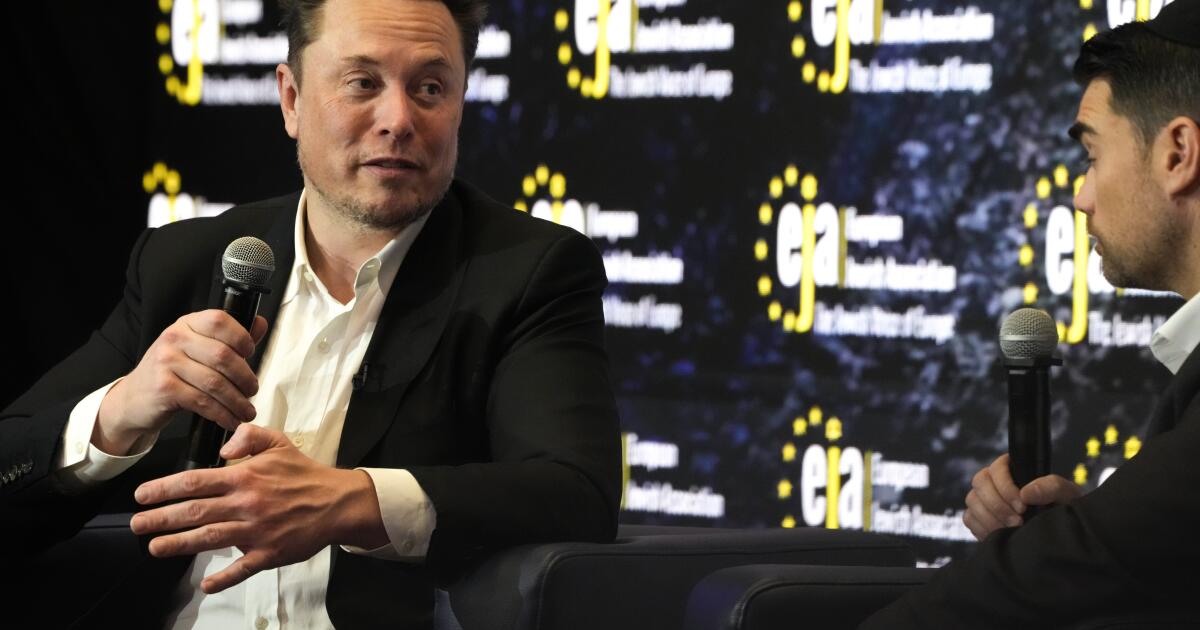
Both of these xenophobic and Islamophobic films are being pushed as “anti-woke” vehicles, deliberately engineered to bypass traditional critical reception and capitalize on a fractured media ecosystem. “Citizen Vigilante,” which features an American protagonist killing dark-skinned immigrants and Muslims in an unnamed European setting, was denied a rating certificate by the German government for inciting violence. Yet despite that determination, the film secured global reach through decentralized digital distribution and high-profile promotion from Elon Musk.
Similarly, “Run, Fight, Hide: Infidels” — a campus siege narrative evoking 1980s action film nostalgia that leans heavily into outdated, post-9/11 anxieties — relies on a built-in conservative media apparatus to guarantee financial returns. The film is produced by the conservative media figure Ben Shapiro and the Daily Wire, which he co-founded. It is a sequel to a 2020 film that was their film company’s premiere.
But while promoters of such films frame their work as a brave rebellion, the reality is much more sinister: rehashing 40-year-old tropes while invoking conspiracy theories of Muslims bringing sharia law to America, because outrage is cheap to produce and easy to monetize.
Stories matter. Stories shape how we see one another. They influence what we love, what we celebrate, whom we trust, whom we understand and whom we fear.
Since January, the Muslim Public Affairs Council has documented a sharp escalation in threats and attacks targeting Muslims and Islamic institutions across the United States, including vandalism, shootings, bomb threats, attempted assassinations and physical assaults. These are not isolated incidents. They reflect a broader climate in which dehumanizing representation increasingly manifests as real-world violence.
Entertainment and politics increasingly employ the same tactic as one another, recycling narratives of fear and “otherness” to mobilize audiences, voters and consumers. When political leaders encourage those narratives, as President Trump recently did by amplifying and commenting on a photo of young Muslim American students in hijab, they further normalize the same stereotypes that entertainment companies have learned to monetize.
Yet while the social costs continue to mount, the economic incentives remain firmly intact. “Citizen Vigilante” earned a 93% audience score on Rotten Tomatoes despite receiving just a 6% critics’ score. More tellingly, it quickly climbed to the top of Amazon’s and Apple TV’s paid video-on-demand charts.
And this isn’t just a Muslim and immigrant issue — and it’s not only about who is portrayed on screens, but also who is not. Representation has been backsliding, and audiences are left with fewer opportunities to see the reality and humanity of diverse communities, making them more vulnerable to fear-based narratives.
According to a 2026 report from the nonprofit Define American, which tracks representation across television and film, Latinos account for only 23% of immigrant characters represented on screen, even though they make up more than 40% of the immigrant population in the United States. In 2020, 50% of immigrants on screen were Latino.
The industry’s defense is that whitewashed and xenophobic films reflect audience demand. But the recent research by Define American challenges this assumption. Data show that nuanced, multidimensional storytelling, in which immigrants and minority characters are woven into the fabric of everyday narratives rather than tokenized or villainized, actually leads to greater audience engagement and deeper systemic understanding.
Entertainment doesn’t simply reflect culture; it teaches us who belongs within it. Studios, distributors, streaming platforms and filmmakers all have a responsibility to reject narratives that portray immigrants as enemies and instead embrace stories that reflect the diversity and complexity of our world. At the same time — as with voters — the power ultimately rests with consumers. The choice to demand storytelling that challenges prejudice rather than profits from it belongs to all of us.
Sue Obeidi is the senior vice president of the Muslim Public Affairs Council Hollywood Bureau. Jose Antonio Vargas is the founder of Define American.

By and large, the zombie subgenre has bitten off more than it can chew in modern times. Between George Romero survival films and camp comedies, the well has become pretty infected. But once in a while, along comes a movie like This Is Not A Test.
Let’s sink our teeth into this new release and see how it stacks up against the classics.
The tone and tenor of this film represent the classic survival movies like Night Of The Living Dead. But the thing that grabs the audience about This Is Not A Test is the trauma of the characters. Holt shines as a withdrawn survivor of an abusive home, trying to cut through the wreckage to reunite with her sister. Each of the main characters have standout traits, and they bathe in strongly acted moments as the stress of the situation changes who they are.
The gore in This Is Not A Test is pretty strong. The attacks spring quickly and when they do, the special effects team does a good job showcasing the battle scars. The camera work is also frenetic in a good way, because the chaos of the chase scenes puts the viewers in a first-person perspective. This film lets you feel like a part of the survivors, so their journeys are interactive.

Longtime fans may say that there’s nothing new in This Is Not A Test, and maybe they’re right. There’s no fresh take on the monsters here, no crazy origin, nothing that we haven’t seen in the past fifty-eight years. But the pacing nails a great balance between getting to know the characters and getting the zombie splatter fest. The mental meltdowns of the characters feel well earned, and the arc of Sloane and her sister brings a lot of heart and investment to the story. Even the most jaded zombie horror fans will find something to appreciate here, even as a background movie.
Adam MacDonald has made another intense hit here, and This Is Not A Test is currently available to stream on Shudder.
-

 Los Angeles, Ca45 minutes ago
Arrest made in deadly shooting at 4th of July gathering in Compton; search for 2nd suspect continues
-

 Detroit, MI1 hour ago
Detroit crime hits decades-low as Michigan governor candidates debate how to keep progress going
-

 San Francisco, CA1 hour ago
Operator of boat that capsized near Alcatraz mourns brother as search continues
-

 Dallas, TX1 hour ago
Mavericks vs Thunder Game Preview and Injury Update
-

 Miami, FL2 hours ago
Miami Dolphins Fans Vs. The Media
-

 Boston, MA2 hours ago
Man who allegedly shot at Boston Police officers arrested after foot chase in Dorchester
-

 Denver, CO2 hours ago
Swan, dragon and duck boats are back pedaling around City Park
-

 Seattle, WA2 hours ago
Ticket Alert: Thundercat, Michelle Branch, and More Seattle Events Going On Sale This Week – The Stranger

