Oregon
Oregon strikes hundreds from voter rolls


Oregon has removed the names of 302 more people from its voter rolls amid concerns about their citizenship, raising further questions about the integrity of its registration process.
Officials announced on Monday that the residents had failed to provide proof of citizenship at the time of their registration.
The move is part of an ongoing effort to address improper voter registration linked to clerical errors at the Oregon Department of Motor Vehicles (DMV).
It brings the total number of erroneous registrations to 1,561.
The root of the issue can be traced back to legislation passed in 2019 that permits some non-citizens to obtain driver’s licenses in Oregon.
Gillian Flaccus/AP, file
Compounding this, the state’s “Motor Voter” law, enacted in 2016, automatically registers most individuals to vote when they apply for a new license or ID, regardless of their citizenship status.
DMV Administrator Amy Joyce said: “We believed we had a complete understanding of the records at risk of error. Unfortunately, new information has revealed that our confidence was misplaced, and we sincerely apologize for this oversight. We are committed to transparency and accountability as we move forward.”
In response to these issues, Oregon Gov. Tina Kotek has ordered a pause on automatic voter registration while also calling for an independent audit of the Motor Voter system.
The request was echoed by Oregon Secretary of State LaVonne Griffin-Valade.
“The first step in restoring the public’s trust in Oregon Motor Voter is a transparent review by a neutral third party,” Griffin-Valade said, adding that she was confident that the errors would not affect the upcoming November election.
Andrew Selsky/AP, file
As part of the corrective measures, Griffin-Valade has instructed her office to fill a newly created oversight position within the Motor Voter division and to establish a rigorous process for conducting regular data checks with the DMV.
Of the 302 newly identified cases, 178 involved individuals from American Samoa being misclassified as U.S. citizens, despite the fact that they are U.S. nationals and do not possess the same voting rights.
The remaining cases stem from previously identified clerical errors exacerbated by a newly discovered software issue.
The secretary of state’s office is investigating whether any of the 302 individuals participated in previous elections.
In its report, the DMV outlined a series of corrective actions, including updates to its computer systems, daily quality checks, and enhanced staff training.
Among the previously flagged 1,259 registrations, it was determined that 10 individuals had voted, with at least five confirmed as citizens at the time of voting—indicating that these instances represent a minimal fraction of Oregon’s 3 million registered voters.
This article contains additional reporting from The Associated Press



This story was produced by the Oregon Journalism Project, a nonprofit newsroom covering the state.
Oregon’s flu season is closing in on its brutal end, which left many family members dodging each other at holiday gatherings to stay safe.
Nationally, less of the population is getting flu vaccinations, and Oregon followed that trend. This season, only 30.7% of Oregonians got the flu vaccine, 10,000 fewer than last year—a rate about one-third lower than the national average.
The low rate is unsurprising. Oregon has one of the lowest rates for childhood vaccinations in the nation, for example, with nearly 1 in 10 kindergarten students opted out by their parents, according to the Oregon Health Authority.
An OJP analysis shows Multnomah and Washington counties had the highest flu vaccination rates in the state, each around 35%. Counties in Southeast Oregon—Grant and Malheur—had the lowest, at 16% and 17.4%, respectively. So far this season, all of Oregon’s 36 counties but Deschutes and Umatilla showed a drop in vaccination rates compared with last year’s complete flu season. Tillamook had the largest decrease: 4 percentage points, down to 24%.
Tillamook public health officials are concerned, but not surprised that the county mirrors the national drop in flu vaccination rates, says Camille Sorensen, the county’s public health communications manager. The county tried to protect more residents this season, she says, by hosting several low-barrier vaccination events.
Sorensen pointed to two reasons for the drop in her county, ones that likely played a role across the state:
Immigration and Customs Enforcement action around the state may have scared off some groups of people from attending vaccination events or clinics.
Second, the U.S. Department of Health and Human Services, under the leadership of vaccine skeptic Robert F. Kennedy Jr., has promulgated inaccurate and inconsistent information about the safety of vaccines.
“There’s a lot of confusion…regarding vaccination efficacy or other concerns about potential side effects,” Sorensen says.
The U.S. Centers for Disease Control and Prevention reported that the vaccine rate for this season was 22% to 34% effective in preventing doctor’s visits for adults and 30% effective in preventing hospitalizations. While the vaccine wasn’t as effective as in previous years, it remains the best way to avoid getting severely sick or hospitalized, according to OHA.
This season, the flu caused the deaths of about 10,000 people nationwide, mostly elderly, but also more than 44 children, according to the Association of American Medical Colleges. The association said it was the worst outbreak in nearly two decades.
In Oregon’s TriMet region (Multnomah, Washington and Clackamas counties), there have been 934 hospitalizations for the flu so far this year. Last year at this time, there were 1,634, or 75% more, likely because last year’s bug was more severe.
Flu shots are easier to access than many other vaccines. Most people with health insurance can walk into any drug store and get immunized. Oregonians without insurance can get a flu shot at community clinics or through their public health department.
>>> To learn more about finding a vaccine clinic near you, visit the Oregon Health Authority’s “Getting Vaccines in Oregon” webpage,
Willamette Week’s reporting has concrete impacts that change laws, force action from civic leaders, and drive compromised politicians from public office.
Support WW

OREGON, Wis. (WMTV) – Police in Oregon arrested a 57-year-old man Friday after investigators said he communicated online with someone he believed was a 13-year-old child.
The Oregon Police Department said the investigation began March 12 after officers received a report about a concerning video posted online.
Detectives later identified a Village of Oregon resident who had been communicating with an individual he believed to be a 13-year-old. Police did not release the suspect’s name.
Detectives took the suspect into custody Friday and booked him into the Dane County Jail on one count of use of a computer to facilitate a child sex crime, police said.
Click here to download the WMTV15 News app or our WMTV15 First Alert weather app.
Copyright 2026 WMTV. All rights reserved.


Rep Ed Diehl talks lawsuit against Oregon over moving gas tax vote
Rep. Ed Diehl, R-Scio, a leader of the Oregon gas tax referendum, talks about a lawsuit against the state over moving the date of the referendum vote.
Oregon Secretary of State Tobias Read will not have to accept arguments on the gas tax referendum that were not submitted by the state’s March 12 deadline, a federal judge decided.
U.S. District Court Judge Michael Simon’s March 20 ruling is a second blow to the referendum’s chief petitioners: Senate Minority Leader Bruce Starr, R-Dundee, gubernatorial candidate Rep. Ed Diehl, R-Scio, and Jason Williams, founder of the Taxpayers Association of Oregon, whose attempt to keep the vote in November was shot down in Marion County District Court.
The litigation by supporters of the gas tax referendum began after Democratic lawmakers passed, and Gov. Tina Kotek signed, Senate Bill 1599 to move the vote on the gas tax and other transportation costs from the November election to May.
Submitting arguments for the voters’ pamphlet required paying $1,200 or the collection of 500 signatures.
The gas tax referendum leaders’ federal suit, joined by four individuals and unidentified people whose signature submissions were not accepted for the ballot, argued Read violated the First and 14th amendments of the U.S. Constitution and the Americans with Disabilities Act by enforcing the deadline for voters’ pamphlet submissions.
The lawsuit mirrors another suit Simon heard March 11. In those arguments, ahead of the deadline, Simon found there was a potential ADA problem because someone without disabilities would have two pathways to submit signatures, where someone who could not physically collect signatures would only have one.
Simon allowed Mary Martin, a disabled and low-income woman, to submit her argument without the signatures or paying the fee, but noted she must still meet the deadline.
The ruling has no effect on the 35 arguments that are already included in the voters’ pamphlet.
Simon declined to allow the submissions that missed the deadline to be added to the pamphlet in part because only one plaintiff stated they were disabled and none, he said, clearly outlined the extent of their financial situations.
“The Legislature interfered with the referendum process, changed the rules midstream, and 52 Oregonians lost their voice. And today, the court sided with the political class over the people,” Diehl told the Statesman Journal.
In a statement, Read expressed appreciation for the speed of the decision and urged Oregon voters to be on the lookout for voters’ pamphlets and ballots in the mail.
Voters will weigh in on whether to increase the gas tax and other transportation costs in the May 19 election.
A written decision from Simon was expected later on March 20.
Anastasia Mason covers state government for the Statesman Journal. Reach her at acmason@statesmanjournal.com or 971-208-5615.
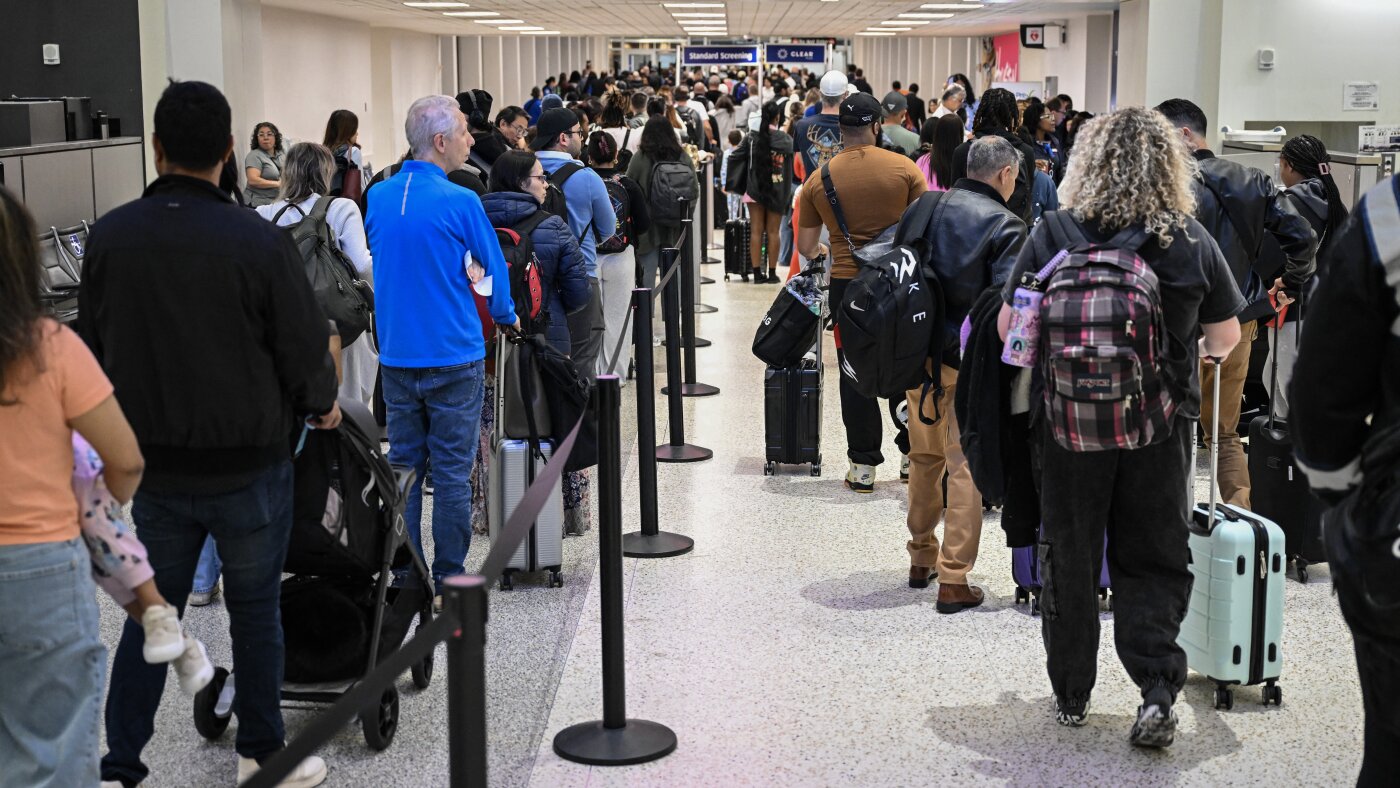
Airport security lines are long. Here’s what to know if you’re flying

Video: Video of Justin Timberlake’s Traffic Stop in 2024 Released

Detroit killer-for-hire becomes convicted liar-for-hire

5 Top-Rated Brunch Spots In San Francisco With Breathtaking Coastal Views – Islands

DAL@MIN Postgame: Jamie Benn | Dallas Stars

Florida High School Football Rankings: Top 25 teams – Oct. 21

How old is Bo Nix? What to know about Oregon quarterback ahead of 2024 NFL Draft

Cleary's 21 help Le Moyne down Central Connecticut State 69-64 in OT

99th annual Pony Swim held in Virginia

Indiana Members Credit Union announced as new anchor tenant at Bottleworks District
Airport security lines are long. Here’s what to know if you’re flying

Schumer gambit fails as DHS shutdown hits 36 days and airport lines grow

Iranian ballistic missile explodes near Israeli nuclear plant

Trump threatens to deploy ICE to airports amid Homeland Security shutdown

Alabama student reportedly fell to his death in Barcelona waters by accident
-

 Detroit, MI3 days ago
Drummer Brian Pastoria, longtime Detroit music advocate, dies at 68
-

 Oklahoma1 week ago
Family rallies around Oklahoma father after head-on crash
-

 Nebraska1 week ago
Wildfire forces immediate evacuation order for Farnam residents
-

 Georgia6 days ago
How ICE plans for a detention warehouse pushed a Georgia town to fight back | CNN Politics
-

 Alaska7 days ago
Police looking for man considered ‘armed and dangerous’
-

 Minnesota1 week ago
Many with Minnesota ties make Forbes list of world’s richest people
-
 Science1 week ago
Federal EPA moves to roll back recent limits on ethylene oxide, a carcinogen
-
 Science1 week ago
H5N1 bird flu spreads to sea otters and sea lions along San Mateo coast, wildlife experts say