Oregon
Jury finds man accused of killing 7 in I-5 crash guilty, but not under the influence


Trial starts for driver charged in I-5 crash that killed 7 farmworkers
The trial for Lincoln Smith, 54, began Monday in Marion County Circuit Court.
A Marion County jury on Wednesday found Lincoln Smith guilty on seven charges of second-degree manslaughter, three charges of third-degree assault and reckless driving, but not guilty of driving under the influence for a semitruck crash on Interstate 5 in May 2023 that killed seven farmworkers.
The jury began deliberating around noon on Tuesday and delivered its verdict shortly before 3 p.m. Wednesday.
The court will set a status check conference next week to determine a date for sentencing.
Prosecutors and defense attorneys asked the jury to decide whether Smith was acting recklessly or under the influence of intoxicants when he was driving the semitruck that crashed into a parked van off I-5 carrying 11 farmworkers near the Santiam River rest stop on May 18, 2023.
Prosecutors argued Smith acted recklessly by choosing to use drugs the previous night and by failing to stop driving when he knew he was tired.
Defense attorneys argued Smith was not acting recklessly because they say he was no longer under the influence and was attempting to find parking when he became tired.
Smith was driving a 53-foot, 55,000-pound semitruck when the truck veered off the road and collided with the van, according to prosecutors and his attorneys, pushing it into another parked semitruck.
Six people died at the scene, and a seventh died in a helicopter on the way to the hospital.
The van was propelled 218 feet from the point of impact, prosecutors said.
Smith, 54, of California, was indicted by a Marion County Grand Jury in May 2023 on seven charges of second-degree manslaughter, three charges of third-degree assault, reckless driving, and driving under the influence of intoxicants.
Tuesday marked the seventh and final day of his trial.
Survivors of the crash who were coming from a beet field near Corvallis recounted their experiences for the first time on Jan. 31.
Three were seriously injured and continue to experience constant pain. They described what they remembered of the crash through tears, talking about the loss of relatives, the terror, and lasting impacts.
Emotions have run high throughout the trial, with family members, jurors, witnesses and Smith crying at times.
First responders for the crash also testified. Many described it as one of the most horrific they’ve ever seen. Smith’s attorneys called the crash “grisly.”
Smith’s attorneys asked the jury to find him not guilty or to find him guilty of criminally negligent homicide rather than manslaughter.
According to the Oregon Department of Transportation, the crash is among the deadliest in Oregon history.
The National Transportation Safety Board opened an investigation into the crash with the intent of issuing safety recommendations. A spokesperson for the agency said the investigation is ongoing and they typically take about two years to complete.
Prosecutors say truck driver accused of killing 7 farmworkers in I-5 crash was experienced and chose to use drugs before driving
Prosecutors have argued that Smith, who has been driving trucks for almost 19 years, was an experienced truck driver who chose to use drugs before getting on the road. Lab tests showed he had methamphetamine, cocaine and fentanyl in his bloodstream, prosecutors said.
“He admits to using meth and cocaine the night before. Again, he knows the risk,” said Marion County Deputy District Attorney David Wilson said.
Drivers who were near or behind Smith on the road testified at trial they saw him swerving on and off the road before the crash. One woman called 911 after witnessing a Jeep veer off the road to avoid getting hit by Smith.
Wilson said in May 2023 Smith had at least 17 arrests in California and nine previous convictions.
During three hours of testimony, Randall Walker, the Oregon State Police officer who evaluated Smith for signs of intoxication after the crash, reaffirmed his belief Smith was under the influence at the time of the crash.
Smith, he said, had constricted pupils, struggled to answer questions about where he had been driving, and often took a long time to respond. In body camera footage played in court, Smith could not recall his own phone number but recalled his girlfriend’s number and his home address.
“I’m getting really dizzy, I can’t remember (expletive),” he said in the footage. “I just can’t focus.”
At the hospital, Walker asked Smith if he could search his clothes. He found a vial in Smith’s pocket that he said contained methamphetamine, according to the footage.
Smith previously told Walker he’d used “zero drugs” and “zero alcohol” in the past 48 hours. After Walker found the vial, Smith admitted he’d used it the previous day.
Defense attorneys say truck driver accused of killing 7 farmworkers on I-5 was no longer under influence of drugs during crash
Smith’s attorneys have argued while Smith did party with a couple of hitchhikers and use drugs the night before the crash, he was no longer under the influence that day and had fallen asleep at the wheel while trying to take the exit to the Santiam River rest stop.
They claimed the symptoms Walker observed as signs of being under the influence, including confusion and dizziness, were actually signs of shock resulting from the crash.
“He was just in the middle of a grisly scene,” defense attorney Tiffany Humphrey said. “He was in a high-impact crash.”
They cited Walker’s drug evaluation training, which states the effects of methamphetamine, a stimulant, can last up to 12 hours, suggesting any methamphetamine Smith had used the previous day should have worn off.
While stimulants typically cause people to be more alert, Walker said when used in combination with drugs that have opposite effects, like fentanyl, the outcome can be unpredictable.
Additionally, he said users of methamphetamine can experience a “downside” after the fact and cited Smith’s poor driving before the crash as evidence of impairment not caused by shock.
“At the end of the high there’s a low,” he said. “The downside of meth is that they are lethargic and sleepy and have a hard time staying awake.”
Prosecutors argued Smith became so tired he fell asleep at the wheel because he was experiencing the downside.
Multiple witnesses for the defense, however, including the paramedic who evaluated Smith at the scene, testified Smith’s vitals, pupils and demeanor were not abnormal and he did not appear to be under the influence.
Kenn Meneely, owner of Willamette Valley Forensics, who formerly worked with OSP and launched the agency’s drug recognition evaluation training program, said Walker did not follow proper protocol to evaluate Smith’s pupils.
Meneely, who was not at the scene of the crash, said based on a review of police reports, body camera footage and medical records, he did not believe Smith was under the influence.
He said Smith was not displaying symptoms consistent with the downside of meth and any effects from drugs taken the previous night would likely have worn off by then.
Smith’s attorneys said Walker was the state’s only witness who saw impairment in Smith’s behavior.
“Lincoln Smith was not reckless. There’s no proof he was impaired. The signs he exhibited did not match impairment,” Humphrey said to the jury. “Trooper Walker was the only person that told you he thought Lincoln Smith was impaired.”
In two emails Smith wrote that prosecutors asked Walker to read to the court, Smith said he was behind on deliveries and under pressure to make all of his stops on time. Smith was transporting truck canopies and camper shells. He described the day of the crash as “the worst day of my life.”
“I’m upset with myself for letting this happen but I’m not ashamed of myself,” Smith said in an email. “Truck drivers fall asleep every day.”
Smith also said in the emails he was not guilty of driving under the influence, just of being tired.
“I was behind and pushing …,” he said in an email. “My life is over because of this. I’ll view it as my punishment for those poor innocent people in that van.”
Semitruck driver accused of killing 7 farmworkers in I-5 crash said he has been doing drugs since he was 12
The state called nearly 30 witnesses over four days. The defense made its case Monday with six witnesses, concluding with Smith.
Smith said the day before the crash started like any other day.
He woke up around 2 or 3 a.m., headed to Woodland, California, with his dog Bear to pick up the truck, did a check of the truck, and headed up I-5.
Near Redding, California, he picked up two hitchhikers, something he said he enjoys doing so he isn’t alone.
They stopped near Sutherlin, south of Eugene, at about 8 p.m.
“I’m not proud of it but we smoked some meth, did a couple lines of coke, and then we parted ways,” he said.
One of the hitchhikers gave him the vial Walker would later find in his pocket, he said. He said he last used drugs around 8:45 p.m., then took Bear for a long walk, got something to eat, and went to sleep. He said he had only done “a little,” and it didn’t affect him very much.
Smith has been using drugs on and off since he was about 12, he said, and experienced the “downside” of meth when he was younger, but hasn’t for a long time. He said he has a “strict” rule about not using substances while driving and is a “professional driver.”
On May 18, 2023, he got up and left around 6:40 a.m. and headed first toward Eugene and Springfield, he said.
After eating lunch around noon, he said he realized he needed to call it a day because he was tired and started looking for a rest stop.
“I realized I wasn’t really feeling so well, I was getting kind of tired, I was having trouble keeping the lane,” he said.
He said he tried two rest stops and both were full. Prosecutors said there were about six truck stops and two rest stops between Eugene and the Santiam River rest stop. Smith said he knew the Santiam River rest stop usually had space, and trucks can’t just be parked anywhere, so he needed to find a legal spot.
“It started to weigh on me as I was not finding a parking space,” he said.
Prosecutors pressed him on why he didn’t stop driving sooner, knowing he was tired and that made driving dangerous. He said he “wasn’t clear-headed” that whole day but was not impaired.
“You’re supposed to take care of being tired,” Smith said. “We learn to recognize it early. They really stress not driving while you’re tired, at the same time they’re calling you to make sure you get the stops done.”
Smith appeared to become emotional, describing the crash itself. He said it was “really violent” and “like a warzone.”
“The first thing I saw when I got out of the truck was two gentlemen laying down,” Smith said. “I went up to them and I wanted to see if they were OK but they weren’t moving.”
He recalled trying to check their pulse but said it was too loud and chaotic. He said he feels devastated about the crash now.
Isabel Funk covers breaking news and public safety for the Statesman Journal. Funk can be reached at ifunk@statesmanjournal.com or on X at @isabeldfunk



The man wanted in connection with two Pierce County homicides was shot and killed by police in Seaside, Oregon, Pierce County Sheriff Keith Swank announced on X Wednesday night.
Hayes McCloud, 24, was identified earlier in the day by the Pierce County Sheriff’s Office (PCSO) as a person of interest in two killings — the first in Puyallup around 2:40 a.m. and the second in Tacoma shortly after 3 a.m.
On Wednesday night, authorities referred to him as a suspect.
“The suspect has been contacted by police in Seaside, Oregon,” PCSO said in a Facebook post. “We are no longer looking for the suspect and details of the contact and major incident that transpired in Oregon will be available once the investigation is concluded.”
After that announcement, Swank posted an update on X.
“After he killed the person in Tacoma, he drove away. We didn’t know where he went, but he was picked up by a Flock camera in Lewis County around 4 a.m. So we knew he was headed southbound at that point,” Swank’s post said. “The suspect was shot and killed by police in Seaside, Oregon. No cops were hurt. I’m glad he was stopped before he killed anyone else. Great police work!”
The murder suspect from the homicide on Woodland Avenue also shot and killed a person in Tacoma.
After he killed the person in Tacoma, he drove away. We didn’t know where he went, but he was picked up by a flock camera in Lewis County around 4:00 AM. So we knew he was headed…
— Sheriff Keith Swank (@SaveOurSheriff) July 9, 2026
35-year-old killed in Puyallup home early Wednesday
At 2:40 a.m. Wednesday, deputies responded to the 12500 block of Woodland Avenue E. in Puyallup after receiving reports that a man was found dead in a home. Two homeowners were at the scene when deputies arrived.
“The preliminary investigation indicates there was homicidal violence in a bedroom that eventually led outside the home,” the Pierce County Sheriff’s Office reported. “The 35-year-old male was located inside the home with multiple deadly injuries. We have no suspect in custody at this time.”
Second homicide in Tacoma less than 30 minutes later
Just after 3 a.m., police responded to the 6900 block of E. D Street in Tacoma’s Hillsdale neighborhood after multiple people reported hearing gunfire. When officers arrived, they found a man suffering from apparent gunshot wounds.
Officers began lifesaving measures, but the victim was pronounced dead at the scene.
Contributing: Frank Sumrall, MyNorthwest
Frank Lenzi is the News Director for KIRO Newsradio. Read more of his stories here.

The Oregon Country Fair is right around the corner and got an up-close preview of the annual event with generations of revelers expected to return yet again.
Vendors and construction teams were busy setting the venue up on Wednesday. It opens to the public on Friday, and organizers are expecting a big turnout.
For over fifty years, people have come together to enjoy live music, art, food and community at the event in Veneta.
“It has definitely changed and evolved and it’s definitely still holding true to the magic that has started the fair,” said fair attendee Jill Carter.
Carter has been going to the fair for about forty years, but throughout her time there, there’s always one thing on her mind.
“I’ve had a lifelong dream to do the poster, and I’ve been working on applying for a long time, and I got to do it and I’m so excited!”
Carter says over the years, she’s fine-tuned her design proposal to accurately capture the whimsey of the fair.
“In our day-to-day world, we really don’t get to connect on this kind of level of art and whimsey.”
This curated space of art and whimsey is what keeps generations returning to the fair.
“I was at a meeting the other day and somebody was a third generation Oregon Country fairgoer. Their parents were babies here. They were babies here. Now, they’re on crews that help manage the safety of this community,” says Kate Gillespie, the White Bird Rock Medicine crew coordinator.
Gillespie has been working within medical response at the fair for sixteen years.
Before fair goers even arrive, White Bird Rock Medicine works on setting up for the two hospitals provided on site as well as staffing medical crew – which consists of almost 300 medical professionals and mental health crisis workers.
“We are prepared to deal with first aid things like scrapes, bumps, bruises; injured feet are a big thing that we see – all the way up to things like cardiac events and strokes,” Gillespie explains.
And for the attendees they serve, the event is a yearly tradition that is more than just a fair – it’s a chance to catch up with old friends and make new memories.
“I think it’s really like a reunion for a lot of the people that are out here on this property,” says Gillespie.
The Oregon Country Fair runs Friday through Sunday from 11 a.m. to 7 p.m. at the intersection of Suttle Road and Bus Road in Veneta.
For more information, visit the fair website.

The Oregon attorney general will ask a court to pause Paramount’s PSKY.O $110 billion bid to acquire Warner Bros. WBD.O for 60 days, saying on Tuesday that the company withheld records of its lobbying efforts.
While Paramount has told the state it will not close the deal before July 16, Attorney General Dan Rayfield said he will ask a Multnomah County court to order the company to hand over records and to delay the deal so the state can review them.
“We’re not going to let Paramount Skydance play hide the ball so they can rush through their massive merger,” Rayfield said in a statement. “Oregonians have a real stake in this deal – in our film industry, in our economy, in the choices they’ll have as consumers.”
A Paramount spokesperson said the information Oregon seeks “has nothing to do with whether this transaction complies with Oregon’s antitrust laws and is not a legitimate basis to delay a plainly lawful, pro-competitive transaction.”
The company has provided the state with documents relevant to the merger, the spokesperson added.
Oregon is seeking documents regarding “Project Warrior,” which was Paramount’s internal code name for efforts to obtain regulatory clearance. The state is also asking for records related to the company’s efforts to lobby the Trump administration for support of the merger.
Paramount CEO David Ellison’s father, billionaire Oracle co-founder Larry Ellison, has cultivated ties with President Donald Trump, and the company has hired former Trump officials.
Oregon is also seeking information on whether Paramount had any role in the U.S. Department of Justice’s statement announcing it had cleared the deal.
While Oregon ordinarily “would afford significant weight” to the DOJ’s determination, the state plans to cite a Wall Street Journal report that officials overrode career staff attorneys at the DOJ who were leaning toward a recommendation to challenge the deal, according to documents to be filed in court that Reuters reviewed.
The DOJ issued a lengthy statement last month saying it believed the deal would “increase competition across the media and entertainment ecosystem, with benefits for American consumers and workers.”
The company has said the deal would create a stronger streaming competitor to Netflix NFLX.O and Disney DIS.N, and benefit creatives and consumers.
California, New York and other U.S. states are preparing to sue to block the deal, sources familiar with the matter told Reuters last month. The states have authority to enforce laws against mergers that they believe would unlawfully decrease competition.
Opponents of the deal, including some actors, writers and media workers, have worried that it would hurt jobs.
-

 Texas2 minutes ago
Ted Cruz warns Talarico has ‘real chance’ to flip Texas’ U.S. Senate seat
-

 Utah9 minutes ago
Man suspected in 2006 Utah murder left suicide note in Las Vegas jail cell: police
-
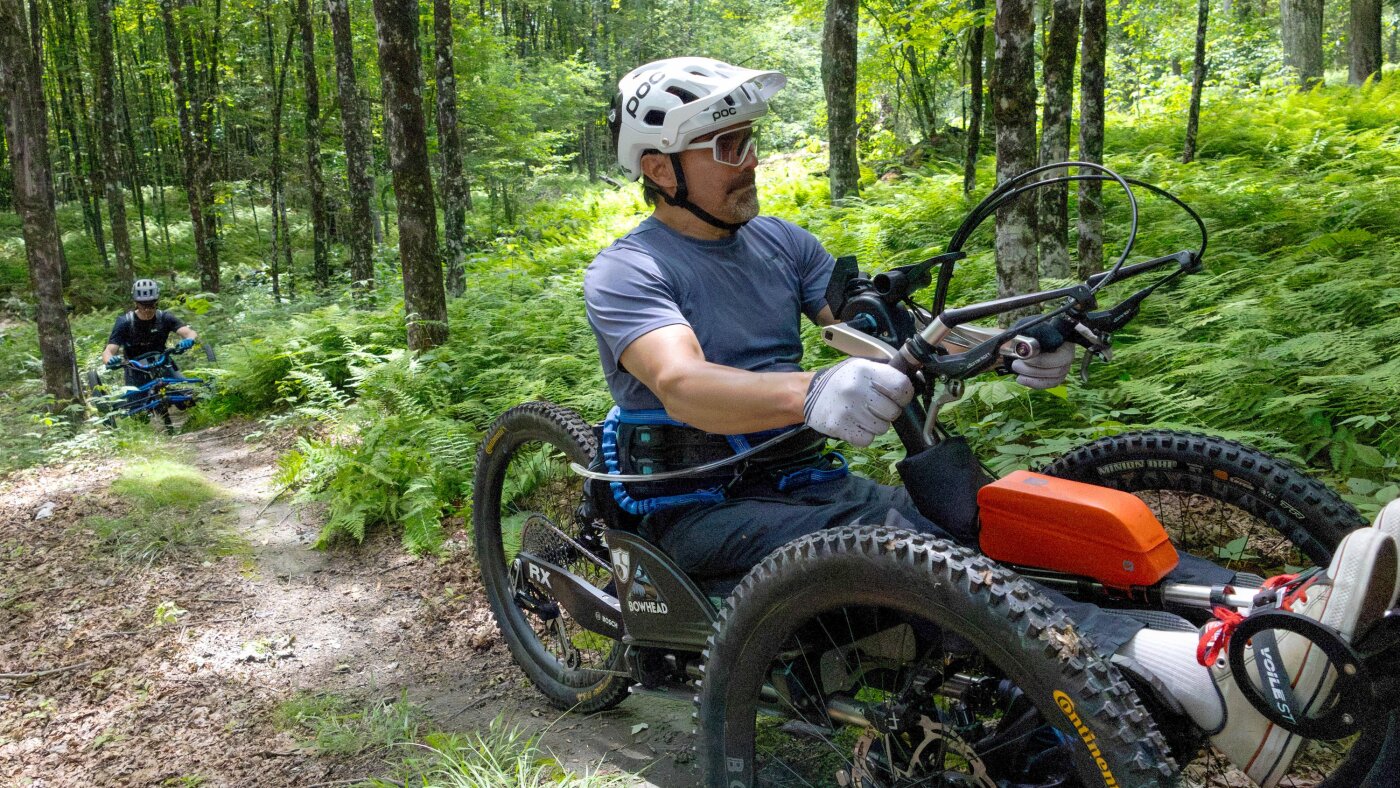 Vermont12 minutes ago
OUTDOOR ACCESS FOR DISABLED IN VERMONT
-
 Virginia17 minutes ago
4 indicted in Virginia double homicide; second victim ID’d as grandmother of 6
-

 Washington24 minutes ago
Washington Commanders are retiring Hall of Famer John Riggins’ No. 44
-

 Wisconsin27 minutes ago
Wisconsin State Patrol rides with truck and bus drivers to spot violations in five areas
-

 West Virginia32 minutes ago
West Virginia town fires entire police force after chief resigns, sergeant alleges evidence room break-in
-

 Wyoming39 minutes ago
WHP: July 5 single-vehicle rollover north of Riverton resulted in one death, one injury

