
West
Oregon Gov. Kotek calls for halt to Portland interstate tolling plan

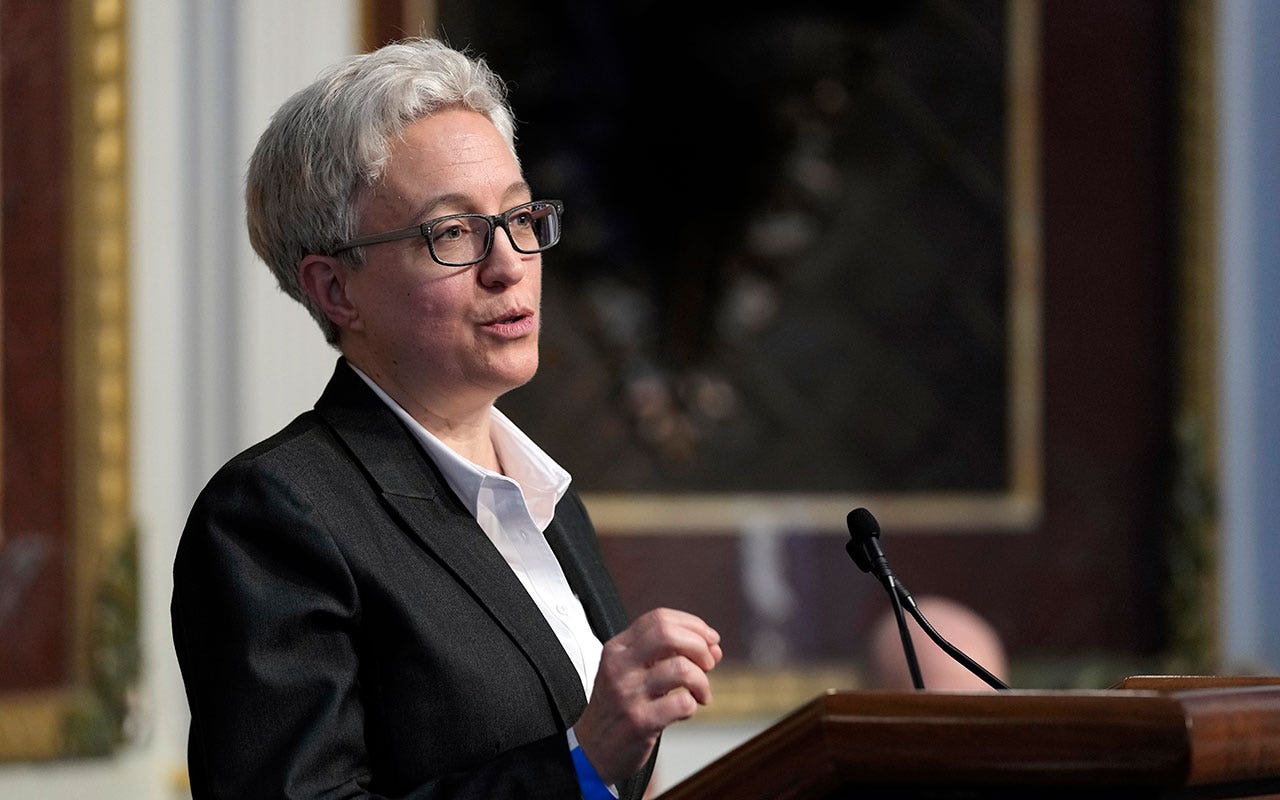
- Oregon Gov. Tina Kotek has halted the Regional Mobility Pricing Project for Interstate 5 and Interstate 205 toll implementation in Portland.
- Kotek voiced uncertainties about tolling’s feasibility and said growing challenges outweigh expected benefits.
- Kotek’s letter came a few weeks after a survey found a majority of Oregon voters opposed the Regional Mobility Pricing Project tolls.
Oregon Gov. Tina Kotek wants to scrap a plan to implement tolls on large sections of two Portland-area interstates, she said Monday.
Kotek sent a letter to the Oregon Transportation Commission on Monday saying the Regional Mobility Pricing Project for Interstate 5 and Interstate 205 should be halted, KGW-TV reported.
Kotek said in the letter that the “state’s path toward implementing tolling in the Portland metro area is uncertain, at best,” and that the challenges associated with the plan “have grown larger than the anticipated benefits.”
OREGON GOV. TINA KOTEK DIRECTS STATE POLICE TO CRACK DOWN ON FENTANYL DISTRIBUTION, HOLD SELLERS ACCOUNTABLE
“Therefore, I believe it is time to bring the agency’s work on RMPP to an end,” she wrote.
Oregon Gov. Tina Kotek speaks during a signing ceremony on Feb. 23, 2024, in Washington. Oregon Gov. Tina Kotek is scrapping a plan to implement tolls on large sections of two Portland-area interstates, she said on Monday. (AP Photo/Susan Walsh, File)
In 2017, the state Legislature directed the Oregon Department of Transportation to start exploring tolling as a traffic congestion management tool that could be part of a major transportation funding package, but the plans have drawn increasing criticism as they’ve become clearer.
Kotek’s letter came a few weeks after a survey found a majority of Oregon voters opposed the Regional Mobility Pricing Project tolls, KOIN-TV reported.
The move also came after the Oregon Department of Transportation produced a report on the equity impacts of tolling and the agency’s plan to mitigate the impacts on low-income Portlanders. Kotek wrote in her letter that the report showed “a toll program which keeps toll rates low enough for working families and raises enough funding for major projects would fail to meet expectations for local project funding and revenue sharing.”
The state transportation agency is facing funding challenges because of a projected decline in revenue from the state’s gas tax, and Kotek said she expects the Legislature to tackle that issue in the 2025 session.
The governor said in the letter she is “confident that a more robust conversation on funding options will yield greater understanding and direction for our future moving forward.”
Oregon Transportation Commission Chair Julie Brown and Vice Chair Lee Beyer, as well as Oregon Department of Transportation Director Kris Strickler, all released statements later Monday suggesting they agree with Kotek.
OREGON GOVERNOR TO SIGN BILL RECRIMINALIZING ILLICIT DRUGS, ENDING LIBERAL EXPERIMENT
Beyer said “metro leadership views on tolling have changed” and “local and regional opposition to tolling makes clear that Oregon is not ready for regional tolling.” Strickler said “it is clear the toll program cannot be designed in a way that meets the needs expressed by our local partners while also meeting the needs of Oregonians statewide.”
Brown said she looked forward to conversations about other funding sources but added that while she didn’t believe tolling should be the only tool to solve challenges, “as a steward of our state’s transportation system, I believe it should be one of our tools.”
Kotek said this move should not impact the planned collection of toll revenue on the interstate highway bridge between Oregon and Washington that’s set to be replaced as part of a multibillion-dollar project supported by federal funding.
Read the full article from Here

Continue Reading
West
Newsom’s ‘disgraceful’ call for Dems to be ‘culturally normal’ is ‘dangerous,’ far-left podcaster says
NEWYou can now listen to Fox News articles!
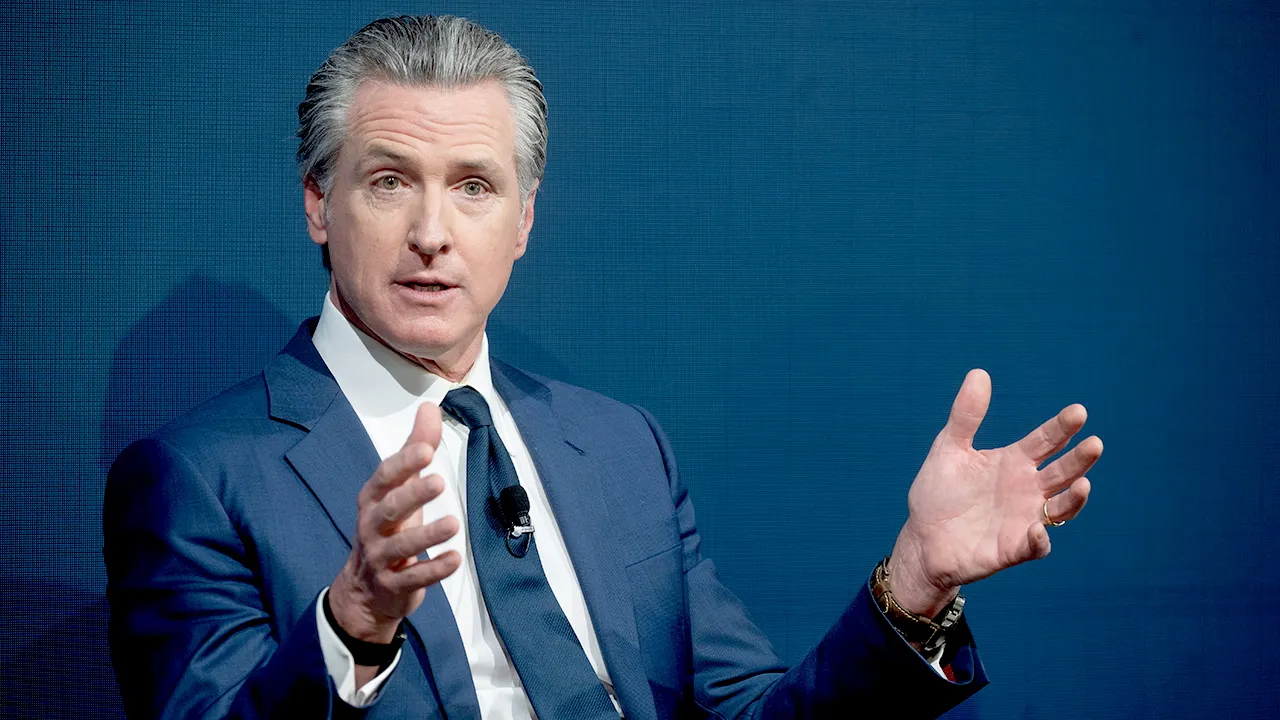
“I’ve Had It” podcast host Jennifer Welch accused Democratic California Gov. Gavin Newsom of committing “political suicide” Wednesday after he called on the Democratic Party to become “more culturally normal” to win elections.
Welch reacted to Newsom’s interview with CNN Monday during which he called on Democrats to be more focused on affordability rather than niche cultural issues.
“From a tactical perspective, from the prism of purely politics, there’s no doubt that the Democratic Party needs to be, dare I say, more culturally normal,” Newsom said.
“I believe that — less prone to spending a disproportionate amount of time on pronouns, identity, politics, more focused on tabletop issues, things that really matter, the stacking of stress in terms of electricity bills and childcare costs and healthcare and, obviously, housing costs and how easily we get trapped in that, how I’ve fallen prey to that.”
Far-left podcast star Jennifer Welch has emerged as a darling of the liberal media and Democratic politicians. (Bryan Bedder/Getty Images for GLAAD)
Welch accused Newsom of “ceding ground” to Republicans with his comments and attempts to appear more moderate.
“What you’re saying, Gov. Newsom, is breathtakingly dangerous,” Welch said. “And you’re ceding ground to the narratives that Republicans try to define free people that mind their own business that stand up for everything. You’re allowing their b—— narratives to define Americans, and it is utterly disgraceful.”
GAVIN NEWSOM SPOX TELLS REPORTER ‘F— OFF’ WHEN ASKED FOR RECORDS OF HIS DYSLEXIA DIAGNOSIS
Welch, whose podcast has become a hub for high-ranking Democratic leaders, also expressed frustration that Newsom appeared to be taking advice from “corporate Democrats” on trying to move to the center of politics.
Gavin Newsom told CNN Democrats need to be “more culturally normal” to win elections. (Marijan Murat/picture alliance via Getty Images)
“He is adamantly against a billionaire tax, which I just think, ‘My god, that’s a layup right now.’ Tax the billionaires. It is not even remotely a liberal thing. It is a moderate position from both parties. But here’s Gavin Newsom as he continues his death march to the center,” Welch said.
STEPHEN A SMITH CALLS ON GAVIN NEWSOM TO ‘ANSWER’ FOR CALIFORNIA’S HOMELESSNESS, CRIME
She pointed to other politicians like New York City Mayor Zohran Mamdani as examples of Democrats who held onto progressive politics and were still elected.
“Gavin Newsom, this is so incredibly disappointing. It’s so devastating that you cede ground to these bigots, and you allow their b—— framework to redefine you. I just think this is political suicide. You don’t have to throw one person under the bus,” Welch said.
Gov. Gavin Newsom has been pushing a more moderate position on transgender issues. (Amy Sussman/Getty Images)
Fox News Digital reached out to Newsom’s office for comment.
CLICK HERE TO DOWNLOAD THE FOX NEWS APP
Newsom faced backlash from members of his own party for his more moderate position on transgender issues. He has nevertheless insisted that he remains a staunch advocate for the transgender community.
Related Article

Read the full article from Here

If you purchase an independently reviewed product or service through a link on our website, The Hollywood Reporter may receive an affiliate commission.
Sam Smith has kicked off his residency at the Castro Theatre in San Francisco, with the singer’s 20-date stint helping to officially usher in a new era for the historic landmark.
First erected in 1922, the Castro closed in 2024 for a reported $41 million renovation project. But the century-old Spanish-style Baroque theatre is open for business — and music — once again, with its gilded ceiling and ornamental walls restored to its original design, while seating is now reconfigurable for different events, including 650 seats that can be removed to create more standing room space (like for Smith’s concert). More importantly, city officials hope the re-opening of the Castro Theatre will also help revive the predominantly queer neighborhood it sits in, which shares a name with the venerable venue.
“Do you guys realize how special this street is?” Smith asked the sold-out crowd, during night two of their residency last week. “I grew up in a village in the middle of f-ckin’ nowhere,” they shared. “I was the only gay in the village and yes I was very dramatic about it as well,” they added with a laugh.
“There is nothing like this street and nothing like the Castro and the community here,” Smith said. “I’ll never forget coming here when I was 20 years old, so reopening this theater now is such an honor.”
BUY ONLINE
Sam Smith Tickets on StubHub
Tickets to Smith’s Castro residency quickly sold out when the shows were first announced but you can still find stubs on sites like StubHub, Vivid Seats and SeatGeek. New users can use the promo code THR30 to save $30 on orders of $300 and up at VividSeats.com. SeatGeek customers can use promo code HOLLYWOOD10 to save $10 at SeatGeek.com.
Smith’s San Francisco stint follows their “To Be Free: New York City,” residency which took place last fall at Brooklyn’s historic Warsaw club. Other artists set to play at the Castro this spring include Father John Misty, José González, Santigold and Lucy Dacus. The Castro will also help celebrate the 50th anniversary of the LGBTQ-themed Frameline Film Festival this June.

ALSO AVAILABLE
Castro Theatre Tickets on Vivid Seats
Smith’s residency runs until March 14.
According to tourism officials and local businesses, Smith’s new Castro residency and the reopening of the theatre has already helped to bring in a number of new visitors to the area. Mat Schuster, the executive chef and owner of long-time neighborhood fixture, Canela, says business has been “very busy” in the last few weeks, crediting Smith’s show with bringing out new diners to the Spanish restaurant, which has been on Market Street since 2011. Other local hotspots like wine bar Bar49, the San Francisco outpost of Hi Tops, and the women’s sports bar, Rikki’s (named after Gay Games Federation founder Rikki Streicher), were all packed on a recent evening following Smith’s Castro concert.
According to San Francisco Tourism, the reopening of The Castro Theatre is poised to deliver “meaningful economic gains” to the surrounding neighborhood, which some stats estimating that the venue will draw more than 200,000 visitors annually.
With the Castro Theatre now open again, local officials are looking ahead to other upcoming celebrations, including a planned reimagining of the Castro and Market Street intersection into The Memorial at Harvey Milk Plaza, honoring the first openly gay elected official in California (and the inspiration for the 2009 Sean Penn film). Milk’s legacy is already enshrined at the San Francisco airport of course, with terminal 1 at SFO renamed as the “Harvey Milk Terminal;” the new memorial is scheduled to be completed by 2028. The annual Castro Street Fair, meantime, a community street celebration founded by Harvey Milk in 1974, will take place on the first weekend of October.
The reopening of the Castro comes amidst a busy few months for San Francisco, which recently saw a number of athletes and celebrities in town for the Super Bowl. Steph Curry’s new speakeasy, The Eighth Rule, was among the hotspots over the big game weekend and the basketball star’s bourbon-forward bar continues to be a hot reservation in the city. Opened in the fall, the bar is tucked away in a nondescript hallway inside the Westin St. Francis hotel in Union Square, offering an intimate and exclusive setting for the Golden State Warriors point guard’s Gentleman’s Cut Bourbon, which can be ordered on its own or as part of a six-course omakase-style cocktail tasting (we loved the clarified coconut milk punch and the truffle-vanilla whiskey sour). Of course, guests can also order cocktails a la carte, choosing from different bourbons and whiskeys, plus a full selection of other spirits.

Next door to The Eighth Rule is Bourbon Steak San Francisco, the latest outpost of Chef Michael Mina’s award-winning steakhouse. The restaurant marks the celebrity chef’s return to the Westin St. Francis, where he opened his first eponymous restaurant in 2004. In addition to its selection of steaks, seafood and caviar offerings (like Mina’s famous “caviar twinkee”), this Bourbon Steak outpost offers a family-style dining experience for six people, available through advance reservations. This is the only Bourbon Steak location to offer this communal table format.
New this month is the highly-anticipated opening of JouJou, an elevated French brasserie concept from the owners of the two Michelin-starred Lazy Bear. Located in the city’s Design District, JouJou is poised to be the next celebrity hangout, with its ornate dining room and marble-topped counters setting the scene for steak frites and star sightings alike. As chef David Barzelay told the San Francisco Chronicle when asked about the inspiration for JouJou: “It always feels like you’re just in a place where it’s happening.”

Richard Jackson
OBITUARY
Richard E. Jackson, affectionately called “Jackson”, was beloved by his family, friends and colleagues. He passed peacefully surrounded by his wife and children. He was receiving exceptional medical care at City Park Healthcare and Rehabilitation Center at the time of his death. A devout Catholic, he received his Last Rights from Fr. John Ludanha of Blessed Sacrament Church and School.
He earned a Bachelor’s degree in Economics from Gannon University and a Master’s degree in Education from the George Washington University. For over 30 years, he was employed by the federal government, mostly as an analyst for the Social Security Administration (SSA). Other positions he held were: Beneficiary Services Specialist, Division of Medicare, Health Care Financing Administration; Public Affairs Specialist for SSA; and Management Analyst SSA Office of Management and Budget. After he retired, he was a consultant to the State of Colorado Center for Medicare and Medicaid Services.
Jackson was a devoted father, step-father and foster father. He would take over the kitchen and cook spaghetti and meatballs, a family favorite, and then transport children to gymnastics practice and friends’ houses. He had a remarkable sense of humor, bringing joy and laughter to his home. He adored his wife and would leave her weekly love notes in drawers around the house. Exercising at the Denver Athletic Club, taking walks with his wife, and reading the New York Times were three of his favorite activities. He was born in Westfield, New York. His parents were Canadian immigrants. He was the youngest of eight children.
He is survived by his wife, Joycee Kennedy; his children – Kimberly Jackson (Mike Estes), Dawn Jennings (Ed Jennings) and Kevin Jackson; his stepchildren – Cary Kennedy (Saurabh Mangalik) and Jody Kennedy (Christopher Thompson); his grandchildren – Elizabeth, Chase and Drew; his step grandchildren – Kadin, Kyra, Bryce and Sena; and his first wife Madonna Smyth.
Services will be held at Blessed Sacrament Church – the time and day to be announced.

Technology5 minutes ago
Tired of websites blocking your VPN? A dedicated IP fixes that
Business11 minutes ago
Commentary: The Pentagon is demanding to use Claude AI as it pleases. Claude told me that’s ‘dangerous’

Entertainment17 minutes ago
Review: In ‘American Classic,’ Kevin Kline and Laura Linney deliver a love letter to theater

Lifestyle23 minutes ago
A secret-ish Japanese-style listening lounge just opened inside the Hollywood Palladium
Politics29 minutes ago
Commentary: With midterm vote starting, here’s where things stand in national redistricting fight

Florida1 year ago
Florida High School Football Rankings: Top 25 teams – Oct. 21

Connecticut2 years ago
Cleary's 21 help Le Moyne down Central Connecticut State 69-64 in OT

Oregon2 years ago
How old is Bo Nix? What to know about Oregon quarterback ahead of 2024 NFL Draft

Virginia2 years ago
99th annual Pony Swim held in Virginia

Indiana1 year ago
Indiana Members Credit Union announced as new anchor tenant at Bottleworks District

World53 minutes ago
At least nine killed after Iranian strike on Israel’s Beit Shemesh

News1 hour ago
Mass shooting at Austin, Texas bar leaves at least 3 dead, 14 wounded, authorities say

Politics12 hours ago
Mamdani’s response to Trump’s Iran strike sparks conservative backlash: ‘Rooting for the ayatollah’

World13 hours ago
Activists hail ‘historic’ EU’s decision on accessible abortion

News13 hours ago
A long-buried recording and the Supreme Court of old (CT+) : Consider This from NPR
-

 World3 days ago
Exclusive: DeepSeek withholds latest AI model from US chipmakers including Nvidia, sources say
-

 Massachusetts4 days ago
Mother and daughter injured in Taunton house explosion
-

 Montana1 week ago
2026 MHSA Montana Wrestling State Championship Brackets And Results – FloWrestling
-

 Denver, CO4 days ago
10 acres charred, 5 injured in Thornton grass fire, evacuation orders lifted
-

 Louisiana6 days ago
Wildfire near Gum Swamp Road in Livingston Parish now under control; more than 200 acres burned
-

 Technology1 week ago
YouTube TV billing scam emails are hitting inboxes
-

 Technology1 week ago
Stellantis is in a crisis of its own making
-

 Politics1 week ago
OpenAI didn’t contact police despite employees flagging mass shooter’s concerning chatbot interactions: REPORT