Nevada
Nevada protects consumers from utility shutoffs in extreme heat. Advocates want more. – The Nevada Independent


As electricity costs grow steeper and Nevada summers grow deadlier, advocates are sounding alarms about the risks to low-income people who can’t afford consistent air conditioning in dangerous temperatures.
Between May and August 2025, there were at least 114 heat-related deaths in Clark County alone, according to the county coroner’s office.
This summer’s scourge of heat-related death and illness mirrors a nationwide trend. Recent studies show that extreme summertime heat is now the leading cause of weather-related deaths, according to the U.S. Environmental Protection Agency (EPA).
In 2023, the death certificates of more than 2,300 people who died in the summer mention the effects of excessive heat, the highest number in 45 years of records, according to an Associated Press analysis of Centers for Disease Control and Prevention data. Three-quarters of those deaths occurred in five states: Arizona, Texas, Florida, Louisiana and Nevada.
According to the nonprofit organization Climate Central, Las Vegas and Reno are the two fastest-warming cities nationwide. Las Vegas’ environment puts residents at particular danger from extreme heat. The city’s sprawl has created a “heat island,” where heat-absorbing roads and buildings further increase temperatures.
Yanci Hill works to protect her fellow Nevadans from extreme heat as part of the Latin-focused environmental group Chispa Nevada, which advocates for less expensive utility costs and more transparent utility policies for Nevadans. She experienced extreme heat herself in July 2024, when the central air-conditioning unit in her one-story home in Henderson broke.
Hill, her husband and their 18-year-old daughter spent five days virtually trapped inside their home. “It was 113 degrees outside,” she explained, “and 102 degrees inside. We were sleeping with cold compresses on our foreheads and ice packs under our pillows.” The heat got so bad, Hill said, one of the family cats fell ill with liver disease.
Hill said one of her friends once had her utilities shut off because she was a few dollars short on her bill.
The federal government has long recognized the need to ensure Americans can access their utilities in extreme weather. Since 1980, the federal Low Income Home Energy Assistance Program (LIHEAP) has provided funds to state governments to subsidize residents who have trouble affording their heating or cooling bills. But according to Mark Wolfe, executive director of the National Energy Assistance Directors Association (NEADA), which represents the program’s state managers, roughly 85 percent of the program’s resources are used for heating in the winter. That leaves less support available nationally for households requiring cooling.
“How do we protect vulnerable households both during periods of extreme heat and extreme cold?” asked Wolfe. “The rules haven’t caught up.”
Nationally, the cost of electricity has risen at twice the pace of the average cost of living, exacerbating this problem. According to NEADA, almost one in every five of the poorest families lacks consistent access to cooling.
To supplement the LIHEAP program’s efforts and keep utilities operating in sweltering heat, many states bar utility companies from disconnecting services in certain temperatures or during certain months.
Nevada is one of 20 states that offer protections from utility shutoffs during extreme heat and one of 41 states that offer the same protections during extreme cold. According to the Public Utilities Commission of Nevada (PUCN), utilities cannot be disconnected when the temperature is above 105 degrees. If customers are elderly or disabled, that threshold drops to 95 degrees. Utility disconnections also must be delayed for 30 days if a resident is experiencing a medical emergency.
But Olivia Tanager of the Sierra Club’s Toiyabe Chapter, one of Nevada’s largest environmental organizations, said she believes the state must do more.
Some states have their temperature-based protections kick in at a lower threshold. Arizona, for instance, prevents utilities from being shut off during summer months or whenever it hits 95 degrees.
“I think a lower threshold — in the 92 or 95 degree area — would be much more reasonable for Nevada, because we also know, especially in Southern Nevada, the heat disparities between different neighborhoods are very extreme,” said Tanager.
In this year’s legislative session, a bill that went even further — prohibiting utility cutoffs from May 1 to Oct. 31 — died without a hearing.
Along with more expansive time- or temperature-based protections, environmental and consumer advocates have encouraged the state to provide more robust financial assistance to low-income families. Nevada is one of 26 states plus Washington, D.C., that offer assistance with summer energy bills, partnering with the federally funded LIHEAP to provide support to consumers through the Energy Assistance Program (EAP). NV Energy, which controls the majority of utilities in Southern Nevada, also oversees the Special Assistance Fund for Energy (SAFE) program, which is intended to supplement state and federal assistance.
But Nevada is not one of the 21 states with explicit policies protecting low-income families from utility disconnections during summer months. Such disconnections are only barred if the temperature is above 105 degrees. But even if families keep their utilities on in such intense heat, they must foot the bill. A public utilities commission spokesperson told The Nevada Independent in a statement that Nevada places “a moratorium on disconnections during periods of extreme temperatures; the regulations do not exempt customers from paying utility bills incurred during extreme temperature periods.”
Residents are only allowed to receive EAP funds once annually, which Tanager says further prevents the program from becoming a long-term solution to an affordability crisis.
“While we do have resources, and while we appreciate those resources existing, we know that it’s not working for everybody,” she said.
Tanager’s Sierra Club and Hill’s Chispa Nevada are part of the Nevada Environmental Justice Coalition, which sent a group of activists to the state legislative session in April 2025 to advocate for greater transparency and affordability concerning utilities. They petitioned successfully for the passage of AB442, which requires the Public Utilities Commission to report quarterly data on when and where utility services are being disconnected, and AB452, which requires greater transparency around the setting of utility rates.
“AB452 was really about consumer protections — how do we know what we’re paying for as energy consumers?” said Assm. Tracy Brown-May, who sponsored the bill. “So that we know when [Nevada utility companies] purchase that natural gas, the cost of it is not all immediately passed onto the rate payer, with no data or information as to why.”
In February 2025, NV Energy proposed a revenue increase that would spike rates up to 9 percent, a move they justified by pointing to last year’s expensive heat waves. The Public Utilities Commission, forced to delay August public hearings on the matter due to the government’s recent cyberattack, is expected to vote on the proposed rate hike next week.
Tanager, for her part, said she hopes that the commission votes against the hike.
“The utility companies are bringing in record profits year-after-year, but Nevadans continue to be squeezed more and more,” she stated. “Several percentage points of people in each ZIP code are unable to pay their utility bill each year, which is, in my opinion, just disgusting.”
Cora Lewis of The Associated Press contributed to this article.


The Las Vegas Raiders have orchestrated many groundbreaking moves this offseason, but none as important as the impact they made at a fundraising event.
Over the weekend, the Raiders hosted the Silver & Black Gala, raising $2.5 million for mental health in Nevada. Sunday marked the third time the organization had hosted the event, which has produced a tremendous turnout.
Several individuals spoke during the event, including Las Vegas Raiders owner Mark Davis and president Sandra Douglass Morgan, who each highlighted the importance of acknowledging mental health.
Davis’ Thoughts
- “We’re here to raise money for mental health, which is one of the most important things we can all deal with,” Davis said. “Every one of us is impacted by mental health and our families, friends, or anywhere else, we are all directly affected. That’s why it’s so critical to raise money for our community. We’re grateful for you all, and appreciate you being here.”
Morgan’s Thoughts
“Mental health remains one of the most urgent issues across Nevada,” Morgan said. “Through the Silver & Black Gala, the Raiders Foundation is helping expand access to trusted, community-based resources that meet people where they are. This year’s recipients reflect the depth and complexity of that work, supporting our community in schools, clubhouses, homes, shelters, and family systems statewide.”
The Raiders also honored former player Carl Nassib and NFL broadcaster Jay Glazer on Sunday night as the winners of the Commitment to Excellence award. Here is what each of them had to say.
Glazer’s Thoughts
- “First, this is incredible what the Raiders are doing,” Glazer said. “God blessed me with the ability to communicate, so I’m going to use that to try and help other people. When we’re willing to share our scars, we turn them into strength—into something that connects us as teammates with nothing to hide. That’s what builds a true team, a championship team. I’m proud to stand with you and be part of this team tonight.”
Nassib’s Thoughts
- “It is truly a privilege to be up here,” Nassib said. “We’re creating space for people to be vulnerable—and that work is truly lifesaving. It’s not about being perfect, it’s about showing up and reminding people they’re not alone.”
Overall Thoughts
This has been a tremendous event over the last few years, and the Raiders’ organization has done a great job of raising awareness for mental health. This will be an event that the team will continue to host in the future.
 Add us as a preferred source on Google
Follow
Nevada
Nevada workers fear homelessness as housing, jobs vanish before July deadline | Fox News Video

The final casino resort in Primm, Nevada, will close this summer after years of declining tourism, ending gaming operations in the once-busy border town and putting hundreds of employees out of work.
Primm Valley Casino Resorts is shutting down its remaining hotel and casino operations in July as experts point to increased competition, changing travel habits and post-pandemic losses behind the decline.

RENO, Nev. (News 4 & Fox 11) — Nevada Governor Joe Lombardo (R) is in a strong position heading into the thick of his 2026 reelection bid — a huge war chest, almost universal name recognition and strong favorability numbers among the electorate.
Though Lombardo is likely focusing on the general election already, he faces 6 longshot candidates in the GOP primary seeking to upset him in June.
Nevada Governor GOP primary: 6 longshot candidates taking on incumbent Joe Lombardo
The challengers face a ‘Herculean’ task, said Mike Noble, CEO and founder of Noble Predictive Insights, an Arizona-based nonpartisan pollster focusing on the Southwest region.
“I see it as a Herculean task for anyone. If someone was coming in with like, I don’t know $10 million or something to spend, sure I can see that might be competitive, but I don’t see any of them coming anywhere near close to that. And so again, I just think I think it’s a non-factor at this point,” Noble said.
RELATED | Ballot Battleground: Nevada podcast: Early Noble poll shows dead heat in governor’s race
Despite the long odds, News 4-Fox 11 reached out to all candidates requesting an interview as part of our commitment to 2026 election coverage and our Know Your Candidates series. Three of the 7 running interviewed with us — Irina Hansen, Kameron Hawkins, Lombardo and Jose Zelaya did not respond to multiple emails requesting an interview.
We asked them similar questions about Gov. Lombardo’s leadership as governor, how they would pass a balanced budget and whether they support taxpayer subsidies for sports teams or major projects.
Click the candidate’s name to watch their full interview. Quotes below have been edited for space and clarity.
Donald J. Beaudry Jr. is an entrepreneur who founded BlkEdgeAi, a financial technology firm specializing in AI-driven trading systems and market strategy, according to his campaign website.
He told News 4-Fox 11 that Nevada has been drifting the last four years with ‘no captain, no vision.’ He believes his Wall Street-like trading market called NGEX (Nevada Global Exchange) would generate enough revenue to eliminate sales taxes, property taxes, business taxes and vehicle registration fees.
“I completely blueprinted it out and calculated that this model could generate enough revenue in this state that we could eliminate all the state taxes and fees that are currently in place and use that as the revenue source for the state and make everybody, every man, woman and child throughout Nevada, a shareholder in the dividends of that exchange … it would be a kind of Wall Street type of stock market, but far broader, more advanced, and exponentially more profitable.”
Matthew Rian Winterhawk is the founder of SmartSlaps foundation, a nonprofit that works to help schools and students with civic engagement and community responsibility.
If elected, he described going through a DOGE-like review of the state budget to determine which areas can be cut or kept depending on their ‘dollar to impact’ ratio.
“What I would like to do is go through every department, I’m talking top to bottom, from here from the primary to the beginning. We will cut every piece of administrative bloat across the system … I need more money for my teachers. Teachers never see it, students never see it, the impact never reaches the classroom. It’s 100% administrative bloat.”
The son of immigrants, Barak Zilberberg is now an entrepreneur and real estate investor based in Las Vegas. He ran for governor in 2022, earning 0.2% of the vote in the GOP primary. He told News 4-Fox 11 he’s also running for President in 2028.
He said he’s running for governor to improve the educational system, bring jobs to Nevada and open up federal land to build more affordable housing.
“We’ve got get high-speed railing systems in here where we can transit very easily, efficiently, and basically moving around between economies of both cities. Not only that, I’d like to bring Disneyland here and the Olympics, sponsor the Olympics here. I just want to make this a well-known place of entertainment, a hub.”
To help voters make informed decisions this election year, News 4-Fox 11 is publishing and broadcasting dozens of interviews with candidates who will appear on the June primary ballot.
In fairness to all candidates, they were asked a series of similar questions. We are posting the full interviews online so voters can watch their responses in their entirety.
Visit our Know Your Candidates 2026 page to view other race previews and meet other candidates.
Email reporter Ben Margiott at bjmargiott@sbgtv.com. Follow @BenMargiott on X and Ben Margiott KRNV on Facebook.
-

 Politics4 minutes ago
Georgia Republicans head to runoff in secretary of state race defined by 2020 election claims
-

 Health10 minutes ago
Could Ebola spread to the US? WHO emergency sparks fears after American infected in Congo
-

 Sports16 minutes ago
Lamar Jackson absent from Ravens OTA as new coach Jesse Minter downplays voluntary practice skip
-

 Technology22 minutes ago
Turning 65? Month-by-month plan to protect yourself
-
 Business28 minutes ago
Volvo to pay $197 million after hidden pollution device found in California truck engines
-
 Entertainment34 minutes ago
Why the ‘Harry Potter’ series is recasting a major role ahead of Season 2
-
 Lifestyle40 minutes ago
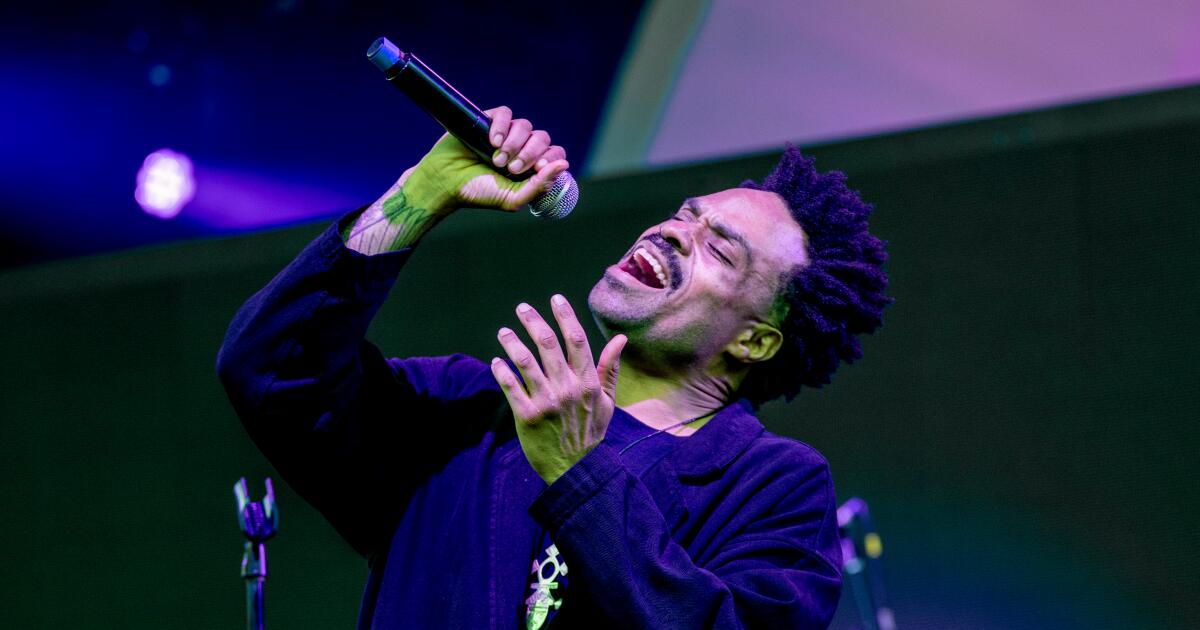
10 minutes backstage with Bilal at Blue Note
-
 Politics46 minutes ago
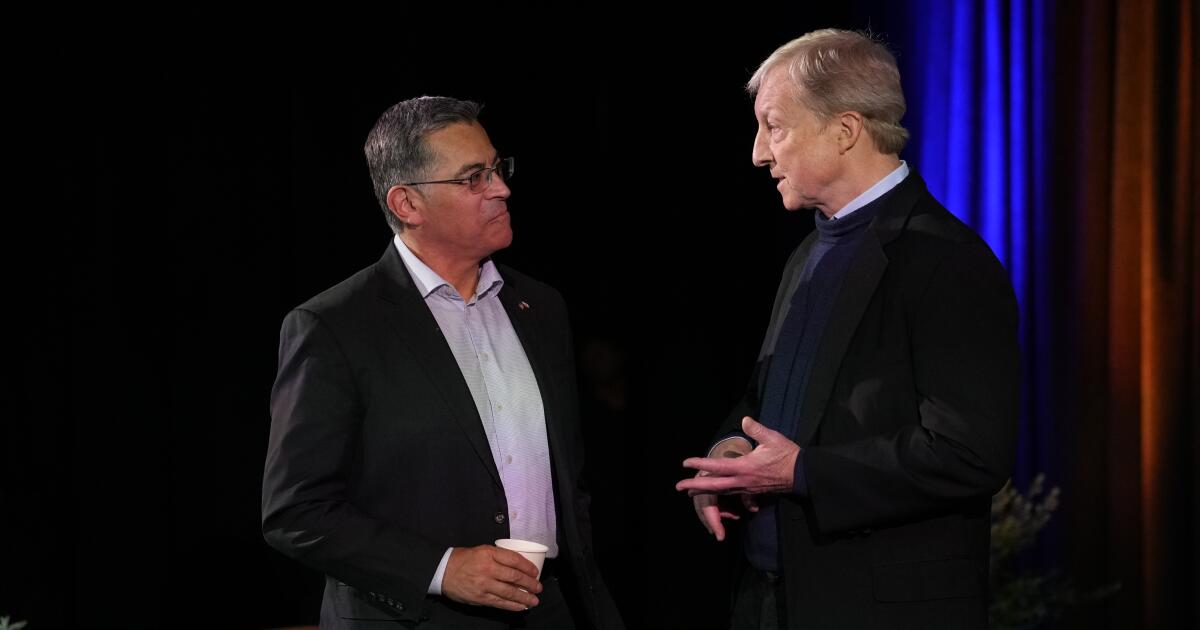
In growing fight, Steyer’s campaign says pro-Becerra influencers didn’t disclose pay

