Montana
Montana’s youth climate activists aren’t stopping at their landmark court win – High Country News


Ripley Cunningham took the microphone and looked out at an audience of about 350 people in the echoey, ornate rotunda of Montana’s state Capitol, her favorite thrift-store flower pendant around her neck. It was January, the start of the legislative session, and the high school senior, a speech and debate star, was emceeing a statewide climate gathering. “I am comforted in knowing that we have an interconnected community of people fighting for the future of our home,” she said. Cunningham, who’d just turned 18, added that she’d not yet been able to vote in an election, but “being here today helps me realize the power that my voice carries and the change that it can create.”
Cunningham and five other members of Green Initiative, a student climate club at Park High School, a public school in Livingston, Montana, had driven hours along icy, wind-drifted roads to get here. Just weeks earlier, Montana’s Supreme Court upheld a lower court ruling in favor of a group of young people who sued the state over its climate inaction in Held v. Montana. Now, state lawmakers had to implement that decision. As Cunningham spoke, the Green Initiative members who were in the audience hoisted a massive sign: “PROTECT OUR HOME.”
Livingston, population about 9,000, is located in a fossil fuel-driven, Republican-led state whose leaders are working to quash any action to slow climate change. But Park High’s Green Initiative is an incubator for climate action, and these students aim to show those in power that there’s still a groundswell of resistance.
“I am comforted in knowing that we have an interconnected community of people fighting for the future of our home.”
Nearly 50 students have come through Green Initiative since the program began in 2017. Former science teacher Alecia Jongeward — who still sponsors the club, though she’s left teaching — started it by sorting through the school’s trash for recyclables with students. They won a small grant to get recycling bins at the school. Then they won more grants and awards, including one for a feasibility study from the state for solar panels on the school that led to the installation of the panels themselves. Members have performed climate-related monologues and held “trashion” shows to highlight sustainable clothing. They’ve served on a state-appointed committee to help Montana review its environmental policies and organized and attended protests. The inaugural statewide climate summit they hosted drew dozens of students from across Montana. Last year, they even won a $400,000 grant from the federal government for electric school buses.
Perhaps most visibly, a Green Initiative participant was one of the 16 plaintiffs in Held who alleged that, through its fossil fuel-centric policies, the state was violating their constitutionally enshrined right to “a clean and healthful environment.” In particular, they challenged a rule related to the Montana Environmental Policy Act, or MEPA, that excluded the impacts of greenhouse gas emissions from environmental reviews.
In summer 2023, the case went to trial. Over the course of a week, young people and climate experts took the stand. Home-schooled Green Initiative participant Eva Lighthiser recalled recent climate-related catastrophes that affected Livingston: a parasite outbreak on the Yellowstone River, a historic flood, and oppressive, depressing smoke from wildfires summer after summer. “I felt like I needed to take action, and this felt like a way to do it,” she testified.
In August 2023, the judge ruled against the state, which appealed to the Montana Supreme Court. When the court affirmed the ruling in December, Held became the first case in the country in which youth sued the government over climate change — and won.


“IT GAVE ME a lot of hope that we are going to be able to make independent change within our community and, hopefully, within the state,” said Jorja McCormick, a Green Initiative member who loves hiking and embroiders her own shoes. But the pushback came fast. U.S. Sen. Steve Daines and Gov. Greg Gianforte, both Republicans, released statements saying the Supreme Court decision would hurt Montana’s economy and lead to endless litigation.
Now, lawmakers have to figure out how to incorporate the decision into the state’s environmental reviews. Republican legislators introduced a suite of bills to reshape such reviews in this year’s legislative session. Proposed laws would exclude whole categories of projects from MEPA, remove language that requires reviews to analyze long-term impacts, strike a sentence that connects MEPA to protecting Montanans’ right to a clean and healthful environment, and prevent the state from implementing air quality standards stricter than the federal government’s. Another bill tackled the Held decision head-on, mandating that environmental reviews consider only “proximate” impacts. Imagine, say, a coal project on state land: The environmental analysis could include only emissions associated with the mining project itself, not the transport or burning of that coal.
“I felt like I needed to take action, and this felt like a way to do it.”
At the time of writing, the MEPA bills have strong Republican support and seem likely to pass. Asked about the bills at a press conference in February, Gianforte said, “I’m looking forward to getting them on my desk.” Montana Republicans also put forth dozens of bills designed to check what they describe as judicial overreach, in part inspired by the Held decision. In press conferences and podcasts, lawmakers dismissed the students behind the case as “activists” and “a bunch of little Greta Thunbergs.”
The rhetoric and legislation in Montana echo the current federal approach to climate change. But Held paved the way for even larger, nationwide action: Our Children’s Trust, the nonprofit law firm that represented the Held plaintiffs, has active youth climate cases in Alaska, Hawai’i, Utah, Florida and Virginia, with the Held decision providing precedent that these cases can make it to trial, and win. And late last year, the young people pursuing Juliana v. United States appealed directly to the U.S. Supreme Court to hear their claims against the federal government.
The Held case, Jongeward said, fueled the Green Initiative students’ commitment to local environmental action. One member, Oliver Zeman, is an avid kayaker focused on cleaning up local rivers. Home-schooler Anders Harrison is planning an upcoming community hiking trip. Cunningham, the speech and debate standout, is helping students across the state learn how to get involved in the legislative process. Green Initiative alumni have been valedictorians and received full-ride scholarships to college. “They’re amazing,” Jongeward told me. “It’s incredible to see the drive that young people can have if you just give them the platform.”
At a recent meeting, Jongeward started things off with some tough news. The federal grant they’d been awarded for electric school buses was facing some school board opposition. The students, though, were ready to fight.
“I’ll go speak. I’ll go chew ’em out, Ms. J.,” Cunningham said.
The group was overflowing with ideas: They could write a letter, maybe submit it to the local newspaper, and compile air quality data on what the diesel emissions from the current buses mean for the area outside the school. The battle was far from over. (In fact, just before this story went to print, the school board approved the grant.)
McCormick reflected on the Held decision and the kids behind it. “I can get electric buses in our school system; that’s easy, compared to what they did,” she said. “(The case) set the bar, and now we just have to reach it.”

We welcome reader letters. Email High Country News at editor@hcn.org or submit a letter to the editor. See our letters to the editor policy.
This article appeared in the April 2025 print edition of the magazine with the headline “Checking in with Montana’s youth climate activists.”




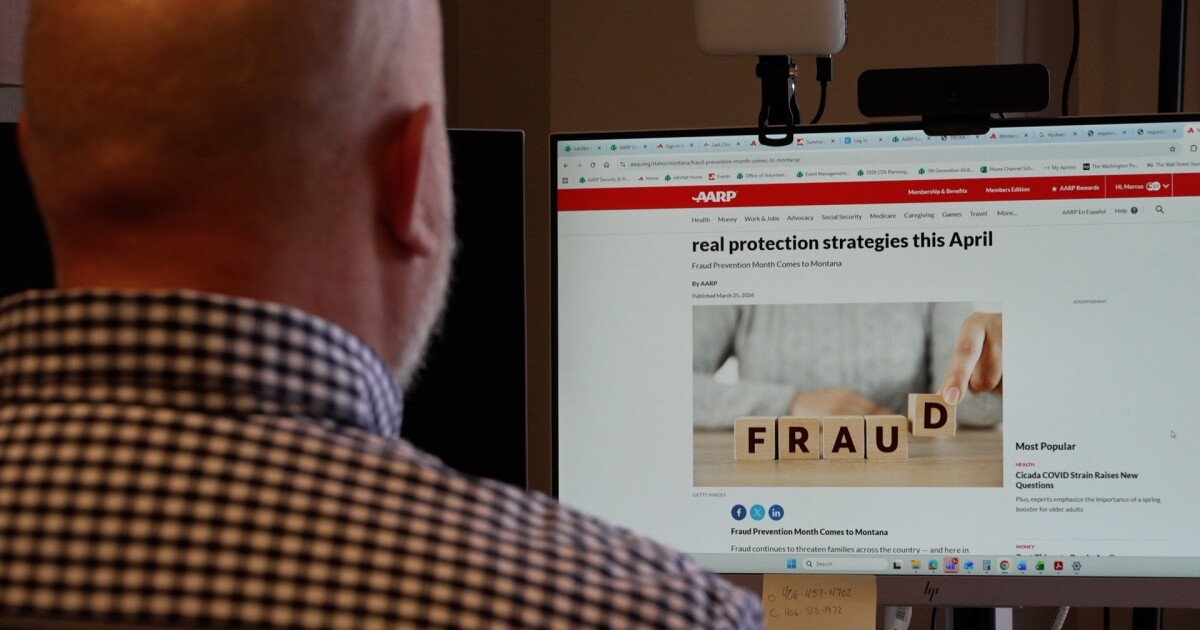
On March 26th, the city of Helena proclaimed April as Fraud Prevention Month, encouraging people to be aware of scams and to take preventative measures. April also marks the American Association of Retired Persons Fraud Prevention Month. While anybody can be impacted, older Americans are most at risk.
“It can completely change their life, as far as losing their life savings,” said AARP director of outreach and community engagement Marcus Meyer. “It can take an emotional toll on them, where they may become paranoid or not trustworthy.”
In 2024, the Federal Trade Commission data showed over 6,000 Montanans reported fraud losses, totaling over $23 million dollars. The Department of Justice says they’re seeing a huge uptick in numbers, getting calls every day.
Scams and fraud can come in many shapes and sizes, from calls, texts, emails, social media, and even AI. Thankfully, there are signs to look for to avoid them altogether.
Evan Charney, MTN News
“A sense of urgency, so wanting you to act now, make some sort of payment where it’s untraceable,” Meyer said.
Experts say if you see a potential scam, consider if it’s too good to be true.
Officials in the Division of Criminal Investigation with the Department of Justice remind residents that legitimate government agencies will never ask for immediate payment, whether that be through gift cards, cryptocurrency, or even a text.
“Just most recently, I got one saying that I had a violation from MHP, and that I had to pay all this money,” explained DCI Edler Justice Unit agent Jeremy Alvarez. “It came on my work phone, and I’m like… Montana Highway Patrol doesn’t do that.”
For those with concerns, there are plenty of resources available to be made aware of scams, take preventative measures, and make reports of incidents.
The division of criminal investigation works with local law enforcement to investigate reports, tracking where the money goes, and providing assistance where they can.
Evan Charney, MTN News

Throughout the month of April, AARP is holding conferences and webinars to raise awareness. Here in Helena, they’re hosting a shred event at the UPS store so people can shred their documents with personal information to reduce their risk.
More information about these events and resources can be found here.

Thirteen miles west of Thompson Falls and the banks of the Clark Fork River, a dirt road leads to a cluster of weathered green buildings and rusted remains of mining operations long quiet, until recently.
The humming comes from furnaces blasting pieces of slag into molten metal. This is Stibnite Hill, a smelting facility nestled in the Coeur D’Alene mountains. Inside, Plant Manager Rob Hill is in charge.
“This is what’s called sodium antimonate. It’s like wet sand. We run it with coal and soda ash into this furnace. It’s about 60 percent antimony.”
Hill works for United States Antimony Corporation, or USAC. It’s a small company that has quietly operated here since 1969. Now, that’s changing.
Antimony is an ingredient used in certain military applications, including flame retardants, infrared sensors and nuclear weapons.
Antimony is an ingredient used in certain military applications, including flame retardants, infrared sensors and nuclear weapons. As the Trump administration’s policies to bolster domestic mineral extraction have rolled out, the lesser-known metalloid took center stage.
“We became literally the only game in town so we really had to start running,” Hill says.
Stibnite Hill contains the only smelting facility for this material in the country. As a result, USAC was recently charged with replenishing domestic stockpiles. The project raises hopes and concerns for locals who have experienced the impacts of mining industries in western Montana.
For several decades, the U.S. has relied on foreign imports for antimony. Recent trade wars have compromised those imports.
In 2023, China, Russia and Tajikistan controlled about 90 percent of global antimony production. In December 2024, China banned all exports of it to the United States. That ban has since been lifted, but trade today remains stringent.
Last year, United States Antimony Corporation won a $248 million sole-source contract to resupply the federal government. CEO Gary Evans says they were the only company qualified to bid.
Last year, United States Antimony Corporation won a $248 million sole-source contract to resupply the federal government.
CEO Gary Evans says they were the only company qualified to bid.
“When the government needed more antimony ingots, which are used as an inventory supply for future wars, they contacted us.”
The company grew significantly over the last three years. Their revenues more than doubled in 2025, as did their stock value. Most of that growth came prior to their first antimony deliveries to the federal government.
Montana Gov. Greg Gianforte attended the groundbreaking ceremony and issued a press release supporting the company’s growth.
“We’ve been able to basically take an older, sleepy company and revitalize it with a new board, new management team and new directions,” Evans says.
The goal is to smelt 400 tons of antimony per month, ideally with ore mined from Montana, Idaho or Alaska. The expansion project cost $20 million and will add about 25 new jobs.
The goal is to smelt 400 tons of antimony per month, ideally with ore mined from Montana, Idaho or Alaska. To meet demands, the company must expand production capacity up to 500%.
The expansion project cost $20 million and will add about 25 new jobs.
One January morning, Plant Manager Rob Hill stands next to a cylindrical stone furnace, roaring with heat.
“What we need to do is get the antimony out of it,” he says. “We just load it into there, heat it up, it melts down. We’ll pour this whole thing up, this whole furnace will pour into these molds …”
In the next room, wooden pallets are stacked with dozens of shiny, grey antimony ingots.
“There’s over 100,000 pounds sitting here right now,” Hill says.
Their primary role today is smelting, but officials say they plan to reopen the underground antimony mine here too. Company officials say some surface mining has already begun.
Just down the road, Kevin Bush owns the Wild Coyote Saloon, a restaurant, bar and campground. He says the uptick in activity has been good for business.
“I thought it was good, we needed jobs in this area, so yeah, I had no problems with it.”
Inside the saloon, Plains-local Medric Jones sips a drink with his wife. He grew up a half hour from Thompson Falls and remembers mines supplying most of the jobs around.
“That’s jobs for the people in the middle of nowhere. It’s jobs for these people, us people,” Jones says.
But the legacy of mining in the region also spurs concerns. Prospect Creek, a tributary of the Clark Fork River that runs adjacent to Stibnite Hill, is already on the state’s list of impaired waterways due to mining pollution.
Cesar Hernandez is with grassroots conservation organization, the Cabinet Resource Group.
“The organization I represent is not against mining, but if it has to be done it needs to be done right,” Hernandez says.
He’s concerned about any mining projects approved under an era of weakened environmental protections and mining regulations.
“This isn’t just an issue of jobs and big money, but there will be increasing impacts from whatever goes on up at the mine.”
U.S. Antimony Corporation officials responded to these concerns saying they plan to “put the land back” in better shape than it was before.
Back in Thompson Falls, Robert Hill reflects on his 32 years with the company. He says the rapid growth has been impactful.
“This little backwoods Montana rural company is suddenly a hub of some very, very important materials, and we’re a name and we are not used to that. We really aren’t. It’s a unique position to be in, for sure,” Hill says.
The full expansion is estimated to be complete by the end of April. They plan to provide $75 million worth of antimony to the government in 2026.
Requests for interviews with local government officials about the project were denied.
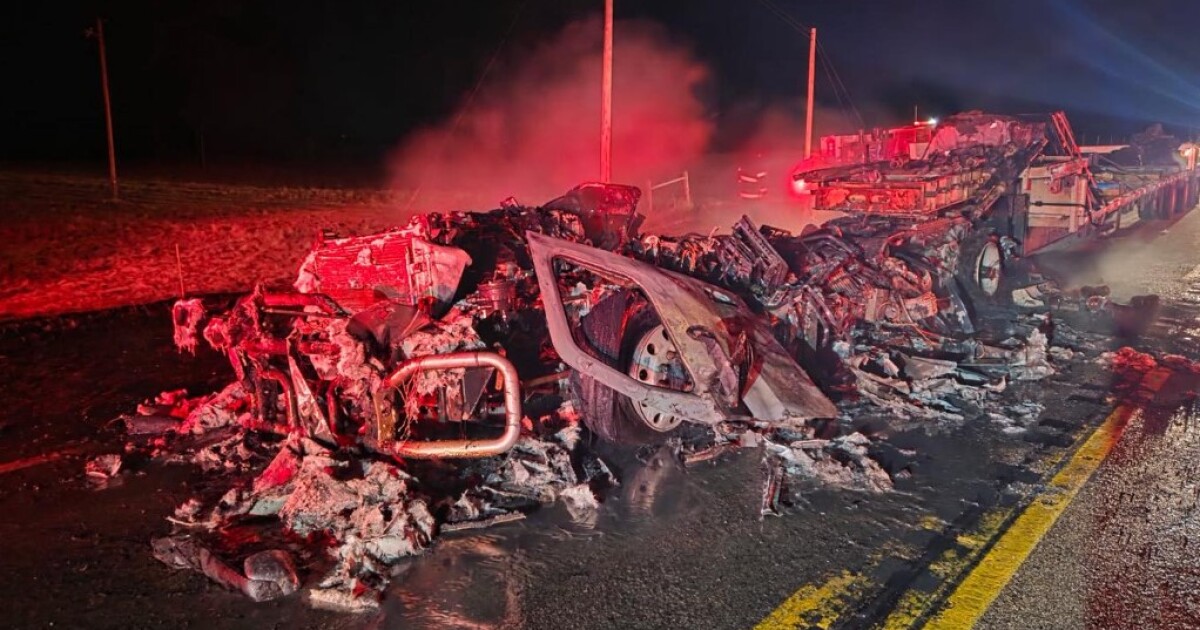
Fergus County – A Montana semi-truck driver is lucky to be alive after his truck was shot at early Sunday morning and erupted in fire, according to a social media post from the Fergus County Sheriff’s Office.
The incident happened on Highway 191, south of Eddies Corner.
The driver called dispatch for shots being fired, but before first responders arrived, the truck started on fire.
All occupants in the semi were able to escape to a nearby field, but the truck was completely destroyed.
Deputies later found the vehicle matching the suspect’s description and the person was arrested at gunpoint.
Investigators say there is no on-going threat to the public and the investigation continues.

North Dakota approves certificate of site compatibility for 400MWh BESS from NextEra Energy Resources

Commitment 2026: Key races, dates ahead of Ohio, Kentucky, Indiana elections

Fire damages apartment complex in northwest Oklahoma town

Kentucky showing interest in Oregon forward Kwame Evans Jr.

Pa. data centers: How lawmakers are responding, from electricity and water use to tax breaks

Florida High School Football Rankings: Top 25 teams – Oct. 21

How old is Bo Nix? What to know about Oregon quarterback ahead of 2024 NFL Draft

Cleary's 21 help Le Moyne down Central Connecticut State 69-64 in OT

99th annual Pony Swim held in Virginia

Indiana Members Credit Union announced as new anchor tenant at Bottleworks District

Ilhan Omar calls Trump an ‘unhinged lunatic,’ urges booting him out of office
Between Budapest and Brussels: Péter Magyar’s political tightrope

Michigan muscles its way to program’s 2nd NCAA basketball title, beating UConn

Map: Minor Earthquake Strikes Near San Diego

Trump claims he’d win as the president of Venezuela — just needs to ‘quickly’ learn Spanish
-

 Atlanta, GA2 days ago
1 teenage girl killed, another injured in shooting at Piedmont Park, police say
-

 South-Carolina1 week ago
South Carolina vs TCU predictions for Elite Eight game in March Madness
-

 Movie Reviews5 days ago
Vaazha 2 first half review: Hashir anchors a lively, chaos-filled teen tale
-

 Vermont1 week ago
Skier dies after fall at Sugarbush Resort
-

 Politics1 week ago
Trump’s Ballroom Design Has Barely Been Scrutinized
-

 Politics1 week ago
JD Vance says he was ‘obsessed’ with UFOs, believes aliens are actually ‘demons’
-

 Politics1 week ago
Jeffries declines to break with indicted Democrat after ethics panel’s guilty verdict
-
 Entertainment5 days ago
Inside Ye’s first comeback show at SoFi Stadium