Montana
Montana veterans proving 'No one gets left behind'


HELENA — A core part of the U.S. military is a commitment, “no one gets left behind.” But the realities of war can complicate that promise. Three Montana veterans recently helped a fallen marine come home, 80 years after his death.
“We always try to bring those people home, whenever there’s a chance we will. That’s what we do,” said Montana Veterans of Foreign Wars volunteer Tim Sowa.
Sowa joined the Marine Corps in 1971 and did a three-year tour as a generator mechanic in places like Okinawa and Thailand. He then served in the Marine Corps Reserve for 10 years. Following that, he served in the Montana Army National Guard for 27 years before retiring in 2011.
Courtesy: Tim Sowa
He recently returned from Kiribati where he participated in the return of the remains of a Marine who died in the Battle of Tarawa. He was joined by Fred Hamilton and Mike Pryor also with Montana VFW.
The remnants of Japanese and American forces still stand in Tarawa Atoll more than a half-century since the end of World War II.
The Battle of Tarawa was the first American Offensive in the Central Pacific region, with the intent of capturing Japanese-held territory within the Gilbert Islands.
Library of Congress

It was also the first time U.S. forces faced serious Japanese opposition to an amphibious landing.
On November 20, 35,000 troops from the U.S. 2nd Marine Division and the Army’s 27th Infantry Division assaulted Tarawa. After 76 hours the United States had taken the island, but at a significant cost.
There were 1,020 U.S. personnel reported missing or killed during the Battle of Tarawa. A reported 4,836 Japanese troops died, with only 17 survivors.
Library of Congress

The trip to Kiribati was a long time in the making. Sowa says in 2019, Montana VFW Adjutant Tim Peters met with the Department of Accountability about going with History Flight to Kiribati. But the even best-laid plans can be impacted by a worldwide pandemic. When all was said and done the trip was rescheduled for November, 2023.
“It turns out it coincided with the 80th anniversary of the Battle [of Tarawa],” explained Sowa.
The Montana veterans participated in the 80th-anniversary commemoration ceremony alongside members of the Marine Corps, U.S. Ambassador Marie C. Damourand, and the President of Kiribati Taneti Maamau.
Montana VFW

Sowa, Hamilton and Pryor also honored the marine as his remains were sent to Hawaii for identification.
“You’re humbled to know that that person gave his life for you,” explained Sowa. “And when we sent him on the plane you’re humbled again, and then when we walked the beaches you’re really humbled to know what they went through. You’re walking there but you don’t have bullets or shells or explosions around you.”
Courtesy: Tim Sowa
For the last decade, History Flight has been working with the Department of Accountability to identify more than 600 remains of the Marines killed during the battle of Tarawa, but there are still hundreds of Marines who died during the battle who are unaccounted for.
Of the U.S. Forces that died, most were buried in makeshift graveyards on the island with identifying markers. However, the markers were removed so Navy construction could build airfields and other infrastructure. In 1949, the U.S. government informed the families the remaining bodies, hundreds in total, on Tarawa were unrecoverable.
History Flight hasn’t accepted that answer and worked with involved governments to continue to identify and recover remains, even buying out homes so that remains can be recovered.
Courtesy: Tim Sowa

Sowa says he is thankful for the opportunity and commitment the involved organizations and governments have shown to help identify remains and get them back home.
“Thanks to the State of Montana VFW for letting us go to that and everybody that was contributing to that,” noted Sowa. “Just… It showed their warmth and their devotion to bringing people home, and that’s what matters to us, taking care of our veterans be they alive of dead and bringing them back.”



BILLINGS— Sponsorship of businesses on Montana highway exit signs have doubled in cost, pricing out some small business owners.
Montana Logos, which manages the signs, renegotiated its contract within the last year with the Montana Department of Transportation (MDT), which resulted in prices doubling for most customers. They refer to the signs as tourist-oriented directional signs (TODS).
Watch the report:
Highway ad sign costs double, pricing out Montana business owners
Transportation officials say they increased the costs to match rising costs. According to Bob Heiser, MDT Right of Way bureau chief, the department and Montana Logos have not increased costs for years.
“The contract was up for renewal this past year. And during that renewal process, we asked them to look at this program. And that’s when we discovered that there hadn’t been any rate changes in at least 21 years,” Heiser told MTN.
Heiser said the increased revenue will fund highway projects and other infrastructure.
“We feel it’s still an affordable way for some of those businesses to have some advertisement along our interstates,” he added.
Some business owners in Big Horn County disagree.
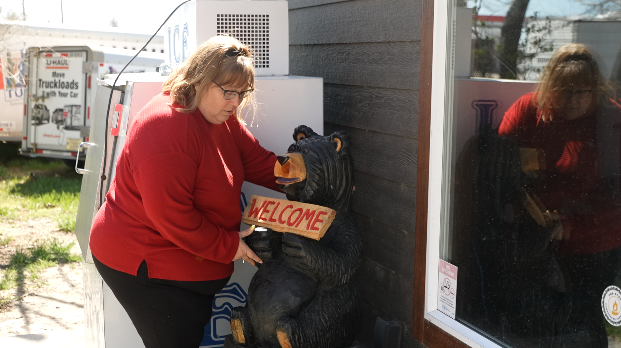
“I just don’t understand how a company can gouge small businesses. That wasn’t in my budget,” said Kristy Mastin, owner of the KOA campground in Hardin.
Vanessa Willardson/Q2
She received an invoice for $4,800 in February to keep her business on the exit signs. She paid $2,400 last year for the same service.
“I was dumbfounded,” said Mastin.
Other campground owners in the county shared Mastin’s shock.
Vanessa Willardson/Q2
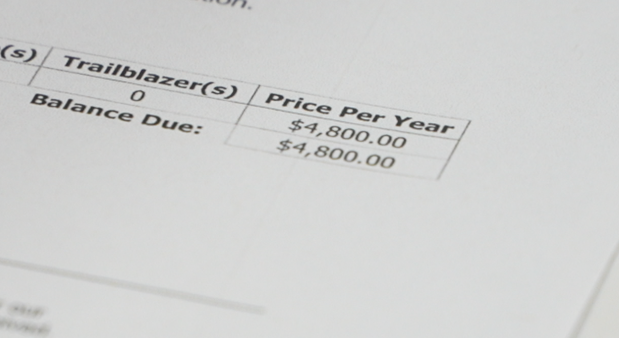
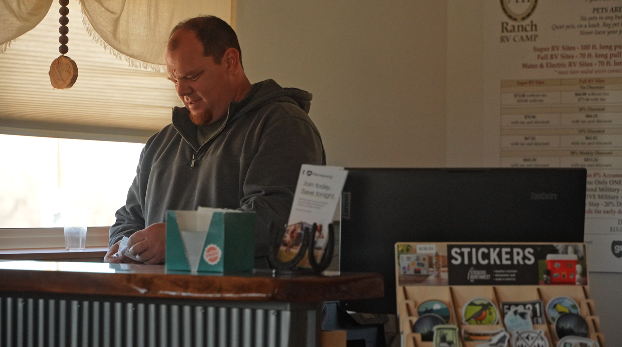
“We can’t afford that as a small business to suddenly have one aspect of our advertising raised that much,” said Jamie Redger, owner of 7th Ranch RV Camp in Garryowen.
His costs quadrupled in a year, increasing from $1,200 to $4,800, after Montana Logos told him he had to pay to be on the signs for a full year. In the past, he had only paid for half the year.
“At this point, I’ve told Montana Logos that I don’t plan to renew with them,” said Redger.
Vanessa Willardson/Q2
Another campground, Grandview Campground and RV Park, may be disappearing from the signs as well.
“We have to ask ourselves, what can we cut out? And Montana Logo is probably going to be it,” said the campground’s owner, Laurie Tschetter.
She is concerned about how the lack of advertising will affect the tourism industry in her community.
“We are kind of the backbone of bringing a lot of tourism dollars back into this state,” said Tschetter.
Vanessa Willardson/Q2
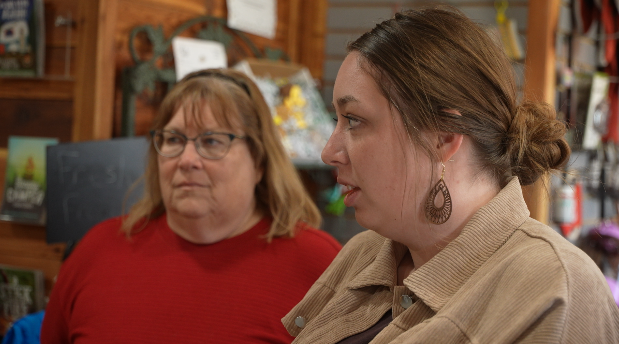
The business owners are working with the Hardin Chamber of Commerce, in hopes the state will hear their voices and give them a grant.
“I want to support these businesses and our communities and whatever we need to do next, whether it’s a letter or taking it up a little higher. That’s all we can do,” said Alexandria Edwards, with the Hardin Chamber of Commerce.
The community is also starting to consider advertising alternatives.
Vanessa Willardson/Q2
“It would be cheaper just to go get a billboard or put their money into something that would be more fruitful for them,” said Edwards.
“I’ve watched different advertising things go by the wayside. And maybe Montana Logos needs to find that out,” added Tschetter.
Montana Logos did not return multiple calls and messages from MTN News requesting comment.

I’m going to be honest, I’ve lived in Bozeman for years, and I have yet to spot anyone famous.
I bring this up because it seems that celebrity spotting’s are a big deal here in Montana, especially around the Bozeman area. Just in the last couple of weeks there have been Shaq and Justin Timberlake sightings, although it should be noted the two weren’t together.
Shaq decided to stop into McKenzie River Pizza in Belgrade and took a photo with the staff, while Justin Timberlake actually lives outside of Bozeman and so I’m not sure you get as many points seeing him out and about.
There are others, Glen Close has a place here, Sam Elliot has been spotted in town, as well as Michael Keaton, and Kurt Russell, and I had a co-worker swear we were in line with Cameron Diaz one time at an event over at The Armory.
So, yes, famous people hang out around Bozeman. However, when you encounter one, there are certain rules you should be aware of.
What do do when encountering famous people in Montana
First, are they with their family or are they eating? If so, maybe a head nod and you move on. Don’t be that person that goes up and interrupts them or worse, just stands there until they acknowledge you. While they may be famous, they still have a right to enjoy a meal or time with their family out in public.
Second, if they are alone, be cool. Don’t rush up to them and ask for 50 billion things. Approach them, calmly, say hello, let them know you’re a big fan. See how they respond, if they are gracious, then maybe ask for a picture. But don’t blow it by acting a fool.
Finally, if they come across as rude, don’t take it personal. Some of these folks work several hours a day, and maybe you caught them in a moment. Yes, it’s super cool for you to meet a celebrity, but for them, you’re the 500th person they’ve had to meet that day. You have to know when to walk away.
Have you ever ran into a celebrity? Who was it? Did you have a chance to talk with them? How was their reaction? Let us know by sending us a message on our app.
13 Famous Celebrities You Could Run Into in Montana
Whether they’re fly fishing, performing at local venues, or just grabbing a coffee downtown, these stars are blending into Montana life
Gallery Credit: jessejames
10 Celebrities Who’ve Lived In Missoula
Sure, tons of celebrities like to visit Montana but here are 10 who actually lived in Missoula.
Gallery Credit: Mike Smith
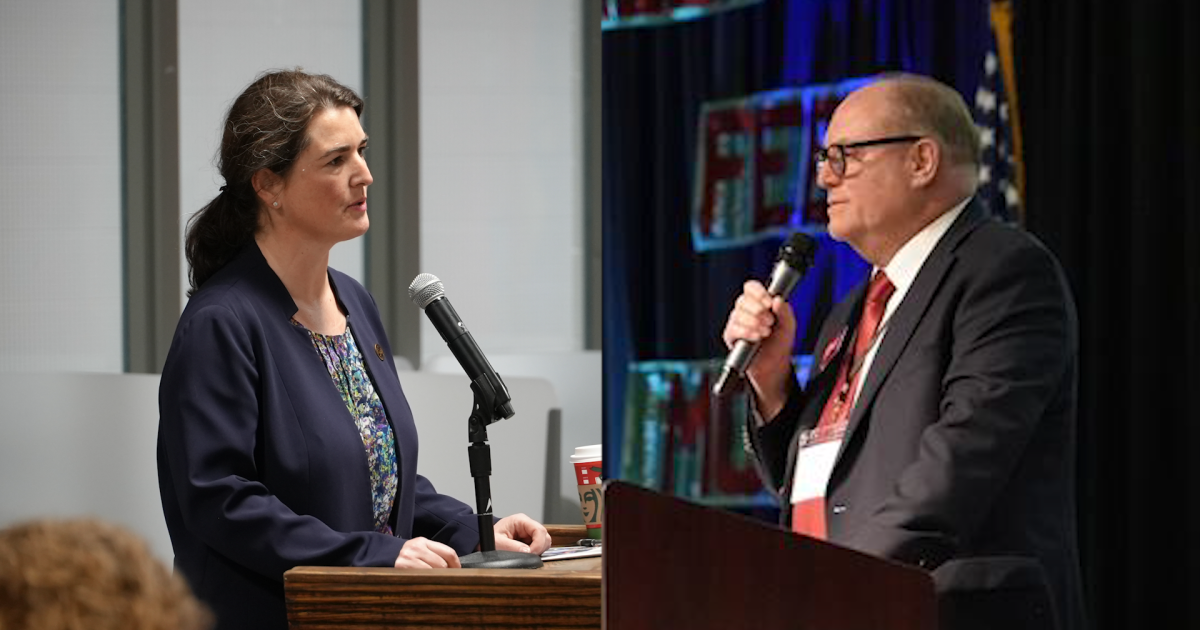
KALISPELL — There’s one open seat on the Montana Supreme Court in this year’s elections, and only two candidates filed to run for it. That means both Dan Wilson and Amy Eddy will be moving on to the general election in November, regardless of what happens in the June primary.
Wilson and Eddy are running for an associate justice position, currently held by the retiring Justice Beth Baker. They have several key things in common – most notably, both are state district judges, holding court at the Flathead County Justice Center in Kalispell.
(Watch the video to hear from the two candidates.)
Finalists already set for Montana Supreme Court Race
For many Montana voters, Wilson will be more familiar, after he ran for associate justice unsuccessfully in 2024.
“What’s different for me this time is that people are really wanting to know and have their questions answered about my judicial philosophy and my judicial approach,” he told MTN. “I would say the last time I ran, they were more curious just to get to know me as a person, meet me face to face and shake my hand and that sort of thing.”
Wilson, elected as a district judge in 2016, describes himself as a “constitutional conservative” and says Montana courts have leaned too far toward “judicial activism.”
“A judicial activist, in my view, is one whose judicial decision-making is dominated in those questionable cases by perhaps their own personal agenda or the agenda of special interests who advance their career,” he said. “A constitutional conservative does not look to the end result first, but looks to the law.”
Jonathon Ambarian
Eddy was first appointed to the bench in 2015. As she hasn’t run statewide before, she says she’s been working hard to introduce herself to voters.
“We’re approaching the campaign the same way we have been since May, when we announced,” she said. “We’re out talking to everybody in as many counties as we can.”
Eddy says her campaign is emphasizing the nonpartisan nature of judicial elections and the court’s role in upholding the state constitution and protecting individual liberties.
“People want nonpartisan, independent courts, and they want a government that functions, which is something we can certainly all get behind,” she said. “Then, of course, with the focus on the Montana Constitution right now and the different constitutional initiatives, we have lots of conversations about the unique rights we have under the Montana Constitution that are not enjoyed under the U.S. Constitution.”
Both candidates have said they want to maintain judicial impartiality. For Eddy, she says that means not participating in campaign events sponsored by political parties.
“We should not be checking in with a political party leadership, and before a judge makes a decision, they should not be saying, ‘How do I earn a standing ovation at a political party convention?’” she said. “They should be asking themselves, ‘What does the Constitution demand?’”
Wilson was a featured speaker at the Montana Republican Party’s winter kickoff in Great Falls earlier this year. In addition, he received $20,000 in two contributions from the state GOP – in the first election cycle since the Legislature repealed a law banning political parties from contributing to judicial candidates.
Jonathon Ambarian
Wilson says judges in nonpartisan races aren’t supposed to seek endorsements from parties, but the First Amendment allows them to support whoever they want. He believes judicial ethics rules don’t disallow judicial candidates from attending party-sponsored events.
“I think it’s a little bit naive to think that you can run a statewide campaign as a nonpartisan candidate without getting out and trying to meet as many people as you can, and to attract as much support as you can,” he said.
Wilson says people supporting him don’t expect him to rule a specific way, but to be consistent and evenhanded in how he applies the law.
“The impartiality comes with giving each side a fair hearing and taking their arguments to their logical endpoint and deciding which one is more persuasive under the law, so it’s more about having and keeping an open mind as to what the outcome should be,” he said.
While Eddy is staying away from party meetings, she has addressed some interest groups like the Montana Conservation Voters. MTN asked how she would respond to people who said those events could be seen as having political leanings, and she said groups like MCV do include members from more than one party.
“People can put a partisan view on it, but in fact, that organization is made up of lots of different people – and those are principles specifically protected in the Montana Constitution, which, of course, I’ve taken an oath to uphold,” she said.
The state constitution’s provision guaranteeing “the right to a clean and healthful environment” is at the center of one of Wilson’s major criticisms of the current Montana Supreme Court. In speeches and in interviews, he has said the majority overstepped in the Held v. Montana climate change case, when they struck down a law on the basis that state policies on greenhouse gas emissions were harming that right.
“The drafters of our constitution were adamant that this is a right that the Legislature – and therefore the people – needed to control, and that they were most concerned that the Supreme Court would take it over, issue a ruling that would bind the government and the citizens of Montana, possibly forever, and the citizens could never overturn,” Wilson told MTN.
Wilson has also criticized Eddy for having been part of a 2011 lawsuit making similar arguments to argue the state had a duty to manage the atmosphere as a public trust, and therefore to address emissions. Eddy told MTN she was one of the original attorneys on the case when plaintiffs asked the Montana Supreme Court to take jurisdiction, but that she wasn’t involved further after the court sent it back to district court for a trial. She said it hasn’t been an issue she’s heard concerns about from voters yet.
“We spent three weeks living out of our car in eastern Montana and it never came up,” she said.

Move over, Mr. Ripley. ‘I Am Agatha’ is a delightfully duplicitous debut

Microsoft starts removing Copilot buttons from Windows 11 apps

Inside Tehran after strikes: Iranian woman describes fear, checkpoints and people used as ‘human shields’

Rep Randy Fine joins House Freedom Caucus: ‘Strongest group of conservative patriots in Congress’

Common vaccine slashes Alzheimer’s disease risk when dose is increased

Florida High School Football Rankings: Top 25 teams – Oct. 21

How old is Bo Nix? What to know about Oregon quarterback ahead of 2024 NFL Draft

Cleary's 21 help Le Moyne down Central Connecticut State 69-64 in OT

99th annual Pony Swim held in Virginia

Indiana Members Credit Union announced as new anchor tenant at Bottleworks District
Rep Randy Fine joins House Freedom Caucus: ‘Strongest group of conservative patriots in Congress’

Trump issues NATO ultimatum to reopen Strait of Hormuz ‘within days’

Women are getting most of the new jobs. What’s going on with men?

Video: How Trump’s Advisers Felt About Going to War With Iran

Unearthed clip exposes shocking claim by Newsom’s wife about inmates at violent California prison
-

 Atlanta, GA5 days ago
1 teenage girl killed, another injured in shooting at Piedmont Park, police say
-

 Education1 week ago
Video: We Put Dyson’s $600 Vacuum to the Test
-

 Movie Reviews1 week ago
Vaazha 2 first half review: Hashir anchors a lively, chaos-filled teen tale
-

 Georgia3 days ago
Georgia House Special Runoff Election 2026 Live Results
-

 Pennsylvania3 days ago
Parents charged after toddler injured by wolf at Pennsylvania zoo
-

 Education1 week ago
Video: YouTube’s C.E.O. on the Rise of Video and the Decline of Reading
-
 Milwaukee, WI4 days ago
Potawatomi Casino Hotel evacuated after fire breaks out in rooftop HVAC system
-

 Education1 week ago
Video: Toy Testing with a Discerning Bodega Cat