Carroll College tight end Carson Ochoa caught five passes for 125 yards and three touchdowns in the Saints’ 31-21 NAIA Football Championship Series Round of 16 loss to Montana Tech Saturday, Nov. 29, 2025, inside Alumni Coliseum.
Carroll College safety Braeden Orlandi breaks up a pass intended for Montana Tech wide-out Levi Torgerson Saturday, Nov. 29, 2025, during the Orediggers’ 31-21 NAIA Football Championship Series Round of 16 victory over the Saints.
Montana Tech wide-out Levi Torgerson totaled 124 yards receiving, caught two touchdowns, and tossed a 21-yard score to Orediggers QB Jarrett Wilson in Tech’s 31-21 NAIA Football Championship Series Round of 16 victory over Carroll College Saturday, Nov. 29, 2025, inside Alumni Coliseum. Torgerson was selected game offensive MVP.
Montana Tech QB Jarrett Wilson completed 11 of 16 passes for 197 yards and two touchdowns Saturday, Nov. 29, 2025, in the Orediggers’ 31-21 NAIA Football Championship Series Round of 16 victory over Carroll College. Wilson carried the football 15 times for 94 yards. He also caught a 21-yard touchdown.
Joseph Scheller
kAm}:46C r2A:E2= qCF:? H9@ 92F=65 😕 2 aeJ2C5 4@>A=6E:@? @? bC5 2?5 d 2E %649’D @H? gJ2C5 =:?6 E@
Montana Tech QB Jarrett Wilson completed 11 of 16 passes for 197 yards and two touchdowns Saturday, Nov. 29, 2025, in the Orediggers’ 31-21 NAIA Football Championship Series Round of 16 victory over Carroll College. Wilson carried the football 15 times for 94 yards. He also caught a 21-yard touchdown.
Email Daniel Shepard at daniel.shepard@406mtsports.com and find him on X/Twitter @IR_DanielS.
Be the first to know
Get local news delivered to your inbox!
Advertisement
Montana Tech beat Carroll for the 5th-straight time Saturday, Nov. 29, 2025, advancing to the NAIA Football Championship Series Quarterfinals.…
Advertisement
Advertisement
Montana Tech wide-out Levi Torgerson totaled 124 yards receiving, caught two touchdowns, and tossed a 21-yard score to Orediggers QB Jarrett Wilson in Tech’s 31-21 NAIA Football Championship Series Round of 16 victory over Carroll College Saturday, Nov. 29, 2025, inside Alumni Coliseum. Torgerson was selected game offensive MVP.
Advertisement
Montana Tech QB Jarrett Wilson completed 11 of 16 passes for 197 yards and two touchdowns Saturday, Nov. 29, 2025, in the Orediggers’ 31-21 NAIA Football Championship Series Round of 16 victory over Carroll College. Wilson carried the football 15 times for 94 yards. He also caught a 21-yard touchdown.
Advertisement
Montana Tech QB Jarrett Wilson completed 11 of 16 passes for 197 yards and two touchdowns Saturday, Nov. 29, 2025, in the Orediggers’ 31-21 NAIA Football Championship Series Round of 16 victory over Carroll College. Wilson carried the football 15 times for 94 yards. He also caught a 21-yard touchdown.
Advertisement
Carroll College safety Braeden Orlandi breaks up a pass intended for Montana Tech wide-out Levi Torgerson Saturday, Nov. 29, 2025, during the Orediggers’ 31-21 NAIA Football Championship Series Round of 16 victory over the Saints.
Advertisement
Carroll College kicker Kai Golan recovered an on-side kick in the third quarter of the Saints’ 31-21 NAIA Football Championship Series Round of 16 loss to Montana Tech Saturday, Nov. 29, 2025, inside Alumni Coliseum. Golan’s recovery led to a Saints touchdown that pulled Carroll within three points.
Advertisement
Montana Tech head football coach Kyle Samson celebrates the Orediggers’ 31-21 NAIA Football Championship Series Round of 16 victory over Carroll College Saturday, Nov. 29, 2025, inside Alumni Coliseum.
Advertisement
Carroll College tight end Carson Ochoa caught five passes for 125 yards and three touchdowns in the Saints’ 31-21 NAIA Football Championship Series Round of 16 loss to Montana Tech Saturday, Nov. 29, 2025, inside Alumni Coliseum.
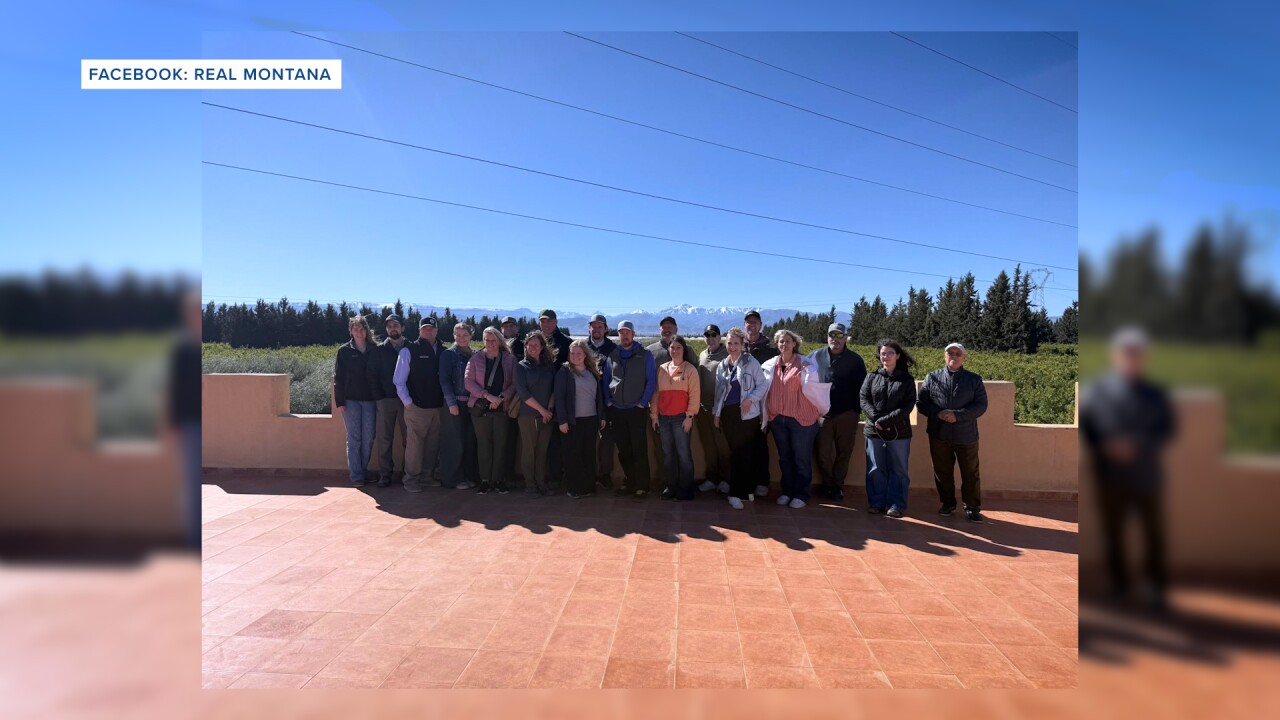
GREAT FALLS — REAL Montana, short for Resource Education & Agriculture Leadership, is a two-year leadership development program through Montana State University Extension designed to strengthen the future of the state’s natural resource industries. The program combines in-state seminars, national travel, and an international study tour to expose participants to a wide range of perspectives.
Madison Collier reports – watch the video here:
Montana Ag Network: REAL group highlights international industry
Advertisement
The mission is simple: build a network of informed leaders who can help advance Montana agriculture and natural resource industries in a rapidly changing world.
A global classroom
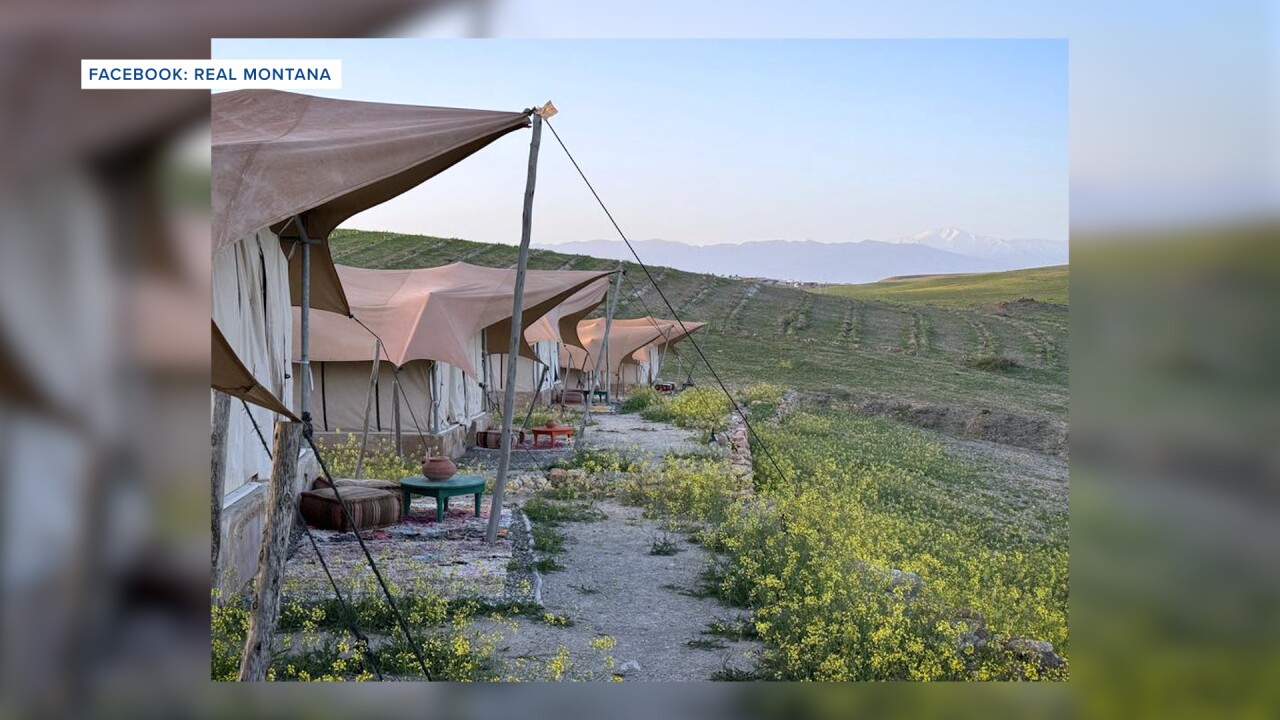
This year, participants traveled across Morocco, visiting farms, research centers, and food production facilities to better understand how agriculture operates on a global scale.
According to REAL Montana Co-Director Tara Becken, the trip is about more than just travel, it’s about perspective.
“We were able to see how Montana commodities fit into the global picture,” said Becken, who also attended the trip. “Wheat from Montana’s Golden Triangle ends up on a plate on the other side of the world.”
Advertisement
Participants explored everything from citrus production to international trade, gaining firsthand insight into how food systems connect across continents.
Similar challenges, different landscapes
While Morocco’s environment and crops differ from those in Montana, participants said the challenges facing producers still felt familiar.
“Even though we’re worlds away, our challenges are very, very similar,” Becken said, pointing to issues like drought, labor shortages, and market pressures.
For Alice Miller, a participant in the program, those similarities stood out immediately.
“They’ve been dealing with drought. They’re working through input costs and labor… those are the same conversations we’re having here,” Miller said.
Advertisement
From farm to global table
One of the most impactful moments for participants came from seeing food production up close and realizing how connected it is to back home.
“Eating oranges right off the trees and then thinking about how that food ends up on our grocery store shelves… it just hits different when you’re there,” Miller said.
The experience reinforced a broader takeaway: Montana agriculture plays a role far beyond state lines.
“Montana really is feeding the world. That’s not just a phrase, that’s a reality,” Miller said.
Building the next generation of leaders
The international trip is just one part of the REAL Montana program, which includes eight in-state seminars and a national policy-focused trip to Washington, D.C.
Advertisement
Participants are selected from across Montana’s natural resource industries, including agriculture, energy, and forestry, with the goal of building a diverse network of future leaders.
Program leaders say those experiences are critical as the industry faces ongoing challenges, from global trade to shifting consumer demands.
“Unless we can understand the world around us, it’s really hard to tackle our own problems,” Becken said.
As the current class prepares to graduate, the focus now shifts to applying those lessons back home.
“We hope they go out and make a difference for the state of Montana and their communities,” Becken said.
Advertisement
Looking ahead
Applications for the next REAL Montana class are open through March 31. The program targets individuals working in Montana’s natural resource industries who are interested in growing as leaders and making an impact in their communities.
For Miller, the experience is one she encourages others to pursue.
“It’s an investment you won’t regret making, in yourself and in your industry,” she said.
The Montana Farmers Union is now offering a scholarship to help offset the cost of participation for eligible members accepted into the program. The support is designed to make leadership development more accessible to those working in agriculture and natural resource industries.
More information on scholarship opportunities and the application process can be found on the REAL Montana website.
State House considers reforms that allowed greater variety of construction in Big Sky State
Dennis MacDonald/Shutterstock.com
Advertisement
Michigan could follow Montana’s lead after state House members introduced a bipartisan package of bills aimed at making housing less costly.
“The bipartisan Housing Readiness Package modernizes our development processes to reduce unnecessary costs and delays, making housing more affordable and available across the state,” according to a press release from the House Republican caucus. “This is about ensuring Michigan is prepared for growth and that more residents have access to safe, stable homes.”
The package draws on ideas Montana successfully enacted in 2023 and 2025 to ease the state’s housing shortage. It includes Michigan House bills 5529, 5530, 5531, 5532, 5581, 5582, 5583, 5584 and 5585. The package is intended to restrain cities and counties from restricting accessory dwelling units, duplexes, and other non-single-family units; to limit protests and impact studies on developments; and to reduce local red tape.
Advertisement
Housing costs in Michigan have almost doubled in recent years, according to the Federal Reserve Bank of St. Louis. Michigan has exceeded the pace of housing inflation found in other states.
The average price of homes in the state was about 75% of the national average in 2012, but it is roughly 82% of the average today, according to Jarrett Skorup, vice president of marketing and communications at the Mackinac Center for Public Policy.
Inflation, interest rates, and rising construction costs have increased housing prices, Skorup told Michigan Capitol Confidential, but local government red tape is still making things worse.
“A lot of this is because of dumb, unnecessary, big-government policies at the local level,” Skorup told CapCon in an email. “This bill package protects the private property rights of citizens in a way similar to what Montana and many other states have done. It is good policy that will help people afford to live where they want.”
Montana made changes to legalize duplexes, allow accessory dwelling units, open commercial zones to housing, and permit taller buildings that can accommodate more housing units.
Advertisement
The laws faced a legal challenge, but the Montana Supreme Court unanimously upheld the bipartisan legislation.
“There are a lot of similarities between what is being proposed in Michigan and what we accomplished in Montana,” Forrest Mandeville, a Republican state senator from Stillwater County, told Michigan Capitol Confidential in an email.
Montana enacted laws that call for freedom to build duplexes and accessory dwelling units by right (with no need for extra approvals) in many cities. The Big Sky State also streamlined review processes and simplified public participation.
“These reforms were necessitated by a housing market that was seeing prices skyrocket and existing zoning that created a lot of single-family-only development in large areas,” Mandeville said.
A broad coalition supported the changes: builders, real estate agents, free-market advocates and some local government groups, Mandeville told CapCon. Housing prices and rents have stabilized since the legislation was enacted.
Advertisement
“We tried to get government out of the way to encourage building without red tape,” Sen. Jeremy Trebas, a Cascade County Republican, told CapCon in an email about the housing situation in Bozeman. With a population of 60,000 and slow growth, the city faced a housing crunch, with a large inventory of aging and obsolete buildings. Expensive housing and taxes, Trebas said, were driving people to move to Washington, California and other states.
“If we could change land-use policy, encourage development of higher density like duplexes as infill, allow for housing in commercial zones (as it was a 100 years ago), reduce minimum lot sizes, and allow by-right accessory dwelling units and such, we could let the market work to produce density and supply without spending government dollars to incentivize it,” Trebas said.
Opponents of Montana’s reforms expressed concerns about more people moving in from out-of-state, said Trebas. He countered that Montana natives were hurt by high costs that price upcoming generations out of the housing market.
The buzz over the Miley Cyrus special has also led to a surge of renewed interest in the show’s popular soundtracks
If you purchase an independently reviewed product or service through a link on our website, Rolling Stone may receive an affiliate commission.
Advertisement
Hannah Montana celebrated its 20th anniversary this week with a brand new special on Disney+ that reunited Miley Cyrus and company for a look back at the nostalgic Disney Channel series. While the special unveiled plenty of surprises (including a new song and celebrity cameos), the buzz over Hannah‘s anniversary has also led to a surge of new interest in the show’s popular soundtrack.
Hannah Montana spawned five studio albums, including a soundtrack for Hannah Montana: The Movie. It also led to Best of Both Worlds Concert, a live album that featured Cyrus performing both in character as Hannah and under her own name. All of the albums were originally released on CD, though vinyl pressings of each release came later as well. Three of the albums debuted at number one on the Billboard charts and all of them were later certified gold or higher by the RIAA.
Now, a number of the albums have returned to the bestsellers list, with four Hannah LPs currently sitting in the Top Ten of Amazon’s soundtracks chart. Here’s a look at the trending releases and how to buy them online.
Hannah Montana [Green Splatter LP]
This Hannah Montana vinyl has returned to the top ten of Amazon’s overall soundtracks chart. This is the soundtrack to season one of the Disney Channel show in an Amazon-exclusive “green splatter” colorway. While the original soundtrack was released in October 2006, this vinyl edition was released this past January ahead of the show’s 20th anniversary.
Advertisement
Best Of Hannah Montana [Clear LP]
Amazon’s bestseller is this “Best Of” LP, which comes in an exclusive limited-edition purple vinyl colorway. First released in 2011, the album was later made available on vinyl in 2019. Hot off the 20th anniversary special, the LP has returned to number one on Amazon’s Disney soundtracks chart.
Advertisement
Hannah Montana: The Movie, Original Motion Picture Soundtrack [Lavender Eco-Mix 2 LP]
This two-LP set features all the songs from Hannah Montana: The Movie, which hit theaters in 2009. The track list includes hit songs from the original film like “The Climb,” “Butterfly Fly Away” and “Hoedown Throwdown.” It also includes the 2009 “movie mix” of “The Best of Both Worlds.” The discs come in a lavender colorway inspired by the colors in the show logo.
Advertisement
Hannah Montana 2 [Color Splatter LP]
This LP features songs from season two of the Disney Channel series, including hits like “We Got the Party,” “Nobody’s Perfect” and “Life’s What You Make It.” Amazon has this available on a special “color splatter” vinyl.
All of the above vinyl releases are part of limited-edition drops that are exclusive to Amazon.
Advertisement
Hannah Montana – Hannah Montana 3 LP
Urban Outfitters, meantime, has this tie-dye edition of the Hannah Montana season three soundtrack on vinyl. From Walt Disney Records, the LP gets you 14 songs on a groovy, 70s-inspired disc.
Advertisement
Need somewhere to play your new Hannah Montana vinyl? Amazon has this light pink record player on sale for under $60 right now as part of the site’s Big Spring Sale event.
Victrola Journey II Bluetooth Suitcase Record Player
From popular turntable makers Victrola, the Victrola Journey II is the latest version of the brand’s bestselling suitcase record player, which offers a portable way to take your records on the go. This unit features a three-speed turntable, built-in speakers (with “enhanced bass”) and both Bluetooth capabilities and headphone outputs.
Advertisement
A star-making vehicle for Miley Cyrus, Hannah Montana ran for four seasons from 2006 to 2011. You can stream every Hannah Montana episode and Hannah Montana: The Movie online through Disney+.






![Best Of Hannah Montana [Clear LP]](https://www.rollingstone.com/wp-content/uploads/2026/03/best-of-hannah-montana-lp.jpg?w=1024)

![Hannah Montana 2 (Original Soundtrack)[Color Splatter LP]](https://www.rollingstone.com/wp-content/uploads/2026/03/hannah-montana-2.jpg?w=1024)








