


Ahead of the 2026 Maccabiah Games, an event often called the “Jewish Olympics” and the largest Jewish sporting competition in the world, which are set to begin next week, social media influencer, dancer, and singer, Montana Tucker expressed her excitement to be hosting the delegation parade at the event and said that the games were taking place at a critical point for the global Jewish community.
Montana
Montana polling places are busy across the state • Daily Montanan


Polling places across Montana were busy Tuesday morning.
Montana voters stood in some long lines from Yellowstone County to Missoula County to register to vote, and they cruised through parking lots to drop off their ballots.
In Missoula, Shelby Richards stood in line with pup Rose, a service animal in training to help with her severe post traumatic stress disorder.
Richards, who has a 6-year-old daughter, said she believes the economy has been in decline.
“It’s time for some things to change and make it livable for families,” Richards said.
She said she wants to see former President Donald Trump and fellow Republican Tim Sheehy, running to oust Democrat incumbent Jon Tester in the U.S. Senate, take office.
Tester and Sheehy have been in an expensive and heated battle being watched nationally with control of the Senate in the balance.
That race and the presidential outcome aren’t likely to be known on Tuesday night, according to previous races Tester has run in Montana and elections experts watching national polling.
Outside the Elections Center in Missoula, Community Emergency Response Team workers directed voters driving through the parking lot.

CERT’s Dawn Couch said people had been kind and patient with each other, and a few were honking and yelling the names of their candidates.
She said the elections staff had been “amazing.”
“It’s been really, really well run,” Couch said.
In the parking lot, Logan Kostka looked for a pen to sign his name and turn in his ballot. Kostka said women’s reproductive rights were one factor in the 2024 election, but not the only one.
“As an LGBTQ+ member, a lot of the stuff coming from Project 2025 is literally against my belief system and my being as a human,” said Kostka, 20.
Project 2025 is a conservative playbook devised by the Heritage Foundation, other conservative groups, and more than 200 former staffers of Trump. It contains controversial policy ideas such as doing away with the federal Department of Education.
 Greg Weller, also with CERT, said traffic Tuesday morning had come in waves. As he waited to direct voters, one rolled up with an open window.
“I have one to drop off,” the voter said.
At least one neighborhood polling place at an elementary school in Missoula didn’t have lines out the door.
Shelby Jessop walked down the sidewalk sporting an “I Voted” sticker on her coat. Jessop, whose little girl followed, said abortion is a top issue for her, and she stands with Sheehy.
“I think that we should all be a part of what decisions are made in our country,” Jessop said. “I wish more people would vote, honestly.”

In Lewis and Clark County, more than 100 people were in line to vote or update their registration around 11 a.m., while people simultaneously came in to drop their absentee ballots off.

A county election official told the Daily Montanan it had been “busy as hell” all morning and likely would be throughout the rest of the day.
Montana Secretary of State’s Office Elections Director Austin James was at the county elections office to check in and said things were similarly busy in many counties across Montana.
James said he’d gotten to work at 4 a.m. Tuesday and that a team was working at the office to ensure there were no cyberattacks or other malicious activity occurring within election offices, but he reported no issues so far. He said the office would not release a county’s results until everyone in line had voted to ensure none of their votes were influenced by early results.
Election workers at four polling sites the Daily Montanan visited around Helena in the late morning and early afternoon continued to see a steady stream of voters coming through. Several said they had lines to start the morning at 7 a.m., that the turnout was much higher than in the primary, and that they had been busy throughout the morning.
In Yellowstone County, polling places were filled on Tuesday morning. Election officials there said they hadn’t seen such a turnout from voters since at least the 2008 election.

Cascade County officials had to open up extra room to house long lines of voters waiting to register, the Montana Free Press reported. Voters in Gallatin County stood in line through a morning dose of snow, social media posts show. Nora Shelly of the Bozeman Daily Chronicle reported that some of those voters in Gallatin County had been standing in line for four hours in the snow. Officials there said they don’t anticipate having the first results in until at least 11 p.m.

By 1:30 p.m., nearly 81% of Montana’s 549,080 absentee voters had returned their ballots — meaning turnout was about 55.6% of voters at the time.

In Kalispell, voters in 27 precincts visited the Flathead County Fairgrounds to cast their ballots. Outside, supporters of U.S. Representative Ryan Zinke, who is running for re-election to represent Montana’s 1st Congressional District, waved signs, blasted music and stayed warm under heat lamps.
For a time, Zinke himself was out on the sidewalk waving at the cars lined up to enter the fairgrounds. Zinke will be spending election night in Whitefish.



ELK PARK — A father and his four sons reported missing near Elk Park were found safe after their vehicle became disabled, according to Butte-Silver Bow County Sheriff Ed Lester.
They were found walking along a roadway around 5 p.m. north of Maney Lake, according to Lester.
Rescuers from 15-90 Search and Rescue, the United States Marshals Service, the United States Forest Service, and the Bureau of Land Management (BLM) were able to reach the group and transport them to safety.
“We are very happy that everyone is safe. We appreciate the hard work of the rescuers and the coordination among Jefferson, Anaconda-Deer Lodge, Powell, and Silver Bow counties,” Lester said in a statement.
(original report) Law enforcement and search and rescue teams are searching for a missing father and his four sons near Elk Park, just off Interstate 15, after the group failed to return from a fishing trip north of Butte.
The group has been missing for nearly 24 hours. Three of the four boys are Type 1 diabetics in need of insulin.
WATCH: Law enforcement and search and rescue teams near Butte, Montana are searching for a missing father and four sons. Three of the boys are Type 1 diabetics in urgent need of insulin
Search expands for missing Butte family as friend reveals 3 of 4 boys are Type 1 diabetics
Courtney Mosier, a family friend who drove from Helena to assist in the search, said the urgency of the situation is critical.
“There (are) four little boys that range from ages 14 to 10. Three of the little boys are Type 1 diabetics. They need their insulin. They need their sugar. They need to be found immediately,” Mosier said.
Mosier has known the father, Paul Klimpel, her whole life and said his outdoor experience is a reassuring factor.
“Paul is an avid outdoorsman. Like I said, I’ve known him my whole life. If the truck broke down, Paul would be able to fix it. So, luckily they’re with a really, really, really good adult. We just need to find these children,” Mosier said.
Meagan Thompson
According to a press release from Butte Sheriff Ed Lester, police are searching for the group in the Brown’s Gulch, American Gulch, Flume Gulch, and Bernice area north of Butte. Officials are also searching the Homestake and Delome Lake areas.
The last known location of the group came from a cell phone ping near Maney Lake.
“The last ping from one of the little boys’ cell phone was up near Maney Lake so that’s where the family is at currently right now,” Mosier said.
Butte-Silver Bow County Sheriff’s Office Butte-Silver Bow Sheriff’s Office

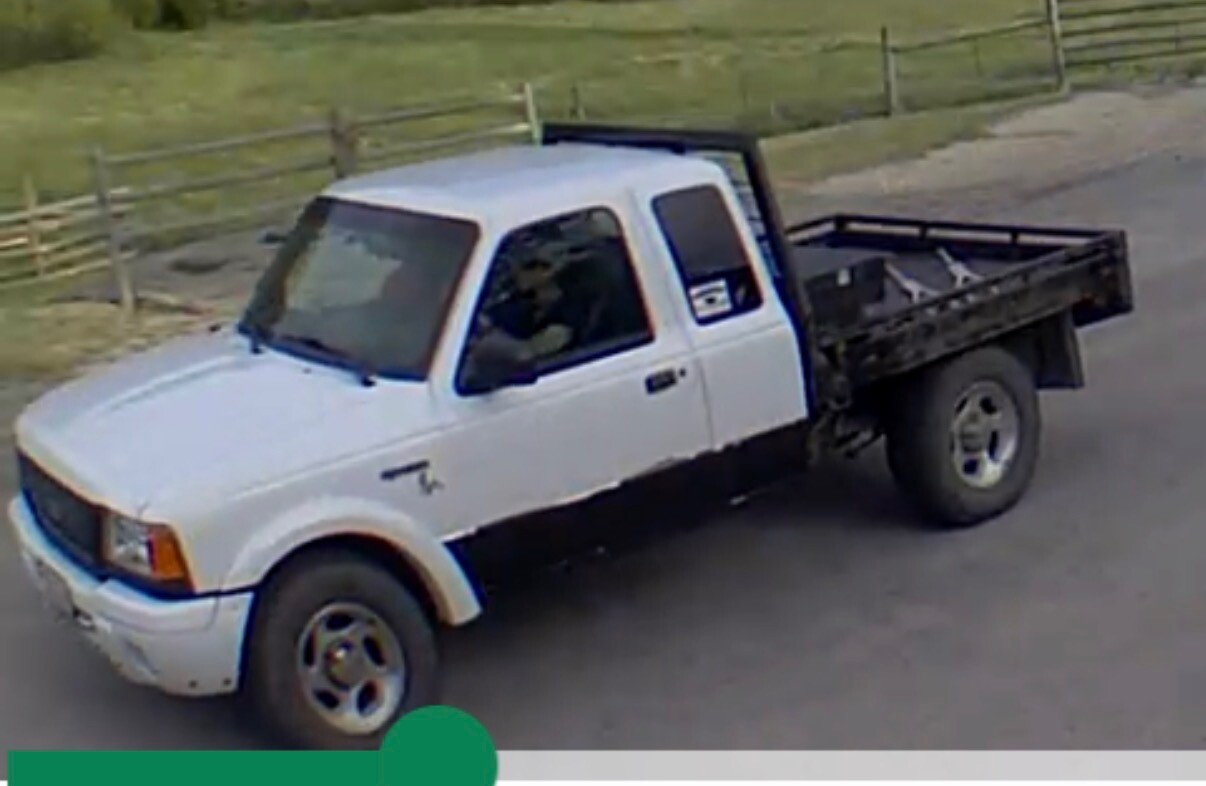
Anyone who spots a white Ford Ranger flatbed pickup is encouraged to call law enforcement at 406-497-1120.
This story was reported on-air by a journalist and has been converted to this platform with the assistance of AI. Our editorial team verifies all reporting on all platforms for fairness and accuracy.
Montana
Social media star Montana Tucker to host Maccabiah Games delegation parade | The Jerusalem Post

“Israel has gone through a lot, Israelis have gone through a lot, Jews have gone through a lot around the world,” Tucker told The Jerusalem Post on Tuesday. “What’s going on is not just happening in Israel; it’s really happening all around the world with our Jewish community. So, an event like the Maccabiah Games is showing the world that we are strong, we are united, and we don’t give up, and we keep fighting.”
According to Maccabiah, the games bring together more than 10,000 athletes from at least 80 countries in Israel every four years to compete in over 45 sports. The Maccabi World Union says the games are the second-largest sporting event in the world after the Olympics.
The 2026 Maccabiah Games, the 22nd of their kind, were initially scheduled for last year but were postponed due to the security situation involving Iran and its regional proxies.
“This was supposed to happen last year, and about a month away, we had to cancel it due to the war,” Tucker recalled. “And so I am so grateful that it is happening this year, because we truly do need this now more than ever.”
She also said she was excited to debut her new song “We’re Not Strangers” at the event.
“It’s all about unity and building bridges and bringing people together. And some of the lyrics say ‘we may pray to different saviors, but we’re not strangers,’” she told the Post. “Our world is so divided right now. I think that we really just need to come together and have more unity and compassion and understanding of one another. And if we really talk to people who look differently than us, act differently than us, have a different religion than us, we’ll realize we’re actually more similar than we think.”
Montana Tucker: Sport ‘truly unites the world’
Sports, she said, was an ideal method to build these bridges, adding she viewed it as something that “truly unites the world.”
The Maccabiah Games this year, though, will be the first since the Hamas-led massacres in southern Israel on October 7, 2023. The attacks sparked a regional eruption with Israel fighting wars against Hamas in Gaza, Hezbollah in Lebanon, and the Islamic regime in Iran.
“We always have to talk about what happened on October 7,” Tucker said. “We should never stop talking about it. And I think it is so important that Maccabiah is utilizing this platform to talk about it. I know they actually have a former hostage, Daniella Gilboa, who’s going to be performing, which is so powerful.”
Tucker also highlighted the value of the games, saying they were a powerful tool to dispel disinformation about the Jewish state.
“What’s shown on the news nowadays is just all the negativity. Most of it is just propaganda and lies about what Israel is, and I think the Maccabiah just debunks every possible propaganda and lie about Israel,” she said. “When people say the word ‘Israel,’ it comes with so many different connotations, and I think we can show them this. This is Israel. This is what being Jewish means.”
A key element in showing the world what Israel and being Jewish mean, she reiterated, meant showcasing Jewish unity at a time when, in the wake of the October 7, the global Jewish community has faced a worldwide rise in antisemitism.
The games themselves are being held under the slogan, “More Than Ever,” according to Maccabiah, to emphasize “the importance of strengthening the bond between [Jewish] communities worldwide and the State of Israel.”
The Montana Lottery offers multiple draw games for those aiming to win big.
Here’s a look at June 23, 2026, results for each game:
Winning Mega Millions numbers from June 23 drawing
48-51-60-63-66, Mega Ball: 20
Check Mega Millions payouts and previous drawings here.
Winning Big Sky Bonus numbers from June 23 drawing
06-21-22-31, Bonus: 13
Check Big Sky Bonus payouts and previous drawings here.
Feeling lucky? Explore the latest lottery news & results
When are the Montana Lottery drawings held?
- Powerball: 8:59 p.m. MT on Monday, Wednesday, and Saturday.
- Mega Millions: 9 p.m. MT on Tuesday and Friday.
- Lucky For Life: 8:38 p.m. MT daily.
- Lotto America: 9 p.m. MT on Monday, Wednesday and Saturday.
- Big Sky Bonus: 7:30 p.m. MT daily.
- Powerball Double Play: 8:59 p.m. MT on Monday, Wednesday, and Saturday.
- Montana Cash: 8 p.m. MT on Wednesday and Saturday.
- Millionaire for Life: 9:15 p.m. MT daily.
Missed a draw? Peek at the past week’s winning numbers.
This results page was generated automatically using information from TinBu and a template written and reviewed by a Great Falls Tribune editor. You can send feedback using this form.
-

 Florida4 minutes ago
Florida man accused of supplying fentanyl that killed woman in Hillsborough County
-

 Georgia7 minutes ago
Miami lands elite Georgia duo: OL Kweli Fielder and QB CJ Cypher commit to the Hurricanes
-

 Hawaii12 minutes ago
Red Lobster exits Hawaii with closure of Waikiki location | Honolulu Star-Advertiser
-

 Idaho19 minutes ago
Large police presence near Taco Bell in Blackfoot – East Idaho News
-

 Illinois22 minutes ago
Illinois could face new costs because of high error rate in SNAP food aid
-

 Indiana27 minutes ago
Braden Smith to play for hometown Indiana Pacers after NBA draft selection, trade
-

 Iowa34 minutes ago
Iowa one of nine states that won’t have to match portion of federal SNAP benefits
-

 Kansas37 minutes ago
Body believed to be Kansas City highway shooting suspect found in burned home’s basement by family: police

