Montana
Montana Fouts Named to USA Softball 2026 Athlete Pool: Roll Call


Former Alabama softball pitcher Montana Fouts was one of 36 athletes named to the 2026 USA Softball Women’s National Team athlete pool. This group will compete at the World Baseball Softball Confederation (WBSC) World Cup Group Stage event as well as the 2026 USA Softball International Cup. These players will also be in consideration for the 2028 Olympic team.
Fouts was an all-American pitcher at Alabama from 2019 to 2023 and has represented Team USA on the international stage multiple times at the World Games in 2022 and the Pan American games in 2023. She currently plays in the AUSL for the Utah Talons.
𝑱𝒖𝒔𝒕 𝒂𝒏𝒏𝒐𝒖𝒏𝒄𝒆𝒅 🔥
🇺🇸 𝟯𝟲 𝗮𝘁𝗵𝗹𝗲𝘁𝗲𝘀 have been named to the 2026 𝗪𝗡𝗧 𝗔𝘁𝗵𝗹𝗲𝘁𝗲 𝗣𝗼𝗼𝗹 ahead of the WBSC World Cup & International Cup!
𝑹𝒆𝒂𝒅 𝒎𝒐𝒓𝒆 ➝ https://t.co/95L5FZk6GY#USWNT | #USASoftball pic.twitter.com/pckOSDeebs — USA Softball (@USASoftball) April 2, 2026
Lexi Kilfoyl and Skylar Wallace both started their careers at Alabama before transferring to Oklahoma State and Florida respectively and were also named to the athlete pool. The WBSC World Cup group stage will be September 12-16 at Devon Park in Oklahoma City.
Crimson Tide Roll Call: Friday, April 3, 2026
- Former Alabama basketball player and longtime assistant Antoine Pettway was recognized as the Ben Jobe National Coach of the Year for his work at Kennesaw State this year. Pettway’s squad won the Conference USA tournament, earning a spot in the NCAA tournament.
ESPN’s @ReceDavis congratulates Kennesaw State head coach Antoine Pettway on winning the 2026 Ben Jobe National Coach of the Year award. @KSUOwlNation @KSUOWLSMBB @ConferenceUSA #2026CIAwards
AWARD WEBSITE: https://t.co/Z9hgSc3ZTr pic.twitter.com/82E9xpBd7U
— College Insider Inc. (@collegeinsider) April 2, 2026
- After her introduction as the new women’s basketball head coach earlier in the day, Pauline Love threw out the first pitch at the Alabama softball game on Thursday night.
Love + Mudita #RollTide pic.twitter.com/JvJNcKL1qb
— Alabama Women’s Basketball (@AlabamaWBB) April 3, 2026
- Former Alabama forward Brandon Miller has set a new franchise record for the Charlotte Hornets with 54 consecutive games with a made 3-pointer.
keep it goin’ ☔️
54 games in a row with a bmill three! pic.twitter.com/h8u62Sf1Sj
— Charlotte Hornets (@hornets) April 2, 2026
Alabama Crimson Tide Thursday results:
- Women’s tennis: LSU 4, Alabama 1
- Softball: Texas 9, Alabama 1
- Baseball: Alabama 10, Oklahoma 7
Alabama Crimson Tide Friday schedule:
- Track and field at Battle on the Bayou, Baton Rouge, Louisiana, All day
- Rowing at Rocky Top Invite, Oak Ridge, Tennessee
- Baseball at Oklahoma, Norman, Oklahoma, 1 p.m., SEC Network+
- Gymnastics at NCAA Regional vs. Utah, Denver and Oregon State, Corvallis, Oregon, 3 p.m., ESPN+
- Softball vs. Texas, Tuscaloosa, Alabama, 7:30 p.m., SEC Network
Countdown to Alabama Football’s A-Day Scrimmage
8 days
On this date in Alabama Crimson Tide history:
April 3, 1985: Former Alabama quarterback Bobby Skelton was hired by the NFL as a back judge. Skelton, a long-time SEC official, joined former teammate Bobby Boylston, captain of the 1960 Alabama team, as a member of Art McNally’s NFL officiating crews. As a player, Skelton was best remembered for leading Alabama’s 16-15 win over Georgia Tech in 1960. — Bryant Museum
Alabama Crimson Tide Quote of the Day:
“I thought Nebraska was the most football-crazed state until I came to Alabama. — James Michener in 1975 when he was writing his book, “Sports in America.”
We’ll leave you with this…
Home Sweet Home! 🐘#RollTide | @UA_Athletics @Plove55 pic.twitter.com/rp1IHl0ZpP
— Alabama Women’s Basketball (@AlabamaWBB) April 2, 2026
Sign up to our free newsletter and follow us on Twitter/X, Facebook, YouTube, Instagram, Threads and Blue Sky for the latest news.


According to the New York Times, 300 individual billionaires spent more than $3 billion during the 2024 election cycle. Keep those figures in mind as you consider Initiative 194 and its potential impact on Montana values.
The Montana Chamber of Commerce, the Kalispell Chamber of Commerce and the Billings Chamber of Commerce have taken a clear and united stand against I-194. We believe Montanans deserve a full and transparent explanation of why.
No doubt, I-194 would prohibit Montana businesses and nonprofits from participating in the political process. Under this initiative, family-owned businesses including farms, ranches, restaurants and retail stores could not respond publicly to a ballot initiative targeting them. A Main Street restaurant could not support a local levy to improve public safety. A small business coalition could not push back against misleading claims that threaten their livelihoods and their employees’ jobs. These are not hypothetical concerns; they are the everyday realities of how Montana businesses engage in the civic life of our communities.
But make no mistake, I-194 does not remove big money from our politics.
While cleverly named “The Montana Plan,” I-194 should be called the “California Plan” since California is home to more than 200 individual billionaires and places no restrictions whatsoever on out-of-state wealthy individuals. Under I-194, a single well-funded outsider could bankroll a campaign to devastate a Montana agricultural practice, a logging operation or a ranching family, while the Montana businesses under attack would be legally silenced. That is not campaign finance reform. That is a one-sided disarmament of Montana’s own voices.
The supporters of I-194 like to reference the Copper King’s influence that occurred at the beginning of the 20th century. And while this initiative would have prohibited the Anaconda Copper Company from supporting candidates, the actual individual Kings of copper — the millionaires that owned those companies — would have still been free to bankroll their preferred candidates, while the rest of Montana’s small business community sat in silence. They would have loved this proposal.
Montana has a proud history of fighting outside influence in our politics, from the battles against the Copper Kings to the Corrupt Practices Act of 1912. But that Act targeted corruption and covert control of government, not the right of businesses and community organizations to have an open voice in the state they call home. There is a meaningful difference between a corporation secretly buying a legislator and a chamber of commerce publicly advocating for its members.
We raised constitutional and legal questions about I-194’s scope before the Montana Supreme Court because those questions deserved an answer. We respect the court’s ruling. And now we are doing exactly what any organization or individual is entitled to do: making our case openly, with our names attached and letting Montanans decide.
That is what chambers of commerce do. We advocate for Montana’s businesses and workers — the coffee shops, hardware stores, family farms, and yes, the larger employers whose presence helps keep smaller businesses alive. We are Montanans representing Montana’s economic engine.
We agree that Montanans deserve a political system where their voices matter more than outside money. Silencing Montana businesses while leaving out-of-state billionaires free to spend without restriction does not achieve that goal. It simply changes who gets silenced.
We urge every Montanan to read I-194 carefully — all of it — and ask: Does this make our democracy stronger, or does it make some voices louder by making others disappear?
Montana Chamber of Commerce, Kalispell Chamber of Commerce and Billings Chamber of Commerce.

GREAT FALLS — Chester-Joplin-Inverness standout Brynn Kammerzell announced Thursday that she has committed to play for the Montana State women’s basketball program.
Kammerzell helped lead C-J-I o a 24-3 record and a fourth-place finish at the Class C state tournament this past season. She averaged more than 24 points per game as a junior.
WATCH: Brynn Kammerzell talks about her commitment to MSU
CJI Standout Brynn Kammerzell Commits to Montana State
For Kammerzell, the decision came down to more than basketball.
“I just love (MSU’s) winning culture right now,” Kammerzell said. “They’ve been on fire winning lots of games. Their coaching staff is just incredible. And their girls are my type of people. Just great people. Fun to be around.”
Kammerzell said seeing other Class C athletes find success at Montana State, like Roberts’ Taylee Chirrick and Saco’s Teagan Erickson, also made the transition feel natural.
“It’s really nice knowing that these Class C girls are going to be there,” she said. “I’ve known Teagan for a while when I was a freshman she was competing against me at state high jump.”
She added that staying close to home was another major factor in her choice.
“It means a lot to be a Montana girl and to be able to go play at Montana State,” Kammerzell said.
Kammerzell has been a standout multi-sport athlete throughout her high school career. Along with her basketball success, she has helped the C-J-I volleyball team reach the Class C state tournament twice and will be chasing her third straight Class C high jump state championship next weekend.
Now that her college decision is made, Kammerzell says she can fully focus on her senior season and locking up a track and field title next week.
“I feel so relieved,” she said. “I’m so happy with the choice I made. And I can’t wait to be a Bobcat, but I want to finish off my school season with a trophy.”

BILLINGS — A new report highlighting aging roads and bridges across Montana is raising concerns in Billings, but transportation leaders say long-term investments and infrastructure projects are already underway to address the problem.
Watch the story below:
Montana transportation leaders address aging infrastructure at Billings summit
The report from national transportation research group TRIP found seven bridges in the Billings area are in poor condition, while another 186 are rated fair. Statewide, nearly one-third of Montana’s major roads are considered in poor condition, and 7% of bridges are classified as structurally deficient.
New report flags Billings bridges, rough roads as infrastructure concerns
The report did not identify the specific bridges in Billings.
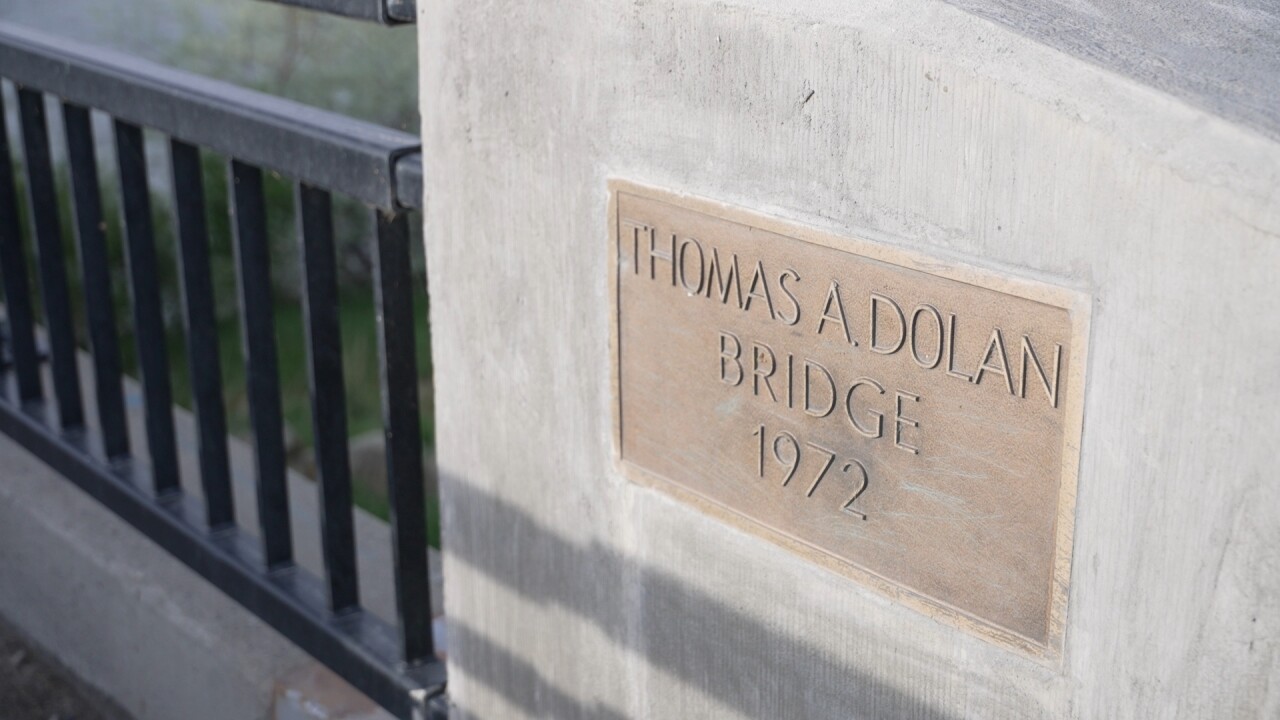
For residents like Alisha Oster, who works at a gas station near the Blue Creek bridge that spans the Yellowstone River, concerns about aging infrastructure feel personal. She said crossing the bridge can feel unsettling, especially when large trucks pass through.
“When you go across it, it sounds like it’s cracking sometimes,” Oster said. “It just sometimes makes me feel like I’m just going to fall.”
Isabel Spartz/MTN News
Crews rehabilitated the Blue Creek bridge in 2024, but Oster said the report heightened concerns about other bridges in the Billings area.
“So it is concerning, not just this bridge, but like all the other bridges around Billings,” she said. “What happens if the bridge does cave in?”
Transportation leaders said the report’s findings were expected and reflect challenges the state has already been working to address.
Isabel Spartz/MTN News
“We’re well aware that it was going to come out,” Montana Department of Transportation Director Chris Dorrington said. “The results are not surprising. Some of Montana’s roads and bridges need attention.”
On Thursday, transportation officials, contractors, and local leaders gathered at the Northern Hotel in downtown Billings for the 2026 Infrastructure Summit, where discussions focused on long-term transportation and infrastructure needs across the state.
Isabel Spartz/MTN News

Dorrington said the summit brought together stakeholders from transportation, water, and wastewater systems, local governments, and private industry.
“We all came together … all interested in trying to do the very best of what we can for Montana’s transportation system,” Dorrington said.
David Smith, executive director of the Montana Contractors Association and chair of the Montana Infrastructure Coalition, said many rural and county-owned bridges across Montana are decades old and in need of repair or replacement.
“We have a lot of off-system bridges, which are county bridges that are in old shape,” Smith said. “They’re 70, 80, 90 years old, so they need attention.”
Dorrington said MDT monitors thousands of bridges statewide through a rotating inspection schedule and has already developed long-term investment plans to address deteriorating infrastructure.
Isabel Spartz/MTN News
“In Montana, out of 5,000 (bridges), we have a lot that are going to need to be rebuilt, in addition to being maintained,” Dorrington said. “We look at the report as an indicator.”
He said the state plans to invest $1 billion into bridge projects over the next five years, including repairs or replacements for roughly 40 bridges annually.
Montana bridges are breaking down, but state has $1 billion plan to fix them
Still, officials acknowledged that inflation and rising construction costs continue stretching transportation dollars thinner.
“We still receive about the same amount of fuel tax revenues, and cars are more efficient,” Smith said. “So the income level for the state has been pretty flat through the years, but the cost of construction has greatly increased.”

Isabel Spartz/MTN News
The TRIP report warned that delaying repairs only increases long-term costs. According to the report, every dollar of deferred road and bridge maintenance can lead to an additional $4 to $5 in future repair costs.
Aging roads and rising costs put pressure Montana’s infrastructure system
Despite the challenges, officials pointed to major projects already completed in Billings as evidence that infrastructure investments are improving safety and capacity. Smith highlighted the recently completed $72 million Yellowstone River bridge replacement on Interstate 90.
“It increased the safety and the capacity for the interstate through Billings,” Smith said. “It’s been a great project, but it’s not cheap.”
Leaders at the summit also discussed future transportation projects, including planned improvements to the Johnson Lane interchange in Lockwood, which is expected to become a diverging diamond interchange.
Isabel Spartz/MTN News

The summit also focused on broader infrastructure concerns beyond highways and bridges, including water systems, wastewater facilities, rail infrastructure, and airports.
While construction projects may frustrate drivers in the short term, leaders argued that proactive investment can prevent larger infrastructure failures and more expensive repairs later.
“It’s important that associations and government work together to try and make sure that we’re in front of those things and anticipating where there might be failures in the future and mitigate that,” Smith said.
-

 New York22 minutes ago
How Stars From ‘The Morning Show’ and ‘The League’ Keep Their Love Alive
-

 Los Angeles, Ca28 minutes ago
Los Angeles man charged in Southern California catalytic converter theft spree
-

 Detroit, MI52 minutes ago
Rain-soaked Detroit job seekers show skills, grit at Comerica Park hiring event
-

 San Francisco, CA1 hour ago
Nine runs? NINE runs! White Sox down Giants with one huge inning
-

 Dallas, TX1 hour ago
11 Dallas neighbors declared best places to live and more top stories
-

 Miami, FL1 hour ago
Dolphins 90 in 90: Tight end Greg Dulcich looking to build in 2026
-

 Boston, MA1 hour ago
Red Sox’s Trade Market Desires Reported By Boston Insider
-

 Denver, CO1 hour ago
Rookie LB Red Murdock is anything but Irrelevant and gives the Broncos a tackling and fumble forcing machine

