Montana
Keep ‘roadless rule’ in place, say former Forest Service officials • Daily Montanan


ROCK CREEK — Punch more roads through the forest, and you’ll get more people starting fires, fewer bull trout and an even heftier maintenance bill.
Keep the 2001 Roadless Rule in place, and you’ll ensure elk have a healthy habitat, and you’ll still be able to reduce wildfire risk.
Those were some of the arguments former U.S. Forest Service employees made Friday at the edge of the Silver King Inventoried Roadless Area east of Missoula.
Montana Trout Unlimited and the Montana Chapter of Backcountry Hunters and Anglers hosted the event as the Trump administration takes steps to repeal the 2001 Roadless Rule.
The rule prohibits building roads and harvesting timber on 30% of Forest Service land in the country, or 60 million acres. In Montana, that’s 6.4 million acres, or 37% of Forest Service land in the state.
In June, the U.S. Department of Agriculture, parent agency of the Forest Service, announced plans to rescind the rule, enacted at the end of the Clinton administration.
Secretary of Agriculture Brooke Rollins said doing so would help protect communities from fires, remove “burdensome” regulations, and help create productive forests.
A comment period in the fall resulted in 223,000 comments, with 99% opposed to repealing the rule, according to Trout Unlimited and Backcountry Hunters and Anglers.
Opponents of the rule, including Republican politicians from Montana, have argued it’s outdated and hamstrings forest managers’ abilities to do their jobs in a landscape that’s changed.
Proponents of the rule, including the groups that participated in the media event at Rock Creek, said the “roadless rule” is sometimes misunderstood, and it’s been effective for ensuring land is productive for wildlife and to protect social values.
They also noted it came to pass in 2001 after public meetings across the country.
At the time, the Forest Service held more than 600 public meetings, including 34 in Montana, the groups said. This time, it has no public meetings scheduled, so the groups also are putting on seven public meetings in Montana in March.
Jeff Lukas, with Montana Trout Unlimited, said roadless areas are some of the most productive for fish and wildlife habitat, and they support clean water and offer social and economic benefits.
“The rule is vital to protecting the backcountry experiences so many Montanans enjoy,” Lukas said. “It helps ensure good habitat for deer, elk and fish, it protects clean drinking water, and contributes to our quality of life in Montana.”
The rule still allows the Forest Service to plan timber harvests and fuel reductions, but it does so while upholding values Americans have expressed as a priority, such as preserving natural scenery and offering a place to get away, rule proponents said.
Brian Riggers, former Region 1 Roadless Coordinator for the Forest Service, said in his six or seven years working in roadless areas, he ran into few people who didn’t value those unique, untrammeled landscapes.
“Most people have sort of a heartfelt connection to those places,” Riggers said.
But he said those hunters, anglers, backpackers, even people just driving along and enjoying the view, don’t always know much about how the rule works.
And he said it’s important to know because once you develop an area, you can’t go back.
“The rule provides for science-based conservation of the characteristics that make unroaded areas unique — high water quality and wildlife habitat, scenic integrity, remote recreation opportunities and buffers” from more developed areas, Riggers said.
At the same time, Riggers said, the rule is flexible. If a fire is imminent, and a road is needed in an emergency, the rule won’t prohibit it.
“I’ve not seen any fire projects not allowed to move forward due to the rule,” Riggers said.
Montana’s congressional delegation has supported the repeal of the “roadless rule,” as has Gov. Greg Gianforte, all Republicans. They argue it gives the federal agency more tools to manage the forest and helps rural economies.
Riggers said the rule was born out of controversy and was meant to help resolve it.
In the past, Riggers said, every time the Forest Service would propose a project, people would fight about it, and the rule was meant to help eliminate individual fights and provide a framework that would take care of people’s concerns for the long term.
The group spoke near the Tyler’s Kitchen Fuels Reduction and Forest Health Project to point out the “roadless rule” in action, an example of the exceptions the rule offers to actively manage forests.
Finalized by the Lolo National Forest in December, the Tyler’s Kitchen project includes a timber harvest, a prescribed burn and thinning on more than 2,000 acres to reduce wildfire risk and improve the forest.
Speakers noted the benefits of the rule, but they also pointed to problems with roads on Forest Service land and the idea of building more roads.
For one thing, roads cost money, and the Forest Service doesn’t have the dollars to pay for maintenance on the ones already built, said Riggers — the cost of the backlog is $6.4 billion nationally, according to Pew Charitable Trusts.
Roads also hurt fish, said Shane Hendrickson, a fish biologist who formerly worked for the Forest Service. In fact, he said, roadless areas are “imperative” for native fish species, such as bull trout, which need clear cold water to survive.
Cutting roads into forest land “drastically” affects the watershed, taking away its resiliency, he said. He said protected bull trout aren’t present in waterways in roaded areas in a sustainable way.
Some politicians argue roads are needed to increase fire responsiveness, but Julie Shea, a former fire planner for the Forest Service with 39 years and 10 months of service, said she doesn’t wholly buy the argument.
Some places that already have roads aren’t accessible for fire anyway depending on the terrain, she said. Also, especially in the West, more than 75% of fires are caused by humans, so more roads could mean more fires in the places they’re built, she said.
The main thing, though, is the rule represents the will of the people, and people are smart, Shea said.
The recent Conservation in the West poll showed 84% of voters believe the rollback of laws that protect land, water and wildlife is a serious problem.
“It’s about the right of all Montanans and United States citizens to have a voice,” Shea said.
Public meetings
Montana Trout Unlimited and the Montana Chapter of Backcountry Hunters and Anglers are organizing public meetings to hear from the public on the rescission of the “roadless rule.”
The meetings are scheduled as follows:
- Kalispell: 6-7:30 p.m. Wednesday, March 4, Flathead Valley Community College AT-139 (Arts and Technology Building)
- Libby: 6-7:30 p.m. Thursday, March 5, K.W. Maki Theatre, 724 Louisiana Ave.
- Missoula: 6-7:30 p.m. Monday, March 9, Missoula Public Library, Cooper Space A/B
- Hamilton: 6-7:30 p.m. Tuesday, March 10, Rocky Mountain Grange #116, 1436 South 1st St (Hwy 93)
- Butte: 6-7:30 p.m. Wednesday, March 11, Butte Archives, 17 W Quartz St
- Bozeman: 6-7:30 p.m. Thursday, March 12, Gallatin Valley Fairgrounds, Exhibit Building #2, 901 N Black Ave.
- Helena: 6-7:30 p.m. Friday, March 13, Holter Museum of Art, 12 E Lawrence St


ROUNDUP, Mont. —
The Rehder Creek Fire is burning 16 miles southeast of Roundup has grown to about 5,000 acres, prompting evacuation orders for residents in the Bruner Mountain Area/Subdivision.
The fire started Feb. 26, the cause is unknown and containment was at 0%.
Evacuation orders are in effect for all residents in the Bruner Mountain Area/Subdivision. The Musselshell County Sheriff’s Office is coordinating the evacuation orders, and 911 reverse calls have been sent out to advise people in the area.
A shelter is opening at the Roundup Community Center. Residents were told to contact Musselshell County DES for further information.
Firefighter and public safety remain the top priority. The public is asked to avoid the Fattig Creek and Rehder Road area so emergency personnel can safely and effectively perform their work.
Fire resources assigned to the incident include 40 total personnel, 11 engines, one Type 2 helicopter, three tenders and two dozers.

Montana
Escobar, Jayapal, Members of Congress Call on Camp East Montana to be Shut Down – Congresswoman Pramila Jayapal

(Washington, D.C.) – Today, Congresswoman Veronica Escobar (TX-16) – joined by Representative Pramila Jayapal, the Ranking Member of the Immigration Integrity, Security, and Enforcement Subcommittee, and 22 other Members of Congress – sent a letter to Department of Homeland Security (DHS) Secretary Kristi Noem and Immigration and Customs Enforcement (ICE) Acting Director Todd Lyons calling for the immediate closure of Camp East Montana in El Paso. They cite urgent humanitarian concerns following multiple deaths in custody, documented unsafe conditions, and serious deficiencies in medical care.
This marks the fourth letter Congresswoman Escobar has sent to DHS and ICE leadership. The previous three letters have gone unanswered.
The letter can be found in its entirety below and here.
“Secretary Noem and Acting Director Lyons:
We are urgently calling on the Department of Homeland Security (DHS or the Department) and U.S. Immigration and Customs Enforcement (ICE) to shut down Camp East Montana in El Paso, Texas.
Camp East Montana has been operational for six months, and at least three people have died at the site since December 2025: Francisco Gaspar-Andres, Geraldo Lunas Campos, and Victor Manuel Diaz. The El Paso County Medical Examiner has officially ruled Lunas Campos’ death a homicide, citing “asphyxia due to neck and torso compression.”
Camp East Montana was constructed in a matter of weeks and opened before construction was complete and it does not have enough federal staff on-site to provide adequate oversight. Over the last several months, Congresswoman Veronica Escobar, in whose district this facility is located, has sent multiple letters to DHS and ICE regarding concerns about the conditions at Camp East Montana, and has received no responses.
According to detainees, there have been constant and consistent problems at the facility since it opened, beginning with the facility’s poor construction and poor ambient temperature control. Upon opening, the drinking water at Camp East Montana tasted foul and made some detainees sick. Detainees continue to be served inadequate meals, including food that is rotten or frozen; last fall, the facility was also consistently failing to make dietary accommodations for detainees. Detainees have shared that they have sporadic access to outside spaces and recreational areas, and that their dormitory pods are cleaned only once every eight days, despite pods housing up to 72 people at a time. Laundry services are not consistent, and people are washing their clothes in the facility showers. Additionally, the facility experiences flooding and sewage backups when it rains, leading to stagnant water.
One of the biggest concerns with the Camp East Montana facility is the inadequate medical care being provided to detainees. Our offices have heard that only the most ill detainees are referred to the medical unit and that there are inconsistencies as to how soon after arriving detainees are able to undergo initial medical screenings. Detainees with chronic health issues who rely on regimented medications for their health have had difficulty accessing necessary medications, including blood pressure medication and insulin.
At least one of the deaths that occurred in ICE custody, the death of Francisco Gaspar-Andres, appears to partially be the result of poor medical care by staff at the facility. According to ICE’s own account, Gaspar-Andres sought medical attention from facility staff for increasingly serious symptoms, but was only transferred to an area hospital once his condition had severely deteriorated.
In addition to our concerns about poor medical care, we are also aware that detainees have experienced irregular access to their legal counsel, including instances of detainees having only two minutes allotted per phone call every 8 days, which is contrary to ICE’s Detention Standards on access to counsel, and that the belatedly created law library lacks adequate resources for the amount of people currently held at the facility. In January 2026, ICE announced the on-site death of Geraldo Lunas Campos “after experiencing medical distress.” ICE opened an investigation into the death, but did not provide a cause of death. However, The Washington Post later reported that another man detained at Camp East Montana had witnessed guards choking Lunas Campos when he refused to enter a segregated housing unit. Weeks later, the El Paso County Medical Examiner ruled that Lunas Campos had experienced “asphyxia due to neck and torso compression” and ruled his death a homicide.
Lunas Campos is the first detainee to die at Camp East Montana as a result of a use-of-force incident, but we are strongly concerned that he will not be the last if ICE is allowed to continue operating Camp East Montana.
ICE was given $45 billion in taxpayer dollars in the reconciliation bill, $1.2 billion of which were awarded to Acquisition Logistics, LLC, a company with no previous experience managing immigration detention facilities, to build and oversee Camp East Montana. However, in the wake of three deaths in custody so far, continued concerns about conditions at the facility, and ICE’s apparent disinterest in responding to oversight letters from Congress, we do not believe Camp East Montana is being run professionally or responsibly.
Camp East Montana must be shut down. For the safety of everyone at the facility, for an end to abuses to detainees, and for fiscal responsibility to the American people, the site cannot continue to operate. We are calling on DHS and ICE to move to immediately close operations at Camp East Montana.
We look forward to hearing from the Department promptly on this matter.
The other co-signers include Representatives Yassamin Ansari, Nanette Barragán, Yvette Clarke, Lloyd Doggett, Maxwell Frost, Jesús “Chuy” García, Sylvia Garcia, Daniel Goldman, Jimmy Gomez, Henry Johnson, Stephen Lynch, Seth Moulton, Eleanor Holmes Norton, Delia Ramirez, Andrea Salinas, Janice Schakowsky, Darren Soto, Rashida Tlaib, Paul Tonko, Lauren Underwood, Gabe Vasquez, and Nydia Velázquez.
Issues: Immigration
VT Lottery Mega Millions, Gimme 5 results for Feb. 27, 2026

How to Watch Virginia vs. Duke Basketball Game Online Without Cable

Man charged with shooting co-worker in Washington Heights

Wisconsin Lottery Mega Millions, Pick 3 results for Feb. 27, 2026

As Mountaineers try to move forward from recent struggles, freshman sensation Dybantsa awaits – WV MetroNews

Florida High School Football Rankings: Top 25 teams – Oct. 21

Cleary's 21 help Le Moyne down Central Connecticut State 69-64 in OT

How old is Bo Nix? What to know about Oregon quarterback ahead of 2024 NFL Draft

99th annual Pony Swim held in Virginia

Indiana Members Credit Union announced as new anchor tenant at Bottleworks District

ICE blasts Washington mayor over directive restricting immigration enforcement

Did the EU bypass Hungary’s veto on Ukraine’s €90 billion loan?
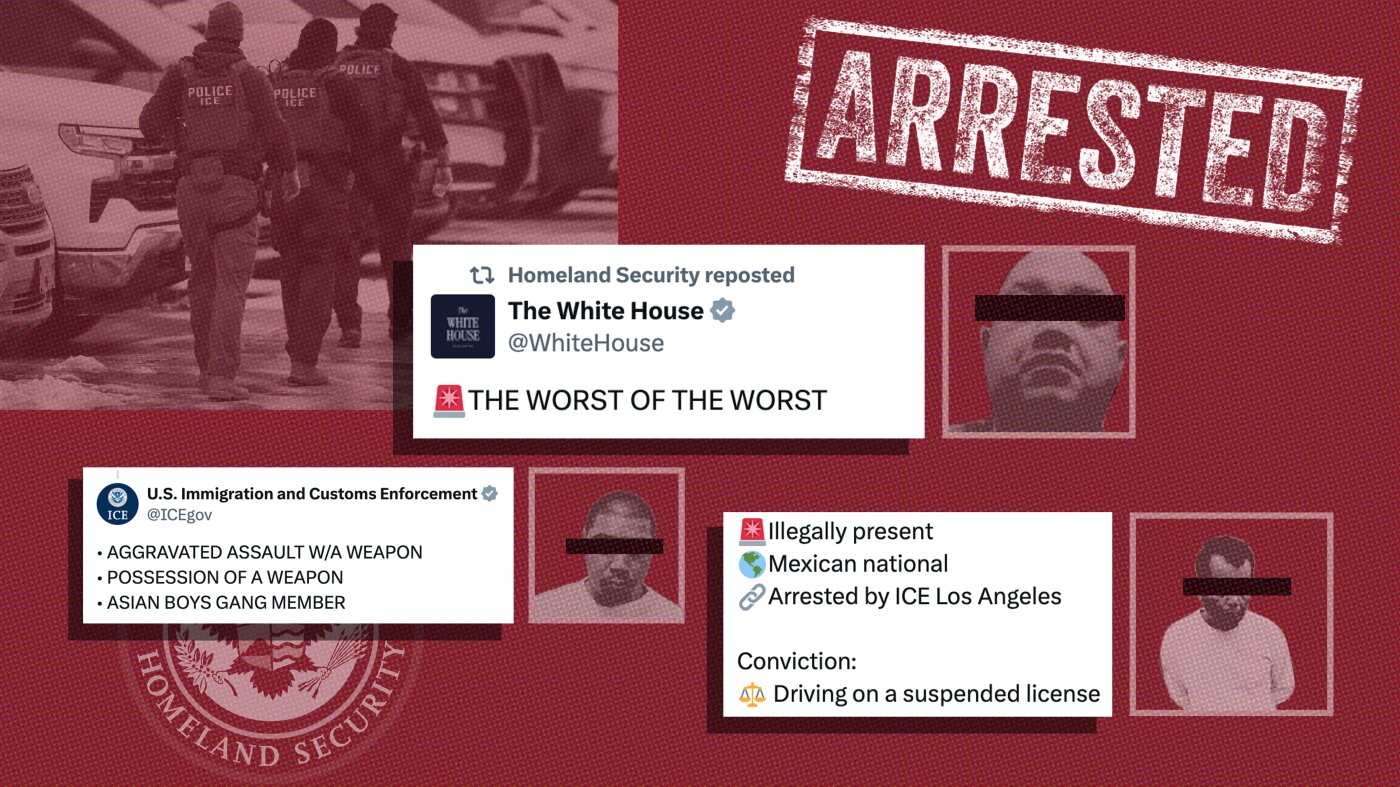
How the federal government is painting immigrants as criminals on social media

Where Iran’s ballistic missiles can reach — and how close they are to the US

Has India’s influence in Afghanistan grown under the Taliban?
-

 World2 days ago
Exclusive: DeepSeek withholds latest AI model from US chipmakers including Nvidia, sources say
-

 Massachusetts2 days ago
Mother and daughter injured in Taunton house explosion
-

 Montana1 week ago
2026 MHSA Montana Wrestling State Championship Brackets And Results – FloWrestling
-

 Louisiana5 days ago
Wildfire near Gum Swamp Road in Livingston Parish now under control; more than 200 acres burned
-

 Denver, CO2 days ago
10 acres charred, 5 injured in Thornton grass fire, evacuation orders lifted
-

 Technology7 days ago
YouTube TV billing scam emails are hitting inboxes
-

 Technology7 days ago
Stellantis is in a crisis of its own making
-

 Politics7 days ago
OpenAI didn’t contact police despite employees flagging mass shooter’s concerning chatbot interactions: REPORT