

Miley Cyrus Claims Dad Billy Ray Once Smoked Pot on ‘Hannah Montana’ Set
Montana
Healing Beneath the Surface: Underwater Soldiers Clean Montana's Waterways and Their Souls


GREAT FALLS — From the surface, Montana’s lakes and rivers may appear pristine — but just below, hidden trash paints a different picture. Fortunately, one group is diving in to help, and they’re finding healing along the way.
JAMES ROLIN REPORTS – WATCH:
Underwater Soldiers help clean Montana’s waterways and their souls
Service, Submerged: Veterans Take on Waterway Pollution
Underwater Soldiers, a non-profit based in Great Falls, is made up of certified SCUBA-diving military veterans who volunteer their time to clean Montana waterways. Their most recent cleanup at Gates of the Mountains marked a record-breaking haul.
“This is the most trash we’ve picked up to date,” said Mike Lukas, co-founder of Underwater Soldiers Great Falls Chapter. “So congratulations, everyone. Give yourselves a hand.”
Trash enters Montana’s waterways through runoff, rain, or littering — and it accumulates in hard-to-reach areas. Volunteers recovered hundreds of pounds of debris, including unusual finds like metal rails, pipes, a toilet, and even a large carpet.
“It’s always a puzzle,” said diver Daniel Hurd. “What does this even go to? Who knows?”
More Than Cleanup: Diving as Therapy
For these veterans, the mission is about more than trash. Many members of Underwater Soldiers have faced physical injuries and emotional trauma. SCUBA diving offers them an unexpected but powerful form of therapy.
“I was not the type that wanted to get out,” said Hurd, a former Army Ranger who was medically retired after a Stryker vehicle accident. “Alcoholism took over my life… and I’ve been sober now for six years.”
SCUBA diving helps veterans regain purpose and accountability.
“If you want to do well underwater, you’ve got to make sure your stuff is working. It creates that self-accountability again,” Hurd explained. “All of a sudden you’re checking in with a teammate… it’s familiar turf.”
Support That Extends to Families
The organization also brings together veterans’ families, creating a community where healing extends beyond the dive site. After a hard day of work, volunteers share food, laughter, and connection.
“He talks to people. He’s talking to you with the camera — and that wouldn’t have happened without Underwater Soldiers,” said Starlette Hurd, Daniel’s wife. “That’s a fact.”
Breathing Life Back In
Underwater Soldiers is helping restore both Montana’s waters and Montana’s veterans, one dive at a time.
“Feeling like a soldier that couldn’t breathe in the world I lived in… all of a sudden Mike and them taught me how I could breathe underwater,” Hurd said. “And that was, oh man — yeah. I can breathe in life again.”
Are you or someone you know a military veteran or current servicemember suffering from PTSD? You can contact UWS on Facebook here or at the organization’s main website here.
And if you’ve ever wondered where the term SCUBA comes from – it’s an acronym for Self-Contained Underwater Breathing Apparatus.

Montana
‘Hannah Montana’ Alum Mitchel Musso Reveals Why He Missed 20th Anniversary Special With Miley Cyrus

Hannah Montana star Mitchel Musso was noticeably absent from the show’s 20th anniversary special earlier this year — and now he’s revealing why.
“Of course they asked me [to be in it],” Musso, 34, revealed on the “Joe Vulpis Podcast” on Wednesday, June 24. “But, it wasn’t presented correctly [to me].”
Musso appeared in more than 70 episodes of the classic Disney Channel comedy series, playing Miley Stewart’s (Cyrus) best friend Oliver Oken alongside Emily Osment’s Lilly Truscott.
The star explained to host Joe Vulpis that he truly valued the opportunity to play Oliver again since he’d mostly been living outside the spotlight for the past decade. Instead, Disney opted for a retrospective look back at Hannah Montana.
Mitchel Musso, Emily Osment and Miley Cyrus on “Hannah Montana.” Joel Warren / Disney Channel / Courtesy Everett Collection
“I’ve been waiting ten years,” he stressed. “The people, they say, 20. My break’s been 10. It’s too long of a wait to do it in a way that isn’t even close to, in my opinion, correct.”
The Hannah Montana 20th Anniversary Special aired in March and featured Cyrus, 33, looking back on memorable moments from the show, alongside host Alex Cooper and celebrity guests such as Chappell Roan and Selena Gomez.
In his new interview, Musso said he would relish the chance of actually getting to play Oliver again in a proper Hannah Montana episode.
“I need a wig,” he joked. “I’d want the hair, which is fine. I’ve worn [wigs] plenty of times on Disney. I’ve worn plenty of wigs. … I’d want to feel the part again. I’d want to put on that little polo again, and wear the … plaid shorts with the goofy shoes.”
The actor went on, “I’d want to play the character, yeah. Once I saw myself doing it, I’d say, ‘Oh, there you are!’ Let’s get out there and let’s do it.”
Musso was not the only major Hannah Montana cast member missing from the anniversary special, as Osment, 34, could not appear due to her filming obligationa on CBS sitcom Georgie & Mandy’s First Marriage.
“We’re at Georgie & Mandy … and that’s why I was not able to be part of the 20-year reunion, because we are here shooting our show,” she said in a social media video at the time. “But I wanted to say hello and thank you to everybody that has stuck by us for all these years. I’m so grateful that you guys all still love the show. I’m so proud to be a part of it.”
Ahead of the Hannah Montana 20th Anniversary Special airing in March, Musso paid tribute to the show with his own Instagram post.


Miley Cyrus is still fielding questions about Hannah Montana more than a decade after its end — and she has some hilarious memories to share. During the Thursday, June 19, episode of her mom Tish Cyrus and sister Brandi Cyrus’ “Sorry We’re Cyrus” podcast, the Grammy winner, 32, opened up about a moment that never […]
“Hannah Montana wrapped around my heart and never really let go. We literally grew up with ya’ll — long days, crazy schedules, learning lines, cracking up between takes, and figuring out life while the cameras rolled,” he wrote. “It taught me so many wonderful values, but the most important ‘to me’ is that laughter can get you through the tough days. That confidence still sticks with me every single day.”
He also shouted out his costars, writing, “Miley, Emily, Jason [Earles], Billy Ray [Cyrus], Moises [Arias], and the whole crew at Disney — you became my family through all the real, messy, beautiful moments. Thank you for believing in a goofy kid from Texas who wore some questionable outfits with a haircut like that. To all of you, thank you for welcoming me into your homes and hearts 20 years ago and still allowing me to be here today. I’m honored we get to share all of this together.”
Hannah Montana originally aired for four seasons between 2006 and 2011. Classic episodes, as well as the Hannah Montana 20th Anniversary Special, can be streamed via Disney+.

ELK PARK — A father and his four sons reported missing near Elk Park were found safe after their vehicle became disabled, according to Butte-Silver Bow County Sheriff Ed Lester.
They were found walking along a roadway around 5 p.m. north of Maney Lake, according to Lester.
Rescuers from 15-90 Search and Rescue, the United States Marshals Service, the United States Forest Service, and the Bureau of Land Management (BLM) were able to reach the group and transport them to safety.
“We are very happy that everyone is safe. We appreciate the hard work of the rescuers and the coordination among Jefferson, Anaconda-Deer Lodge, Powell, and Silver Bow counties,” Lester said in a statement.
(original report) Law enforcement and search and rescue teams are searching for a missing father and his four sons near Elk Park, just off Interstate 15, after the group failed to return from a fishing trip north of Butte.
The group has been missing for nearly 24 hours. Three of the four boys are Type 1 diabetics in need of insulin.
WATCH: Law enforcement and search and rescue teams near Butte, Montana are searching for a missing father and four sons. Three of the boys are Type 1 diabetics in urgent need of insulin
Search expands for missing Butte family as friend reveals 3 of 4 boys are Type 1 diabetics
Courtney Mosier, a family friend who drove from Helena to assist in the search, said the urgency of the situation is critical.
“There (are) four little boys that range from ages 14 to 10. Three of the little boys are Type 1 diabetics. They need their insulin. They need their sugar. They need to be found immediately,” Mosier said.
Mosier has known the father, Paul Klimpel, her whole life and said his outdoor experience is a reassuring factor.
“Paul is an avid outdoorsman. Like I said, I’ve known him my whole life. If the truck broke down, Paul would be able to fix it. So, luckily they’re with a really, really, really good adult. We just need to find these children,” Mosier said.
Meagan Thompson
According to a press release from Butte Sheriff Ed Lester, police are searching for the group in the Brown’s Gulch, American Gulch, Flume Gulch, and Bernice area north of Butte. Officials are also searching the Homestake and Delome Lake areas.
The last known location of the group came from a cell phone ping near Maney Lake.
“The last ping from one of the little boys’ cell phone was up near Maney Lake so that’s where the family is at currently right now,” Mosier said.
Butte-Silver Bow County Sheriff’s Office Butte-Silver Bow Sheriff’s Office

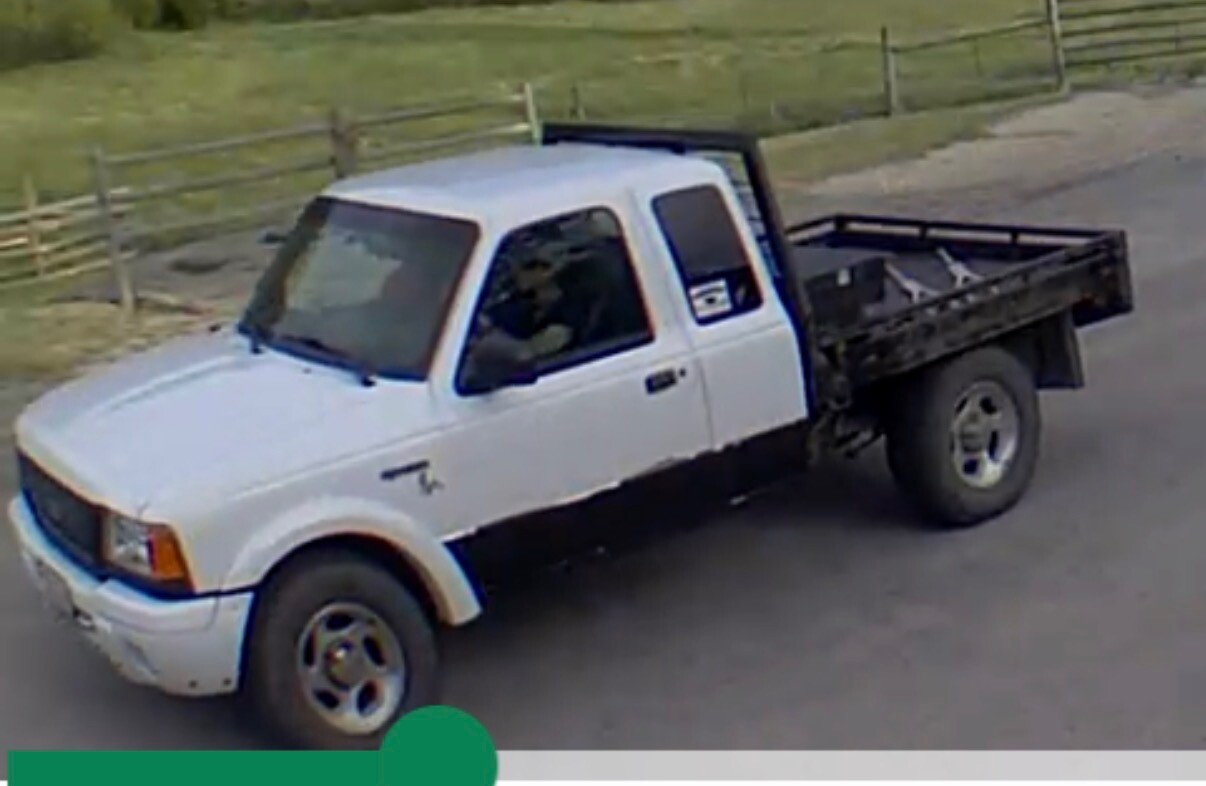
Anyone who spots a white Ford Ranger flatbed pickup is encouraged to call law enforcement at 406-497-1120.
This story was reported on-air by a journalist and has been converted to this platform with the assistance of AI. Our editorial team verifies all reporting on all platforms for fairness and accuracy.
Montana
Social media star Montana Tucker to host Maccabiah Games delegation parade | The Jerusalem Post

Ahead of the 2026 Maccabiah Games, an event often called the “Jewish Olympics” and the largest Jewish sporting competition in the world, which are set to begin next week, social media influencer, dancer, and singer, Montana Tucker expressed her excitement to be hosting the delegation parade at the event and said that the games were taking place at a critical point for the global Jewish community.
“Israel has gone through a lot, Israelis have gone through a lot, Jews have gone through a lot around the world,” Tucker told The Jerusalem Post on Tuesday. “What’s going on is not just happening in Israel; it’s really happening all around the world with our Jewish community. So, an event like the Maccabiah Games is showing the world that we are strong, we are united, and we don’t give up, and we keep fighting.”
According to Maccabiah, the games bring together more than 10,000 athletes from at least 80 countries in Israel every four years to compete in over 45 sports. The Maccabi World Union says the games are the second-largest sporting event in the world after the Olympics.
The 2026 Maccabiah Games, the 22nd of their kind, were initially scheduled for last year but were postponed due to the security situation involving Iran and its regional proxies.
“This was supposed to happen last year, and about a month away, we had to cancel it due to the war,” Tucker recalled. “And so I am so grateful that it is happening this year, because we truly do need this now more than ever.”
She also said she was excited to debut her new song “We’re Not Strangers” at the event.
“It’s all about unity and building bridges and bringing people together. And some of the lyrics say ‘we may pray to different saviors, but we’re not strangers,’” she told the Post. “Our world is so divided right now. I think that we really just need to come together and have more unity and compassion and understanding of one another. And if we really talk to people who look differently than us, act differently than us, have a different religion than us, we’ll realize we’re actually more similar than we think.”
Montana Tucker: Sport ‘truly unites the world’
Sports, she said, was an ideal method to build these bridges, adding she viewed it as something that “truly unites the world.”
The Maccabiah Games this year, though, will be the first since the Hamas-led massacres in southern Israel on October 7, 2023. The attacks sparked a regional eruption with Israel fighting wars against Hamas in Gaza, Hezbollah in Lebanon, and the Islamic regime in Iran.
“We always have to talk about what happened on October 7,” Tucker said. “We should never stop talking about it. And I think it is so important that Maccabiah is utilizing this platform to talk about it. I know they actually have a former hostage, Daniella Gilboa, who’s going to be performing, which is so powerful.”
Tucker also highlighted the value of the games, saying they were a powerful tool to dispel disinformation about the Jewish state.
“What’s shown on the news nowadays is just all the negativity. Most of it is just propaganda and lies about what Israel is, and I think the Maccabiah just debunks every possible propaganda and lie about Israel,” she said. “When people say the word ‘Israel,’ it comes with so many different connotations, and I think we can show them this. This is Israel. This is what being Jewish means.”
A key element in showing the world what Israel and being Jewish mean, she reiterated, meant showcasing Jewish unity at a time when, in the wake of the October 7, the global Jewish community has faced a worldwide rise in antisemitism.
The games themselves are being held under the slogan, “More Than Ever,” according to Maccabiah, to emphasize “the importance of strengthening the bond between [Jewish] communities worldwide and the State of Israel.”
-
Ohio36 seconds ago
Prevent Blindness Ohio warns of firework dangers ahead of July 4 celebrations
-

 Oklahoma3 minutes ago
What Houston Does Better Than Oklahoma State and Why It Matters
-

 Oregon9 minutes ago
Marion County may join 6 other counties to control garbage, recycling
-

 Pennsylvania16 minutes ago
The Dish: Caesar salad with a twist from Rivertown Taps in Phoenixville, Pa.
-

 Rhode Island19 minutes ago
RI becomes first state to establish grocery self-checkout limits
-

 South-Carolina24 minutes ago
Spartanburg’s Riley Vaughn named Gatorade Girls Track and Field Player of Year in SC
-

 South Dakota31 minutes ago
South Dakota Supreme Court upholds Box Elder burglary, assault convictions
-

 Tennessee34 minutes ago
Middle Tennessee man facing 64-count indictment involving child sex crimes, police say

