Montana
Fish and Wildlife Commission sued over open-meeting law, black bear quotas


The Montana Fish and Wildlife Commission was sued Friday for allegedly ignoring state open meeting laws when it approved eliminating some black bear hunting quotas in December.
The seven-member commission unanimously agreed at its Dec. 19 meeting to drop a rule that closed black bear hunting in certain hunting districts of northwest Montana if hunters killed more than 37% of the estimated female bear population there. The lawsuit, filed by wildlife and conservation group members from across the state, claims the commissioners failed to publish the proposal before the meeting and then took action on it without proper notice or public comment.
“I personally care a lot about black bears,” said Denise Boggs, lead plaintiff in the lawsuit and a former Fish, Wildlife & Parks wildlife division employee. “But we are litigating this because the public process and open meeting laws were violated.”
During a discussion of “corrections and amendments to black bear, antelope, deer bighorn sheep and boundary descriptions/clarifications” listed on the agenda during the December meeting, Region 2 Commissioner Jeff Burrows of Hamilton proposed the black bear rule change. It had not been included in the published agenda before the meeting, according to the lawsuit.
In the online recording of the meeting, Commission Chair Lesley Robinson said Burrow’s proposal was “one the public has not seen, which is perfectly fine. This is completely fine for the amendments to come at the meeting.”
Requests for comment to Robinson and Montana FWP spokesman Greg Lemon were not returned by Friday afternoon.
The change affected FWP Region 1 efforts to sustain black bear populations in northwest Montana. Region 1 Wildlife Manager Neil Anderson told the commissioners in December that hunters were particularly successful in the 2021 and 2022 seasons, killing about 1,500 black bears combined. But through 2023 and 2024, they only took about 900.
Region 1 Commissioner Pat Tabor of Whitefish said hunters were telling him that deer and elk populations were down in northwest Montana and they believed black bears were partly responsible.
“A slight decline in black bears is in order until we get stabilization in ungulates,” Tabor said during the December meeting. “I got a tremendous amount of traffic on this. We need to be more aggressive in predator management in Region 1.”
Region 3 Commissioner Susan Kirby Brooke of Bozeman added she thought over-large populations of black bears were the reason more residents in Kalispell and Columbia Falls were having bear conflicts at their homes.
“If the population is stable, they wouldn’t be coming into neighborhoods,” she said. However, FWP staff said those two things were not related.
“The challenges we have managing altercations with bears is largely independent of population size and hunting,” FWP game management Bureau Chief Brian Wakeling told the commissioners. “Hunting is not the primary method we use to address human conflict that arises from bear interactions or altercations.”
Anderson added that bear-human conflicts in neighborhoods had more to do with food supplies. In dry years when huckleberry crops are small, bears seek out human foods like unsecured garbage, bird feeders and dog food.
“It’s a little more complicated than just black bear numbers,” Anderson told the commissioners. “All the [residential] development is occurring in the valleys and riparian areas [that bears used to frequent]. People want to live there.”
Region 1 wildlife managers suggested the 37% female kill quota in January 2024. The move came in response to the recent extension of black bear hunting seasons, along with new opportunities to chase black bears with hounds. That likely meant more females getting killed, which raised the potential for a population downturn.
“We wanted to use this method for a couple years, and then come back to next year’s biennial season-setting with hard quotas, rather than this 37%,” Wakeling told the commissioners.
But Tabor, who recently retired from an hunter outfitting and guide company in northwest Montana, said he thought the 37% female kill quota was “uber-conservative,” and asked if a limit of 40% or 45% was possible.
Anderson replied that killing 40% of the females in a bear management unit was the expected threshold where populations could start crashing. The 37% point was chosen to avoid reaching that tipping point.
Mike Bader, a Missoula-based wildlife consultant and plaintiff in the lawsuit, said the divergences between what the commissioners proposed and what their FWP staff research showed was part of the reason why the U.S. Fish and Wildlife Service declined to delist grizzly bears from the Endangered Species Act last week. Federally protected grizzlies are often killed in encounters with black-bear hunters, and the FWS decision cited inadequate state regulatory controls on those hunters as a serious risk to grizzly survival.
“They just don’t seem ready to manage the species,” Bader said Friday. “They can’t just say ‘we’ll make adjustments and fix it next year.’”
A group of 40 wildlife experts made a similar point in a letter to the Fish and Wildlife Commission after the December meeting.
“This is management based on the whimsy of commissioners rather than on data, analysis and consultation with biologists on the ground,” the letter stated. “A particular irony in this case is that FWP recently initiated research to update our understanding of both black bear abundance and elk population dynamics in northwestern Montana. Rather than awaiting the results from FWP staff tasked with providing objective information, the commission moved forward based on some anecdotes they heard and their obvious personal bias against predators.”
During a public comment session later in the meeting, several speakers supported removal of the black bear quota. Two hunting outfitters noted it was difficult for hunters in the backcountry to know if their district black bear season had been closed early because the quota had been reached. They also said it was hard to book late-season hunting clients not knowing if the district might be closed before the regular season ended.
Mike Mershon, of the Montana Wildlife Federation, praised a different rule change involving bighorn sheep, but then added a warning about the commission’s process.
“These agenda amendments make it difficult to get it out to the public,” Mershon said, “so they can respond to developing amendments.”



Although newly minted GOP candidates for the U.S. House and U.S. Senate have garnered heavyweight endorsements, the Montana Republican Party said Thursday it won’t throw its support behind any candidates for federal office in the primary.
“The Montana Republican Party (MTGOP) stands behind its deep bench of qualified candidates seeking to represent Montanans and supports a competitive primary process to let voters pick their preferred candidates,” the Montana GOP said in a news release Thursday.
Monday, U.S. Rep. Ryan Zinke announced he was retiring due to health concerns once his term ends, and he immediately tapped talk-show host Aaron Flint as his preferred successor in Congress.
Secretary of State Christi Jacobsen and Flathead County Republican Central Committee Chairperson Al Olszewski also filed for the U.S. House as Republicans, as did Ray Curtis of Bonner.
Wednesday, U.S. Sen. Steve Daines withdrew, and in a statement the same night, announced an endorsement of former U.S. Attorney Kurt Alme, who had filed the same day.
In the Senate, Lee Calhoun and Charles Walking Child also filed to run in the Republican primary.
Endorsements for Flint and Alme cascaded. U.S. President Donald Trump endorsed both candidates, and U.S. Sen. Tim Sheehy and Gov. Greg Gianforte threw their weight behind Flint and Alme.
Late on Wednesday, the Montana GOP did not immediately have comment on the news Daines, Montana’s senior U.S. senator, had resigned, but Thursday, the party thanked Zinke and Daines for their service.
A news release said the party would not endorse any candidates in the federal primary and would leave the job in the hands of voters.
“The party hopes every candidate will make their case to the public, contrasting their Republican policies and principles with those of Democrats — as well as phony ‘Independents,’” the news release said.
Former University of Montana President Seth Bodnar announced a run for the U.S. Senate as an independent this week.
A tension within the Republican party has emerged in recent years between hardline conservatives and more moderate members, and some legislative primaries illustrate the split.
This week, the state GOP said the number of primaries for state legislative seats shows a high interest from Montanans who want to serve the state and pass Republican policy, and the MTGOP “is glad to see so many Republicans being called to public service.”
In a brief call, MTGOP spokesperson Ethan Holmes said the party had not ruled out endorsements in legislative primaries.
In the news release, however, the MTGOP offered its view of the larger political debate.
“Montana voters know that beyond the primaries, there is a clear choice between Republican and Democratic governance; one path leads to lower taxes, less crime and stronger families, and the other leads to higher taxes, more crime, and social decay,” MTGOP Chairperson Art Wittich said in a statement.
The news release also said the state GOP is working “tirelessly to deliver a Bright Red Future” at both the state and federal level and looks forward to help candidates whom voters select win in November.
The Montana Lottery offers multiple draw games for those aiming to win big.
Here’s a look at March 4, 2026, results for each game:
Winning Powerball numbers from March 4 drawing
07-14-42-47-56, Powerball: 06, Power Play: 4
Check Powerball payouts and previous drawings here.
Winning Lotto America numbers from March 4 drawing
33-38-39-47-51, Star Ball: 07, ASB: 02
Check Lotto America payouts and previous drawings here.
Winning Big Sky Bonus numbers from March 4 drawing
01-07-08-27, Bonus: 12
Check Big Sky Bonus payouts and previous drawings here.
Winning Powerball Double Play numbers from March 4 drawing
05-10-26-53-59, Powerball: 06
Check Powerball Double Play payouts and previous drawings here.
Winning Montana Cash numbers from March 4 drawing
03-04-06-08-10
Check Montana Cash payouts and previous drawings here.
Winning Millionaire for Life numbers from March 4 drawing
12-13-36-39-58, Bonus: 03
Check Millionaire for Life payouts and previous drawings here.
Feeling lucky? Explore the latest lottery news & results
When are the Montana Lottery drawings held?
- Powerball: 8:59 p.m. MT on Monday, Wednesday, and Saturday.
- Mega Millions: 9 p.m. MT on Tuesday and Friday.
- Lucky For Life: 8:38 p.m. MT daily.
- Lotto America: 9 p.m. MT on Monday, Wednesday and Saturday.
- Big Sky Bonus: 7:30 p.m. MT daily.
- Powerball Double Play: 8:59 p.m. MT on Monday, Wednesday, and Saturday.
- Montana Cash: 8 p.m. MT on Wednesday and Saturday.
- Millionaire for Life: 9:15 p.m. MT daily.
Missed a draw? Peek at the past week’s winning numbers.
This results page was generated automatically using information from TinBu and a template written and reviewed by a Great Falls Tribune editor. You can send feedback using this form.

The search for a new University of Montana president has drawn more than 60 applicants, according to a spokesperson for the Office of the Commissioner of Higher Education.
“We do not have an exact count at this time, as several applications are still being completed and additional submissions are expected,” said spokesperson and Deputy Commissioner Galen Hollenbaugh in an email earlier this week.
In January, then-UM-President Seth Bodnar announced his resignation to pursue other public service. Wednesday, the final day of filing, he announced he was running as an independent for the U.S. Senate to try to unseat Republican incumbent Steve Daines.
Commissioner of Higher Education Clayton Christian earlier said that with the advice of AGB Search, a firm that’s helped the Montana University System conduct other executive searches, he would undertake an expedited process to appoint a new president.
Christian has been providing brief updates on a website dedicated to the search. Last week, he said he and AGB Search are reviewing applications, and the pool of candidates was “strong and diverse.”
The commissioner also announced he was convening a small working group to assist in the search, members who “represent a variety of perspectives to assist in vetting and narrowing this field of exceptional candidates.”
In an email this week, Hollenbaugh identified the members of the working group who are assisting Christian with application review as:
- Community member and former Regent Joyce Dombrouski
- Faculty Senate Chairperson Valerie Moody
- Staff Senate President Dominic Beccari
- Administration Representative John DeBoer (Vice President of Academic Affairs)
- ASUM (Associated Students of the University of Montana) President Buddy Wilson
Hollenbaugh declined to comment on the way the rest of the process would unfold or the role the working group members would play.
Christian earlier said he anticipated an appointment within one to three months, or as soon as early this month.

Britney Spears Open to Treatment Plan as Team Weighs Options

Anxiety grows among California Democrats as gubernatorial candidates rebuff calls to drop out
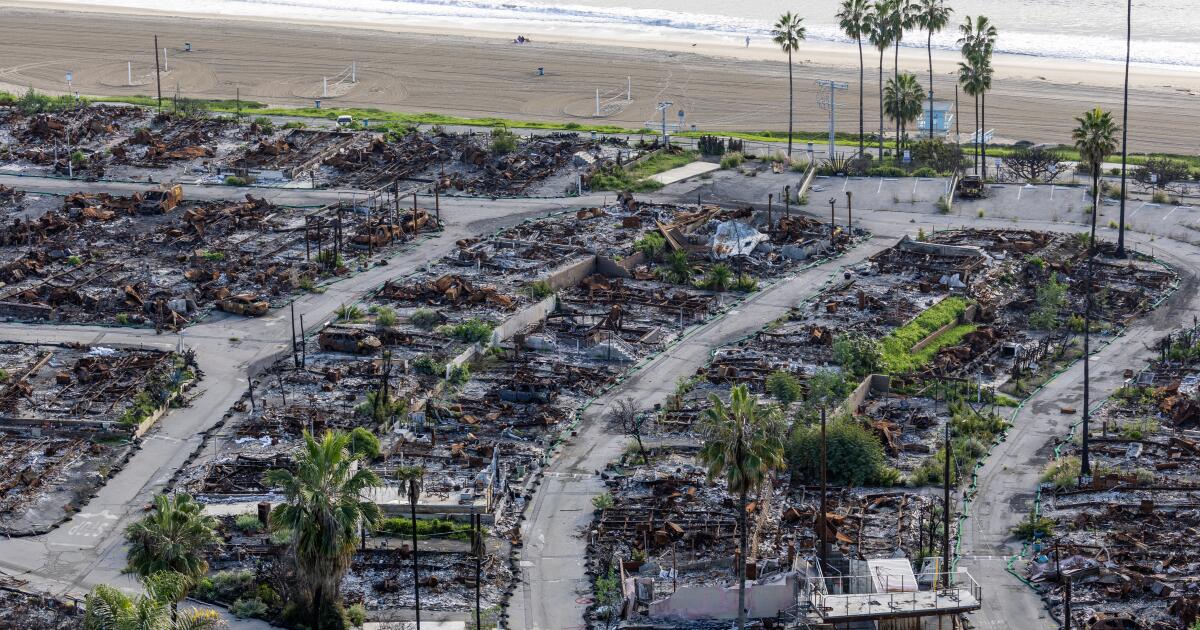
Owners of fire-destroyed Palisades mobile home park seek to displace residents for development deal

Fatigue a factor as early matches begin at Indian Wells
Fact check: Did French border guards mock influencers returning from Dubai amid Iran war?

Florida High School Football Rankings: Top 25 teams – Oct. 21

Cleary's 21 help Le Moyne down Central Connecticut State 69-64 in OT

How old is Bo Nix? What to know about Oregon quarterback ahead of 2024 NFL Draft

99th annual Pony Swim held in Virginia

Indiana Members Credit Union announced as new anchor tenant at Bottleworks District
Fact check: Did French border guards mock influencers returning from Dubai amid Iran war?

Iran’s fight for survival / The widening war / Trump’s nebulous goals : Sources & Methods

Map: 4.9-Magnitude Earthquake Shakes Louisiana

Paxton vows he’s ‘staying in this race’ even if Trump backs Cornyn in Texas GOP clash

Which Kurdish groups is the US rallying to fight Iran?
-

 World1 week ago
Exclusive: DeepSeek withholds latest AI model from US chipmakers including Nvidia, sources say
-

 Wisconsin4 days ago
Setting sail on iceboats across a frozen lake in Wisconsin
-

 Massachusetts1 week ago
Mother and daughter injured in Taunton house explosion
-

 Maryland5 days ago
AM showers Sunday in Maryland
-

 Massachusetts3 days ago
Massachusetts man awaits word from family in Iran after attacks
-

 Florida5 days ago
Florida man rescued after being stuck in shoulder-deep mud for days
-

 Denver, CO1 week ago
10 acres charred, 5 injured in Thornton grass fire, evacuation orders lifted
-

 Oregon6 days ago
2026 OSAA Oregon Wrestling State Championship Results And Brackets – FloWrestling