West
Los Angeles' new DA-elect says woke predecessor lost trust of prosecutors, victims: 'I have to rebuild that'

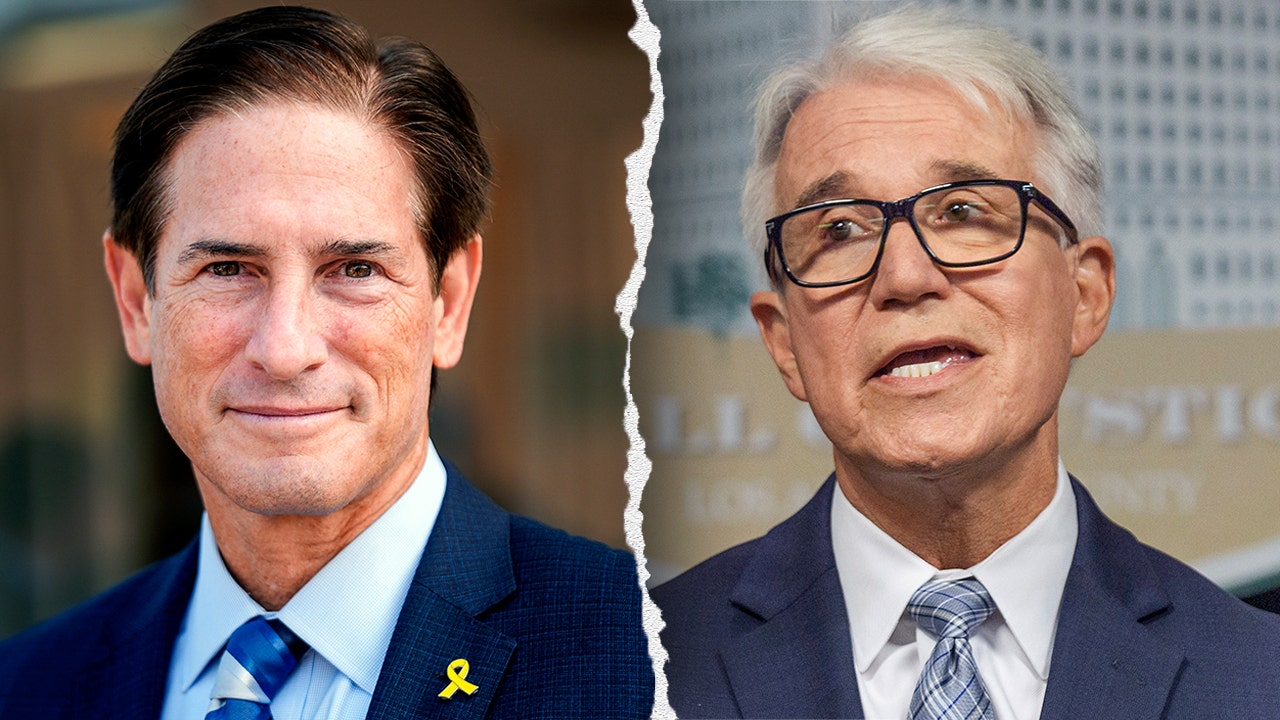
Los Angeles County’s newly elected district attorney said one of his first orders of business will be to regain the trust of the community after voters ousted first-term progressive District Attorney George Gascon on Tuesday, ending what critics deemed a failed progressive overhaul of the country’s largest criminal justice system.
Gascon received less than 40% of the vote in a race against Nathan Hochman, a former federal prosecutor who campaigned against the DA’s controversial policies, highlighting them as a public safety risk.
“The office has to build the trust back with its own prosecutors,” Hochman told Fox News Digital. “He lost trust and credibility with law enforcement… with victims and victims’ families. From day one, I have to rebuild that trust.”
DEMOCRAT ADAM SCHIFF WINS DIANNE FEINSTEIN’S FORMER SENATE SEAT
Nathan Hochman unseated Los Angeles County District Attorney George Gascon on Tuesday. Gascon survived two recall attempts and came under fire for his progressive criminal justice policies. (AP)
In a statement to Fox News Digital, Gascon commented on Tuesday’s election, saying the country’s “rightward shift across America last night is heartbreaking.”
“Democrats have a long road ahead, but the work is more vital than ever and our commitment will not waver,” he said. “Nevertheless, I have called Mr. Hochman and wish him the best as Los Angeles County’s next District Attorney. I’m deeply proud of what we’ve accomplished over the past four years and grateful to the communities who have been and will always be the heart of criminal justice reform.”
Gascon was ushered into office in 2020 amid a reckoning over police misconduct and national calls for criminal justice reform. His directives – such as the elimination of cash bail, not seeking the death penalty and refusing to try underage defendants charged with violent crimes as adults – were panned by critics as being too soft on crime.
Upon taking office, Hochman said he plans to eliminate “blanket, extreme pro-criminal policies,” such as gang members engaging in violent crimes as part of their initiation.
“That’s what the George Gascon decarseration policies have effectively meant,” he said.
While in office, Gascon also survived two recall attempts as voters voiced concern over his policies.
LA PROSECUTOR SAYS BOSS GASCON SENT COPS TO INTIMIDATE HER AT HOME AFTER BLOWING WHISTLE ON SOFT-ON-CRIME MEMO
Los Angeles County District Attorney George Gascon addresses the media during a press conference on developments for the case of brothers Erik and Lyle Menendez, Thursday, Oct. 24, 2024, in Los Angeles. (AP Photo/Eric Thayer)
He also co-authored Proposition 47, a 2014 voter-approved measure that downgraded most thefts from felonies to misdemeanors if the amount stolen was under $950 and reclassified some felony drug offenses as misdemeanors. The law became the scorn of critics as retail and smash-and-grab thefts in California increased during and after the COVID-19 pandemic.
Some also accused him of politicizing the DA’s office, such as his recent announcement that he would recommend re-sentencing for the Menendez brothers.
On Tuesday, voters overwhelmingly backed a measure to roll back some of Prop 47’s provisions. Proposition 36, the Homelessness, Drug Addiction and Theft Reduction Act, will undo portions of Prop 47 by increasing penalties for some crimes.
Hochman was endorsed by police unions, many of Gascon’s own prosecutors, as well as many local elected officials.
‘WOKE’ DA SUED BY HIS OWN OFFICE FOR ALLEGEDLY PROTECTING ETHICS CHIEF CHARGED WITH FELONIES
Justice advocate Bertha Fraire of the Cherokee Nation, left, whose daughter’s kidnapping and death, stating that no suspects have been identified and brought to justice even after four years, takes a photo with Nathan Hochman, an independent Los Angeles County District Attorney candidate, during a campaign event in the Los Feliz neighborhood of Los Angeles on Saturday, Oct. 26. (AP Photo/Damian Dovarganes)
In Alameda County, across the bay from San Francisco, Pamela Price was recalled as district attorney two years after taking office. Critics accused Price of being soft on crime after her handling of several cases.
Eric Siddall, a Los Angeles country prosecutor and former DA candidate who ran against his boss, said there has been a shift in attitudes about criminal justice.
“I don’t know if there’s a progressive DA in California anymore. I think they’re all gone,” he told Fox News Digital. “It’s kind of an amazing shift from 2020 to 2024. Voters have clearly stated they want sensible reform, but they also want protection.”
Despite political differences between voters, public safety is a crossover issue, said Hochman.
“I spoke to ultra-left liberals, independents and conservative Republicans. And it turns out that even though they don’t agree on much, they do agree that making sure that the district attorney prioritizes their safety and implements policies that will hold criminals accountable for their actions in a smart and proportional manner really matters,” he said.
Los Angeles County district attorney George Gascon meets with media in Grand Park on Tuesday, March 5, 2024 in Los Angeles, CA. (Myung Chun / Los Angeles Times via Getty Images)
CLICK TO GET THE FOX NEWS APP
In Oakland, Mayor Sheng Thao was also ousted from office after recall effort passed with 65% of the vote. In San Francisco, Mayor London Breed was poised to fail in her re-election bid.
Daniel Lurie was leading the incumbent Breed in the city’s first round of ranked-choice voting.
Read the full article from Here


San Francisco’s Fourth of July celebration along the city’s waterfront quickly turned into hours of gridlock, dangerous fireworks incidents and a surge in emergency calls.
Thousands packed Crissy Field to watch fireworks launched from the Golden Gate Bridge. But once the show ended, it wasn’t exactly a smooth ride home.
While many left with great memories. Others found themselves stuck for hours in gridlock, caught in a massive backup involving dozens of Waymo cars, while firefighters across the city were responding to fires and serious fireworks injuries.
For Rose Peterson, the ride home after San Francisco’s Fourth of July fireworks took an unexpected turn.
“We were pulling up to a four-way stop and this guy was shooting off a firework in the middle of the road, and then our Waymo starts driving, and we’re like ‘Wait, what’s happening?’,” she said.
No one inside was hurt, but Peterson says the experience left her questioning how autonomous vehicles respond in unpredictable situations.
“I definitely think it needs to be more sensitive of anything that can come into the path of the road,” she said.
That wasn’t the only challenge after the show.
As thousands left Crissy Field and the Presidio, traffic came to a standstill. Among those stuck was Dave Guingona, who had friends visiting from the Philippines and wanted to show them a memorable Fourth of July in San Francisco.
“Five minutes, 10 minutes, 15 minutes went by, then we realized people were getting out of their cars, yelling and screaming at these Waymos because there were no drivers,” he said.
He says nearly two hours later, Waymo employees finally began driving the vehicles out.
“They had a great time, but this is what they’re going to remember for the rest of their lives. This was unbelievable,” he said.
While traffic barely moved, San Francisco firefighters responded to more than 500 calls for service, including four fireworks-related wildfires, numerous outside fires across the city and a vehicle fire on Connecticut Street believed to have been sparked by illegal fireworks.
Crews also responded to two life-altering fireworks injuries.
Captain Jonathan Baxter says the incident Peterson experienced in the Waymo was another reminder of how quickly things could have turned tragic.
“That situation could’ve had a far worse outcome—not only for the individuals in the car that could’ve been injured or worse—but for the individuals who lit the fireworks. They could have their life altered for the rest of their lives as well,” Baxter said.
Waymo says extreme traffic congestion disrupted operations for several vehicles after the fireworks and crews worked with city officials to clear them from the area.
The company also says it’s evaluating the incident surrounding fireworks, adding it’s committed to learning from situations like this.
San Francisco fire officials are reminding people that even fireworks marketed as “safe” can cause devastating injuries and fires. As for Waymo, the company says it’s reviewing both last night’s traffic congestion and the incident involving Rose’s ride as it looks for ways to improve operations during major events.


9:20 PM: Seattle Fire has a water-rescue response headed to Alki Avenue and 64th SW after a report of someone hanging onto a capsized watercraft – possibly a kayak, per dispatch – about 50 yards offshore.
9:29 PM: SFD responders report another kayaker appears to be towing in the person who was in trouble, or trying to.
9:34 PM: Rescuers, including an SFD boat, are deciding where to take the kayaker once he’s out of the water.
9:36 PM: They’re going to move a medic unit and battalion chief to Don Armeni Boat Ramp and take the kayaker there for evaluation.
-

 Politics1 minute ago
Trump shares news of ‘crystal clear’ Reflecting Pool, calls for vandalism suspect’s arrest
-

 Health4 minutes ago
How a 93-year-old soccer referee credits wartime rations and discipline for his longevity
-

 Sports9 minutes ago
England stuns Mexico 3-2 in instant World Cup classic, hands team first World Cup loss at Estadio Azteca
-
 Business19 minutes ago
FDA escalates recall of Utz brand potato chips before July Fourth holiday
-
 Entertainment25 minutes ago
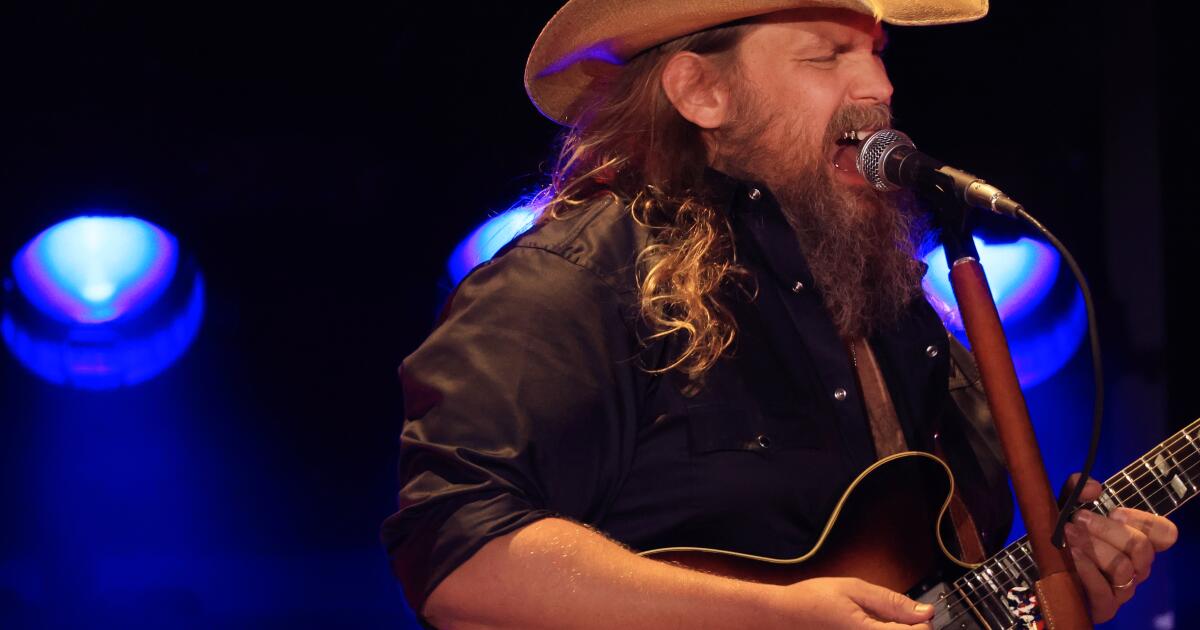
Inside the all-star America250 concert at the L.A. Coliseum
-

 Lifestyle31 minutes ago
Luxury Clients Want Meaning More Than Status
-
 Politics34 minutes ago
Commentary: Even in ugly times, the bicentennial united us. America 250 still can
-
 Sports46 minutes ago
‘I wish she was alive.’ Eliezer Alfonzo has emotional day as Dodgers lose to Padres

