Lifestyle
How Route 66 inspired Disney’s ‘Cars’ and Cars Land — and the ride that never came to be

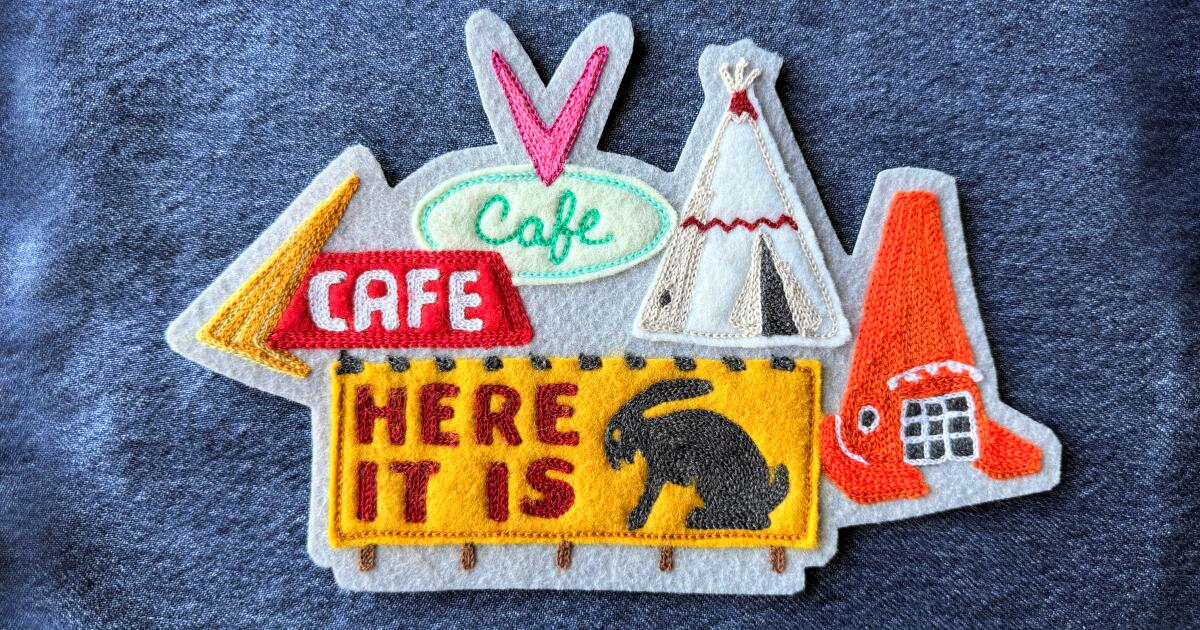
Route 66 has its tendrils throughout SoCal, and especially in the L.A. area, winding through Pasadena, West Hollywood and culminating in Santa Monica. But the most loving ode to Route 66 may in fact be at the Disneyland Resort, specifically at Disney California Adventure.

Stories, photos and travel recommendations from America’s Mother Road
Cars Land opened in 2012 as part of a reworking of the theme park and at long last gave it a striking land that could rival — and in many cases surpass — those of its next-door neighbor, Disneyland. Flanked by sun-scarred, reddish rocks that look lifted from Arizona, Cars Land is a marvel of a theme park land, with its backdrop mountain range ever so slightly nodding to the fins of classic Cadillacs from 1957 to 1962. That design element is a salute to the Cadillac Ranch in Amarillo, Texas, where 10 vintage Cadillacs are buried nose-first in the ground that to many resembles a 20th century Stonehenge.
Yet before the area was attached to the 2006 film, it was envisioned as a theme park destination dedicated to roadside attractions and trips along the so-called Mother Road. Cars Land is a make-believe area based on a fictional town from an animated film, but its roots are decidedly real.
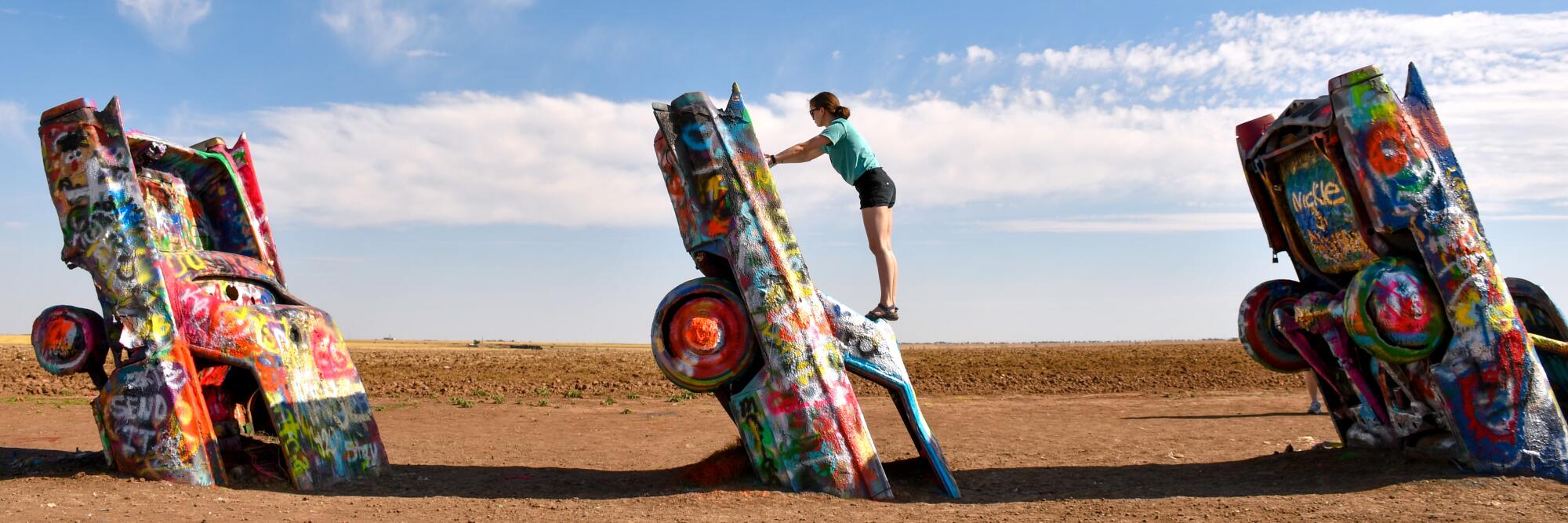
Cadillac Ranch, an artwork made from 10 old cars by the Ant Farm artists’ collective in the 1970s, has become one of Amarillo’s top attractions. Visitors are invited to add their own spray-painted touches.
(Christopher Reynolds / Los Angeles Times)

The backdrop mountain range of Radiator Springs Racers is a nod to Cadillac Ranch. The peaks are designed to look like the tail fins of classic cars.
(Mark Boster / Los Angeles Times)
“We very much acknowledge that up front, that you’re walking down Route 66,” says Kathy Mangum, the retired Walt Disney Imagineer who served as the executive producer of Cars Land.
“But you’re also not walking down a part of Route 66 that exists anywhere,” Mangum continues. “There’s no part of Route 66 where you’re looking up at a Cadillac range surrounded by red rocks. It’s the spirit of Route 66. I wouldn’t even call it a ‘best-of.’ It’s just a little bit of this, a little bit of that, and combined it feels real.”
Before those at Walt Disney Imagineering, the secretive arm of the company devoted to theme park experiences, were even aware that Pixar Animation Studios was working on the “Cars” film, an automotive-focused land was in the planning stages for Disney California Adventure. The park had opened in 2001 and had struggled in its early years to pull in crowds, with audiences zeroing in on a lack of Disneyland-style attractions and an absence of grandly designed vistas.
In an effort to rejuvenate the park, then-Imagineer Kevin Rafferty envisioned an area to be called Car Land — without the “s” — pulling heavily from his family’s road trips and Route 66-like roadside attractions and oddities. Among its standout attractions was to be one initially named Scoot 66, later changed to Road Trip, USA, a slow-moving ride that took guests on a cross-country journey through nature and roadside quirkiness, although its showcase scene would have been a trip trough a miniaturized Carlsbad Caverns, a bit of a detour from Route 66.
“It was kind of tongue-in-cheek,” says Rafferty, now retired, of the never-built ride. “You were going to be seeing all these roadside attractions that would draw you in, like giant bunnies.”

Mater’s Junkyard Jamboree brings the rusty, old tow truck character from the “Cars” movie to life in Cars Land at Disney California Adventure. (Mark Boster / Los Angeles Times)

An artwork in Seligman, Ariz., pays homage to the Disney-Pixar “Cars” movie, which was heavily inspired by the town. (Mark Lipczynski / For The Times)
Rafferty believed a place such as Car Land would be ripe for exploration in a Disney park, as it was to be set from the late 1950s to the early 1960s and tap into a collective nostalgia for a time when a vehicle meant the freedom to explore the open road. Cars Land today still has some of that ageless energy, boasting a vintage rock ’n’ roll soundtrack and a strip of a street filled with colorful neon, its lights, especially at night, beckoning guests to come closer.
“The reason why I thought it would fit into a Disney park, especially Disney California Adventure, is because cars are so much a part of the California story,” Rafferty says. “Cars are designed in California, even though they’re built elsewhere. There’s more custom shops in California. There’s more design studios in California. There’s more car clubs. And all the cars songs. ‘She’s so fine, my 409.’ It was all the Beach Boys and Jan and Dean.”

The neon signs of Radiator Springs. Flo’s V8 Cafe isn’t a direct match for any Route 66 diner, but it was inspired in spirit by the Midpoint Cafe in Adrian, Texas.
(Paul Hiffmeyer / Disneyland Resort)
Development on Rafferty’s Car Land idea would change course when Imagineering and Pixar eventually aligned. But it was also a shift that would more formally ground the area in the culture of Route 66, which heavily influenced the film. Both the filmmakers and, later, those with Imagineering, embarked on 10-day research trips along the road led by historian Michael Wallis, author of “Route 66: The Mother Road.” Those at Pixar, in fact, were so charmed by Wallis’ tours that the author was asked to voice the role of the film’s sheriff.
Wallis says he took the teams out in rented Cadillacs. “I like to stop every 300 yards,” Wallis says. “If I’m doing a road trip, I get into it. So we stopped to move box turtles off the road. I waded them into winter wheat to dance, to pick wild grapes. I introduced them to people that I guaran-damn-tee that they never would have met, the great characters of the road, and I showed them the man-made and natural sites of the road.”

Though the fictional “Cars” and Cars Land community of Radiator Springs has no single inspiration, it echoes the scenery and history of several small towns between Tulsa, Okla., and Kingman, Ariz., including Tucumcari, N.M., Seligman, Ariz., and Oatman, Ariz. And the single, graceful bridge that is centered upon the land’s backdrop mountain range closely resembles Pasadena’s own Colorado Street Bridge, although there’s no roaring waterfall next to the original.

Scenes from Route 66 in Seligman, Ariz. The town was one of the inspirations for the fictional “Cars” and Cars Land town of Radiator Springs.
(Mark Lipczynski / For The Times)

The centerpiece bridge of the Cars Land mountain range was modeled after a local landmark. (Paul Hiffmeyer / Disneyland Resort)

The Colorado Street Bridge in Pasadena, an inspiration for the Cars Land structure. (Adam Markovitz)
Elsewhere, Ramone’s House of Body Art connects with the U-Drop Inn, a 1936 Art Deco gas station in Shamrock, Texas, that now serves as a visitor center and cafe. The Cozy Cone Motel nods to the Wigwam motel chain, which once included seven locations from Kentucky to California. Two remain in business along Route 66: the Wigwam in San Bernardino and another in Holbrook, Ariz.
While Imagineers had visual references from the animated film, Mangum says the research trip was invaluable in lending authenticity to the park.
“We could walk into a building in Shamrock, Texas, that looks so much like what Ramone’s House of Body Art looks like and see that those tiles are made of raised terra-cotta,” Mangum says. “So we could get the actual texture. It’s a movie world, but it’s also a real world.”
Flo’s V8 Cafe isn’t a direct match with any Route 66 eatery, the Imagineers say, but was certainly influenced in spirit by the Midpoint Cafe in Adrian, Texas.

The Midpoint Cafe in Adrian, Texas, celebrates the halfway point on Route 66 between Chicago and Los Angeles.
(Christopher Reynolds / Los Angeles Times)
“We sampled all their pies and food and made copious notes on this stuff,” Rafferty says. “The two women who owned the Midpoint Cafe had what they said was their mother’s recipe for ‘ugly crust pies.’ We fell in love with ugly crust pies. I met with the head chef of Disneyland, who was a Frenchman at the time, and I said we wanted to serve ugly crust pies at Flo’s V8 Cafe. And he said, ‘No, no, no, nothing at Disneyland will be ugly.’”
No, but it may be influenced by abandoned buildings. Mangum says a key locale for the land was the deserted structures of Two Guns, Ariz. Gas station remains led to sketches that would inspire parts of the “Stanley’s Oasis” area of the Radiator Springs Racers queue, which Rafferty and company filled out with an oil service station and then a building composed of empty oil bottles. The story goes that Stanley’s Oasis is a roadside attraction settlement that led to the development of the town of Radiator Springs.

At the Cozy Cone Motel, a string of cone-shaped food stalls sell quick bites such as swirled soft-serve cones. (Stephanie Breijo / Los Angeles Times)

The Cozy Cone is based on the real-life Wigwam Motels. (Christopher Reynolds / Los Angeles Times)
“That kind of Route 66-inspired story was all made up,” Rafferty says. “It wasn’t in the film.” That backstory, however, would inform the 2012 short “Time Travel Mater.”
The enduring strength of the land, however, isn’t just due to the popularity of the animated properties that led to it. While Route 66 wasn’t magic for everyone — the history of the road is dotted with tales of extreme poverty and horrific racism — it’s become romanticized as a slice of Americana and stands as a jumping-off point to further delve into our past.
The land is, in a word, timeless. It’s also representative of the ideal of a working small town, the sort of place we forever long for. “It may not be the America of today,” Mangum says, “but in a way it is.”
Times staff writer Christopher Reynolds contributed to this report.


Once rivals on the tennis court, Martina Navratilova, left, and Chris Evert have become close friends in retirement. They are pictured above at the French Open in 1986.
Trevor Jones/Getty Images Europe
hide caption
toggle caption
Trevor Jones/Getty Images Europe
Chris Evert and Martina Navratilova were the most successful women’s tennis champions of their generation. Both were 18-time Grand Slam tournament winners — and each other’s greatest rivals.
Evert, a Florida native, became a tennis star in her teens. Navratilova was born in communist Czechoslovakia, and emerged as a player after Evert was established. They first faced off during a match in Akron, Ohio, in 1973, when Evert was 18, and Navratilova was 16. Evert won, but Navratilova left an impression.
“I remember thinking to myself, holy cow, when this young girl gets into better shape, she is going to be a force to be reckoned with,” Evert says. “She had so much talent. Her hands were quick, she had a big first serve, she had a big forehand, and she just was so powerful.”

Two years later, on the day she lost a semifinals match to Evert at the U.S. Open, Navratilova defected to the U.S. In the years that followed, her tennis game improved. Though she and Evert had initially been friendly, the friendship cooled as their rivalry heated up.
“Playing Chris was difficult because how can you not like Chris? What’s not to admire?” Navratilova says. “She was like the epitome of cool.”
The new Netflix documentary Chris & Martina: The Final Set tells the story of how Evert and Navratilova re-established their friendship and how they both faced cancer in retirement. Evert was diagnosed with ovarian cancer in 2021; Navratilova was diagnosed with throat and breast cancer in 2022.
“I can’t get away from her,” Evert jokes. “We had a 15-year career, and then we got cancer at the same time. It really is freaky, but I always say: If I want someone to be in the trenches with me, it’s Martina because she has been so supportive and so understanding.”

Navratilova agrees: “We have such a level of trust that we know whatever we say to each other, it stays there. We give each other the best advice we know how to. And there is no ulterior motive, no playing games.”
At the time that this interview was taped, Evert and Navratilova were both in remission from cancer. But late last week, Evert disclosed she’d recently been diagnosed with a recurrence of ovarian cancer.

“We know whatever we say to each other, it stays there,” Martina Navratilova says of her friendship with Chris Evert.
Netflix
hide caption
toggle caption
Netflix
Interview highlights
On supporting each other through cancer
Evert: There are a lot of phone calls between us. … I don’t cook, but Martina would bake bread for me, and her wife Julia would cook, make some chicken soup. … I got a lot of food from Martina. She got a necklace from me.
Navratilova: I get jewelry from Chris, she gets food from me.
Evert: Martina’s and my relationship — because we’ve had one for 50 years — is not the type where we have to talk to each other every day to maintain the closeness. I always knew she was there. She always knew I was there if we needed to talk, and that was that.
On the weakness they experienced with cancer
Navratilova: Chris’ diagnosis and treatment was much more life-threatening than mine, percentage wise, but my treatment was more difficult physically. … I was in New York for seven weeks and I literally sat on a yoga mat, maybe half an hour of the seven weeks, and did some stretching. I couldn’t even do the down dog pose because I would have fallen down. I had absolutely zero strength left.
Evert: The chemo kicked my butt, let’s put it that way. … It left me very weak, very, very weak. After chemo I would have three or four days of intense nausea and I just would feel tingling in my body and it just wasn’t nice. I didn’t have the energy. To walk six blocks was a big deal for me. And it was foreign. You know, it felt like it wasn’t my body, for sure.
On watching the old footage of their matches together for the documentary
Navratilova: For me, it was fun watching with Chris, because we had different reactions to what happened on the court. But what impressed me is how well we played with those wooden rackets. Because you know what? Those rackets are not easy to play with. But you try to put yourself in there physically, what it was like, mentally, what it is like. And it’s like, “Oh, I should have gone down the line,” or, “I can’t believe I missed that shot.” Or “Chris, you had such a great pass.” It was amazing. So it was impressive. … I wish I could still have that six-pack, but anyhow.

Evert: I remember feeling genuinely happy for her. I remember it was her first Wimbledon. That’s always been her dream since she defected. Her family couldn’t be there to watch her. She was all alone. And I just was happy for it. And I knew that this was gonna be one of many for her to win.
On defecting to the U.S. in 1975 when she was 18 years old
Navratilova: I was thrilled to be in the States. I always loved American cars. And when you ordered a ham sandwich, you got, like, two inches of ham and two slices of bread. Whereas growing up, you had thick bread and one slice of ham. So I thought I was in heaven. And it was $2.30 for that sandwich. I still remember it. I couldn’t believe how much ham I was getting.
Lauren Krenzel and Nico Gonzalez Wisler produced and edited this interview for broadcast. Bridget Bentz, Molly Seavy-Nesper and Beth Novey adapted it for the web.


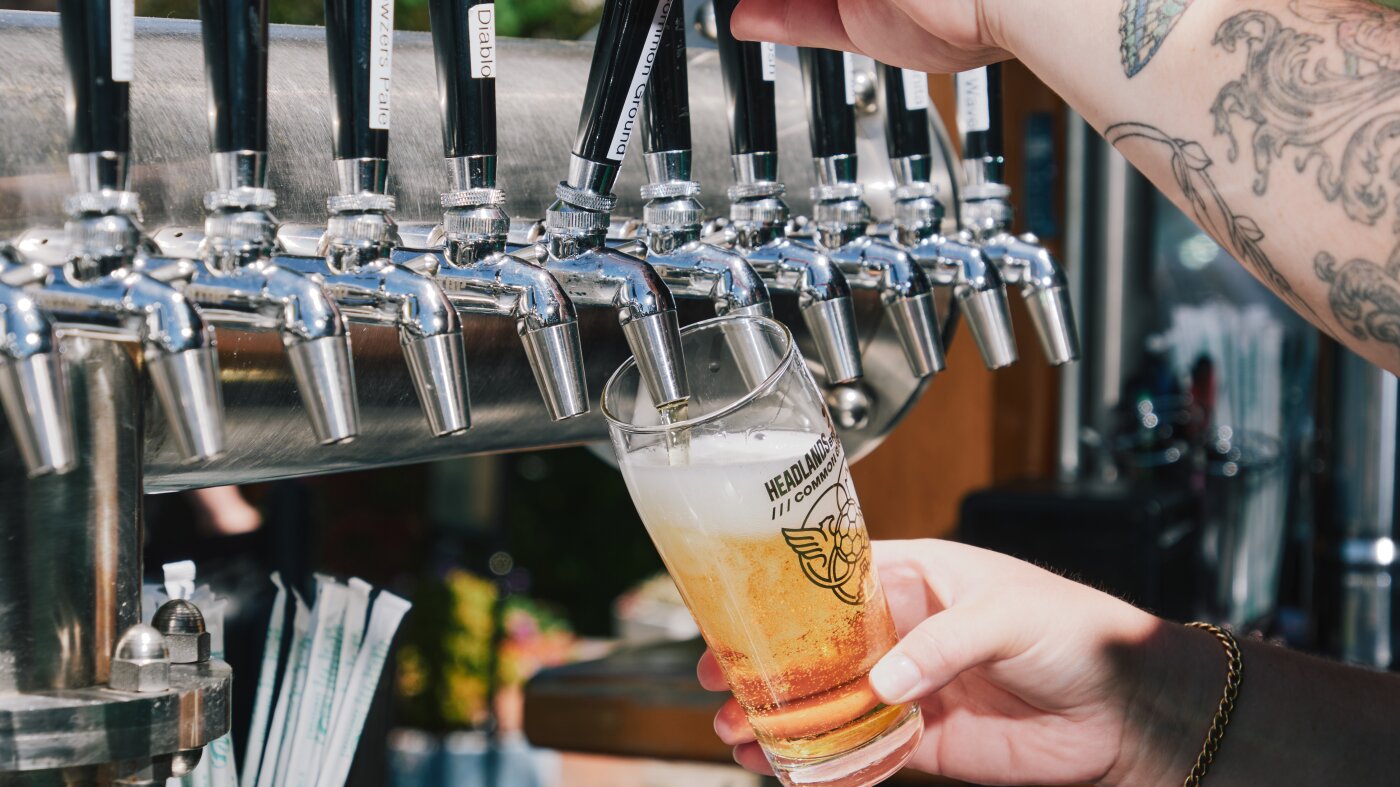
Headlands Brewing launched its World Cup-themed beer Common Ground ahead of the first World Cup game in June.
Justin Gellerson for NPR
hide caption
toggle caption
Justin Gellerson for NPR
The British betting company William Hill predicts that soccer fans will throw back more than 5 million pints of beer in stadiums and fan zones during this year’s World Cup. And that number doesn’t even account for the millions of pints being poured in bars as fans tune in to the global soccer event.
But while international soccer crowds are focusing on goals and penalties, a trio of craft breweries from the tournament’s three host nations are using the tournament to brew something increasingly rare: cross-border solidarity.

A shared recipe with local spin
The collaboration began months ago over a flurry of video chats and emails. The beermakers at Rey Árbol Brewing Co. in Mexico, Headlands Brewing in the United States, and Cabin Brewing Co. in Canada set out to design a single, unified recipe representing the brewing traditions of all three nations.
“It’s a Mexican lager,” said Alejandro Gomez, founder of Rey Árbol.
“That’s like a West Coast IPA,” said Ryan Frank, chief operating officer and brewmaster for Headlands.
“And up in Canada, most of our beers are hop driven,” said Haydon Dewes, co-founder of Cabin. “So we thought, let’s go for a dry-hopped Mexican lager.”
While all three breweries share the exact same recipe, each is giving the final product a distinct local spin, including unique, regionally designed labels. A four-pack of the U.S version costs $15.99. Frank said Headlands has produced about 130 cases of the limited-run brew.
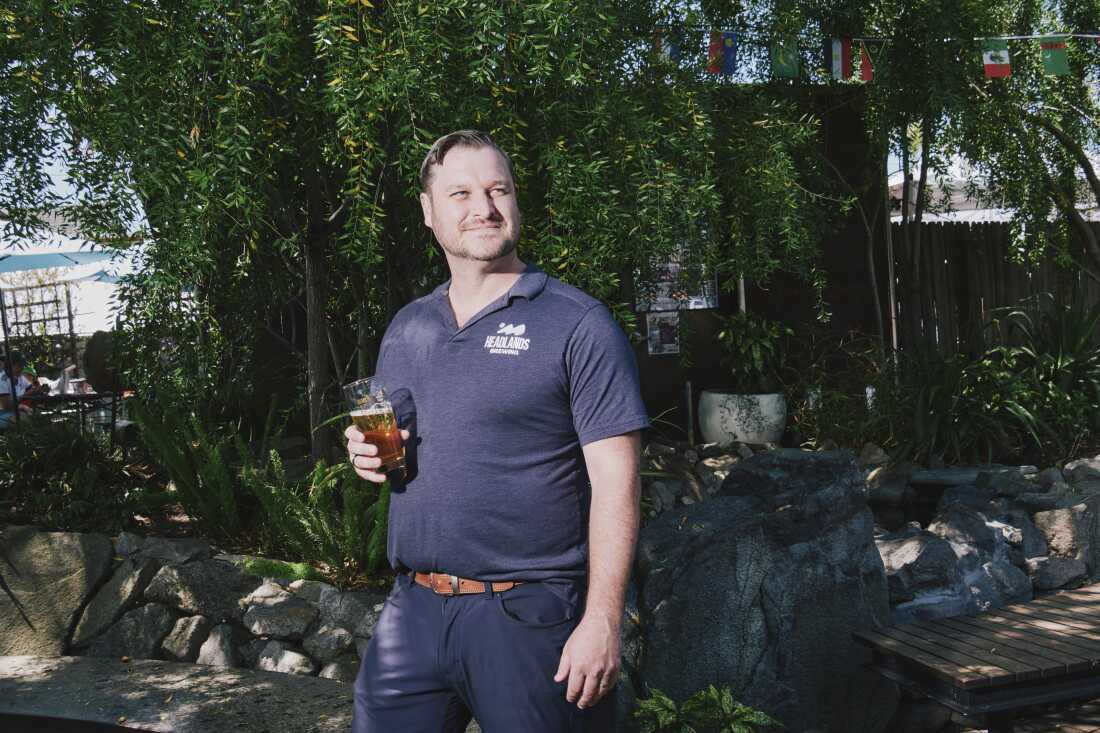
Headlands Brewing COO and brewmaster Ryan Frank drinks a Common Ground beer in Berkeley, Calif., on June 11.
Justin Gellerson for NPR
hide caption
toggle caption
Justin Gellerson for NPR
For the brewers, however, the project is less about marketing and more about connection: They named the multinational beer “Common Ground.”
“When I go to California or Canada, they will treat me like family,” Gomez said.
“It makes the world feel so much smaller,” said Dewes.
“It’s about building bridges and knowing what’s important in life,” said Frank. “And for us, that’s soccer and beer.”
Geopolitical friction in the taproom
The official rhetoric surrounding World Cup 2026 mirrors the brewers’ optimism, with promotional materials promising a tournament where billions are “united as individuals, united as billions.”
Yet this idealistic messaging stands in sharp contrast to a prickly geopolitical reality. Tensions between the U.S., Mexico and Canada have mounted over trade tariffs and auto manufacturing standards as the three nations renegotiate long-standing trade agreements.
The independent brewers behind Common Ground are feeling that friction firsthand through the rising costs of aluminum cans and raw ingredients.
“There are 15% tariffs slapped on any European-grown hops, which are really critical to some of our core brands,” Frank said.

Headlands Brewing brewmaster Ryan Frank and CEO Austin Sharp share a Common Ground beer in Berkeley, Calif., ahead of the first World Cup game on June 11.
Justin Gellerson for NPR
hide caption
toggle caption
Justin Gellerson for NPR
The political discord hasn’t just been confined to trade boards.
When signing an executive order to establish a White House Task Force for the World Cup in March 2025, President Trump suggested that cross-border hostilities might actually benefit the tournament. “Oh, I think it’s gonna make it more exciting,” the president said.
A bittersweet reminder
Tension on the soccer field is one thing; between nations, it’s another.
“It’s true that when it comes to the actual soccer, we’ve developed a very healthy, vibrant rivalry between the three countries,” said Andrés Martinez, the author of The Great Game: A Tale of Two Footballs and America’s Quest to Conquer Global Sport and co-director of Arizona State University’s Great Game Lab, which studies the intersection of sports, media and geopolitics. “But we’re also linked together in this very symbiotic relationship.”
Martinez said that when the U.S., Canada and Mexico initially launched their collaborative bid to host the World Cup back in 2017, the political climate was warmer.
“It was meant to showcase these tight bonds that had developed between the three countries,” Martinez said.

The makers of Common Ground used a shared recipe, but all created their own distinct packaging for the beer: Canada’s Cabin Brewing Co.; Mexico’s Rey Árbol Brewing Co.; the United States’ Headlands Brewing.
Cabin Brewing Company, Rey Árbol Brewing Company, Headlands Brewing
hide caption
toggle caption
Cabin Brewing Company, Rey Árbol Brewing Company, Headlands Brewing
But relations have soured since then, making cross-border business collaborations like Common Ground an anomaly rather than the norm for this tournament.
“To see craft beers across the three countries coming together like this, it’s a bittersweet reminder of what we were hoping to see a lot more of,” Martinez said.
Finding the real common ground
If trade wars and political posturing are looming large in Washington, D.C., Ottawa and Mexico City, they feel a world away at Headlands Brewing’s busy North Berkeley location.
As fans gathered to watch a crucial match between Mexico and South Africa at the start of the tournament, the sunny patio erupted into cheers and shrieks of “Goal!” when Mexico found the back of the net.

Headlands Brewing hosts a screening of the first World Cup game on June 11 in Berkeley, Calif.
Justin Gellerson for NPR
hide caption
toggle caption
Justin Gellerson for NPR
Hovering over a pint of the collaborative brew, soccer fan Roberto Mandujano reflected on the cross-border experiment.
“Three different ways, three different taste buds come together to make something cool,” he said.
When asked about the underlying political tensions between the host nations, Mandujano shrugged off the discord.
“We live in a world where everyone wants to make everything political,” Mandujano said. “But I think we’re all here for soccer. So I guess that’s the common ground.”
-

 Michigan1 minute ago
Michigan Lottery Daily 3, Daily 4 results for June 29, 2026
-

 Massachusetts4 minutes ago
Millions of gallons of wastewater discharged into Merrimack River due to broken pipe
-

 Minnesota9 minutes ago
Driver in fatal crash near Belview, Minnesota, was fleeing law enforcement
-

 Mississippi16 minutes ago
Mississippi gas prices drop ahead of Fourth of July weekend
-

 Missouri19 minutes ago
Gas prices falling in Missouri despite U.S. conflict with Iran
-

 Montana24 minutes ago
June 29 recap: Missoula and Western Montana news you may have missed today
-

 Nebraska31 minutes ago
Nebraska running back arrested in Florida on aggravated battery charge
-

 Nevada34 minutes ago
An ‘orchestrated dance’: Nevada moves bighorn sheep to help restore northern herd

