West
I was stranded in an EV at midnight. Progressives don't want you to know about my nightmare

NEWYou can now listen to Fox News articles!
It only takes a weekend trip to a wedding two hours outside of a big city to realize this country is nowhere near ready for the Democrats’ clean energy revolution. It’s too bad they’re unwilling to accept reality.
Democrats are pushing us toward an America powered by wind, solar, and other green alternatives to gas, oil, and coal. It makes us more reliant on electricity. But as I detail in my book “What’s Killing America: Inside the Radical Left’s Tragic Destruction of Our Cities”, the eco-reality favored by the Left is lightyears ahead of our reality.
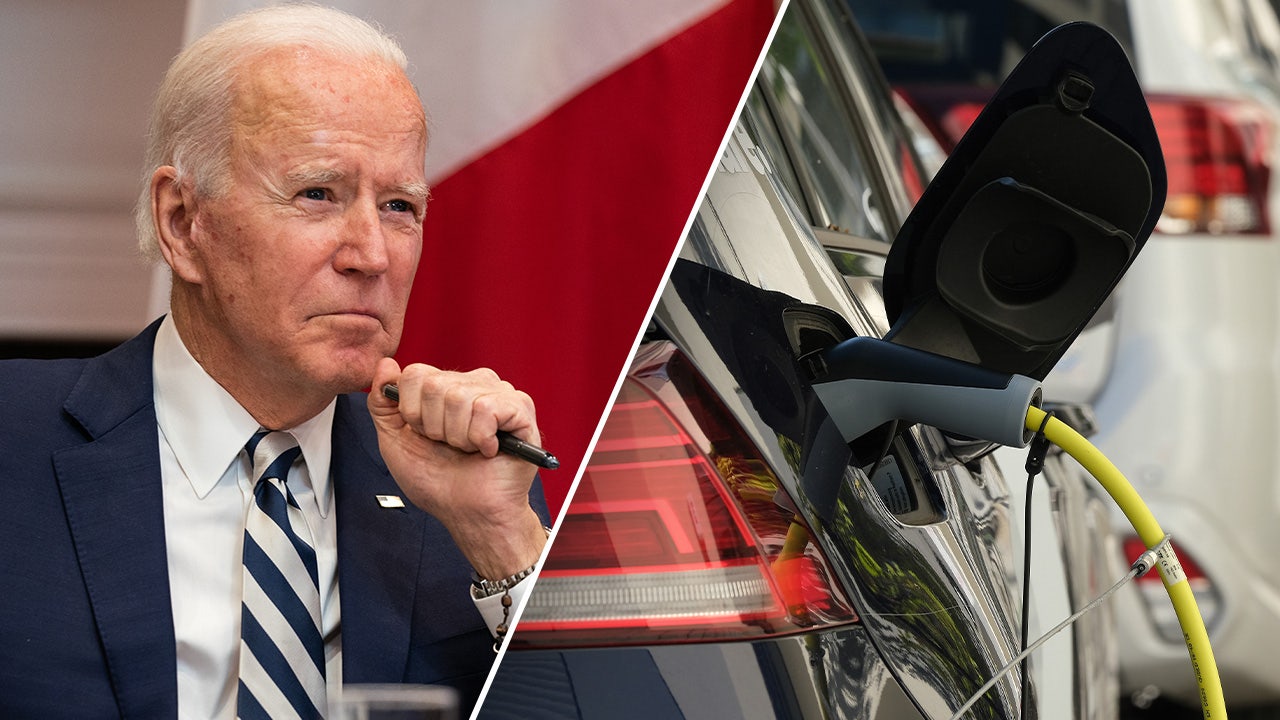
A major piece of the Democrats’ clean energy revolution is a mandate towards electric vehicles (EVs). At least 13 states, including Washington, California, New York, and Virginia, plus D.C., mandate new car sales to be EVs by 2035. The goal is to convert everyone to electric — by force. But to date, the country only has 168,426 charging stations, with a goal of 500,000 by 2025. A lot of good that will do. The International Council on Clean Transportation says the U.S. will require 2.4 million charging stations by 2030 (which includes at-home, public, and workplace) based on EV market trends.
BIDEN’S EV INSANITY JUST GOT EVEN WORSE
Last week, Hertz rental cars made headlines for ditching its EV fleet for more gas-powered vehicles. I lived their reason, learning a harsh lesson about our weak EV infrastructure while driving to a wedding in Cle Elum, 90 minutes east of Seattle.
I don’t own a car, so I rented one from Hertz. I was dubious of the EV they gave me, but I had no choice: they rented out the gas-powered car that I reserved and I was out of options.
As I drove to the wedding venue, I was nearly glued to the dashboard, watching a dwindling battery percentage. Just when I thought everything would be OK, I encountered hills. EV batteries do not like hills.
When I arrived at the venue, my dashboard said the battery would only last 43 more miles. I needed double that to make it back to Seattle. From the vows to the post-ceremony dinner, I was panicked, downloading apps that mapped out the nearest EV power stations, hoping I could make this work.
EVS SIGNIFICANTLY LESS RELIABLE THAN GAS-ENGINE CARS, CONSUMER REPORTS FINDS
There was a nearby EV plug-in location with a dozen open spaces — for Teslas. I wasn’t driving a Tesla. Without a standard EV plug, if you don’t have an adapter, you’re out of luck. The closest location compatible with my car was a diner in the middle of nowhere, 30 miles away.
I nervously headed out, watching the battery react to every hill, and every press of the gas pedal. The car misled me about how far I’d get. After 30 minutes, I had 9.5 miles to the charger and a battery that could handle 17 more miles.
WINTER WEATHER PRESENTING EV OWNERS WITH ‘FRUSTRATING’ CHALLENGES
Pro-tip: when driving an EV, do not make any mistakes — like missing a poorly lit off-ramp to your plug-in station on a highway where the next opportunity to get off and head back is two miles away (and two miles back), when your battery has only about one mile left to give. I was forced to pull over, cruising to a stop in the middle of nowhere. The battery had died as I was pulling off the freeway. Moments later, the lights and heat went out. It was pitch black and about 30 degrees.
I don’t know if you’ve ever tried getting a tow truck to pick you up in the middle of nowhere, but it turns out they will accept your business, quote you $300, and say they’ll pick you up in 20 minutes only to tell you 45 minutes later that they are canceling.
After two hours of mostly yelling at Hertz customer service and cursing the lack of EV infrastructure in the state, I got an Uber after two hours of waiting. A driver named Hussein took pity on me and agreed to pick me up. He couldn’t arrive soon enough. My cell phone battery hit 13%, and, as with my EV, I had nowhere to plug it in.
CLICK HERE FOR MORE FOX NEWS OPINION
When the Uber arrived, I abandoned the EV. It was now Hertz’s problem. I got home, $108.91 later (plus a generous tip). This is your future in the Democrats’ EV world.
In Washington state, relatively straightforward transit projects take years and are always over budget. Does anyone think any state can install the hundreds of thousands of charging stations needed for an hours-long ride? Even the large urban areas with Democrat-controlled government aren’t installing charging stations at large scale. And can we even afford it? Washington State is spending $41 million to install just over 180 charging stations. As of September 23, the state only had 1,820 charging stations. Is the technology advanced enough that the current charging stations, with clunky and heavy plugs, will not need a major upgrade within the next decade?
FILE – Man pushing stranded Tesla in Chicago in frigid winter temperatures (‘Fox & Friends’ screengrab)
We’d better start embracing staycations because road trips are out of the question. Forget long drives to see medical specialists. And you better not forget to plug in each night or you’ll find yourself without a battery juice when driving home from work.
The battery technology isn’t where it needs to be to make EVs worthwhile, and the prices aren’t low enough for most families to comfortably purchase (you can thank Bidenomics for that). Yet Democrats continue to force EVs on us.
Even if the infrastructure existed, our power grids couldn’t handle it.
Temperatures in Washington state hit historic lows this month and our power grid wasn’t prepared. As temperatures dropped to 17 in Seattle, Puget Sound Energy, the state’s largest supplier of electricity and natural gas, asked customers to lower their thermostats and limit the use of hot water to “reduce strain on the grid.”
Our grid couldn’t handle a weekend of below-normal temperatures. But we should expect it’ll handle a near future of EVs? Heaven forbid it get cold when our cars are plugged in.
CLICK HERE TO READ MORE FROM JASON RANTZ
Read the full article from Here


An abandoned house near San Francisco’s Castro neighborhood that has been popular with squatters for years is now for sale.
On Yukon Street at the edge of Kite Hill in the Eureka Valley neighborhood, the house with arched windows over the garage, including one that’s broken, is listed for $1.3 million.
Listing agent Zara Rowbotham and her brother, James, put together a promotional video highlighting the home’s fixer-upper potential.
There is no running water or power at the house. Neighbors have reported to the city that squatters relieve themselves at the top floor atrium.
“They needed a place to do it, so they had the nice manners to do it in one basket,” Rowbotham said. “Unfortunately it was an outside basket right in front of one of the neighbors’ houses.”
With the nature of San Francisco’s red-hot housing market, Rowbothom said they already have a potential buyer.
Rowbothom added the city is swirling with money right now and there are few places to buy, so properties like the one on Yukon Street – even with a history of squatters – are being snapped up quickly. Rowbothom said they’re going for millions of dollars, with people paying cash a lot of the time.

Denver will use $3 million of its contingency fund money to help pay out settlements this year under an ordinance the City Council approved Monday.
The council makes a similar transfer every year, but the amount varies depending on the settlements reached, said Laura Swartz, the spokesperson for the city’s finance department.
“It is difficult to budget for settlements in advance because the amounts and timing can be unpredictable based on each case’s own scheduling, negotiations and court decisions,” Swartz said.
Every year, the city sets aside $2 million for settlements in the budget. Officials request a transfer from the contingency fund for anything needed above that amount. The 2026 transfer brings the amount that will be used to pay out settlements this year to $5 million so far.
This year’s allotment will leave the city with $30.5 million remaining in its contingency fund. The contingency fund is separate in the annual budget from the city’s reserves, which officials have been working to replenish from a recent low point.
The city has been ordered to pay millions of dollars in settlements in recent years related to the Denver Police Department’s actions during the George Floyd protests.
Earlier this month, the council approved about $2.87 million in payments for 13 people who alleged that local police violated their constitutional rights during the 2020 protests.
In April, a federal appeals court ruled that the city must also pay $14 million to another group of protesters, upholding a jury verdict. The city hasn’t yet said how it will pay out that amount.
“The city is contemplating the next steps first and expects to have more to share soon,” Swartz said.
The city has approved a total of $24.2 million for settlements related to the George Floyd protests, according to the City Attorney’s Office. That count doesn’t include the $14 million the appeals court ordered the city to pay in April.
“This is money that we could have used for any other purpose,” Councilwoman Shontel Lewis said during a council meeting. “It represents a missed opportunity.”
The council unanimously approved the contingency money transfer through its consent agenda.
Stay up-to-date with Colorado Politics by signing up for our weekly newsletter, The Spot.

Two weeks ago, we reported on information prepared for a scheduled meeting of the City Council Public Safety Committee, suggesting that SPD might have to slow its hiring because fewer officers were leaving, which posed a budget dilemma. That briefing scheduled for the committee’s June 9 meeting ultimately was postponed because it was the last item on the agenda and the previous two ran long. It’s now scheduled for tomorrow’s committee meeting (9:30 am Tuesday, June 23), same slide deck, but this time it’s the second item on the agenda, so not likely to be bumped again. It’s a regularly scheduled quarterly update, no votes scheduled nor attached proposals, but it can be viewed in the prism of the city’s looming budget shortfall. The agenda explains how to comment and/or watch, in person or remotely.
-

 San Francisco, CA1 minute ago
San Francisco home with a history of squatters hits the market for $1.3 million
-

 Miami, FL9 minutes ago
Miami Heat slip behind Boston Celtics in Giannis Antetokounmpo race
-

 Dallas, TX11 minutes ago
1 Dallas Cowboys Training Camp Battle That Could Make Or Break 2026 Season
-

 Boston, MA19 minutes ago
With Columbia Threadneedle out, Boston Triathlon director is looking for a new sponsor – The Boston Globe
-

 Denver, CO26 minutes ago
Denver transfers $3 million from its contingency fund to pay out settlements
-

 Seattle, WA29 minutes ago
CITY COUNCIL: Rescheduled briefing on Seattle Police staffing Tuesday
-

 San Diego, CA41 minutes ago
Los Angeles schools superintendent resigns after FBI search and months on paid leave
-

 Milwaukee, WI44 minutes ago
Milwaukee DPW truck ran red light, crashed into vehicle; 2 injured

