Hawaii
The ‘shaka’ may become Hawaii’s official gesture. It has a friendly history


KANEOHE, Hawaii — A pinky and thumb extended with the remaining fingers curled down: That’s the “shaka” in Hawaii.
The gesture is sometimes known outside the islands as the “hang loose” sign associated with surf culture, but it was a fixture of daily life in the islands long before it caught on in California, Brazil and beyond. People in Hawaii have a variety of shaka styles and use it to convey a range of warmhearted sentiments, from hi and bye to thanks and aloha, among other meanings.
When captains of the Lahainaluna High School football team, from the Maui community devastated by last summer’s deadly wildfire, were invited to the Super Bowl in Las Vegas last month, they flashed shakas for the cameras.
Now, a pair of bills in the state Legislature would make the shaka the state’s official gesture and recognize Hawaii as its birthplace.
Sen. Glenn Wakai, who introduced the Senate version, said he can’t imagine the measure meeting any opposition and expects it to “sail through.”
Here are some things to know about Hawaii’s shaka — including its purported origin with a seven-fingered fisherman.
What is the shaka?
On paper, the House bill notes that the “shaka generally consists of extending the thumb and smallest finger while holding the three middle fingers curled, and gesturing in salutation while presenting the front or back of the hand; the wrist may be rotated back and forth for emphasis.”
In practice, the shaka is far more nuanced.
Some say the only requirement is an extended pinky and thumb. Others say shaking the shaka is a no-no.
Those from beach or rural communities tend not to shake their shakas. But in the capital city of Honolulu, it’s common.
“It’s just a strong movement — one movement,” said Chase Lee, who grew up just outside Honolulu. He was taught never to shake the shaka. If you do, “you’re a tourist,” he said.
But Erin Issa, one of his colleagues at Central Pacific Bank, likes to wag hers.
“I’m a very animated person,” she said. “I feel awkward if I’m just standing still.”
She prefers to flash a shaka with the palm facing outwards, as a sign of respect: “It’s shaka-ing to you, not to me.”
“As long as you get your pinky finger and your thumb out, you can wave it or you can just do just a flat shaka,” Dennis Caballes, a Honolulu resident, said while fishing at a beach park.
What does it mean?
The shaka carries friendliness and warmth — aloha spirit. Some hold it low when greeting a child, and some like to flash double shakas. It can convey greetings, gratitude or assent, or it can defuse tension. It was particularly useful in the early days of the COVID-19 pandemic, when people were afraid to shake hands.
“It’s such a versatile gesture,” said state Rep. Sean Quinlan, who introduced the House bill at the behest of a documentary filmmaker exploring the sign’s backstory.
Big Island state Rep. Jeanné Kapela, one of the House bill’s co-sponsors, said residents are “so lucky to have a visual signal for sharing aloha with each other.”
Shakas can avert altercations when people are cut off in traffic, said Wakai, the state senator who introduced the Senate version.
“The angst toward that driver kind of just immediately gets reduced,” Wakai said.
Where does the shaka come from?
The prevailing story of the shaka’s origin traces back to a Native Hawaiian fisherman named Hāmana Kalili, who lived on Oahu’s North Shore in the early 1900s. Mailani Makaʻīnaʻi, Kalili’s great-great-granddaughter, wants the bills amended to include his name — something lawmakers are considering.
Kalili lost three fingers in a sugar mill accident, she said.
After the mishap, Kalili worked as a guard on a train. Kids who jumped the train for a free ride would curl their middle fingers to mimic Kalili’s injured hand, giving other train-jumpers the all-clear, said Steve Sue, who researched shaka for his documentary.
Other residents adopted Kalili’s three-finger-less wave more broadly, according to family lore, and it spread, possibly fueled by the waves of tourists that began arriving after World War II.
“I love the compassion part of it, you know, where, ‘Oh, okay, he doesn’t have all three fingers. So, I’m going to say hi the way he’s saying hi,’” Makaʻīnai said. “It’s the idea that … I’m like you and you’re like me.”
There’s a bronze statue of Kalili, his right arm extended into a shaka, at the Polynesian Cultural Center in Laie.
There are various theories about how the term “shaka” became associated with the gesture. Some have suggested that the name came from Japan’s Shaka Buddha.
How is the shaka used now?
The sign has spread around the world since the surfing boom of the 1950s and ’60s. It’s popular in Brazil, where it’s been used by martial arts aficionados. Brazil soccer greats Ronaldinho and Neymar Jr. incorporated it into their goal celebrations.
The shaka is such an integral part of Hawaii life that it’s easy to miss, said Sen. Chris Lee, chair of the Committee on Transportation and Culture and the Arts.
Some Honolulu city buses are outfitted with a digital shaka light that bus drivers can turn on to thank motorists for letting them merge. Texters have co-opted the “call me” emoji to symbolize the shaka, and local station KHON-TV has ended each evening newscast since the 1970s with clips of people flashing shakas.
Longtime KHON anchor Howard Dashefsky said throwing a shaka is almost a reflex when people in the community recognize him and call his name.
“There’s a lot of other places where you only get a one-finger gesture,” he said.
Shakas also come out naturally when people from Hawaii are somewhere else in the world and want to display connection to their island roots.
Businesses often use the shaka to project community belonging.
Central Pacific Bank, for example, called their digital checking account Shaka Checking at the suggestion of electronic banking manager Florence Nakamura.
“It makes people feel good when they receive one,” she said.



HONOLULU (HawaiiNewsNow) – Gov. Josh Green on Thursday announced he has nominated Vladimir Devens to serve as chief justice of the Hawaii Supreme Court.
The chief justice is responsible for administering the statewide court system, including oversight of court operations, judicial assignments, and efforts to improve efficiency and access to justice.
Devens, who has served as an associate justice since 2024, brings more than three decades of legal experience to the role, including extensive work in civil litigation and public service.
Green said Devens “brings something that is essential in this moment — real-world experience, a deep understanding of working people and a grounded, salt-of-the-earth perspective that reflects the values of our communities. At a time when families are focused on affordability, housing and stability, we need continuity and steady leadership in our courts. Justice Devens is the right person to lead with fairness, independence and a clear understanding of how decisions impact everyday people.”
If confirmed by the Hawaii State Senate, Devens will serve as the state’s highest-ranking judicial officer, overseeing the administration of the judiciary and guiding the work of the Supreme Court.
He would succeed Chief Justice Mark Recktenwald, who retired last September after reaching the state’s mandatory retirement age of 70.
“I am deeply honored by Governor Green’s nomination and grateful for the opportunity to continue serving the people of Hawaii,” Devens said. “Throughout my career, I have worked alongside individuals and families navigating real challenges and I carry those experiences with me. If confirmed, I will focus on ensuring our courts remain fair, accessible and responsive to the needs of all communities, while upholding the rule of law and maintaining public trust.”
Devens received a bachelor’s degree in economics, graduating magna cum laude and earning Phi Beta Kappa honors from the University of California, Berkeley. He earned his Juris Doctor from the University of California, Berkeley School of Law (formerly Boalt Hall), where he served as an Associate Editor of the Industrial Relations Law Journal.
Prior to his appointment, Devens worked in private practice for more than 30 years, where he concentrated on civil litigation across multiple practice areas. He also served on the Hawaii State Bar Association board of directors and on various HSBA committees.
Copyright 2026 Hawaii News Now. All rights reserved.


Doctors, nurses arrested in Southern California health care fraud investigation

Colorado National Guard deploys to the Middle East

CT’s top Latin and Caribbean restaurants of 2026, according to Connecticut Magazine

The real differences between Aldi, Lidl and Trader Joe’s in Delaware

Video shows Backstreet Boys star Brian Littrell in heated dispute at Florida home

Florida High School Football Rankings: Top 25 teams – Oct. 21

How old is Bo Nix? What to know about Oregon quarterback ahead of 2024 NFL Draft

Cleary's 21 help Le Moyne down Central Connecticut State 69-64 in OT

99th annual Pony Swim held in Virginia

Indiana Members Credit Union announced as new anchor tenant at Bottleworks District

Video: Trump Struck Iran. Now Farmers Are Paying the Price.

What B-52 bombers bring to Iran fight — and what it means for the war now

Podcast: Hungary elects: what is at stake and who is likely to win?
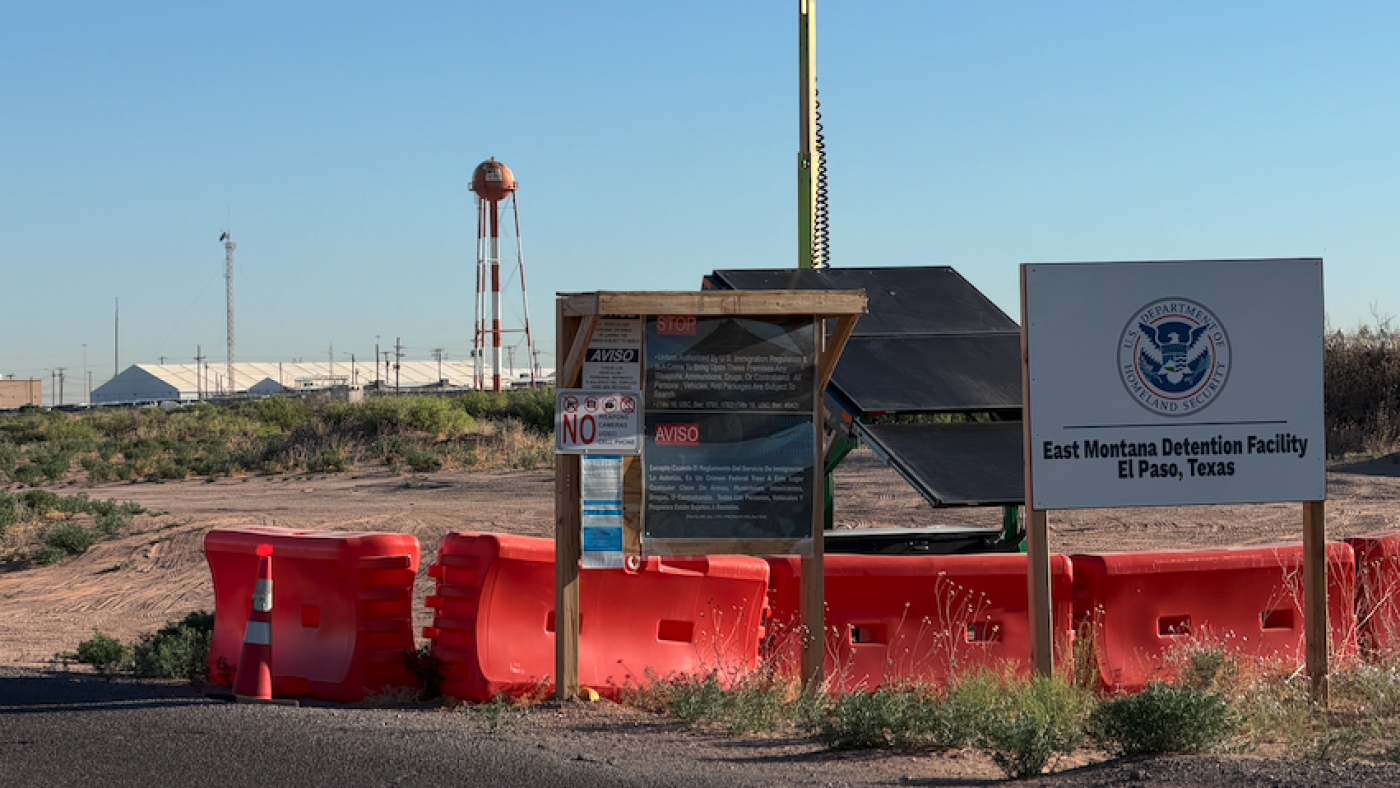
ICE detention deaths are on a record pace. One Texas facility bears the brunt

GOP rails against ‘s— sandwich’ deal as all eyes turn to House to end DHS shutdown
-

 South-Carolina5 days ago
South Carolina vs TCU predictions for Elite Eight game in March Madness
-

 Culture1 week ago
Wil Wheaton Discusses ‘Stand By Me’ and Narrating ‘The Body’ Audiobook
-

 Miami, FL1 week ago
Jannik Sinner’s Girlfriend Laila Hasanovic Stuns in Ab-Revealing Post Amid Miami Open
-

 Culture1 week ago
What Happens When We Die? This Wallace Stevens Poem Has Thoughts.
-

 Minneapolis, MN1 week ago
Boy who shielded classmate during school shooting receives Medal of Honor
-

 Vermont5 days ago
Skier dies after fall at Sugarbush Resort
-

 Education1 week ago
Video: Transgender Athletes Barred From Women’s Olympic Events
-

 Politics5 days ago
Trump’s Ballroom Design Has Barely Been Scrutinized