Hawaii
The Places Visitors Love Most In Hawaii Just Hit Their Limit


If you’ve driven Hana Highway recently, as we have, tried to wedge your rental car onto the shoulder at Honolua Bay, inched along North Shore behind an hours-long nonstop line of brake lights, or followed a social media pin taking you to Hoopii Falls, Hawaii just put those exact places into specific future plans.
The state updated plans naming specific beaches, roads, trails, and bays where visitor pressure is highest and outlining what officials say could change at each. The first round of these (DMAPs) leaned heavily on broader goals and community meetings. The latest version, however, now lists the individual sites and attaches proposed actions. These are among the most in-demand places people build into their trips, not some policy abstractions.
Before assuming your next trip will look dramatically different, one basic reality is worth noting. The Hawaii Tourism Authority does not manage the roads, trails, bays, or neighborhoods in question, so the counties, DLNR, Hawaiian Home Lands, and private landowners will be needed to carry out most of what has just been described. In almost every case, the first year at least is focused on more studies, coordination, and setting up of what might come next.

Maui: Hana and Honolua finally get specific plans.
Maui’s plan centers squarely on the iconic Hana Highway, with six of the island’s nine site-specific actions targeting that single corridor.
The ideas are relatively straightforward. Paid community stewards at high-traffic stops such as Keanae Peninsula, a first-of-its-kind Hawaii tour guide certification program requiring culturally accurate mo’olelo (storytelling), safety guidance, and place-based knowledge instead of loosely scripted commentary, together with clearer signage identifying safe and legal pullouts while reminding drivers to let residents pass instead of backing up traffic for visitor photo opportunities.
At Bamboo Forest off Hana Highway, the plan addresses repeated trespassing onto private land. There have been 35 rescues there over the past decade, most requiring use of emergency helicopters. The proposal calls for signage clearly indicating no access. But because that land is privately owned, any real restriction there depends on the owner’s full cooperation.
Honolua Bay carries perhaps the boldest concept of all in the statewide package of suggested changes, including a reservation and shuttle system to eliminate illegal roadside parking, a cultural trail staffed by stewards before visitors ever reach the water, and water stewards who will be paddling out to orient snorkel boat passengers. No procurement process has started, and no shuttle contract exists, so the idea remains on paper for now. Kaupo, where a recently paved road has attracted more traffic and complaints, would also get sensor-linked warning signs at blind hills to focus on driving safety.
Big Island: Kealakekua Bay may see closings.
Kealakekua Bay is the main headline site here, as might be expected. The draft introduces the possibility of “rest days” during coral spawning or other sensitive periods, coordinated by the DLNR, when the bay would be closed to visitors. It is still a concept and would require coordination beyond HTA.
At Keaukaha near Hilo, cruise ship impacts drive the conversation ideas, and the community has pushed for a permanent role in shaping how visitor flow is handled around the port. A steward program piloted in 2023 is now being formalized rather than remaining as a short-term experiment.
South Point, or Ka Lae, sits on Hawaiian Home Lands, so the state’s role here is to support the Department of Hawaiian Home Lands’ existing plan rather than create a new one from scratch. Hilo itself is described as needing more visitor activity even as other Big Island sites seek to manage crowding.

Oahu: North Shore, pillboxes, and parking reality.
On Oahu, it’s the iconic North Shore that anchors the plan. Five sequenced actions are listed, but the first year focuses on studies, coordination, and groundwork.
There is no shuttle system scheduled for immediate rollout and no reservation platform ready to launch. During the public webinar, officials said any fees would be site-specific and pointed to the extremely limited parking infrastructure as a major constraint.
Lanikai Pillboxes and Maili Pillbox are cited as trails that have seen steep increases in use due to social media exposure. Lanikai already has daytime parking restrictions on residential streets between 10 am and 4 pm, and Maili has experienced a recent fatality. The plan for Lanikai is to evaluate managed access, while for Maili, it begins with determining who is responsible for the trail and what authority exists in order to manage it.
Downtown Honolulu appears in the draft as a future walkable corridor linking Iolani Palace, Honolulu Hale, and nearby historic sites and shops.

Kauai: this waterfall became a neighborhood fight.
Hoopii Falls in Kapaa has become one of the most tense sites in the statewide plans. What was once a local waterfall became a high-traffic destination after intense social media exposure. The trail crosses private, lease, and state lands and is not formally maintained, and residents have placed rocks and tree stumps at neighborhood access points to slow or block visitor flow. The plan’s near-term focus is to gather more data and bring landowners together to clarify jurisdiction and what can legally be done before any formal access system is devised.
The Kapaa Crawl along Kuhio Highway is listed as a priority, but the proposed response, which is a shuttle and visitor hub concept centered on Coconut Marketplace, has no funding, no operator, and no timeline.
Kokee and Waimea Canyon are also included. Two of four proposed actions are already deferred beyond the first funding year, and the near-term steps focus has moved to installing visitor counters and studying whether a reservation system would be feasible.
What changes on your next trip.
Across all four islands, social media is repeatedly cited as a significant accelerant, turning lesser-known spots into must-see stops almost overnight. And in that regard, there is no end in sight.
There are no additional statewide fees attached to these newly identified sites, no disclosed budgets for even the most ambitious concepts, and HTA does not gain or lose any new enforcement authority through these drafts.
If you are visiting in the coming months, you are unlikely to encounter reservation systems at Honolua Bay, formalized rest-day closures at Kealakekua, shuttles operating on the North Shore, or state-managed access changes at Ho’opi’i. Most of what is described for year one is groundwork.
You can review the full island-by-island drafts here: https://www.hawaiitourismauthority.org/what-we-do/destination-management-action-plans/
Do these plans go far enough or too far at the sites you know best? Get Breaking Hawaii Travel News



Hawaii’s most welcoming countryside towns are rarely the ones that appear on the standard itineraries. Kaunakakai on Moloka’i has no traffic lights and the longest pier in the state. Maunaloa sits above one of Hawaii’s largest white-sand beaches. Naalehu’s most famous landmark is a tree that Mark Twain allegedly planted in 1866. These eight towns, spread across six islands, each have something specific that makes them worth the detour.
Hale’iwa
Next, let’s explore the town of Hale’iwa, a globally renowned destination that draws surfers every year for its winter waves. The town is also renowned for its laid-back charm, local food trucks, and shaved ice. For a day out on the water, try your hand at snorkeling at Shark’s Cove. The cove is a popular destination for snorkeling and scuba diving, surrounded by lava rocks and coral formations, and is bursting with marine wildlife. However, if you are concerned about sharks, then there is no need to worry, as the cove’s name comes from its shark-like shape if you are looking at it from a bird’s-eye view. You can also rent a paddleboard or kayak and travel up the Anahulu River and go under the iconic Hale’iwa Rainbow Bridge. You can also spot green sea turtles basking in the sun on your journey upstream. To satisfy your sweet tooth, you can grab a scoop of flavored ice at Matsumoto Shave Ice, a family-owned dessert spot where its shaved ice is the main attraction. Patrons can choose from a variety of flavors for their shaved ice, like passion fruit, guava, and mango, and top it off with either mochi balls or condensed milk.
Kaunakakai

On the island of Moloka’i, the town of Kaunakakai is famous for its laid-back nature and the charm of “Old Hawaii”. What does “Old Hawaii” mean? It means that there are few traffic lights and no major chain stores. There are, however, some interesting things to see and do in town, including Kaunakakai Harbor, home to the longest pier in Hawaii. It stretches 1,900 feet into the Pacific Ocean and is a popular destination for fishing, sunset watching, and launching boat tours. A legendary spot to visit in Kaunakakai is Kanemitsu’s Bakery. The bakery is known for its “Hot Bread,” which comes in slices filled with any filling you choose, like cream cheese, strawberries, blueberries, or cinnamon. The bakery also serves fresh papaya bread, cheese bread, donuts, and all of the classic pastries that you would find at any bakery. For some retail fun, visit Ala Mālama Avenue. Instead of major chain stores, the avenue is lined from top to bottom with local mom-and-pop stores and boutiques, and it is a hot spot for everyday services. The items the shops offer may make for some interesting souvenirs to take home.
Makawao
One interesting fact about Makawao is that it was known as the heart of paniolo (Hawaiian cowboy) country. That’s right. A long time ago, paniolos inhabited Makawao and made it their home. One way to learn more about them is to attend the town’s annual Makawao Rodeo, which takes place on the weekend of Independence Day. Thousands of spectators flock to the Oskie Rice Arena for bull riding, barrel racing, roping events, and all sorts of other traditional rodeo events. The event also hosts block parties, local food vendors, and live country-western entertainment. For a truly colorful and unique souvenir, visit Hot Island Glass. The shop is a working glassblowing studio where you can watch artists create incredible glass masterpieces, including platters, vases, and island-inspired sculptures such as pineapples and jellyfish. A quick and easy hike to take in Makawao is the Waihou Springs Trail. During the trek, you will be guided through the lush greenery of the forest before being taken to Waihou Spring, where the water drips from a towering fern wall and into the crystal waters. There are also small lava tubes and old irrigation tunnels carved into the volcanic rock to explore on your walk.
Lānaʻi City
As the only major city on the island of Lānaʻi, you can rest assured that there are a lot of things to do in Lānaʻi City upon your arrival. The town is best known for its rich pineapple plantation history, and one way to learn more is to visit Dole Park at the heart of the city. The plantation is the central hub of community events like the annual Pineapple Festival, the Saturday Market, and its “Fifth Friday”, where the community comes alive with free live entertainment and over twenty-five vendors from local restaurants and shops for one of the biggest block parties the citizens have ever seen. If you are an enthusiast of horses or equestrians, then come to the Stables at Koele. At the stables, you will gaze upon the sweeping landscapes via horseback while learning about the ranching history of Lānaʻi and the lifestyle of the paniolo (Hawaiian cowboys) along the way. After a long day of exploring Dole Park and gazing at landscapes via horseback, fill up on pizza, burgers, teriyaki beef, or chicken katsu when you dine at Lanai Bowl. This 1950s-inspired retro diner is also home to an arcade, a soda fountain, a jukebox, and a four-lane bowling alley, where you can not only indulge in Hawaiian and American cuisine, but also have an amazing time while waiting for your food to be served.
Hanapepe
Serving as inspiration for the setting of the 2002 animated feature film Lilo and Stitch, Hanapepe, meaning “crushed bay” in Hawaiian, is renowned for its vibrant art community and deep cultural roots. Speaking of cultural roots, one way to explore Hanapepe’s cultural background is to take a stroll across the Swinging Bridge. The bridge is a 186-foot-long wooden suspension bridge spanning the Hanapepe River. It was built in 1911 to help plantation workers and children cross the water. Since then, it has remained a landmark within the town, offering patrons a fun, bouncy walk across the river. For a tranquil day on the beach, come to Salt Pond Beach Park, a popular, family-friendly beach park that got its name from the town’s traditional Hawaiian salt ponds. At the beach, you can spend the day swimming, snorkeling, camping, and firing up the barbecue on the beach’s own barbecue grills for a picnic lunch. At the Midnight Bear Bakery, you can indulge in organic sourdough loaves, flaky European-style pastries, and the freshest coffee in town. The perfect place to enjoy breakfast or lunch before heading off on your next adventure.
Hāwī
In Hāwī, you will be treated to lush tropical scenery, historic Hawaiian culture, and a laid-back, artsy vibe. To explore the lush tropical scenery of Hāwī, book a horseback riding tour with Paniolo Adventures, an open-range horseback riding experience that gives patrons a chance to become paniolos (Hawaiian cowboys) as they explore the sweeping views of the Pacific Ocean, grazing cattle, and surrounding volcanoes that call Hawaii their home. To satisfy your sweet tooth, you can pay a visit to the Our Founding Farmers Ice Cream Shop. The ice cream shop is a highly rated, farm-to-scoop parlor that specializes in small-batch, handmade ice creams and sorbets that are made with locally sourced Hawaiian ingredients like papaya, dragonfruit, and lychee, organic sugar, and fresh dairy. Every Saturday morning, Hāwī comes alive with the Hāwī Farmers Market. At the market, you will find fresh local produce, handmade artisanal crafts, and prepared, hot meals. All of which are operated under the relaxed, welcoming atmosphere of the rural setting around it.
Maunaloa
At Maunaloa, you can expect to find a town full of laid-back country charm and glorious ocean views. If there was one place to visit in Maunaloa, it is the extremely quirky, world-famous Big Wind Kite Factory. The kite factory is a family-run shop that produces vibrant nylon kites and windsocks for you to purchase and fly across the sky. The shop even offers free kite-making lessons so you can learn how these beautiful, colorful kites are brought to life. Whenever you need essentials during your visit to Maunaloa, take a trip to the Maunaloa General Store, where you will find all of the snacks and groceries you need before heading off on your next Hawaiian adventure. The store also sells cold drinks, local grab-and-go items, and a wide selection of beer and wine. Just a short drive down the hill lies Pāpōhaku Beach, one of the largest white-sand beaches in the state, best known for its isolation and its lower crowd levels compared to other beaches. It also has superb views of Oʻahu, so you can look over the beautiful views as you take scenic walks along the powdery sand, enjoy a picnic lunch, and even camp out overnight at one of their designated campsites.
Naalehu
What was formerly a sugar plantation is now the beautiful town of Naalehu, Hawaii, where you will now find unique, exotic beaches and iconic island landmarks such as Haleokane Lookout. At the lookout, you will overlook panoramic views of Honuapo Bay, rugged sea cliffs, and the sparkling Pacific Ocean below. During the winter months, if you are lucky, you will be able to catch humpback whales frolicking in the ocean waves. At the Punalu’u Bake Shop, you will be able to indulge in their traditional Hawaiian sweet bread and their sugar-coated malasadas (Portuguese fried donuts). Aside from being a bakery, it is also a roadside attraction and visitor center where patrons can come in and sample their delicious goodies while sitting in the lush outdoor patio and garden area. One historic landmark in Naalehu is the Mark Twain Monkey Pod Tree, which, according to legend, is the very tree that author Mark Twain planted in 1866 as a gesture of appreciation for the island’s natural beauty during his visit. It is also known for its enormous, umbrella-shaped canopy, with a diameter of 100 feet, making it the perfect place to catch some shade from the Hawaiian heat.
Visiting Hawaii’s countryside offers an escape from the bustling resort hubs. In the countryside of Hawaii, you will be able to see untouched natural landmarks and ecosystems, immerse yourself in the deep-rooted cultural history, and find local island gems that will have you talking about for years to come. While the bigger cities of Hawaii sound like fun, if you immerse yourself in a slower pace of life, you might find yourself having an even grander time in the Hawaiian countryside.
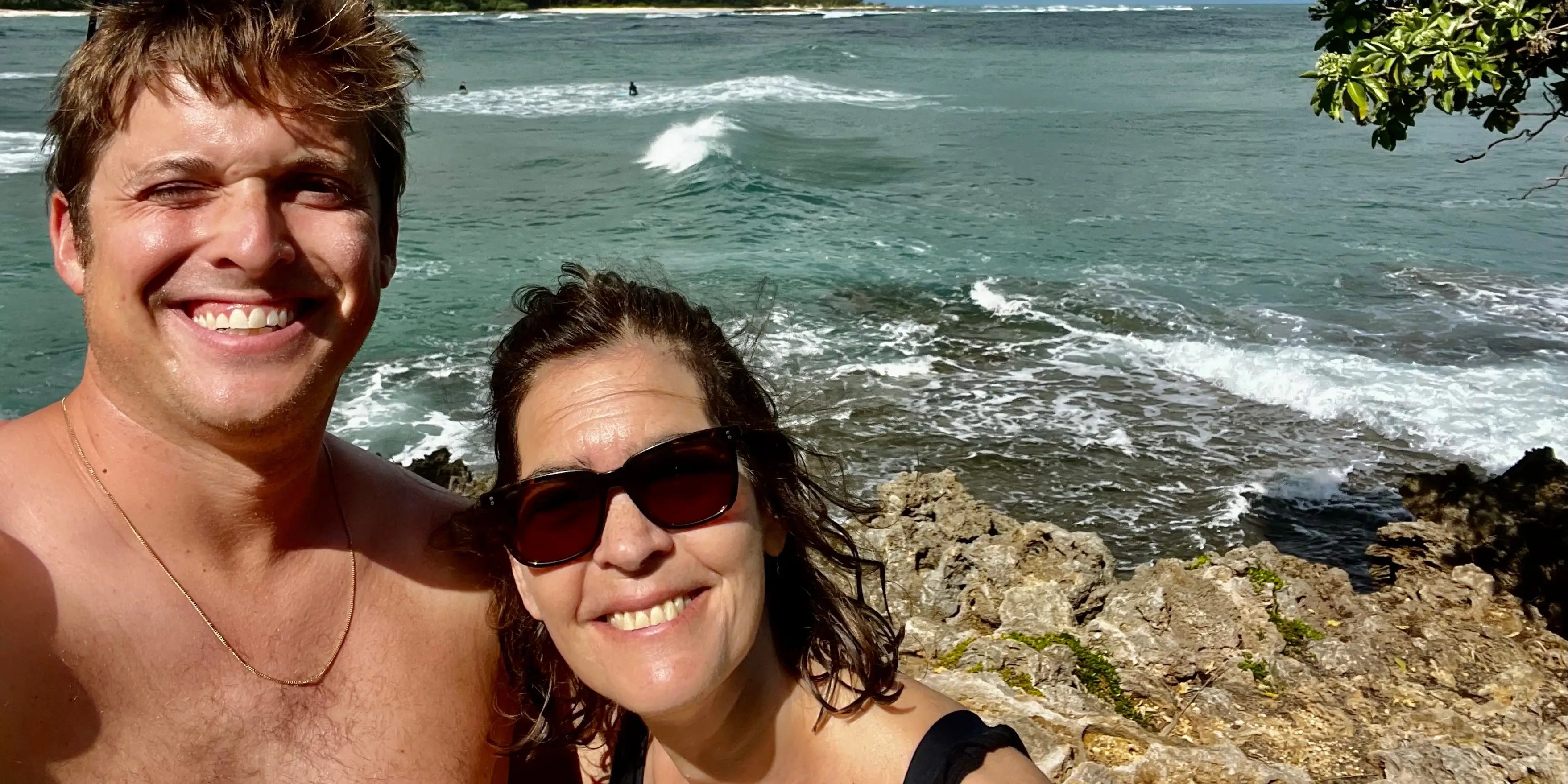
I live in New York City. My 30-year-old son, Alec, lives across the country in Southern California. When I visit, I respect that he has his own busy, adult life. While I’d like nothing more than to spend every minute with him, I’m proud of his independence and try not to monopolize his time.
Alec has a roommate and no space for an overnight guest. When I’m on his home turf, I stay in a hotel or with a friend.
When he comes to NYC for the holidays, his schedule is packed. Plus, with the entire family under one roof, it can be tough to carve out one-on-one time.
I don’t feel shut out of Alec’s life, but I do miss spending quality time with him, so I floated the idea of a mother-son vacation.
He set a few ground rules before we started planning
Alec was vocal that for our getaway to work, we’d need to approach it as equals. This may sound deceptively simple, but it took lots of self-control on my part.
Little kids and I pair like milk and cookies. I did my graduate studies in early childhood education and taught preschool for years. Parenting young kids is never easy, but it felt instinctive. It grew harder as my children grew older.
Alec is my firstborn, and my parental grip was tightest around him. When he was a teenager, he told me I didn’t understand that teens needed autonomy. At the time, he was correct, but over the years, I’ve worked hard to pacify my bossy instincts.
This time, I would welcome his voice in planning our vacation.
Alec brought up another rule: that part of being equal should include sharing expenses. I gifted Alec his airline ticket using miles, and we split additional expenses.
Choosing a destination
Alec had four days off work over Memorial Day Weekend. I advocated for a location that wasn’t too hot, as I had suffered a bout of heatstroke in Greece last summer. A yoga class nearby would be a bonus.
Alec made a case for Hawaii. He’d never been, but its laidback reputation appealed to him. He said he wanted to destress at a resort and eat poke every day.
Hawaii is special to me. I first visited when I was a kid, spending a summer at my aunt and uncle’s home in Waianae on Oahu. The idea of sharing Hawaii with Alec was exciting.
From a practical point of view, Hawaii made sense. There are numerous nonstop flights from LAX, Alec’s home airport. I was going to be in Denver for work, so I was already heading in a westerly direction.
Courtesy of Allison Tibaldi
Each of the Hawaiian Islands has its own flavor. We had lots of options and weren’t quite sure how to narrow them down.
Alec is a fan of the television cooking show “Top Chef.” During his online research, he learned that former contestant Sheldon Simeon was scheduled to be the visiting chef at the Ritz-Carlton O’ahu, Turtle Bay on the island’s North Shore on the Saturday night of our trip.
The Hawaiian-born chef would be preparing a multi-course dinner using island-grown ingredients. I’m all about exploring local culture through food, so it seemed like a jackpot for both of us.
After we booked the dinner, we figured it made sense to stay at the Ritz-Carlton.
Balancing time together and separately was key
Another boundary we set for our vacation was balancing time together with time apart.
Each morning, Alec surfed, and I swam laps in the pool. I signed up for a lei-making workshop while he attended a tennis clinic.
In a perfect world, we would have reserved individual rooms; however, we shared a room for economic reasons.
We were still able to maintain boundaries and give each other privacy as our room had a comfortable ocean-view patio, perfect for reading and relaxing.
Meaningful conversations are what stand out
Time together sparked the meaningful conversations and connection I had longed for.
On May 24, I mentioned that it was my beloved dad’s heavenly birthday. Alec shared tender memories of his grandpa and told me that my dad had been a father figure for him, too, teaching him lessons that continue to impact his life. It made me teary.
We also had an intelligent discussion on income inequality. Alec overheard a group of vacationing doctors and a group of vacationing teachers chatting in the Jacuzzi. He said the doctors worked very long hours without complaint, while the teachers complained nonstop about their overwhelming workload. This led to a conversation between Alec and me about teachers being underpaid and undervalued.
As a former teacher, I found that my son’s thinking about socio-economic issues that hit so close to home really resonated with me.
Our mother-son vacation brought us closer
Our mother-son vacation was a success. Alec ate plenty of poke. I got to practice yoga. Together, we swam in the Pacific, walked trails surrounded by gardenias, and enjoyed a delectable Hawaiian dinner.
As much as I loved our activities, it’s the memories of our personal and poignant conversations that are etched in my heart.
I can’t wait to travel with Alec again.

HONOLULU (HawaiiNewsNow) – A state senator is challenging the Department of Land and Natural Resources’ (DLNR) decision to extend the deadline for the Puuhonua O Waianae (POW) encampment at Waianae Boat Harbor.
It comes as state and community leaders continue efforts to relocate residents to a permanent site.
The deadline was originally set for the end of June and has been pushed to Oct. 16.
State Sen. Samantha DeCorte said the extension marks the third delay in the relocation process since the original notice to vacate was issued last year. The initial deadline was Nov. 27, 2025, followed by extensions to April 30 and June 25 before the most recent extension.
DeCorte criticized the repeated delays during a press conference on Saturday.
“We are calling on DLNR Acting Chair Ryan Kanakaole, members of Puuhonua O Waianae, and the governor’s office to do what they said they would do. Complete the transition, honor the commitment, and bring this process to a close. After 20 years, another extension is not the solution,” DeCorte said.
She added concerns remain around public safety near the harbor, including reports of vandalism involving fishing equipment and conditions she says affect families and students traveling through the area.
“Fishermen have dealt with vandalism (and) theft of their equipment. Public safety concerns have persisted, and kids have to walk past unsafe conditions just to get to school.”
DLNR said the extension is intended to provide additional time for the relocation of the POW community to a nearly 20-acre site in Waianae Valley, while construction continues at the mauka housing development.
Kanakaole said in an email sent to DeCorte Friday that POW requested a deadline extension to vacate by the end of November, and the department, along with the governor’s office, reached an agreement on the October move-out deadline.
“DLNR, POW, and the Governor’s Office worked through what remains to be completed and established a reasonable timeline tied to actual relocation, cleanup, and closure activities and to provide for the most orderly and voluntary transition, which will ultimately lead to a solution that will last,” Kanakaole’s email said in part.
He added that more than 100 people remain at the site and POW leaders said that number should substantially reduce over the next several weeks, “potentially by nearly half within the next month.”
Read Kanakaole’s full email to DeCorte here.
The agency said it is coordinating with community leaders to ensure residents can relocate safely and to support cleanup and transition efforts at the harbor.
The relocation site has been part of a long-term plan tied to the late community leader Twinkle Borge, who envisioned moving families from the harbor into permanent housing.
Community leaders with Puuhonua O Waianae said the process remains complex and cannot be completed immediately.
Kala Paishon, a community leader with the encampment, said some residents are still unable to move because housing units at the new site are not yet complete. He also said limited transportation and volunteer support make moving difficult for some families.
“We do have some people that volunteer their time to help our people move. We’re limited on our vehicles, but we do what we got to do to move the people up there,” Paishon said.
He added that many residents have deep ties to the harbor after years of living there.
“Some people have been here 10-plus years,” Paishon said. “This is the memory they have, and this is where they felt like home.”
Paishon also said crews are working to gradually transition residents while maintaining cleanup efforts at the site.
“We’re making sure everybody moves up there safely… at the same time, we’re still cleaning up our opala down here.”
DLNR said it continues to work with community leaders and the governor’s office to move the relocation process forward in the coming months.
Copyright 2026 Hawaii News Now. All rights reserved.
-
World1 minute ago
Newsletter: A Commissioner's secret trip to Israel
-
News29 minutes ago
US strike on an alleged drug boat kills 2, leaves 6 survivors, in the eastern Pacific Ocean
-

 Los Angeles, Ca2 hours ago
L.A. heat advisory issued as temps expected to surge through midweek
-

 Detroit, MI2 hours ago
Plymouth’s Channell-Watkins joins local hockey players on PWHL Detroit
-

 San Francisco, CA2 hours ago
San Francisco Resident’s Tour of Surveillance Infrastructure Shows System ‘Greater Than Sum of Its Parts’ | KQED
-

 Dallas, TX2 hours ago
Argentina fans gather in Dallas for ‘Banderazo Argentino’ ahead of World Cup match
-

 Miami, FL3 hours ago
Investigation underway in Miami Gardens after hit-and-run leaves a man in critical condition – WSVN 7News | Miami News, Weather, Sports | Fort Lauderdale
-

 Boston, MA3 hours ago
Jets were 300 feet apart in Boston close call that forced Delta flight to abort landing, expert says

