Hawaii
The next great (lefty) QB from Hawaii: Jaron Keawe Sagapolutele hopes to cash in on Elite 11 Finals invite


Jaron Keawe Sagapolutele is ready to carry the torch.
After seeing Tua Tagovailoa stockpile trophies at Alabama on his way to the NFL and closely studying Dillon Gabriel as he’s accumulated thousands of passing yards, first at UCF and then Oklahoma en route to Oregon, the next star left-handed quarterback from the state of Hawaii aims to follow their lead.
Sagapolutele (pronunced: SANG-ah-poh-lu-tele) is a three-star prospect from Ewa Beach (Hawaii) Campbell and is one of just two uncommitted signal callers with a ticket to the prestigious Elite 11 Finals in Los Angeles next month. Although he doesn’t possess any scholarships from schools located east of Denver, Sagapolutele ranks No. 1 among players in the Aloha State for the 2025 class, No. 26 nationally among quarterbacks, per 247Sports, and heads into the premier summer event brimming with confidence.
“Coming from Hawaii, we don’t often get these opportunities to be among a selected few,” Sagapolutele said. “The Elite 11 Finals is a huge platform. This is everything and I really want to prove that I am one of the top guys. I believe I am and hopefully I’m able to show the amount of work I have put in.”
There is a reason Sagapolutele’s self belief is high — the 6-foot-3, 205-pound gunslinger has passed for more than 7,200 yards and 68 touchdowns dating back to the start of his sophomore year. If those numbers suggest that the sport has been easy for Sagapolutele, consider that his preparation for Friday nights began when coaches allowed him to throw against high schoolers as a fifth grader.
Even when his older brother, John, was making noise as a freshman starter on varsity for renowned Punahou School on his way to signing with the hometown Rainbow Warriors, there was already significant buzz around Jaron and how the promising lefty had something special to his game.
“Hawaii is so small that, growing up, you’re always aware of the guys in front of you and those coming behind you,” said Gabriel, who was Hawaii’s Gatorade player of the year for the 2018 season. “Looking at it now Jaron has everything you want. From a physical standpoint he’s taller than me and Tua, and he can sling it just as good. You look at the person and you’re getting a genuine, authentic kid from the islands who is all about family. Who wouldn’t want a guy like that in their program?”
Campbell head coach Darren Johnson argues that his star player would have a larger national profile and more suitors if he played his high school ball on the mainland. It’s an obstacle that many others have faced, including Gabriel, who didn’t see his stock skyrocket until close to signing day when the likes of Georgia and USC all made a late charge.
“It’s a big enough accomplishment just to get other people to recognize him all the way out here,” Johnson said. “We know he can play, but college coaches just have to see him. He is going to have more offers. We know that will happen because he will turn heads.”
Tagovailoa, a former five-star who collected a boatload of blue-blood offers, also had to seize his initial opportunity when recruiters flocked to Honolulu to see him throw.
“During our process, recruiting was more word of mouth and schools didn’t travel to the islands much,” said Tagovailoa’s father, Galu. “We had the Rich Miano camp at the University of Hawaii and a lot of big schools came out, but one of the reasons why Tua got noticed was because Marcus Mariota was doing so great in college. Coaches were talking about another kid from the same high school where Marcus came from who might be just as good or even better than Marcus. That’s kind of how things got going. Recruiting is a different game now, but Jaron has special qualities, too. I watched him throw last year and the ball just pops out of his hand.”
Tagovailoa claimed MVP honors at the Elite 11 Finals in 2016. Johnson said he hopes the same stage can shine a spotlight on Sagapolutele’s abilities ahead of what should be a pivotal point in his recruitment. Only Utah State (May 31), Oregon State (June 7) and Boise State (June 13) have so far locked in Sagapolutele for official visits. Colorado has also offered, while Oregon and USC are two teams with quarterback commitments in the 2025 class which expressed interest in recent weeks.
The momentum continued to simmer this spring. Earlier this month Sagapolutele made the trek to Las Vegas where he was named Alpha Dog at the Elite 11 Regional. His performance there eventually earned him a spot in the Finals.
“It’s just natural arm talent with Jaron,” said Campbell offensive coordinator Leon Cordeiro, the father of former UH and San Jose State quarterback, and recent Seattle Seahawks free-agent signing, Chevan Cordeiro. “Most East Coast schools don’t come out here and, honestly, Jaron is better than most of the quarterbacks committed to those East Coast schools. Dillon was the same way and he didn’t get many offers until late in the process. Jaron still has a lot to work on – his footwork can get better, scheme wise he can improve on reading defenses – but his arm talent is special. Just wait until they see what he develops into in a few years.”
Hawaii’s distance from the contiguous United States, of course, is the most deterring obstacle for prospective recruits. Social media and the increased use of video have erased some hurdles, but it’s still difficult for a college coach to offer a player without getting an in-person look. And unless a prospect flies across the Pacific for events college coaches will attend, there might be only one chance per year to make that lasting impression.
“Manti Te’o, DeForest Buckner and Marcus Mariota kind of started it for us in Hawaii and helped a bunch of other guys get looks,” Gabriel said. “In the past 10 years we have really seen it grow. Colleges aren’t only going to the islands for defensive linemen, offensive linemen and linebackers anymore. It’s also about the skill positions, so the quarterbacks can definitely make an impact on drawing exposure.”
Gabriel will serve as a college counselor at the Elite 11 Finals and looks forward to interacting with the competitors. He realizes the influence he could have on the future of the position, even if that means his name eventually gets wiped from some record books.
“Jaron is probably going to break all my high school stats,” Gabriel said with a laugh. “Watching Tua do what he did gave me the juice that I could do it, too. I beat Tua’s records and Jaron is the next guy up. I still watch Hawaii football on Fridays and the important part for me is to be able to inspire Jaron and others like Kini McMillan at Mililani, just like Marcus inspired me, just like I was able to learn from McKenzie Milton both in high school and in college. That’s all I want to be for the younger guys.”
And so, in less than three weeks, an inspired Sagapolutele will walk through the terminal at Daniel K. Inouye International Airport to board his flight to LAX with one sole motivation.
“I’ll be locked in,” Sagapolutele said, “with the mindset on winning the whole thing, to show that Hawaii can compete with the mainland, just like others have before me.”
MORE: Latest on the status of 2025’s top quarterbacks as summer visits heat up



Hawaii
Kanakaʻole, Zane ʻohana transform Hawaiian cultural practices into captivating visual arts | Maui Now

This powerful new exhibition will feature the work of Nālani Kanakaʻole, Sig Zane, and Kūhaʻoʻīmaikalani Zane—a Hilo-based family of artists whose creative practices are deeply rooted in hula ʻaihaʻa.

Hula ʻaihaʻa is the low-postured, vigorous, bombastic style of hula that Kanakaʻole was known for as kumu hula of Hālau o Kekuhi. The hula springs from the eruptive volcano personas of Pele and her sister Hiʻiaka, characteristic of Hawaiʻi Island’s creative forces.
The Bishop Museum, the State of Hawaiʻi Museum of Natural and Cultural History, on Oʻahu is presenting “Ea Mai ʻEiwa: Patterns of Practice” in the J. M. Long Gallery beginning on Saturday, April 18, 2026.
The exhibition title references “Kūhaʻimoana,” a chant describing the migration of shark gods from Kahiki (ancestral homeland) to Hawaiʻi. “Ea Mai ʻEiwa” reflects the strength, resilience, and environmental knowledge embodied in these ancestral stories.
Bringing together new and existing works alongside botanical specimens and cultural treasures from Bishop Museum’s collections, the exhibition weaves themes of migration, community resilience, and environmental stewardship—offering insight and inspiration for today.
“This exhibition demonstrates that the gap between historic collections and contemporary art is actually a lot smaller than people think,” said Sarah Kuaiwa, Ph.D., Bishop Museum curator for Hawaiʻi and Pacific Cultural Resources. “Audiences will see how the artists use the same materials as pieces in Bishop Museum collections but in different forms. The resonance between the artist’s work with mea kupuna (ancestors) is what makes ‘Ea Mai ʻEiwa’ a uniquely Bishop Museum exhibition.”
Kuaiwa curated the group exhibitions along with co-curator, kumu hula Kauʻi Kanakaʻole, and Bishop Museum exhibit designer, DeAnne Kennedy.
The artists’ work across visual and performing arts is continually charged and sustained by hula. From Nālani Kanakaʻole’s art direction and choreography to Sig Zane’s photography and textile design, and Kūhaʻoʻīmaikalani Zane’s graphic design and immersive installations, each artist channels ʻike (knowledge, wisdom) carried through generations.
“Through repetition, deep study, and consistent practice, mastery is achieved. As practitioners of hula, the artists have continued to deepen their understanding of the natural and spiritual world, which has in turn inspired their art practices,” Kuaiwa said. “They aim to produce art in various visual media not only to educate, but to also be aesthetically celebrated and enjoyed.”
“Patterns of Practice” was suggested by Sig Zane as a way of representing how the artists hone their skills.
“‘Kūhaʻimoana,’ for me, has many layers to it,” Kūhaʻoʻīmaikalani Zane said. “On a first take, it’s a migratory chant that compares migrations to waves of ocean-navigating sharks. That metaphor sets out the tone of connectivity between our natural environment and the beings that inhabit it.”
“‘Kūhaʻimoana’ is an example illustrating metaphorical depth within Hawaiian poetry,” said Sig Zane. “The importance of navigation surfaces in day-to-day cultural practices. This archaic chant reveals nuanced content, giving us a peek into hierarchy, dualities, and familial belief systems.”
Kanakaʻole passed away in January this year, so Kauʻi Kanakaʻole hopes that “Ea Mai ʻEiwa: Patterns of Practice” reflects Kanakaʻole’s philosophy of practice and piques curiosity within people about others’ stories, history, and culture.
“She intentionally taught hula with depth of language, craft, and art form to encompass a full-on lifestyle commitment,” Kanakaʻole said. “This was her everyday; the way she learned, grew, and inspired.” “I would love for guests to leave (the exhibition) with a mixture of awe, appreciation, and curiosity.”
Highlights of the “Ea Mai ʻEiwa: Patterns of Practice” exhibition include:
- Nālani Kanakaʻole’s kite installation, “Kūhaʻimoana,” her last large-scale installation before her passing
- Botanical specimens from various locations across Hawaiʻi Island, chosen to represent their hula ʻahu (altar) and sources of inspiration the artists frequently draw from
- Uniquely colored kūpeʻe (sea snails) shells made into adornments, as well as adornments made to look like kūpeʻe shells
- Kapa (barkcloth) made from the 19th century with dynamic designs
- ʻAwa (kava, Piper methysticum) cups and kānoa (kava bowl) associated with the aliʻi
- New and archival sketches and rubylith artworks by Sig Zane from 1990 to present
- A collection of family photos from the Kanakaʻole ʻOhana
- Memorabilia and ephemera from the theatrical performance, “Holo Mai Pele” (1995-2000)
“Ea Mai ʻEiwa: Patterns of Practice” will be presented in both ʻŌlelo Hawaiʻi and English, and will be on view until Sept. 20, 2026.
For more information, visit bishopmuseum.org.

The demolition of Aloha Stadium on Oahu took a big step forward Thursday with the first section of seating pulled down from the steel structure.
Half of the elevated deck-level seating on the stadium’s makai side was severed and toppled backward as part of demolition work that began in February.
The other half of the upper makai-side seating is slated to come down Tuesday, followed by similar sections on the mauka side and both end zones, though the concrete foundations for lower-level end-zone seating are being preserved for a new, smaller stadium to rise on the same site.
A private partnership, Aloha Halawa District Partners, led by local developer Stanford Carr, is replacing the 50,000-seat Aloha Stadium, which opened in 1975 and was shuttered in 2020, with a new stadium featuring up to 31,000 seats.
AHDP is using $350 million of state funding toward the cost of the new stadium, which could be $475 million or more, and will operate and maintain the facility on state land for 30 years with a land lease.
The development team also is to redevelop much of the 98-acre stadium property dominated by parking lots with a new mixed-use community that includes at least 4,100 residences, two hotels, an office tower, retail, entertainment attractions and open spaces expected to be delivered in phases over 25 years and costing close to or more than $5 billion or $6 billion.
Earlier parts of stadium demolition work led by Hawaiian Dredging Construction Co. included removing four covered multistory spiral walkways leading to the upper level from the ground, and concourse bridges.
Demolishing the stadium is projected to be done by August, according to Carr.
Building the new facility is expected to be finished in 2029.
Hawaii
This Airbnb Tiny Home Sits on a Lava Field in Hawaii With Unbeatable Night Sky Views—and It’s a Guest Favorite
:max_bytes(150000):strip_icc()/tal-airbnb-one-off-tout-1465b3bde0864117b43761b0d1dd346e.jpg?ssl=1 "This Airbnb Tiny Home Sits on a Lava Field in Hawaii With Unbeatable Night Sky Views—and It’s a Guest Favorite")
-
 News26 minutes ago
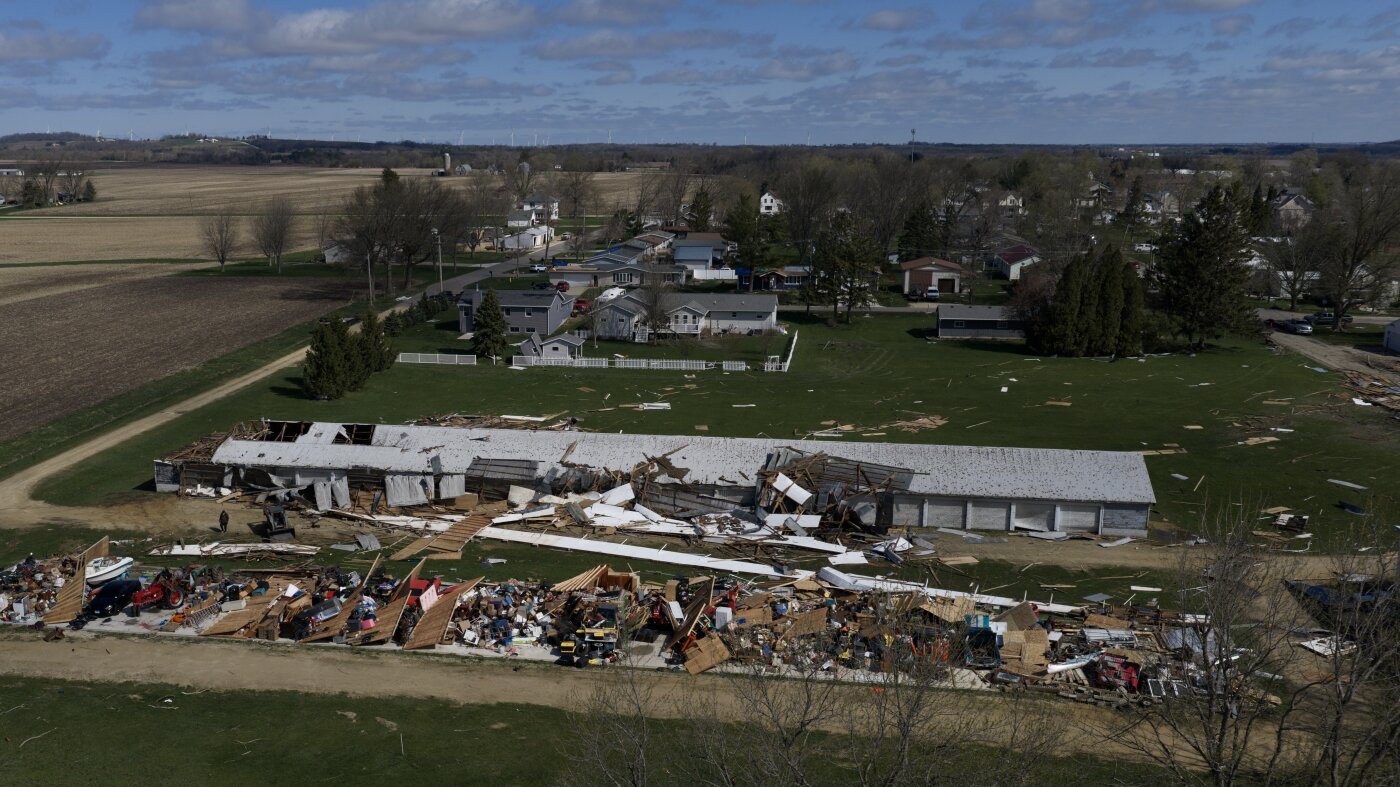
Communities launch cleanup after severe weather and tornadoes churn across Midwest
-

 Detroit, MI2 hours ago
Game 21: Tigers at Red Sox, Garrett Crochet battles both Detroit and the weather
-

 San Francisco, CA3 hours ago
Why do gray whales keep dying in San Francisco’s waters?
-

 Dallas, TX3 hours ago
Dallas Mavericks Owners Might Be Making Big Mistake in Search for New GM
-

 Miami, FL3 hours ago
Defense dominates, Mensah flashes in Miami’s spring game – The Miami Hurricane
-
Boston, MA3 hours ago
A crowd scientist is helping the Boston Marathon manage a growing field of 30,000-plus runners
-

 Denver, CO3 hours ago
Denver Nuggets Altitude broadcasts now being offered in Spanish for first time ever
-

 Seattle, WA3 hours ago
Need to shred? Free drive-up/ride-up shredding Wednesday at Village Green West Seattle