Hawaii
Hawaii: A Kingdom Crossing Oceans review – a feather-filled thriller full of gods, gourds and ghosts


Relations between Britain and the Pacific kingdom of Hawaii didn’t get off to a great start. On 14 February 1779 the global explorer James Cook was clubbed and stabbed to death at Hawaii’s Kealakekua Bay in a dispute over a boat: it was a tragedy of cultural misunderstanding that still has anthropologists arguing over its meaning. Cook had previously visited Hawaii and apparently been identified as the god Lono, but didn’t know this. Marshall Sahlins argued that Cook was killed because by coming twice he transgressed the Lono myth, while another anthropologist, Gananath Obeyesekere, attacked him for imposing colonialist assumptions of “native” irrationality on the Hawaiians.
It’s a fascinating, contentious debate. But the aftermath of Cook’s death is less well known – and the British Museum’s telling of it, in collaboration with indigenous Hawaii curators, community leaders and artists, reveals a surprisingly complex if doomed encounter between different cultures.
Cook isn’t mentioned in the wall texts or portrayed in the show, but his ghost is everywhere in the objects he and his men brought back to Britain. And what marvels they are. Before Cook’s voyages the peoples of the Pacific, connected with each other by epic canoe crossings that linked the Polynesians from Hawaii and Easter Island to Tahiti and New Zealand, created cultural forms that we now call art. Giant pink feathered faces of gods with mother-of-pearl eyes grimace and gurn while a club embedded with tiger shark teeth combines beauty and menace. Bowls carried by naked figures on their backs embody how Hawaiian chiefs and monarchs were feasted and respected.
Monarchy is at the heart of this show, a common language shared by the otherwise chalk and cheese Hawaiians and Britons. After the death of Cook, which was heartily regretted on both sides, Hawaii learned, as it were, to speak British and assert its equality with a “modern” state. It worked, for a while. In 1810 King Kamehameha I sent a magnificent, feathered cloak to George III, with a yellow diamond pattern on red – on loan here from the Royal Collection which still owns it. The king apologised that he was too far away to support Britain in the Napoleonic Wars but expressed friendship – and could Britain help if Hawaii was attacked by France? The Hawaiian cloak is wittily juxtaposed here with a glittering jewelled costume worn by George IV at his coronation: idiosyncratic customs existed on both sides of the world.
Forget Cook, the show suggests: remember King Liholiho. In 1824 he and his Queen Kamamulu set out on a journey that reversed all those British “discoveries”. They set sail for Britain laden with gifts, hitching a lift on a whaling ship (the story would be even better if they’d gone by outrigger canoe). George IV seems to have been touched by the greetings from across two oceans because he received the Hawaiians in 1824 with diplomatic honours. They were seen in the royal box at the theatre and portrayed by artists. Typically cartoonists were less generous – Cruikshank portrays the depraved George IV with his arms around a tattooed Polynesian. They also visited the British Museum where they could not have missed three of its most stunning exhibits, the feathered faces of gods brought back by Cook’s team from Hawaii which are known to have been on display at that time.
The Hawaiian treasures retrieved from the British Museum’s stores are remarkable – they should have a permanent gallery to themselves. You can’t stereotype them: the fierce gaze of a martial-looking god with a chunky wooden body seems modernist, which is no coincidence because Pacific sculptures helped inspire modernism. I mistook one of the feathered godheads with its almost caricatural eye for a contemporary artwork. It was collected by Cook.
These wonders are not reliquaries of a dead culture. There’s a perfectly preserved 18th-century dance rattle, or ‘uli’uli, brought back from Cook’s third voyage, a gourd from which purple, red and white feathers sprout and radiate. A video shows Hawaiian dancers using a modern recreation of the same instrument. To Hawaiians the artistic masterpieces their ancestors made are bearers of memory, instruments of identity.
This exhibition is a celebration of Hawaii and a defence of museums with global collections. The almost miraculous preservation of delicate, fragile artworks made with feathers, teeth, wood and bark for almost 250 years is surely to the British Museum’s credit, as is this way of seeing them as embodiments of living culture.
How does the story end? The king and queen of Hawaii gave their lives for cultural diplomacy: they both died of measles in London in 1824. George IV honoured them by sending their bodies home on a Royal Navy ship. Hawaii successfully persuaded Britain and Europe it was a nation state, with a monarchical government they could do business with – so Britain kept its greedy hands off this one place. In the end it would be the US that seized Hawaii, colonised it and eventually made it the 50th state. The objects here are weapons in a continuing cultural resistance. Look out for that shark-toothed club, Mr President.


Hawaii’s most welcoming countryside towns are rarely the ones that appear on the standard itineraries. Kaunakakai on Moloka’i has no traffic lights and the longest pier in the state. Maunaloa sits above one of Hawaii’s largest white-sand beaches. Naalehu’s most famous landmark is a tree that Mark Twain allegedly planted in 1866. These eight towns, spread across six islands, each have something specific that makes them worth the detour.
Hale’iwa
Next, let’s explore the town of Hale’iwa, a globally renowned destination that draws surfers every year for its winter waves. The town is also renowned for its laid-back charm, local food trucks, and shaved ice. For a day out on the water, try your hand at snorkeling at Shark’s Cove. The cove is a popular destination for snorkeling and scuba diving, surrounded by lava rocks and coral formations, and is bursting with marine wildlife. However, if you are concerned about sharks, then there is no need to worry, as the cove’s name comes from its shark-like shape if you are looking at it from a bird’s-eye view. You can also rent a paddleboard or kayak and travel up the Anahulu River and go under the iconic Hale’iwa Rainbow Bridge. You can also spot green sea turtles basking in the sun on your journey upstream. To satisfy your sweet tooth, you can grab a scoop of flavored ice at Matsumoto Shave Ice, a family-owned dessert spot where its shaved ice is the main attraction. Patrons can choose from a variety of flavors for their shaved ice, like passion fruit, guava, and mango, and top it off with either mochi balls or condensed milk.
Kaunakakai

On the island of Moloka’i, the town of Kaunakakai is famous for its laid-back nature and the charm of “Old Hawaii”. What does “Old Hawaii” mean? It means that there are few traffic lights and no major chain stores. There are, however, some interesting things to see and do in town, including Kaunakakai Harbor, home to the longest pier in Hawaii. It stretches 1,900 feet into the Pacific Ocean and is a popular destination for fishing, sunset watching, and launching boat tours. A legendary spot to visit in Kaunakakai is Kanemitsu’s Bakery. The bakery is known for its “Hot Bread,” which comes in slices filled with any filling you choose, like cream cheese, strawberries, blueberries, or cinnamon. The bakery also serves fresh papaya bread, cheese bread, donuts, and all of the classic pastries that you would find at any bakery. For some retail fun, visit Ala Mālama Avenue. Instead of major chain stores, the avenue is lined from top to bottom with local mom-and-pop stores and boutiques, and it is a hot spot for everyday services. The items the shops offer may make for some interesting souvenirs to take home.
Makawao
One interesting fact about Makawao is that it was known as the heart of paniolo (Hawaiian cowboy) country. That’s right. A long time ago, paniolos inhabited Makawao and made it their home. One way to learn more about them is to attend the town’s annual Makawao Rodeo, which takes place on the weekend of Independence Day. Thousands of spectators flock to the Oskie Rice Arena for bull riding, barrel racing, roping events, and all sorts of other traditional rodeo events. The event also hosts block parties, local food vendors, and live country-western entertainment. For a truly colorful and unique souvenir, visit Hot Island Glass. The shop is a working glassblowing studio where you can watch artists create incredible glass masterpieces, including platters, vases, and island-inspired sculptures such as pineapples and jellyfish. A quick and easy hike to take in Makawao is the Waihou Springs Trail. During the trek, you will be guided through the lush greenery of the forest before being taken to Waihou Spring, where the water drips from a towering fern wall and into the crystal waters. There are also small lava tubes and old irrigation tunnels carved into the volcanic rock to explore on your walk.
Lānaʻi City
As the only major city on the island of Lānaʻi, you can rest assured that there are a lot of things to do in Lānaʻi City upon your arrival. The town is best known for its rich pineapple plantation history, and one way to learn more is to visit Dole Park at the heart of the city. The plantation is the central hub of community events like the annual Pineapple Festival, the Saturday Market, and its “Fifth Friday”, where the community comes alive with free live entertainment and over twenty-five vendors from local restaurants and shops for one of the biggest block parties the citizens have ever seen. If you are an enthusiast of horses or equestrians, then come to the Stables at Koele. At the stables, you will gaze upon the sweeping landscapes via horseback while learning about the ranching history of Lānaʻi and the lifestyle of the paniolo (Hawaiian cowboys) along the way. After a long day of exploring Dole Park and gazing at landscapes via horseback, fill up on pizza, burgers, teriyaki beef, or chicken katsu when you dine at Lanai Bowl. This 1950s-inspired retro diner is also home to an arcade, a soda fountain, a jukebox, and a four-lane bowling alley, where you can not only indulge in Hawaiian and American cuisine, but also have an amazing time while waiting for your food to be served.
Hanapepe
Serving as inspiration for the setting of the 2002 animated feature film Lilo and Stitch, Hanapepe, meaning “crushed bay” in Hawaiian, is renowned for its vibrant art community and deep cultural roots. Speaking of cultural roots, one way to explore Hanapepe’s cultural background is to take a stroll across the Swinging Bridge. The bridge is a 186-foot-long wooden suspension bridge spanning the Hanapepe River. It was built in 1911 to help plantation workers and children cross the water. Since then, it has remained a landmark within the town, offering patrons a fun, bouncy walk across the river. For a tranquil day on the beach, come to Salt Pond Beach Park, a popular, family-friendly beach park that got its name from the town’s traditional Hawaiian salt ponds. At the beach, you can spend the day swimming, snorkeling, camping, and firing up the barbecue on the beach’s own barbecue grills for a picnic lunch. At the Midnight Bear Bakery, you can indulge in organic sourdough loaves, flaky European-style pastries, and the freshest coffee in town. The perfect place to enjoy breakfast or lunch before heading off on your next adventure.
Hāwī
In Hāwī, you will be treated to lush tropical scenery, historic Hawaiian culture, and a laid-back, artsy vibe. To explore the lush tropical scenery of Hāwī, book a horseback riding tour with Paniolo Adventures, an open-range horseback riding experience that gives patrons a chance to become paniolos (Hawaiian cowboys) as they explore the sweeping views of the Pacific Ocean, grazing cattle, and surrounding volcanoes that call Hawaii their home. To satisfy your sweet tooth, you can pay a visit to the Our Founding Farmers Ice Cream Shop. The ice cream shop is a highly rated, farm-to-scoop parlor that specializes in small-batch, handmade ice creams and sorbets that are made with locally sourced Hawaiian ingredients like papaya, dragonfruit, and lychee, organic sugar, and fresh dairy. Every Saturday morning, Hāwī comes alive with the Hāwī Farmers Market. At the market, you will find fresh local produce, handmade artisanal crafts, and prepared, hot meals. All of which are operated under the relaxed, welcoming atmosphere of the rural setting around it.
Maunaloa
At Maunaloa, you can expect to find a town full of laid-back country charm and glorious ocean views. If there was one place to visit in Maunaloa, it is the extremely quirky, world-famous Big Wind Kite Factory. The kite factory is a family-run shop that produces vibrant nylon kites and windsocks for you to purchase and fly across the sky. The shop even offers free kite-making lessons so you can learn how these beautiful, colorful kites are brought to life. Whenever you need essentials during your visit to Maunaloa, take a trip to the Maunaloa General Store, where you will find all of the snacks and groceries you need before heading off on your next Hawaiian adventure. The store also sells cold drinks, local grab-and-go items, and a wide selection of beer and wine. Just a short drive down the hill lies Pāpōhaku Beach, one of the largest white-sand beaches in the state, best known for its isolation and its lower crowd levels compared to other beaches. It also has superb views of Oʻahu, so you can look over the beautiful views as you take scenic walks along the powdery sand, enjoy a picnic lunch, and even camp out overnight at one of their designated campsites.
Naalehu
What was formerly a sugar plantation is now the beautiful town of Naalehu, Hawaii, where you will now find unique, exotic beaches and iconic island landmarks such as Haleokane Lookout. At the lookout, you will overlook panoramic views of Honuapo Bay, rugged sea cliffs, and the sparkling Pacific Ocean below. During the winter months, if you are lucky, you will be able to catch humpback whales frolicking in the ocean waves. At the Punalu’u Bake Shop, you will be able to indulge in their traditional Hawaiian sweet bread and their sugar-coated malasadas (Portuguese fried donuts). Aside from being a bakery, it is also a roadside attraction and visitor center where patrons can come in and sample their delicious goodies while sitting in the lush outdoor patio and garden area. One historic landmark in Naalehu is the Mark Twain Monkey Pod Tree, which, according to legend, is the very tree that author Mark Twain planted in 1866 as a gesture of appreciation for the island’s natural beauty during his visit. It is also known for its enormous, umbrella-shaped canopy, with a diameter of 100 feet, making it the perfect place to catch some shade from the Hawaiian heat.
Visiting Hawaii’s countryside offers an escape from the bustling resort hubs. In the countryside of Hawaii, you will be able to see untouched natural landmarks and ecosystems, immerse yourself in the deep-rooted cultural history, and find local island gems that will have you talking about for years to come. While the bigger cities of Hawaii sound like fun, if you immerse yourself in a slower pace of life, you might find yourself having an even grander time in the Hawaiian countryside.
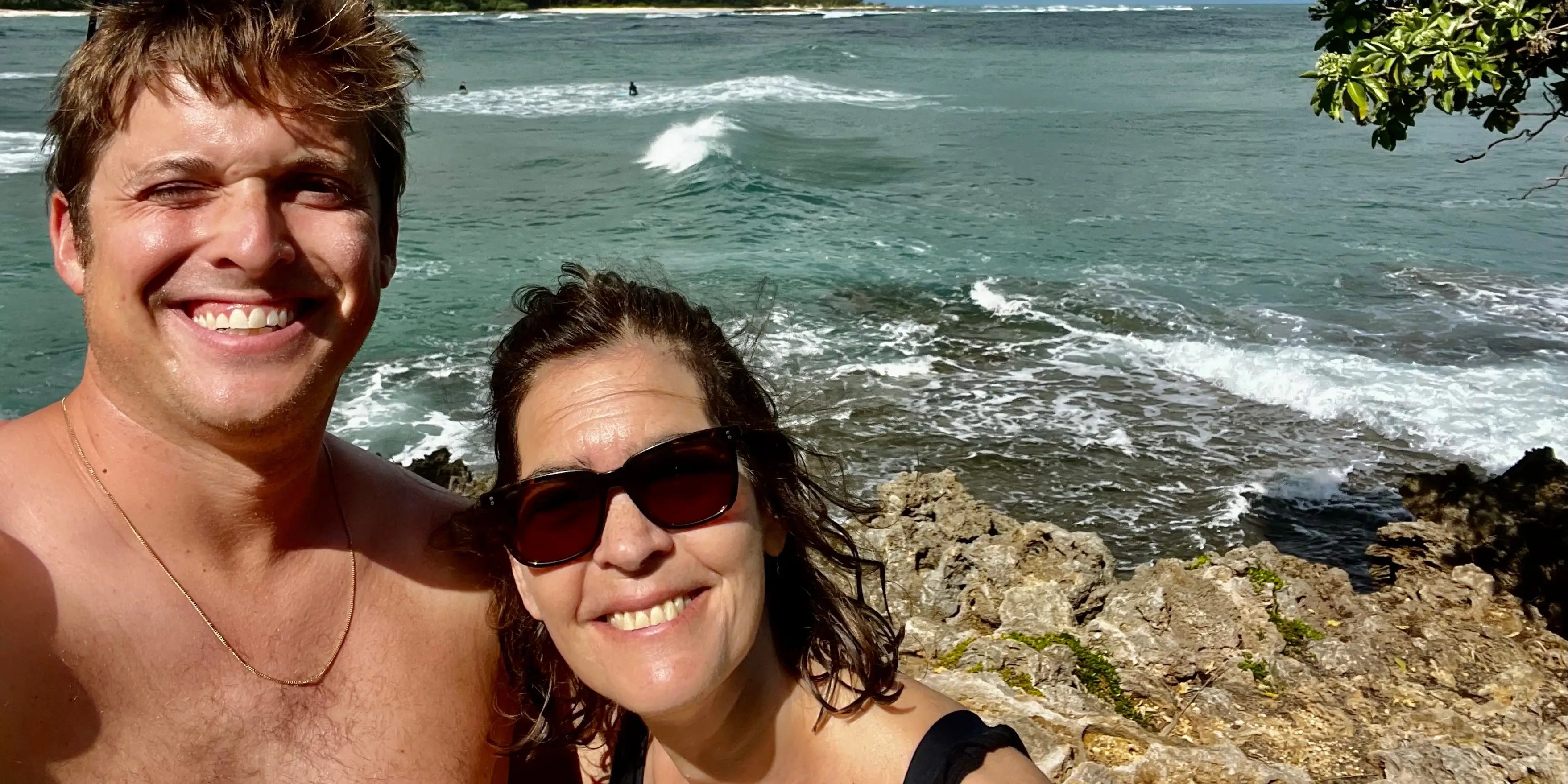
I live in New York City. My 30-year-old son, Alec, lives across the country in Southern California. When I visit, I respect that he has his own busy, adult life. While I’d like nothing more than to spend every minute with him, I’m proud of his independence and try not to monopolize his time.
Alec has a roommate and no space for an overnight guest. When I’m on his home turf, I stay in a hotel or with a friend.
When he comes to NYC for the holidays, his schedule is packed. Plus, with the entire family under one roof, it can be tough to carve out one-on-one time.
I don’t feel shut out of Alec’s life, but I do miss spending quality time with him, so I floated the idea of a mother-son vacation.
He set a few ground rules before we started planning
Alec was vocal that for our getaway to work, we’d need to approach it as equals. This may sound deceptively simple, but it took lots of self-control on my part.
Little kids and I pair like milk and cookies. I did my graduate studies in early childhood education and taught preschool for years. Parenting young kids is never easy, but it felt instinctive. It grew harder as my children grew older.
Alec is my firstborn, and my parental grip was tightest around him. When he was a teenager, he told me I didn’t understand that teens needed autonomy. At the time, he was correct, but over the years, I’ve worked hard to pacify my bossy instincts.
This time, I would welcome his voice in planning our vacation.
Alec brought up another rule: that part of being equal should include sharing expenses. I gifted Alec his airline ticket using miles, and we split additional expenses.
Choosing a destination
Alec had four days off work over Memorial Day Weekend. I advocated for a location that wasn’t too hot, as I had suffered a bout of heatstroke in Greece last summer. A yoga class nearby would be a bonus.
Alec made a case for Hawaii. He’d never been, but its laidback reputation appealed to him. He said he wanted to destress at a resort and eat poke every day.
Hawaii is special to me. I first visited when I was a kid, spending a summer at my aunt and uncle’s home in Waianae on Oahu. The idea of sharing Hawaii with Alec was exciting.
From a practical point of view, Hawaii made sense. There are numerous nonstop flights from LAX, Alec’s home airport. I was going to be in Denver for work, so I was already heading in a westerly direction.
Courtesy of Allison Tibaldi
Each of the Hawaiian Islands has its own flavor. We had lots of options and weren’t quite sure how to narrow them down.
Alec is a fan of the television cooking show “Top Chef.” During his online research, he learned that former contestant Sheldon Simeon was scheduled to be the visiting chef at the Ritz-Carlton O’ahu, Turtle Bay on the island’s North Shore on the Saturday night of our trip.
The Hawaiian-born chef would be preparing a multi-course dinner using island-grown ingredients. I’m all about exploring local culture through food, so it seemed like a jackpot for both of us.
After we booked the dinner, we figured it made sense to stay at the Ritz-Carlton.
Balancing time together and separately was key
Another boundary we set for our vacation was balancing time together with time apart.
Each morning, Alec surfed, and I swam laps in the pool. I signed up for a lei-making workshop while he attended a tennis clinic.
In a perfect world, we would have reserved individual rooms; however, we shared a room for economic reasons.
We were still able to maintain boundaries and give each other privacy as our room had a comfortable ocean-view patio, perfect for reading and relaxing.
Meaningful conversations are what stand out
Time together sparked the meaningful conversations and connection I had longed for.
On May 24, I mentioned that it was my beloved dad’s heavenly birthday. Alec shared tender memories of his grandpa and told me that my dad had been a father figure for him, too, teaching him lessons that continue to impact his life. It made me teary.
We also had an intelligent discussion on income inequality. Alec overheard a group of vacationing doctors and a group of vacationing teachers chatting in the Jacuzzi. He said the doctors worked very long hours without complaint, while the teachers complained nonstop about their overwhelming workload. This led to a conversation between Alec and me about teachers being underpaid and undervalued.
As a former teacher, I found that my son’s thinking about socio-economic issues that hit so close to home really resonated with me.
Our mother-son vacation brought us closer
Our mother-son vacation was a success. Alec ate plenty of poke. I got to practice yoga. Together, we swam in the Pacific, walked trails surrounded by gardenias, and enjoyed a delectable Hawaiian dinner.
As much as I loved our activities, it’s the memories of our personal and poignant conversations that are etched in my heart.
I can’t wait to travel with Alec again.

HONOLULU (HawaiiNewsNow) – A state senator is challenging the Department of Land and Natural Resources’ (DLNR) decision to extend the deadline for the Puuhonua O Waianae (POW) encampment at Waianae Boat Harbor.
It comes as state and community leaders continue efforts to relocate residents to a permanent site.
The deadline was originally set for the end of June and has been pushed to Oct. 16.
State Sen. Samantha DeCorte said the extension marks the third delay in the relocation process since the original notice to vacate was issued last year. The initial deadline was Nov. 27, 2025, followed by extensions to April 30 and June 25 before the most recent extension.
DeCorte criticized the repeated delays during a press conference on Saturday.
“We are calling on DLNR Acting Chair Ryan Kanakaole, members of Puuhonua O Waianae, and the governor’s office to do what they said they would do. Complete the transition, honor the commitment, and bring this process to a close. After 20 years, another extension is not the solution,” DeCorte said.
She added concerns remain around public safety near the harbor, including reports of vandalism involving fishing equipment and conditions she says affect families and students traveling through the area.
“Fishermen have dealt with vandalism (and) theft of their equipment. Public safety concerns have persisted, and kids have to walk past unsafe conditions just to get to school.”
DLNR said the extension is intended to provide additional time for the relocation of the POW community to a nearly 20-acre site in Waianae Valley, while construction continues at the mauka housing development.
Kanakaole said in an email sent to DeCorte Friday that POW requested a deadline extension to vacate by the end of November, and the department, along with the governor’s office, reached an agreement on the October move-out deadline.
“DLNR, POW, and the Governor’s Office worked through what remains to be completed and established a reasonable timeline tied to actual relocation, cleanup, and closure activities and to provide for the most orderly and voluntary transition, which will ultimately lead to a solution that will last,” Kanakaole’s email said in part.
He added that more than 100 people remain at the site and POW leaders said that number should substantially reduce over the next several weeks, “potentially by nearly half within the next month.”
Read Kanakaole’s full email to DeCorte here.
The agency said it is coordinating with community leaders to ensure residents can relocate safely and to support cleanup and transition efforts at the harbor.
The relocation site has been part of a long-term plan tied to the late community leader Twinkle Borge, who envisioned moving families from the harbor into permanent housing.
Community leaders with Puuhonua O Waianae said the process remains complex and cannot be completed immediately.
Kala Paishon, a community leader with the encampment, said some residents are still unable to move because housing units at the new site are not yet complete. He also said limited transportation and volunteer support make moving difficult for some families.
“We do have some people that volunteer their time to help our people move. We’re limited on our vehicles, but we do what we got to do to move the people up there,” Paishon said.
He added that many residents have deep ties to the harbor after years of living there.
“Some people have been here 10-plus years,” Paishon said. “This is the memory they have, and this is where they felt like home.”
Paishon also said crews are working to gradually transition residents while maintaining cleanup efforts at the site.
“We’re making sure everybody moves up there safely… at the same time, we’re still cleaning up our opala down here.”
DLNR said it continues to work with community leaders and the governor’s office to move the relocation process forward in the coming months.
Copyright 2026 Hawaii News Now. All rights reserved.
-
 Utah1 minute ago
Voters weigh what kind of Democrat they want for Utah’s new, blue Congressional seat
-

 Vermont4 minutes ago
The University of Vermont is struggling. Will spending $175 million for athletics help? – The Boston Globe
-

 Virginia9 minutes ago
Virginia man arrested after reported larceny in Elizabeth City
-

 Washington11 minutes ago
Trump claims vandals will force drainage of algae-plagued Reflecting Pool – WTOP News
-

 Wisconsin17 minutes ago
‘Moving Menace’ faces death investigation, 10 criminal cases in Wisconsin
-

 West Virginia24 minutes ago
2030 athlete Noel Devine Jr. talks West Virginia camp
-

 Wyoming27 minutes ago
PAIN: Chugwater Wyoming Jalapeno Eating Contest
-

 Crypto32 minutes ago
Why Lummis Says the CLARITY Act Will End the ‘Absurdity’ Facing US Software Developers

