West
Fentanyl exposure scare forces courtroom evacuation during active trial

NEWYou can now listen to Fox News articles!
Nearly two dozen people were evacuated from a Washington state courtroom Thursday after a piece of drug evidence containing fentanyl residue was opened during trial proceedings, triggering a hazmat response.
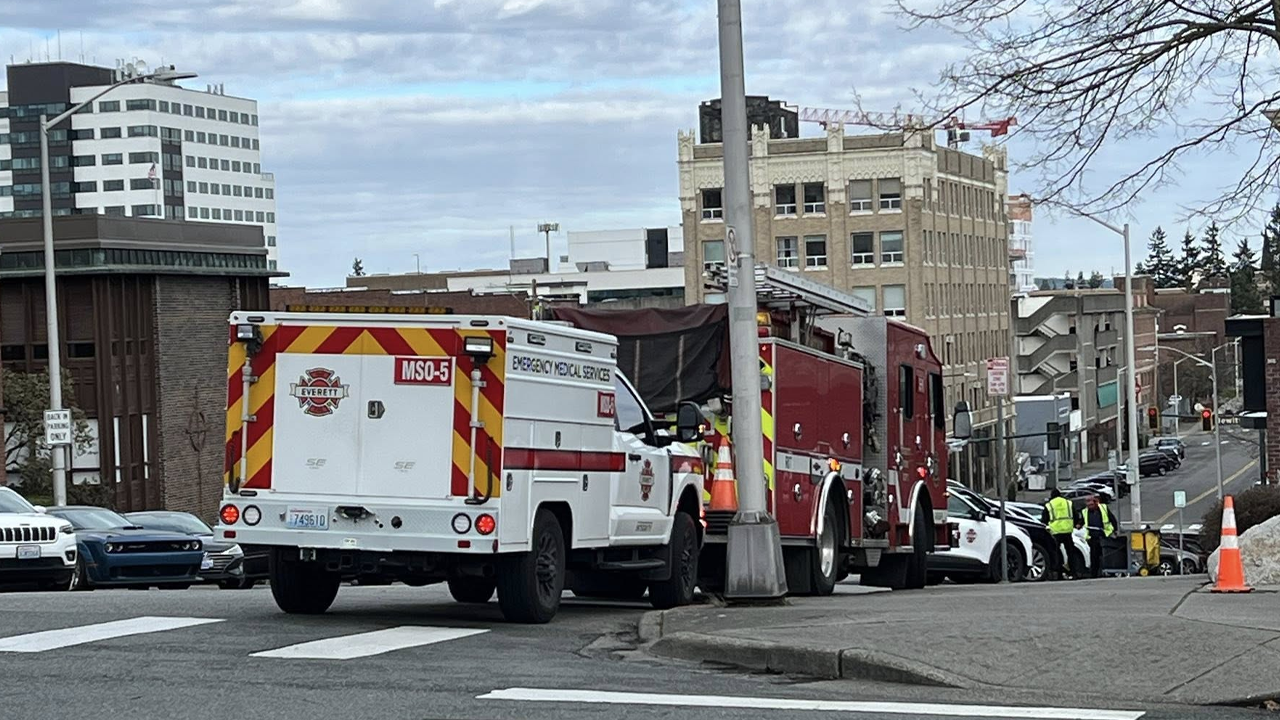
The incident unfolded around 11:55 a.m. inside a second-floor courtroom at the Snohomish County Courthouse in Everett, according to the Everett Fire Department.
An evidence envelope, initially reported as a bag containing a scale, was handled and opened in court. The scale later tested positive for fentanyl residue. It remains unclear why the envelope was opened during the proceedings.
“One person thought that they saw a small powder that kind of came off the scale,” Rachael Doniger of Everett Fire told KOMO.
Everett Fire Department crews responded to the Snohomish County Courthouse after fentanyl residue was exposed inside a courtroom during an active trial. (Everett Fire Department Facebook)
Out of an abundance of caution, everyone in the courtroom was relocated to the courthouse’s fourth floor for medical evaluation. Crews checked vitals and blood pressure and monitored for potential overdose symptoms, including unconsciousness or difficulty breathing, officials said.
“No one showed any symptoms or was taken to the hospital,” Doniger said, adding that all individuals were released to go home.
The second-floor courtroom was shut down by the Snohomish County Sheriff’s Office while a specialized hazmat team cleaned and secured the area.
UTAH CHILDREN’S AUTHOR KOURI RICHINS SAYS STATE THREATENED WITNESSES AHEAD OF TRIAL IN HUSBAND’S POISONING
A courtroom was evacuated and evaluated for fentanyl exposure, prompting a hazmat response from Everett Fire. (Everett Fire Department Facebook)
The unusual incident raised questions about how drug evidence is handled inside courtrooms.
Mark Lindquist, the former district attorney for Pierce County and a former trial chief of the Pierce County Drug Unit, told KOMO he had never heard of a courtroom being cleared over potential drug exposure.
“Either somebody dropped the ball here or a rule needs to be changed,” Lindquist said.
DHS ISSUES WARNING ABOUT TREND OF DOMESTIC PARTNERS POISONING LOVED ONES
Authorities closed a second-floor courtroom at the Snohomish County Courthouse while a hazmat team cleaned the area after suspected fentanyl exposure. (Everett Fire Department Facebook)
He added that drug paraphernalia should be securely stored in an evidence room and questioned why photographs were not used during the Snohomish County trial instead of the physical scale.
“This is the first time I’ve ever heard of a courtroom being cleared because of potential exposure to drugs,” Lindquist said. “And it highlights why prosecutors use pictures rather than the actual drug.”
When asked whether an investigation was underway, the Superior Court told KOMO it is looking into all the circumstances and reviewing policies and procedures to prevent something similar from happening again.
CLICK HERE TO DOWNLOAD THE FOX NEWS APP
“We take all matters impacting staff and court users very seriously, especially with regard to the spaces in which the public frequently occupies,” a statement from the court said. “We are committed to taking all steps necessary to make sure events like this don’t happen again, including examining policies and procedures and working collaboratively with stakeholders.”
Officials said the exact quantity of fentanyl residue involved remains unknown. There was no visible plume or indication of a significant airborne release.
Stepheny Price covers crime, including missing persons, homicides and migrant crime. Send story tips to stepheny.price@fox.com.
Related Article

Read the full article from Here



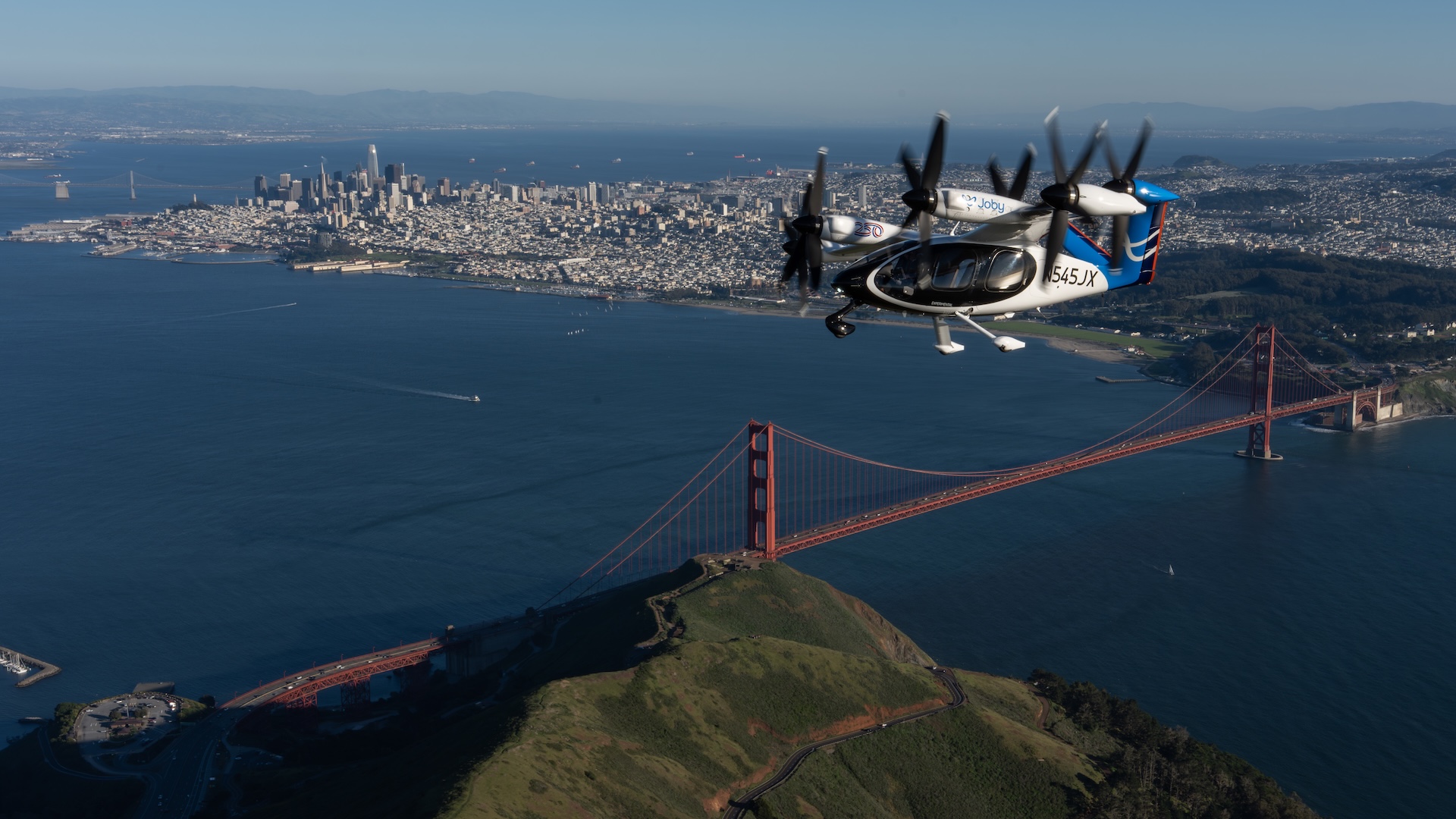
Joby Aviation has kick-started a nationwide tour of its flying taxi. The first flight saw its aircraft fly over the San Francisco Bay Area and around the Golden Gate Bridge.
The flight took place around the same time the FAA announced a nationwide pilot program aimed at finally making commercial air taxi services a reality.
Joby Aviation kickstarts nationwide eVTOL tour
The Joby air taxi is piloted, though the company eventually aims to automate its flight services. It will be capable of flying as many as four passengers on short, urban trips, reaching cruise speeds of roughly 200 mph. Its fixed wings feature six propellers and are capable of swiveling forward after takeoff for increased speed.
Joby Aviation’s nationwide tour, dubbed the “Electric Skies Tour”, will include demonstrations in several cities throughout the US.
In a press statement, the company stated: “With one of the world’s most recognizable skylines as a backdrop, the company showcased its operational readiness in a region defined by traffic congestion, demonstrating that the future of quiet, emissions-free flight, is not just a concept, but nearing commercial readiness.”
The San Francisco flight was conducted using a pre-production prototype, designated N545JX. According to a report by the San Francisco Chronicle, the N545JX aircraft “cruised along in virtual silence” as it flew across the bay. Separately, Joby revealed earlier this month that it had flown its first “FAA-conforming” air taxi.
“With an operational foundation built on thousands of test flights and more than 50,000 miles logged across its fleet, the company is now ready to scale its presence across the US,” the company said in its statement.
The Trump administration’s air taxi push
Joby Aviation also noted that it is among a handful of firms selected as partners in the White House’s recently announced eVTOL Integration Pilot Program (eIPP). The other companies selected are Archer Aviation, BETA Technologies, Electra, Wisk, Ampaire, Elroy Air, and Reliable Robotics.
“Here’s an opportunity for the industry to roll out in a similar way to how Waymo rolled out,” Archer Aviation CEO Adam Archer explained in a video on X after the eIPP announcement. “Rather than an all-or-nothing type certificate where you can go anywhere, or no type certificate where you can’t go anywhere… You can think about it as a few concentrated areas with very, very high margins of safety, allowing us to start very low-level operations, and then expand from there.”
According to Joby, eIPP gives it the opportunity to “begin early operations across 10 states: Arizona, Florida, Idaho, New Jersey, New York, North Carolina, Oklahoma, Oregon, Texas, and Utah.” The company added that the program also has the “potential to meaningfully accelerate the path to commercial service.”
If all goes to plan, Joby Aviation claims it will help realize a society where a daily commute can “take minutes, not hours.”
“Our technology provides an opportunity to build on the immense potential of this region while protecting it for the next generation,” said JoeBen Bevirt, founder and CEO of Joby. “By providing clean, quiet service with minimal infrastructure investment, we are making flight an everyday reality for the community.”
Denver, CO
Traffic, parking and transportation at Burnham Yard are focal points around Denver Broncos stadium plans

As the Denver Broncos design a new stadium for Burnham Yard, one of the most critical elements — with some of the highest potential for backlash from neighbors and the team’s fans — will be the plan for getting people to and from the site.
Questions about parking, traffic management, transit access and accessibility have emerged as major concerns for neighbors of the future stadium during early community meetings in west Denver organized by the city and the team.
“It is probably the No. 1 topic that we’re hearing,” said Troy Halouska, the vice president of the La Alma Lincoln Park Neighborhood Association.
Lindsey Noble, a resident of the neighborhood, said in an interview with The Denver Post that she and her neighbors were “pretty concerned about traffic and parking” from the events the new stadium would host — which the team has said would go well beyond Broncos home games.
“They (the Broncos) are creating these problems, and some of the solutions I have heard have to do with altering our neighborhood or changing streets,” she said. “These aren’t things we want.”
The Broncos are still early in the process of laying out plans for the abandoned rail yard as the team aims to build a stadium by 2031. The team has already released some transportation-related details, including proposed changes to street crossings with the Regional Transportation District’s light rail tracks, potential parking options for events, and plans for connections to existing pedestrian and bike infrastructure.
The team plans to build more than just a stadium, though. Alongside their home field, the Broncos want to create a mixed-use entertainment district that uses the space year-round. Like other modern stadiums, it would have restaurants, open space and, potentially, hotels or apartments outside the venue.
Officials with the Broncos say they have heard the worries from nearby residents about the massive development’s potential impact on their neighborhoods. They say they’re looking for ways to integrate the site into the community — without flooding nearby streets with thousands of cars and people.
Generally, the team plans to address those concerns by designing the site in such a way that eventgoers are guided in through the north and south ends of the site, rather than being routed through the mostly residential neighborhood to the east.
The site itself, once the rail yard is cleared, will be nestled between two rail corridors — freight lines to the west and RTD’s light rail tracks to the east. Entities connected to the Broncos have been buying up properties beyond the banana-shaped rail yard for the stadium and surrounding district.

A bit farther to the west of the site is Interstate 25, and the north and south boundaries are generally West 13th Avenue and West Sixth Avenue. An early conceptual plan the team submitted to the city shows how its designers plan to connect local streets through the site. One new street would connect West Eighth Avenue to Osage Street, for instance, incorporating city plans to lower part of Eighth’s current viaduct.
Josh Brooks, a principal at Sasaki, the architecture firm designing the site’s master plan, said during a community meeting in February that the team plans to design the area so that noise and visual impacts are pushed as far from the residential neighborhood as possible.
“Our intention is to ensure this is an integrated community, a mixed-use development that really serves as an extension of the city and becomes part of the shared memory of the community,” Brooks said.
One of the things that most attracted the team to Burnham Yard was its connectivity with other areas. Located near I-25, Sixth and Eighth avenues, an RTD station, walking paths and planned bike lanes, the site won’t need massive changes to help bring in visitors.
But that doesn’t mean the team won’t have plenty of work to do on that front.

During the February community information meeting at the La Alma Recreation Center, the Broncos conducted a quick survey of attendees to ask what their top concerns were. The most-selected item was “traffic congestion during games/events,” followed closely by “impacts to housing expenses.”
The design for the site will focus on connecting existing roads and pedestrian paths and easing those neighborhood concerns, Brooks said.
The Broncos will work with the city in the coming months to develop a small-area plan, which will set out the design for the expanse surrounding the stadium site. While the stadium itself will be privately financed, the team has said, the city and state could be on the hook for infrastructure improvements nearby.
The city already plans to pay for improvements to two major road connections, the nearby Sixth and Eighth avenue viaducts, as part of bond projects passed by voters last fall.
Train crossings and transit access
One advantage of the Burnham Yard site is that it already has an RTD rail station next to it, making transit access easier. But the 10th and Osage station is accessible only from the east, with Burnham Yard west of the tracks. So it would need to be reconstructed to allow pedestrian access from both directions.
Working together with RTD, the Broncos are proposing changes to several light rail crossings. At 13th Avenue, the team has suggested a bridge for trains to pass over the street, with a place for drivers, cyclists and pedestrians to cross beneath.

At 12th and 9th avenues, team officials are proposing a separated-grade crossing for cyclists and pedestrians to also pass underneath the light rail tracks.
Eleventh, 10th and 8th avenues would have at-grade crossings. Halouska, with the La Alma Lincoln Park Association, said residents would like as few at-grade crossings as possible to prevent collisions or other safety hazards.
Besides concerns about transit crossings, Noble expressed worry that there also might not be enough light rail cars on a game day to transfer everyone who arrives and departs that way.
A spokesperson for RTD said there was no one available to discuss the transit agency’s plans for the area.
“RTD is regularly meeting with the project team and other partners to provide feedback and ask questions about their proposed stadium plans. Specific information about any proposed changes to RTD’s services or operations is not yet available,” RTD’s Pauline Haberman said.
What about parking?
Other concerns about the plan center on where those who drive to the stadium will park.
Halouska said even when his group tries to host meetings about other topics, parking is the concern its leaders hear about the most from the neighborhood.
“The Broncos have said themselves they really want this area to be activated 300 days a year, and so folks in the neighborhood are very concerned about what kind of impact that will have on parking,” he said. “We really need more details from the team and the city.”

Team officials have said they plan to provide the same amount of parking at the new site as Empower Field has — which is roughly 7,000 spots. But instead of a stadium surrounded by surface parking, officials are proposing making use of parking structures and shared parking systems.
Noble said the on-site parking spots could make a big difference in the impact to the neighborhood.
The city could also add resident-only parking permit rules for the surrounding streets, much like a longstanding system in the Jefferson Park neighborhood around Empower Field.
A spokesperson for the Department of Transportation and Infrastructure said the same system is possible for Burnham Yard, but it’s too early to know specifics of how it would work.
“We won’t begin designing anything until we understand how the site will work, where impacts could occur, and there’s a focused conversation on (residential parking permits),” Nancy Kuhn wrote in an email.
Halouska said that could help, but only if the parking permits are regularly enforced.
“Having the permits is a fine idea — though it does cost money to get a permit — but if it’s not enforced, then it’s kind of pointless,” Halouska said.
Bike and pedestrian access
It won’t just be public transportation and cars getting people to events or the new development. The Broncos also plan to build connections to surrounding bike and pedestrian infrastructure, like the South Platte River Trail and the bike lane along 13th Avenue, Brooks said.
There could also be a connection to the proposed 5280 urban trail, which as envisioned by planners would weave through several neighborhoods that include La Alma Lincoln Park, Golden Triangle, Capitol Hill, LoDo and Ballpark. The effort, led by the Downtown Denver Partnership, is not yet fully under construction. About a quarter of the plan is in “next steps development,” according to the DDP.
Noble said she hoped the team would find some ways to encourage people to travel to the stadium without driving.
“Really, I think incentivizing people to ride their bike and take public transportation is the way to go to mitigate the impacts,” she said. “Make it easy. Make it affordable.”
Officials say they will wrap up the community-informed small area plan, which will provide policy guidance for city decision-makers, by the end of this year. It will include resident feedback and ideas about housing, sidewalks, open space and grocery access, among other things.
The Broncos and the city plan to host their next community meeting in May.
Get more Colorado news by signing up for our Mile High Roundup email newsletter.

Seattle – The weekend brought a much-needed break from the rainy atmospheric river. We enjoyed a mainly sunny and dry sky. Monday will see a few more clouds around the area ahead of our next rainmaker, which is forecast to arrive on Tuesday.
After enjoying a dry an mainly sunny weekend, more clouds will move inland throughout the day Monday.
Grab an extra layer on Monday morning as morning lows will be chilly, near freezing in some spots. Partly cloudy and slightly cooler in the afternoon with highs near 50.
Afternoon highs remain cool to start the week.
After the latest atmospheric river sent snow levels up near 8000 and 9000 feet, much of the beneficial snow we picked up was melted. This next round of will lower snow levels back down, where a light dusting of snow is forecast to fall.
Cooler air will force snow levels to lower beginning on Tuesday with a light dusting of snow.
Winds will be gusty next week when the next system arrives on Tuesday. Some spots may see gusts nearing 45 mph.
Gusty winds picking up on Tuesday with speeds nearing 45 mph.
Hard to believe, but the new season of Mariners baseball starts this Thursday. The home open is looking good so far with an even nicer weekend ahead.
Lowland rain and mountain snow early in the week with a dry weekend ahead.
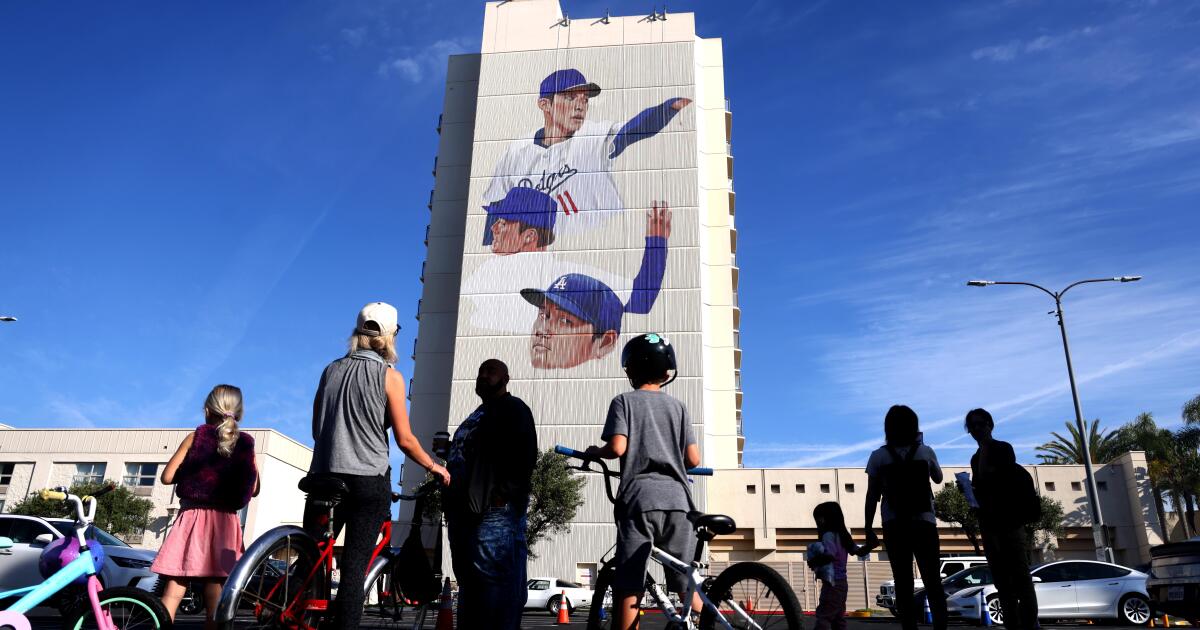
Ohtani. Yamamoto. Sasaki. A 12-story ‘cultural bridge’ between L.A. and Japan to debut in Torrance

How the Iran war is about to hit your wallet

Suspect in slaying of Loyola University student was in the country illegally, officials say

How a Family of 3 Lives on $500,000 on the Upper West Side

Human remains found in 1977 in California identified as Detroit-area native

Florida High School Football Rankings: Top 25 teams – Oct. 21

How old is Bo Nix? What to know about Oregon quarterback ahead of 2024 NFL Draft

Cleary's 21 help Le Moyne down Central Connecticut State 69-64 in OT

99th annual Pony Swim held in Virginia

Indiana Members Credit Union announced as new anchor tenant at Bottleworks District
How the Iran war is about to hit your wallet
Suspect in slaying of Loyola University student was in the country illegally, officials say

Video: Plane Collides With Vehicle at LaGuardia Airport

As cattle herds shrink and beef prices rise, investors back AI cow collars

French elections: Paris stays left as far right makes mixed gains
-

 Detroit, MI5 days ago
Drummer Brian Pastoria, longtime Detroit music advocate, dies at 68
-

 Oklahoma1 week ago
Family rallies around Oklahoma father after head-on crash
-

 Georgia1 week ago
How ICE plans for a detention warehouse pushed a Georgia town to fight back | CNN Politics
-
 Science1 week ago
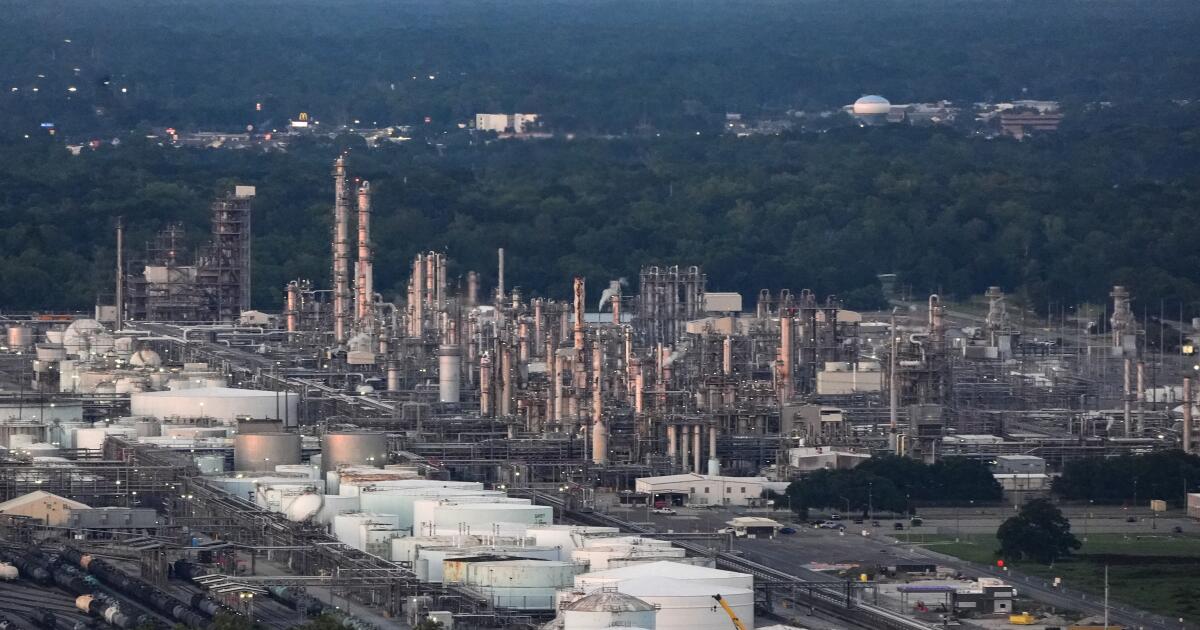
Federal EPA moves to roll back recent limits on ethylene oxide, a carcinogen
-

 Alaska1 week ago
Police looking for man considered ‘armed and dangerous’
-

 Movie Reviews4 days ago
‘Youth’ Twitter review: Ken Karunaas impresses audiences; Suraj Venjaramoodu adds charm; music wins praise | – The Times of India
-
 Science1 week ago
Long COVID leaves thousands of L.A. county residents sick, broke and ignored
-

 Education1 week ago
Video: Turning Point USA Clubs Expand to High Schools Across America