West
Federal charges filed against California man who allegedly drove U-Haul toward Coast Guard officers

NEWYou can now listen to Fox News articles!
Federal prosecutors have charged a 26-year-old Oakland, California, man after he allegedly drove a U-Haul truck toward U.S. Coast Guard personnel guarding a California base last month, prompting officers to open fire in a dramatic incident caught on video.
According to court documents unsealed Tuesday, Brendan Munro Thompson, who also goes by Bella Thompson and Bella Castillo, was charged with assaulting federal officers with a deadly or dangerous weapon after allegedly driving a U-Haul truck toward personnel stationed outside Coast Guard Base Alameda Oct. 23.
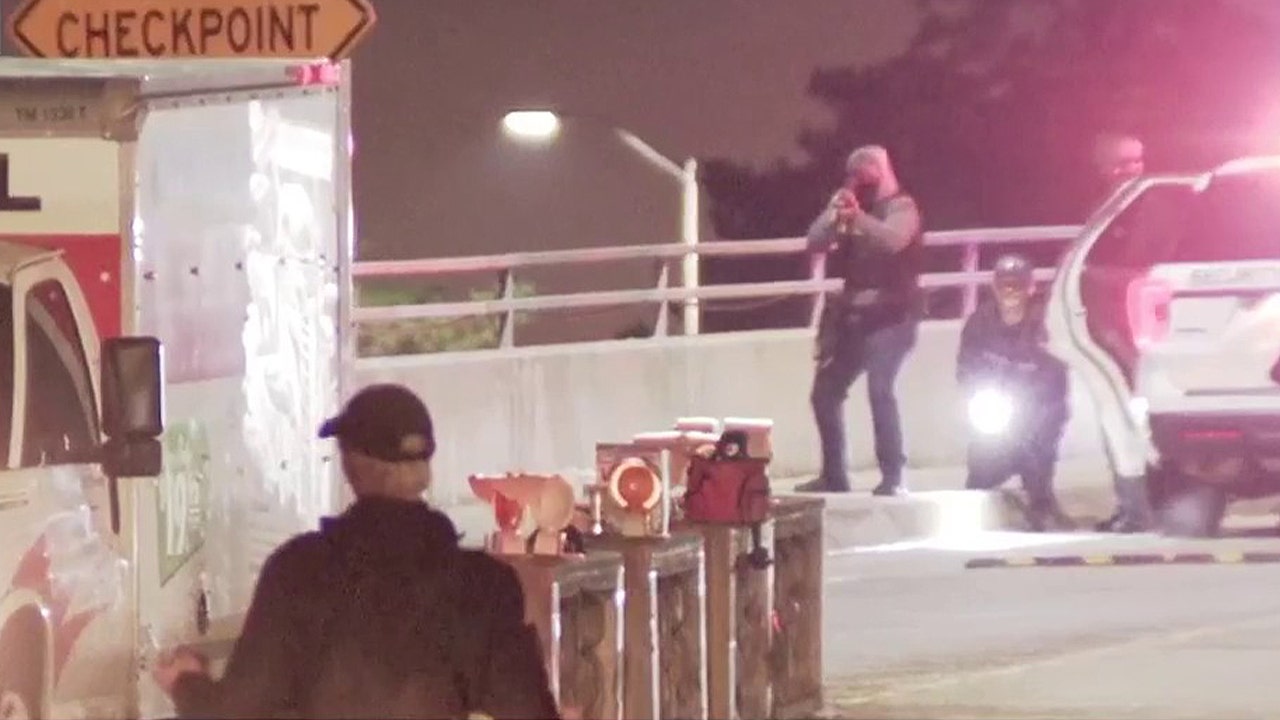
Video of the incident shows the U-Haul reversing toward security personnel positioned near a barricade at around 10 p.m. on the bridge connecting Coast Guard Island to Oakland.
Gunfire erupted moments later as officers shouted orders from behind cover. The driver then hit the gas and sped away.
DRAMATIC VIDEO SHOWS SHIPPING CONTAINERS TOPPLING OFF CARGO SHIP IN CALIFORNIA
Security personnel opened fire on a U-Haul truck that ignored commands and tried to back into Coast Guard Base Alameda in California, the U.S. Coast Guard said. (Video screenshot via KTVU)
The Coast Guard said the truck had been traveling “erratically and attempting to back into the base” and that security officers fired “several rounds of live fire” after the driver ignored “multiple verbal commands” to stop.
The military branch also said that “when the vehicle’s actions posed a direct threat to the safety of Coast Guard and security personnel, law enforcement officers discharged several rounds of live fire.”
Authorities said the truck had been parked outside the base for most of the day before the confrontation. Photographs from the aftermath show officials inspecting the abandoned box truck after the driver fled.
ILLEGAL IMMIGRANT CHARGED FOR RAMMING TRUCK INTO FEDERAL OFFICERS IN CALIFORNIA
Coast Guard police opened fire after the truck backed up toward the base’s entrance, where U.S. Customs and Border Protection agents were reportedly staying amid plans for increased immigration enforcement in the Bay Area. (Justin Sullivan/Getty Images)
Two men later arrived at hospitals with gunshot wounds, both with non-life-threatening injuries, according to the FBI San Francisco Field Office. One of those men — identified as Thompson — was treated and taken into custody.
Court documents allege that Thompson reversed the truck several times before accelerating rapidly toward Coast Guard personnel who feared the vehicle could strike them or contain explosives. When the U-Haul continued to back up toward the line of officers, Coast Guard personnel fired their weapons in self-defense.
“As alleged, Thompson drove a U-Haul truck directly into a line of Coast Guard personnel who were protecting the Coast Guard base, as they bravely do day in and day out,” U.S. Attorney Craig H. Missakian said. “Let this be clear: There is zero tolerance for assault on federal officers or property, and those who do so will face federal criminal charges.”
TWO ILLEGAL IMMIGRANT SUSPECTS INDICTED ON ATTEMPTED MURDER CHARGES IN CBP OFFICER SHOOTING CASE IN NYC
Federal prosecutors have charged a 26-year-old Oakland resident accused of accelerating a U-Haul truck toward U.S. Coast Guard personnel guarding a California base Oct. 23, 2025. (Ting Shen/Bloomberg via Getty Images)
FBI Acting Special Agent in Charge Matt Cobo said the bureau “stands firmly with our federal law enforcement partners and will always work to protect those who protect our communities.”
“Attempting to use a truck to assault federal officers performing their lawful duties is not protest, it is a violent and serious federal crime,” Cobo added.
The confrontation followed a protest outside the base earlier that day, where demonstrators reportedly tried to block U.S. Customs and Border Protection agents from entering. Dozens of California Highway Patrol officers in riot gear were deployed to disperse the crowd, and two people were detained, according to local reports.
TOW TRUCK DRIVER SLAPPED WITH FEDERAL CHARGE AFTER HAULING AWAY ICE VEHICLE: ‘HE CAN LAUGH BEHIND BARS’
At the time, Coast Guard Island had been designated as a potential staging area for a postponed federal deployment to San Francisco.
President Donald Trump wrote on Truth Social that he had called off the plan after speaking with local leaders who said progress was being made on public safety.
Thompson made an initial court appearance on Tuesday morning and is scheduled for a detention and preliminary hearing on Nov. 10, 2025, before U.S. Magistrate Judge Kandis A. Westmore.
CLICK HERE TO DOWNLOAD THE FOX NEWS APP
If convicted, Thompson faces up to 20 years in prison and a $250,000 fine.
Fox News Digital’s Elizabeth Pritchett, Michael Dorgan and Alexandra Koch contributed to this report.
Read the full article from Here



Between surging gas prices and ransom-level parking fees, the cost of the daily grind adds up.
But AbdAllah Abou-Ismail has found a way to make the city foot the bill.
“I was like, you know what? This my reason for biking every day,” he said.
Every morning, he hops on his bike and pedals his way toward a free lunch. Call it a bit of roadside economics: The city of Palo Alto pays him to stay out of traffic. And instead of low-grade road rage, he starts his day on the right foot.
“Actually, my energy levels got a lot better once I started biking. Before I would get to work a lot more sleepy, but with the bike, I come into work 100% I can hit the floor. No downtime, no nothing,” he said.
It’s all thanks to a program called “Bike Love,” which tracks his commute and pays him $5 a day — up to $600 a year — to spend at local businesses. It’s one of several efforts the city has rolled out to get drivers to shift gears. The initiative runs through an app called Motion, which tracks trips automatically on your phone, whether you’re on a bike, e-bike or scooter.
Pat Burt, a Palo Alto city council member who serves on the Metropolitan Transportation Commission, said the goal is simple.
“We want this to be a means where they get addicted to biking and as a result, they’re healthier, mentally and physically, and happier,” he said.
According to the Palo Alto Transportation Management Association, the program kept nearly three million car miles off local roads last year and cut more than a thousand tons of greenhouse gas emissions.
Not everyone thinks it goes far enough. Billy Riggs, a professor at the University of San Francisco who studies transportation innovation, says these programs tend to target people who are already biking.
“This is cute, it just can’t be about cute solutions,” he said.
As for Abou-Ismail, the payoff is simple — and daily.
“By the time I reach work, I’ve already had a small little adventure, and five bucks into my account,” he said.
Denver, CO
Historic 84-year-old Bonnie Brae gas station in Denver officially listed for sale by family

DENVER — After 84 years of pumping gas and cleaning windshields, the family-owned Bonnie Brae Conoco in Denver is officially up for sale.
Located at the corner of University and Exposition, the station has been a staple in the neighborhood for generations. Owner Ken Wilson believes it could be the only remaining full-service, family-owned gas station in the city.
“Some people wouldn’t know what to do if we stopped doing this,” Wilson said.
Mike Castellucci
Wilson started working at the station when he was 12 years old. His family has owned the business through the decades, keeping photos from the 1940s through the 1970s.
“So many memories. I love coming to work. When I come here I feel like my dad never left,” Wilson said.
Wilson noted that his father died 14 years ago.
► Watch Mike Castellucci’s report in the player below:
Historic Bonnie Brae Conoco gas station in Denver officially listed for sale
The station was previously known for a sign that read “not for sale.” Now, the sign has changed to indicate the property is on the market.
“We’re just looking to the future. It’s a great property. It’s been good to us. We love the neighborhood. I love coming to work. So it’s not like I’m dying to sell this. We think it’s a very valuable property,” Wilson said.
Mike Castellucci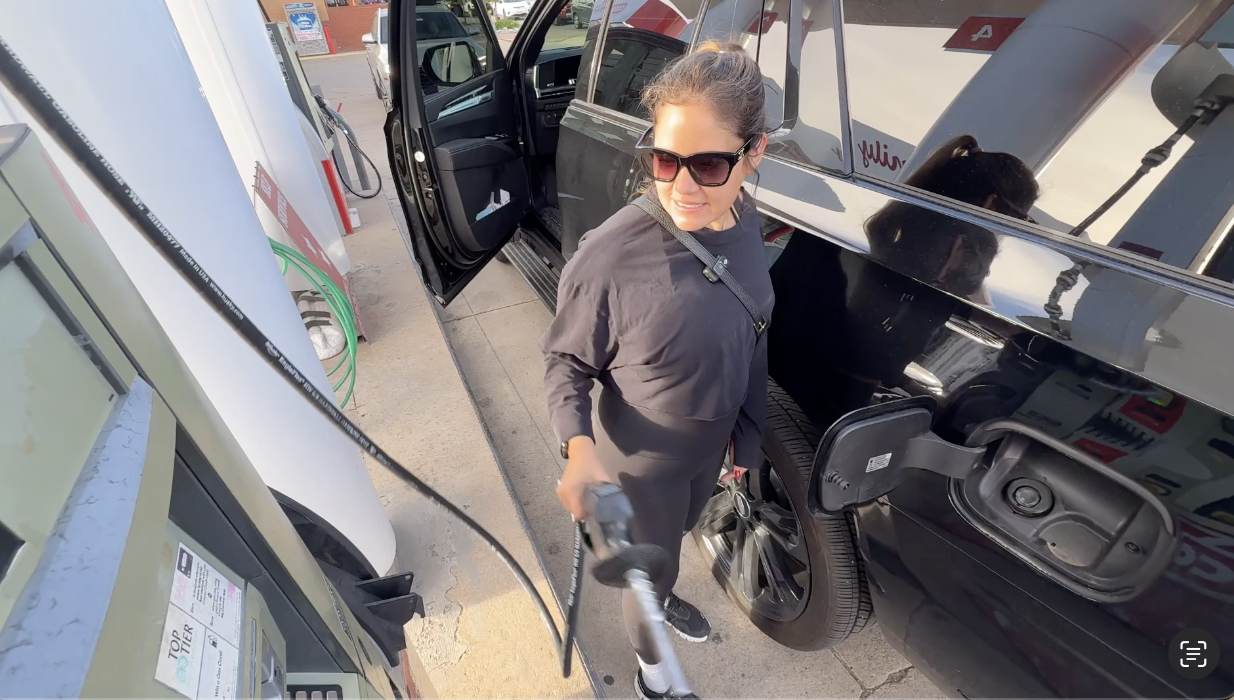
Today, employee Claude Espinoza is changing out winter tires for summer tires.
“I get it. Only so long you can run a family business,” Espinoza said.
Customers like Ali Halberson, who spent $100 to fill her car, are feeling the impact of changing times.
“I was really empty,” Halberson said.
While Halberson thinks current gas prices are “terrible,” customers in the neighborhood do not want to pay the price of watching the Wilson family’s station disappear. Other gas stations that used to operate across the street and next door are long gone, leaving the Bonnie Brae Conoco as a final remnant of a bygone era.
This story was reported on-air by a journalist and has been converted to this platform with the assistance of AI. Our editorial team verifies all reporting on all platforms for fairness and accuracy.

Denver7 | Your Voice: Get in touch with Mike Castellucci
Denver7’s Mike Castellucci covers stories that have an impact in all of Colorado’s communities, but specializes in reporting on community connections. If you’d like to get in touch with Mike, fill out the form below to send him an email.

(WSB photo, Saturday night)
As we first reported last month, some of Seattle Parks‘ “summer” hours this year are starting on May 1 – and this past weekend, we photographed illuminated signage announcing that along Alki, while noting the city had yet to make a full detailed announcement. Today, it’s finally out, including info on beach-fire season, which will start the Friday before Memorial Day:
With the summer season approaching, Seattle Parks and Recreation is reminding visitors of summer park hours, boat ramp access, and beach fire rules at Alki Beach and Golden Gardens.
Below are key details to help you plan ahead, including summer hours and beach fire season dates.
Summer Hours at Parks and Boat Ramps
This summer, starting Friday, May 1, 2026, the permanent summer hours will be in effect at select parks and boat ramps across Seattle:Alki Beach and Golden Gardens:
Summer Hours (May 1, 2026 — September 30, 2026): 4 a.m. – 10:30 p.m.
Non-Summer Hours (September 30, 2026 — April 30, 2027): 4 a.m. – 11:30 p.m.Don Armeni and Eddie Vine Boat Ramps:
Summer Hours (May 1, 2026 — September 30, 2026): 4 a.m. – 10:30 p.m.
Non-Summer Hours (September 30, 2026 — April 30, 2027): Open 24 hoursThese seasonal hours help support safe, enjoyable use during peak visitation while aligning with staffing and safety resources.
Beach Fire and Park Rules
Starting Friday, May 22, 2026, beach fires will be permitted at designated fire pits at Alki Beach and Golden Gardens seven days a week on a first come, first served basis. Bringing your own fire pit is not allowed, and no propane fire pits/rings are allowed.-Fires must be extinguished by 10 p.m.
-Fires allowed 7 days a week starting Friday, May 22 through Tuesday, September 1.
-Staff will be on-site to manage and assist with putting out fires at 10 p.m.
-Parking lot gates will be locked and the park will close at 10:30 p.m. for summer hours.
-Please only burn clean (natural, bare, dry cord-wood) wood and douse your fire completely before leaving.
-Light a fire ONLY in one of the installed fire containers
-Use only clean, dry firewood
-Please douse your fire with water, not sand
-Fires are not allowed during air pollution alerts; we will post sign
-Please don’t remove any materials from the park, beach or dunes
-Please dispose of trash and ashes in the containers provided for each. (SMC 18.12.260)
-Be considerate of others–please, no loud or amplified music! (SMC 18.12.170)
-Remember, no alcohol or smoking are allowed, and parks are drug-free zones.
-Beach fire rules are outlined in detail in the Seattle Municipal Code section 18.12.270 and in our Beach Fires Policy.If you see an illegal fire, call 911. For current burn ban and air quality questions, contact Puget Sound Clean Air Agency.
Fire pits at Golden Gardens and Alki are unlocked by 5:30 p.m. Please extinguish all beach fires (using water, not sand) by 10 p.m. in order to ensure that all fires are completely extinguished in ample time before the park’s closure.
We’re committed to providing a safe and enjoyable experience for all that visit Seattle parks! Thank you for doing your part to follow park guidelines and help keep these spaces welcoming for this summer.
Summer plans on Alki are expected to be among the topics at the Alki Community Council‘s monthly meeting Thursday (April 16), 7 pm at Alki UCC (6115 SW Hinds).

How Jerry West found catharsis by speaking openly before his death in ‘The Logo’

Mass drone warfare is Europe’s rising security threat
Man accused in Molotov cocktail attack of OpenAI CEO’s home charged with attempted murder

Detroit Chinatown Vision Committee discusses Detroit Chinatown

Bay Area bike program pays commuters to ditch their cars

Florida High School Football Rankings: Top 25 teams – Oct. 21

How old is Bo Nix? What to know about Oregon quarterback ahead of 2024 NFL Draft

Cleary's 21 help Le Moyne down Central Connecticut State 69-64 in OT

99th annual Pony Swim held in Virginia

Indiana Members Credit Union announced as new anchor tenant at Bottleworks District
Mass drone warfare is Europe’s rising security threat
Man accused in Molotov cocktail attack of OpenAI CEO’s home charged with attempted murder

Embattled Rep Tony Gonzales announces plans to resign amid sexual misconduct allegations

UN experts slam attacks on Gaza shelters, forced displacement in West Bank

DOJ fires at least 4 prosecutors involved in FACE Act cases during Biden administration
-

 Atlanta, GA1 week ago
1 teenage girl killed, another injured in shooting at Piedmont Park, police say
-

 Georgia7 days ago
Georgia House Special Runoff Election 2026 Live Results
-

 Arkansas4 days ago
Arkansas TV meteorologist Melinda Mayo retires after nearly four decades on air
-

 Pennsylvania1 week ago
Parents charged after toddler injured by wolf at Pennsylvania zoo
-
 Milwaukee, WI1 week ago
Potawatomi Casino Hotel evacuated after fire breaks out in rooftop HVAC system
-

 Austin, TX6 days ago
ABC Kite Fest Returns to Austin for Annual Celebration – Austin Today
-

 World1 week ago
Zelenskyy warns US-Iran war could divert critical aid from Ukraine
-

 World1 week ago
Indonesia receives bodies of peacekeepers killed in southern Lebanon