West
'Fat Leonard' faces sentencing in Navy bribery scandal

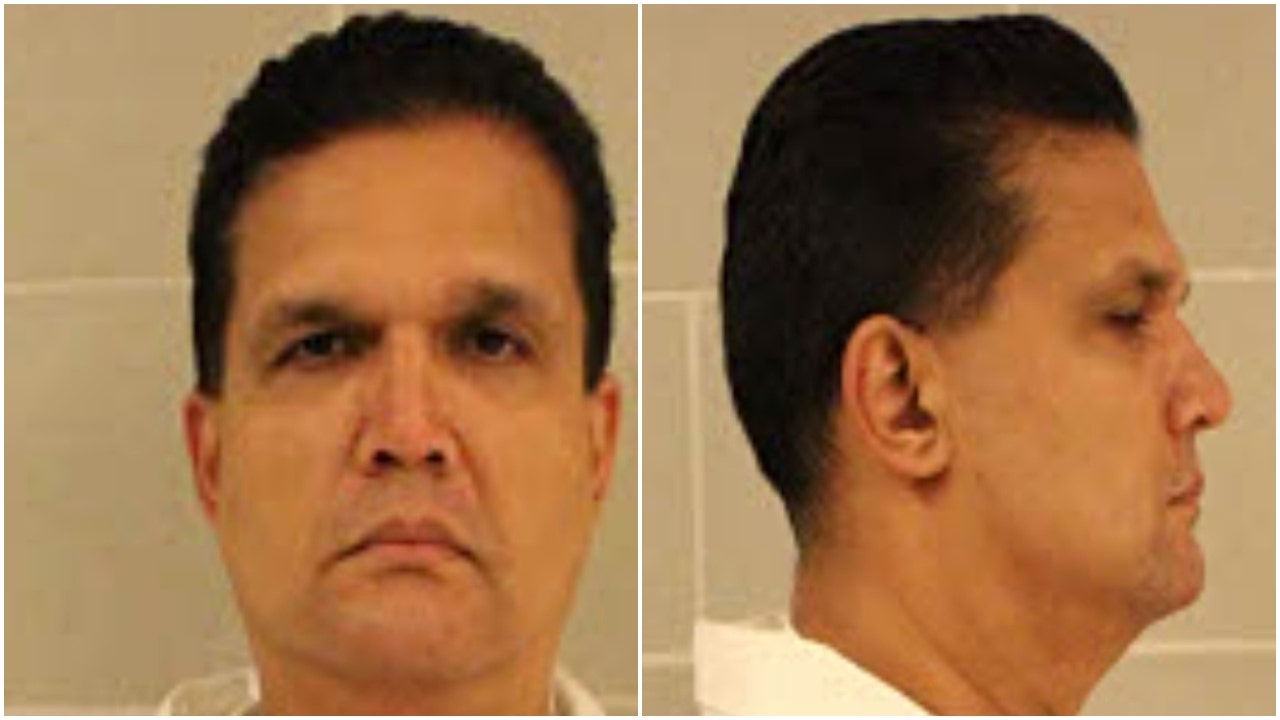
Leonard Glenn Francis, aka “Fat Leonard,” will be sentenced next week after his conviction, dramatic escape from custody and recapture in one of the biggest bribery and corruption scandals in U.S. military history.
Francis is due in U.S. District Court in San Diego on Tuesday, 11 years after his initial arrest and two years after he cut off his ankle monitor and fled to Venezuela. He returned to U.S. custody in December after his apprehension by Venezuelan authorities and a prisoner swap between the two countries.
Under a plea agreement, the 6’3″, 350-pound Malaysian former defense contractor, who bribed hundreds of Navy officers for classified information for more than 20 years, could see less than a year of jail time, court documents show.
The agreement comes after “Fat Leonard” admitted to defrauding the U.S. government and American taxpayers out of at least $35 million dollars until he was caught in a sting operation in 2013. Following his arrest, nearly 1,000 Navy officers came under scrutiny, including 91 admirals.
‘FAT LEONARD’ CAPTURED; NAVY CORRUPTION SCANDAL MASTERMIND NABBED IN VENEZUELA AFTER WEEKS ON THE RUN
Leonard Glenn Francis, aka “Fat Leonard,” pleaded guilty to bribery and fraud charges in one of the largest corruption scandals in U.S. military history. (U.S. Marshal Service)
Federal prosecutors brought criminal charges against 34 defendants, 33 of whom were convicted after Francis provided information to authorities while in U.S. custody. Francis could be sentenced to a maximum of 22 years in prison for his crimes, but the Department of Justice has sought a much lighter sentence in light of his cooperation, court documents show.
“Perhaps a harsher sentence would be justified given Francis’s egregious and prolonged criminal conduct, as well as his violation of the Court’s trust with respect to his release on medical furlough. But the substantial assistance provided by Francis cannot be ignored, and the degree and significance of his cooperation cannot be overstated regardless of what one thinks of the individual or his underlying criminal conduct,” U.S. Attorney Tara K. McGrath wrote.
Francis was arrested in a San Diego hotel nearly a decade ago as part of a federal sting operation. Investigators say he bilked the U.S. military out of more than $35 million by buying off dozens of top-ranking Navy officers with booze, sex, lavish parties and other gifts.
‘FAT LEONARD’ CUTS ANKLE MONITOR WEEKS BEFORE SENTENCING IN $35 MILLION US NAVY CORRUPTION SCANDAL
Another undated photo of Leonard Glenn Francis. (Credit: courtesy Glenn Defense Marine Asia)
The scandal led to the conviction and sentencing of nearly two dozen Navy officials, defense contractors and others on various fraud and corruption charges. Investigators say that Francis, who owned and operated his family’s ship-servicing business, abused his position as a key contact for U.S. Navy shops at ports across Asia, wooing naval officers with Kobe beef, expensive cigars, concert tickets and wild sex parties at luxury hotels from Thailand to the Philippines.
He pleaded guilty to bribery and fraud charges in 2015 and was placed under house arrest in San Diego with a GPS monitor and security guards.
But while awaiting sentencing, Francis slipped out of his ankle monitor and disappeared.
US SWAPS MADURO ALLY WITH VENEZUELA FOR 10 AMERICANS, INCLUDING ‘FAT LEONARD’
Undated photo of Leonard Glenn Francis, owner of the Singapore-based maritime services firm Glenn Defense Marine Asia. (Credit: NCIS-DCIS case files)
He failed to respond to messages and knocks at his door from federal officers who noticed that his monitor had gone offline. His home was found empty after police conducted a welfare check that afternoon.
“He was planning this out, that’s for sure,” U.S. Marshal Omar Castillo told the San Diego Union-Tribune at the time, adding that neighbors said they had seen a U-Haul being loaded up in the weeks prior to his escape.
The U.S. Marshals had offered a $40,000 reward for information leading to his capture.
CLICK TO GET THE FOX NEWS APP
Francis was apprehended by Venezuelan authorities, who had been advised by Interpol that he was a wanted man. Venezuelan officials said he intended to reach Russia.
The Biden administration secured Francis’ extradition and the release of 10 other detainees by Venezuela in exchange for Alex Saab, a Columbian-born businessman and close ally of Venezuelan President Nicolás Maduro, who had been charged in the U.S. in a money laundering case, the Associated Press reported.
Fox News Digital’s Liz Friden, Jennifer Griffin, Brie Stimson and the Associated Press contributed to this report.
Read the full article from Here


San Francisco’s Fourth of July celebration along the city’s waterfront quickly turned into hours of gridlock, dangerous fireworks incidents and a surge in emergency calls.
Thousands packed Crissy Field to watch fireworks launched from the Golden Gate Bridge. But once the show ended, it wasn’t exactly a smooth ride home.
While many left with great memories. Others found themselves stuck for hours in gridlock, caught in a massive backup involving dozens of Waymo cars, while firefighters across the city were responding to fires and serious fireworks injuries.
For Rose Peterson, the ride home after San Francisco’s Fourth of July fireworks took an unexpected turn.
“We were pulling up to a four-way stop and this guy was shooting off a firework in the middle of the road, and then our Waymo starts driving, and we’re like ‘Wait, what’s happening?’,” she said.
No one inside was hurt, but Peterson says the experience left her questioning how autonomous vehicles respond in unpredictable situations.
“I definitely think it needs to be more sensitive of anything that can come into the path of the road,” she said.
That wasn’t the only challenge after the show.
As thousands left Crissy Field and the Presidio, traffic came to a standstill. Among those stuck was Dave Guingona, who had friends visiting from the Philippines and wanted to show them a memorable Fourth of July in San Francisco.
“Five minutes, 10 minutes, 15 minutes went by, then we realized people were getting out of their cars, yelling and screaming at these Waymos because there were no drivers,” he said.
He says nearly two hours later, Waymo employees finally began driving the vehicles out.
“They had a great time, but this is what they’re going to remember for the rest of their lives. This was unbelievable,” he said.
While traffic barely moved, San Francisco firefighters responded to more than 500 calls for service, including four fireworks-related wildfires, numerous outside fires across the city and a vehicle fire on Connecticut Street believed to have been sparked by illegal fireworks.
Crews also responded to two life-altering fireworks injuries.
Captain Jonathan Baxter says the incident Peterson experienced in the Waymo was another reminder of how quickly things could have turned tragic.
“That situation could’ve had a far worse outcome—not only for the individuals in the car that could’ve been injured or worse—but for the individuals who lit the fireworks. They could have their life altered for the rest of their lives as well,” Baxter said.
Waymo says extreme traffic congestion disrupted operations for several vehicles after the fireworks and crews worked with city officials to clear them from the area.
The company also says it’s evaluating the incident surrounding fireworks, adding it’s committed to learning from situations like this.
San Francisco fire officials are reminding people that even fireworks marketed as “safe” can cause devastating injuries and fires. As for Waymo, the company says it’s reviewing both last night’s traffic congestion and the incident involving Rose’s ride as it looks for ways to improve operations during major events.


9:20 PM: Seattle Fire has a water-rescue response headed to Alki Avenue and 64th SW after a report of someone hanging onto a capsized watercraft – possibly a kayak, per dispatch – about 50 yards offshore.
9:29 PM: SFD responders report another kayaker appears to be towing in the person who was in trouble, or trying to.
9:34 PM: Rescuers, including an SFD boat, are deciding where to take the kayaker once he’s out of the water.
9:36 PM: They’re going to move a medic unit and battalion chief to Don Armeni Boat Ramp and take the kayaker there for evaluation.
-
 Lifestyle31 minutes ago
How to enter your Sporty Spice era : It’s Been a Minute
-

 Technology41 minutes ago
Some of the nation’s rich are letting AI teach their kids
-

 World46 minutes ago
Experts ‘deeply’ concerned over Iran’s work at underground nuclear site
-

 Politics53 minutes ago
Trump shares news of ‘crystal clear’ Reflecting Pool, calls for vandalism suspect’s arrest
-

 Health56 minutes ago
How a 93-year-old soccer referee credits wartime rations and discipline for his longevity
-

 Sports1 hour ago
England stuns Mexico 3-2 in instant World Cup classic, hands team first World Cup loss at Estadio Azteca
-
 Business1 hour ago
FDA escalates recall of Utz brand potato chips before July Fourth holiday
-
 Entertainment1 hour ago
Inside the all-star America250 concert at the L.A. Coliseum

