West
Expelled California high school students awarded $1 million in lawsuit after accusation they used 'blackface'

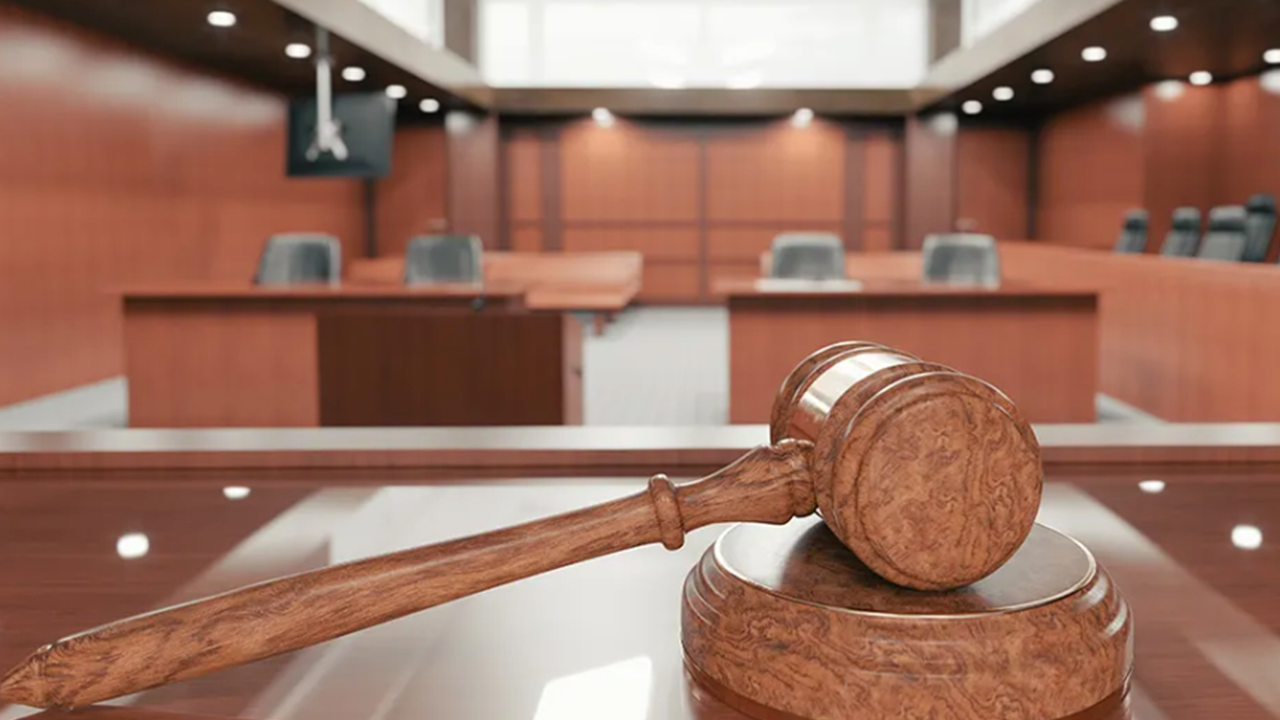
A California jury has awarded $1 million to two former students in their case against a private high school in the Bay Area that forced them to withdraw after a photo of the teens wearing acne masks was interpreted as blackface.
The Santa Clara County jury sided with the former students on two of the five claims made in the lawsuit, awarding them $500,000 each and $70,000 tuition reimbursements to the boys four years after they were swept up in a racial controversy that led to them being forced to withdraw from Saint Francis High School in Mountain View, Calif.
“Our primary goal was to clear (our clients’) names,” the plaintiffs’ attorney, Krista Baughman, told the San Francisco Chronicle after the jury’s decision on Monday. “It was quite clear the jury believed these were innocent face masks. They are young kids, their internet trail is going to haunt them for the next 60 years. Now they don’t have to worry about that.”
A California jury has awarded $1 million to two former students in their case against a private high school in the Bay Area that forced them to withdraw after a photo of the teens wearing acne masks was interpreted as blackface. (iStock)
In 2020, the former students, identified in court records as H.H. and A.H., and their parents initially filed a lawsuit against the private school for $20 million after old photos from 2017 went viral and led to accusation against the boys of doing blackface. In the photo, the two plaintiffs, who were 14 at the time, and a third boy who did not attend St. Francis are posing in front of a mirror wearing green face masks, which the lawsuit said were acne medications.
After the photo reemerged online in June 2020, amid the racial reckoning that followed George Floyd’s death in police custody, other St. Francis students and parents speculated that the boys were making a racially charged joke and pressured the school to take action against them.
YOUNG CHIEFS FAN AND DAD RESPOND TO ‘BLACKFACE’ ACCUSATIONS: ‘NEVER MEANT TO DISRESPECT ANY NATIVE AMERICANS’
The plaintiffs argued that as a result of public pressure, the school gave the two boys an ultimatum to either voluntarily withdraw or be expelled, the Chronicle reported.
“Defendants took it upon themselves to use the innocent and wholly unrelated photograph of the boys to make the malicious and utterly false accusation that the boys had been engaging in ‘blackface,’ and to recklessly assert that the photograph was ‘another example’ of racism at SFHS,” the suit states.
“The boys did not use the facemasks or take the photograph with any ill-intent, bias or prejudice, let alone in connection with any racist sentiments or epithets,” it continues.
The jury found the school guilty of two of the five claims made in the lawsuit, including failing to do a proper investigation and breach of an oral contract. (iStock)
The jury found the school guilty of two of the five claims made in the lawsuit, including failing to do a proper investigation and breach of an oral contract.
CLICK HERE FOR MORE COVERAGE OF MEDIA AND CULTURE
“We appreciate the jury’s verdict rejecting the plaintiffs’ two primary claims of defamation and breach of contract and thank them for their thoughtful analysis. The jury rightly found we did not breach our handbook, did not violate the students’ free speech rights, and did not defame the students,” a spokesperson from the school told Fox News Digital in an emailed statement. ” However, we respectfully disagree with the jury’s conclusion as to the lesser claim regarding the fairness of our disciplinary review process and are exploring legal options, including appeal as there is no legal precedent applying that claim to a high school.”
“We are grateful for the strong support of our community throughout this case,” the statement continued. “We look forward to putting this matter behind us so we can return to focusing solely on educating our vibrant student body and living the Catholic values of the Holy Cross tradition, which are rooted in hope, respect, integrity and family.”
Read the full article from Here


MARANA, AZ (AZFamily) — Proposals for data centers and ICE detention facilities in Marana are dividing neighbors and turning some against their local leaders.
These are two issues that some Republicans and Democrats are finding themselves agreeing on, as people try to take charge of who and what ends up in their communities.
“Well, first I think everyone on our city council needs to be replaced. What they are doing to Marana and surrounding areas is destroying our future and our kids’ futures,” a Marana resident said.
A recent proposal by the Department of Homeland Security would create an ICE detention center about 3 miles from the community center.
The property proposed for the ICE facility was a minimum-security prison with a capacity of about 500 people. The release said that renovations will increase capacity to 775, but could expand to over 1,300.
DHS officials say the facility would include more exam rooms, a dental area, and other features.
Arizona’s Family asked DHS for some clarification on those numbers and details. DHS released a statement saying, “ICE does not discuss individual pre-decisional conversations, but when a new facility contract is finalized, information will be available on ICE.gov.”
Data center concerns
Meanwhile, a rezoning application for a data center surfaced on the Town of Marana’s website last week.
It’s the second potential data center in the area and has people itching to get to public comment to voice their concerns.
“The detention center- we don’t need that here; no one wants that here. The data center- I mean, we already don’t have water and it’s awful; we don’t need another data center. Look at the ones across the country and what they’re doing,” the Marana resident we spoke with said.
Marana Town Manager Terry Rozema said nothing is set in stone.
“There’s so many factors that could come into considering whether or not something is beneficial to a community,” Rozema said.
Supporters of these projects said they will create jobs.
See a spelling or grammatical error in our story? Please click here to report it.
Do you have a photo or video of a breaking news story? Send it to us here with a brief description.
Copyright 2026 KTVK/KPHO. All rights reserved.
California
California bill to block registered sex offenders from local office rejected by Senate committee

FRESNO, Calif. (KFSN) — California bill aimed at preventing registered sex offenders from holding local elected office was halted Tuesday after a Senate committee declined to advance the measure without changes opposed by its author.
Assembly Bill 2753, introduced by Assemblywoman Esmeralda Soria in February, would have prohibited anyone who is or has been required to register as a sex offender from running for local elective office.
“This issue is critical. We have heard loud and clear from the community that we must do something,” Soria said.
The proposal came to a stop in the Senate Elections Committee, where lawmakers argued the bill’s restrictions were too broad.
California’s sex offender registration system is divided into three tiers. Tier 1 offenders are generally required to register for 10 years, Tier 2 offenders for 20 years and Tier 3 offenders for life.
According to Soria, committee members proposed limiting the bill to Tier 3 offenders. She rejected those amendments, arguing that the legislation should apply more broadly.
“For this not to be the law today, where we’re banning people that have committed some of the most horrific crimes against children, against other people, you know, and we have survivors out there, I think it’s a disservice,” Soria said.
The bill had attracted significant support before reaching the Senate. It was backed by the Fresno City Council and passed the Assembly floor in April.
Fresno City Council President Nelson Esparza traveled to Sacramento to testify in favor of the measure and said he was disappointed by the outcome.
“I call it really a gut punch for our community, and what we had experienced here, and sort of the upheaval… I don’t think we want that to happen again here at Fresno,” Esparza said.
Esparza referenced controversy earlier this year involving registered sex offender Rene Campos, who sought a seat on the Fresno City Council but ultimately did not qualify for the ballot.
Opponents of the bill argued that candidacies should be decided by voters rather than restricted by law.
“It should be a decision made by the voters, so a person should not be barred from running for office and let the voters make the decision that makes the most sense for them,” said civil rights attorney Janice Bellucci.
With the committee declining to move the bill forward under its current language, efforts to enact the proposed restrictions have stalled for now.
Copyright © 2026 KFSN-TV. All Rights Reserved.
Colorado
Where to watch Miami Marlins vs Colorado Rockies: TV channel, start time, streaming for July 1


What to know about MLB’s ABS robot umpire strike zone system
MLB launches ABS challenge system as players test robot umpire calls in a groundbreaking season.
The 2026 MLB season has surpassed the quarter mark, and after each team’s first 40 games, there’s plenty of reasons to tune in all summer long.
Chicago White Sox slugger Munetaka Murakami has already proven doubters wrong by launching 17 home runs, Pittsburgh’s Paul Skenes consistently looks like the best version of himself on the mound and Milwaukee ace Jacob Misiorowski is throwing harder than any starter in the majors.
The MLB action continues on Wednesday as the Miami Marlins visit the Colorado Rockies.
Here’s everything you need to know to tune in for the first pitch.
See USA TODAY’s sortable MLB schedule to filter by team or division.
What time is Miami Marlins vs Colorado Rockies?
First pitch between the Colorado Rockies and Miami Marlins is scheduled for 8:40 p.m. (ET) on Wednesday, July 1.
How to watch Miami Marlins vs Colorado Rockies on Wednesday
All times Eastern and accurate as of Wednesday, July 1, 2026, at 6:34 a.m.
- Matchup: MIA at COL
- Date: Wednesday, July 1
- Time: 8:40 p.m. (ET)
- Venue: Coors Field
- Location: Denver, Colorado
- TV: Rockies.TV and Marlins.TV
- Streaming: MLB.TV on Fubo
Watch MLB all season long with Fubo
MLB regional blackout restrictions apply
MLB scores, results
MLB scores for July 1 games are available on usatoday.com . Here’s how to access today’s results:
See scores, results for all of today’s games.
-

 Arizona2 minutes ago
Proposed data centers, ICE facility create mixed emotions in rural Arizona town
-

 Arkansas5 minutes ago
Central Arkansas bike trail breaks ground in Cabot – The Arkansas Leader
-

 California10 minutes ago
California bill to block registered sex offenders from local office rejected by Senate committee
-

 Colorado17 minutes ago
Where to watch Miami Marlins vs Colorado Rockies: TV channel, start time, streaming for July 1
-

 Connecticut20 minutes ago
Lamont signs law in Norwich to stop pay to contractors violating wages
-

 Delaware25 minutes ago
Delaware has gotten these 15 verbal commitments from football recruits
-
 Florida32 minutes ago
Kids with autism are prone to drowning. Florida is trying to prevent that
-

 Georgia35 minutes ago
Bradenton man wanted for murder is found hiding in Georgia

