Denver, CO
Rockies’ Jake Cave supplies the fireworks in 4-3 win over Brewers


Jake Cave has been a sparkplug for the Rockies this season, running down flyballs in the outfield, taking extra bases and pumping up his teammates.
Thursday night, Cave provided the fireworks.
His solo homer to dead center in the sixth inning lifted Colorado to a 4-3 win over Milwaukee in front of an Independence Day crowd of 48,705 at Coors Field.
Cave’s first homer of the season came on a 1-0 fastball by Brewers starter Tobias Myers. The dinger, which traveled 430 feet, was Cave’s first since Aug. 20 of last season when he played for the Phillies. It snapped a streak of 208 at-bats without a homer.
When he got to the dugout, Cave was treated with the silent treatment, a tradition usually reserved for rookies who hit their first career homer. Third baseman Ryan McMahon was the instigator.
“That’s awesome,” said Cave, who entered Thursday with the fourth-longest active homerless at-bat streak in the majors. “I’ve done it to guys before, too. I was so pumped up I didn’t know what was happening at first as I came down the stairs.
“Then I realized they were doing the silent treatment. It was cool. It was fun.”
Manager Bud Black was thrilled for Cave, someone who plays with the kind of passion that Black loves.
“He’s playing a great all-around game over the last couple of months,” Black said. “He knows how to play. He brings great energy every day, in the dugout and in the clubhouse. He’s gritty.
“He’s capable of (hitting a homer) and I’ll go out there and say that there’s some more coming.”
Colorado right-hander Cal Quantrill battled, as he always does. He gave himself a C grade for his outing.
“I see my job as giving my team a chance to win every fifth day,” Quantrill said. “Sometimes it’s easy, sometimes it’s hard. Tonight it was exceptionally hard. I really didn’t have very good stuff. But the way I look at it, if it’s a ‘C’ game and the team gets a win, it’s hard not to be excited about that.”
Quantrill departed after five innings with Colorado holding a 3-2 lead. He gave up five hits, struck out two and walked four. The four free passes stung him, and he failed to get a quality start for just the third time in his last 12 starts.
But the bottom line was that the right-hander set the Rockies up for victory, and he has a 3.03 ERA in those 12 starts, dating back to May 3.
The Rockies held their breath in the third inning when Quantrill walked gingerly off the field. He fielded William Contreras’ swinging bunt in front of the mound and fired a strike to first to nip Contreras for the inning’s final out. But Quantrill fell during his throw and came up limping slightly. He said he “slightly tweaked” his hamstring.
Quantrill was not sharp in the fourth when he walked three batters to load the bases and paid the price when Andruw Monasterio blooped a two-run single to right, cutting Colorado’s lead to 3-2. Quantrill said the hamstring was not to blame for the three walks.
“I was just trying to be too fine,” he said.
The Brewers tied the game in the sixth off reliever Anthony Molina. Jackson Chourio scorched an RBI double to center, scoring Rhys Hoskins, who drew a one-out walk.
Timely hits gave the Rockies an early 3-0 lead. Charlie Blackmon led off the first with a single, advanced to second on Ezequiel Tovar’s sacrifice bunt and scored on Ryan McMahon’s opposite-field double to left.
In the second, Blackmon’s two-run, pop-up, hustle double to shallow right scored Michael Toglia and Sam Hilliard.
Colorado’s much-maligned, rickety bullpen finally delivered in the clutch. Right-hander Tyler Kinley pitched 1 2/3 scoreless innings and lefty Jalen Beeks pitched 1 1/3 scoreless innings for his seventh save.
Beek’s biggest out was striking out pinch-hitter Garrett Mitchell looking at a 96 mph fastball for the final out of the eighth inning with two men on base. Beeks set the Brewers down in order in the ninth, getting All-Star Christian Yelich to chop out to first for the final out.
Friday’s pitching matchup
Royals LHP Cole Ragans (5-6, 3.33 ERA) at Rockies LHP Kyle Freeland (0-3, 7.94)
6:10 p.m. Friday, Coors Field
TV: Rockies.TV (streaming); Comcast/Xfinity (channel 1262); DirecTV (683); Spectrum (130, 445, 305, 435 or 445, depending on region).
Radio: 850 AM/94.1 FM
Freeland has pitched brilliantly in his two starts since coming off the injured list, posting a 1.42 ERA despite not getting a victory. In his last start against the White Sox, the lefty notched his 751st career strikeout, surpassing Pedro Astacio for the fifth most in franchise history. He also tied Jeff Francis for the third-most starts in franchise history (185). In seven career starts vs. Milwaukee, Freeland is 4-2 with a 2.36 ERA.
Ragan is coming off a rough outing vs. Cleveland in which he was charged with the loss when he allowed five runs on six hits over 4 2/3 innings. Entering Thursday’s play, he ranked second in the American League with 126 strikeouts. His 215 strikeouts are the most by a Royals pitcher through 30 starts to begin a stint with the franchise. Ragans has made one career appearance against the Rockies, tossing two scoreless innings in relief on May 20, 2023, at Globe Life Field as a member of the Rangers’ bullpen.
Pitching probables
Saturday: Royals RHP Seth Lugo (11-2, 2.17) at Rockies LHP Austin Gomber (1-5, 4.72), 7:10 p.m.
Sunday: Royals RHP Brady Singer (4-5, 3.05) at Rockies RHP Ryan Feltner (1-7, 5.60), 1:10 p.m.
— Patrick Saunders, The Denver Post
Want more Rockies news? Sign up for the Rockies Insider to get all our MLB analysis.



For most food manufacturers, it makes more financial sense to bake, brew, cook or create their product somewhere where the square footage is a little less expensive, like a business park, and to sell it where the rent – and the foot traffic – is higher.
Kent Beidel, who owns a string of mountain-town ice cream parlors called Sundae, did the opposite when he opened his newest and, by far, his biggest location in downtown Denver.
“We wanted to be right in front of people and hear them say, ‘Oh my god, they make the ice cream right here,’” he explained. “It’s backward … it’s hard. But it’s unique, and it’s really cool.”
Sundae opened in early June in a 5,100-square-foot space that includes a retail shop, a waffle cone-making “theater” where people can watch the staff turn out fresh cones, a pint-mixing classroom and a commercial kitchen – visible to customers on three sides through glass windows – that could one day supply multiple stores around Denver.
Beidel is betting those attributes will help the business stand apart from the competition in Denver, where there are already several big names making and selling scoops in multiple locations.
But that’s not the only gamble he took. Sundae is located on Sixteenth Street, the 44-year-old pedestrian mall that has become both a symbol of the city’s urban decay since the pandemic and a beacon of hope for its future after a $175 million renovation.
“Sixteenth Street is interesting,” said Beidel, who has watched it change over the past year since he first signed his lease at 1600 Glenarm Place. “It’s coming back. It still has a way to go, but we are seeing momentum start to build. Even in the last month, the foot traffic and the feeling downtown has perked up. … We are getting great feedback.”
To help, the Denver Downtown Development Authority — as part of a much larger business incentive plan — loaned Sundae $750,000. “It’s a loan,” he said. “We have to pay it back. … But we couldn’t have done this location without that support.”
Beidel has been in the food business for 22 years. Before ice cream, he was the founder of Loaded Joe’s, a restaurant and coffee shop staple in Vail. But in 2016, he sold Loaded Joe’s and took over two former Marble Slab Creamery locations in Vail and Edwards, rebranding them as Sundae. In 2020, he opened a third shop in Glenwood Springs.
“That was our first chance to build from scratch and decide what it should look like,” he explained, adding that Glenwood, which includes a kitchen, eventually began making ice cream for Sundae’s next two locations in Basalt and Snowmass.
To make the ice cream, Beidel said he employs five pastry chefs to create recipes. So, rather than using cheesecake flavoring, for instance, for cheesecake ice cream, Sundae uses all the same ingredients you would use to make real cheesecake.
The cheesecake, by the way, is among Beidel’s favorite flavors, but Salted Cookies & Cream and Caramelized Banana are two of the most popular with customers. Classic chocolate, vanilla, and strawberry are also top sellers – “and always will be,” he added.
Next month, Beidel hopes to open the classroom, where people can learn how to make ice cream and then whip up some of their own flavors to take home. And down the road, he plans to open more locations.
But in the meantime, he’s focused on downtown. “Let’s say Denver does really become vibrant again. We have a great product and a great following in the mountains. So, it’s just a matter of time down here.”
Subscribe to our new food newsletter, Stuffed, to get Denver food and drink news sent straight to your inbox.
Denver, CO
Denver Country Club caddie earns full-ride Evans Scholarship, becomes first in family to attend college

DENVER — What started as a summer job has turned into a life-changing opportunity for Denver-area student Vanessa Olivar.
The 18-year-old Denver Country Club caddie has earned the prestigious Evans Scholarship, a full tuition and housing scholarship awarded by the Western Golf Association to caddies who demonstrate strong character, academic achievement, financial need and a strong caddie record.
Watch Bradey King’s story on how Olivar persevered to nab this scholarship in the video below.
Denver Country Club caddie earns full-ride Evans Scholarship
Olivar is one of 15 students from Colorado to receive the scholarship this year and will attend the University of Colorado Boulder this fall.
When she first heard about caddying through her high school’s assistant principal, Olivar said she wasn’t sure it was the right fit.
“I didn’t know anything about the game of golf,” she said. “At first, I was a little doubtful and nervous, but I thought it would be a great summer job. I quickly found out that it was more than just carrying a golfer’s bag.”
Over the past three years, Olivar learned the responsibilities that come with the job, from carrying clubs and providing yardages to building relationships with members and fellow caddies.
“I learned a strong work ethic, and the relationships that I built through caddying have really shaped who I am today,” she said.
Her dedication paid off when she received the news that she had earned the Evans Scholarship.
“I got that flag saying, ‘Congratulations,’ and I was so excited,” Olivar said. “Words couldn’t express how excited my family and I were for this great opportunity that I worked so hard for over three years.”
The scholarship carries even greater significance because Olivar will become the first person in her family to attend college.
“I’m a first-generation college student,” she said. “Coming from immigrant parents, I kind of had to navigate this world by myself.”
Her parents immigrated to the United States when they were 18, and Olivar said their sacrifices inspired her to pursue higher education.
“Being able to tell my parents they don’t have to pay for my college takes that weight off their shoulders, but also mine,” she said.
Western Golf Association officials say Olivar exemplifies the qualities the Evans Scholarship is designed to recognize.
“The scholarship is based upon four principles: Their caddie record, their academic record, their financial need, but really what’s most important is their character,” said Brian Wilkinson, the Western Golf Association Director at Denver Country Club. “Vanessa expresses the great character and leadership that we’re looking for in young women and men.”
At CU Boulder, Olivar plans to major in public health with a minor in business before pursuing dental school.
She said the opportunity has changed the trajectory of her future.
“I knew I wanted to go to college, and I wanted to have a further education,” Olivar said. “I just didn’t know how I was going to do that. I didn’t know caddying was eventually going to change that for me. It’s a scholarship that has changed my life forever.
Denver7
Denver7 | Your Voice: Get in touch with Bradey King
Denver7’s Bradey King reports on the entire sports landscape in Colorado, including Denver’s pro teams, but is always looking for stories off the field and in the non-professional ranks. If you’d like to get in touch with Bradey, fill out the form below to send her an email.

-
 Politics5 minutes ago
Commentary: Two Lorenzos from Mexico. One fulfilled his American dream. ICE killed the other
-
 Sports17 minutes ago
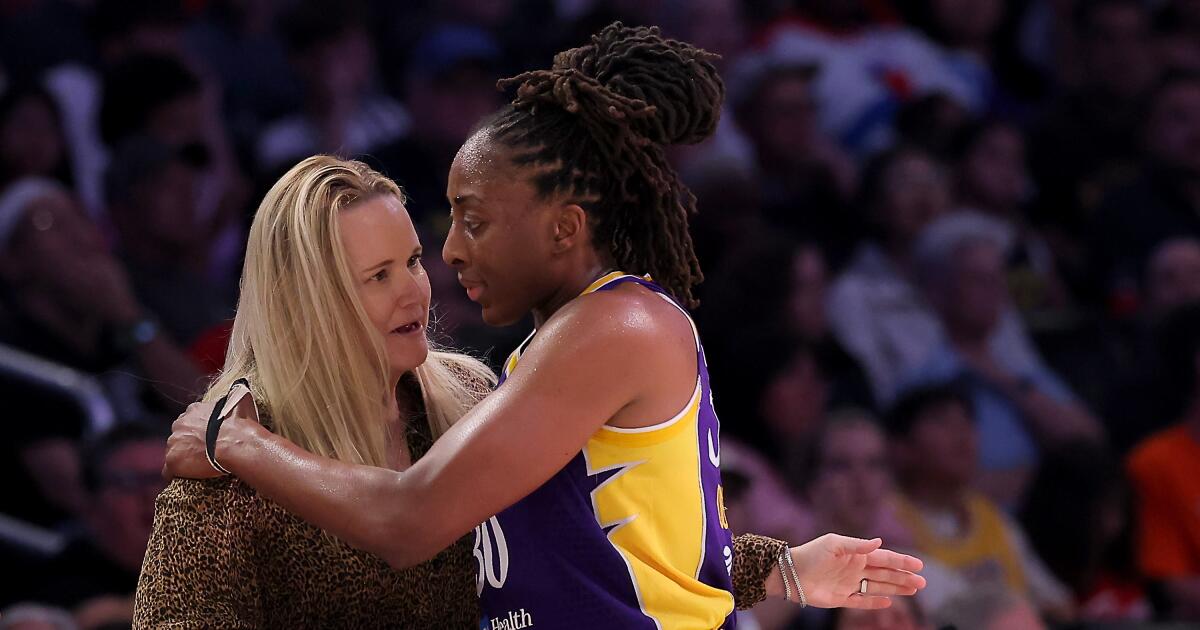
What will the Sparks do next? The franchise is at a crossroads after firing its GM
-
World29 minutes ago
Euronews explains: can Hungary's PM Magyar really remove president Sulyok from office?
-

 News59 minutes ago
Mexico files criminal complaints in US over migrant deaths in custody
-

 Videos3 hours ago
New explosions near Iranian port cities, says state media | BBC News
-

 Los Angeles, Ca3 hours ago
Big rig crash spills cinder blocks on 101 Freeway; lanes blocked in Tarzana
-
 Detroit, MI3 hours ago
How to watch ‘The Odyssey’ in IMAX, 70mm and more in metro Detroit
-

 San Francisco, CA3 hours ago
Sold-Out SF Marathon 2026: The Races, Routes and Road Closures (Plus How to Watch It All) | KQED

