Denver, CO
Here’s how the Broncos graded out in the first round picking Bo Nix

/cdn.vox-cdn.com/uploads/chorus_asset/file/25420453/Denver_1_042624.png?ssl=1 "Here’s how the Broncos graded out in the first round picking Bo Nix")
Last night, I ran a survey asking Denver Broncos fans how they would grade the team’s first round pick of quarterback Bo Nix. Many of us expected them to trade back to get him after the 12th overall selection, but quarterback desperate teams left Sean Payton and George Paton little choice but to take Nix as the sixth overall quarterback taken in the 2024 NFL Draft.
Overall, we were mostly pleased with the pick despite the perception of it being a bit of a reach to take Nix that early in the draft. There was an even split between ‘A’ and ‘B’ grades but a total of 76% of fans voted for either of those.
We can probably guess that us fans were far more optimistic than the national media, so let’s see what draftniks around the web had to say about the Broncos picking Bo Nix in the first round.
Check out DraftKings Sportsbook, the official sportsbook partner of SB Nation.
Broncos Draft Grades
SBNation: C+
The run on QBs continues, with the Nix to Denver rumors being true. While Nix is a good point and shoot QB with accuracy to the short areas of the field, a lot of that Oregon offense was watered down and his responses under pressure left a lot to be lacking. Denver was in a tough spot in this draft, needing a QB but not having the capital to move up to do it. Better hope he works out.
DraftKings: C
The good news is that the Broncos didn’t mortgage their future to trade up for J.J. McCarthy. But they did spend some nice draft capital on a player that doesn’t really deserve to go in the first round. The good news is that his skill set does fit with Sean Payton’s offense. Of course, his trouble comes with pressure and the NFL is not kind to QBs that don’t deal with pressure well. If they can protect him, Nix will be accurate and spread the ball around well. He’ll need to get his confidence up early in his career with help from the running game and defense.
NFL.com: C
I figured Nix would be in the mix in the top dozen picks because of his experience (61 collegiate starts), toughness and mobility. Denver badly needed a new quarterback after the departure of Russell Wilson, and Nix was the top remaining passer in the top two tiers at the position. He does not have the arm talent of the quarterbacks picked ahead of him, and he lacks elite quickness as a runner. He also struggled with his consistency early in his career at Auburn, but he bounced back in a new environment at Oregon. Head coach Sean Payton and quarterbacks coach Davis Webb probably liked the young man’s combination of efficient play and competitive spirit but it will be interesting to see if he has the game to warrant the 12th overall selection.
The Athletic: C+
The 2024 quarterback thirst is very real. Make it six QBs gone in the top 12.
This one, somehow, didn’t feel as shocking as the Penix pick — in part because that already happened. There’s a lot to like about Nix. In fact, the conversation surrounding the former Oregon passer is very similar to the one about Penix: He’s older and comes with physical limitations. Unlike Penix, though, Nix played in a very college-style offense at Oregon.
But Sean Payton knows quarterbacks, and Denver can’t go anywhere without one. The fit here does work, as Nix’s quick release and poise should fit pretty well with Payton’s scheme. Still, as with the Penix pick, it sure feels like Denver could’ve gotten more value here. It’s a bold move, if nothing else.
CBS Sports: C-
I don’t love Nix, but I get the pick. Desperation forces teams to pick quarterbacks earlier than they should. Sean Payton obviously sees Drew Brees in him, but this is way early. Why not trade down and get him later?
USA Today: C+
With a rush on quarterbacks and the organization lacking a second-round pick, Denver might have been somewhat boxed in during its pursuit of a quarterback. But perhaps this is the signal-caller that best fits Sean Payton’s exacting style. With a Football Bowl Subdivision-record 61 starts under his belt, Nix stands out from other rookies with his experience and all that comes along with it. But that’s to be expected of a 24-year-old. He’ll have to prove he can let plays develop after operating out of a quick-hit offense that provided him an abundance of easy throws behind the line of scrimmage and in the underneath range. Payton, however, likely will heavily emphasize the screen game as he works Nix into the offense. Ultimately, however, Nix might not elevate this team so much as keep it afloat as it enters what could be a trying 2024 season.
DraftWire: B+
With a lightning-quick arm, elite accuracy, and tons of experience, Nix should be an immediate upgrade for a Denver team that has been looking for its quarterback for a decade now.
It would seem that most of the concern about the Broncos pick with Bo Nix is that it is universally seen as a reach and that is why the grade isn’t higher than a C, but also they think Nix is a great fit which is why the grades are not lower than C. Only time will tell if this pick ends up being a true draft steal or draft reach.
What do you think of the differences of opinion between us fans and the national media on Denver’s pick here? Share your thoughts in the comment section below.



Investigators with the Denver Police Department are releasing more information about last week’s deadly shooting when a SWAT officer shot a man with a BB gun earlier this month.
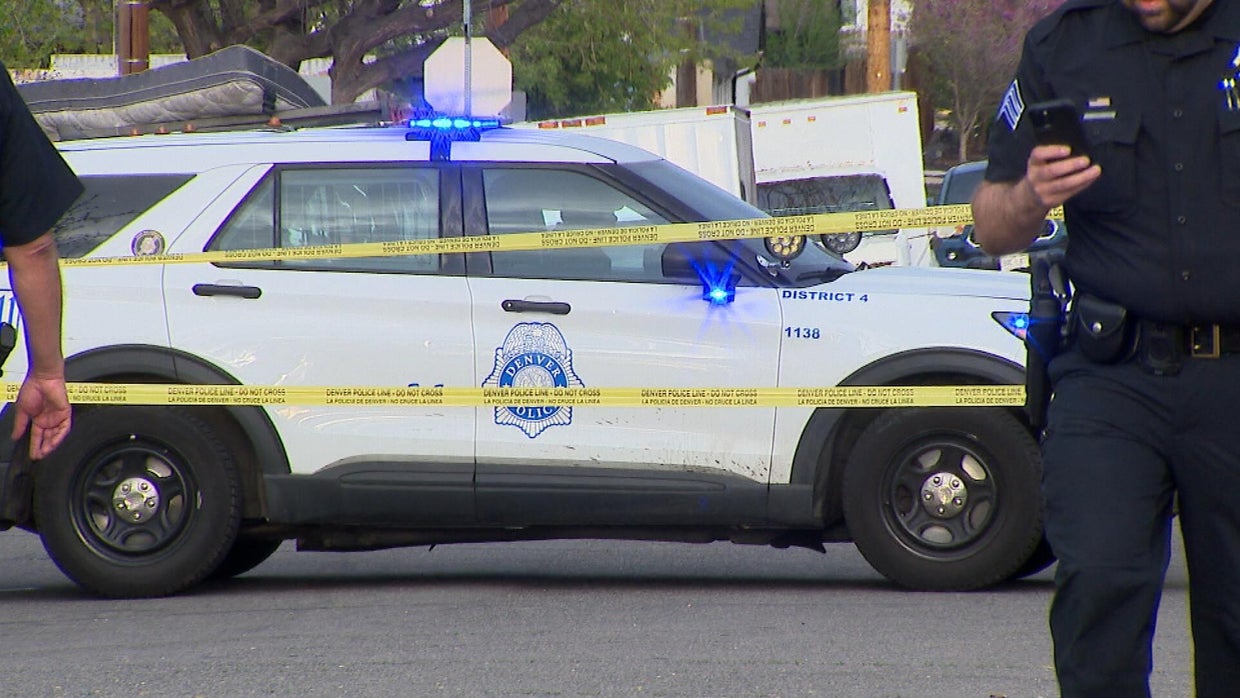
On Wednesday, police shared drone and body-worn camera video from the shooting that happened in the area of South Quitman Street and West Tennessee Avenue at approximately 5 p.m. on April 7.
According to investigators, officers were called to a home in that area after a relative called 911 about Joseph Martinez, 58, who was allegedly walking around outside with a gun. Investigators said officers thought his weapon looked like a hunting rifle and Martinez pointed it at SWAT officers.
“There was a communication that was provided, they thought the weapon may not be a functioning or real weapon, but there was no more information, and officers were left with a weapon that looked very similar to a rifle that was pointed directly at them,” said Denver Police Cmdr. Matt Clark.
An officer fired at Martinez after investigators said he failed to comply with orders to drop his weapon. Martinez was rushed to the hospital, where he later died.
The officer who shot and killed Martinez was taken off patrol per department policy.

DENVER (KDVR) — Denver police are investigating a shooting in the Montbello neighborhood on Wednesday.
According to the Denver Police Department, the shooting happened in the 12200 block of East Burlington Place.
Police located one victim, but the extent of injuries is unknown.
The department said investigators are working to develop a potential suspect.
This is developing news. FOX31 will update.

A prominent Denver hotel and nightclub shut down over the weekend after city officials suspended its licenses, citing repeated failed inspections and violations of a stop-work order.
The city took action on April 10, suspending the liquor, food, lodging and cabaret licenses for the Nativ Hotel & Gatsby Social following multiple failed inspections by the Denver Fire Department, the Denver Police Department and the Department of Licensing and Consumer Protection.
This is only the second summary suspension of a liquor license by the Department of Licensing and Consumer Protection in Denver since 2023.
Courtesy of Marcus & Millichap The Nativ Hotel. (Image courtesy of Marcus & Millichap)
“This is the most severe immediate licensing discipline action the city can take against a business,” said Eric Escudero, director of communications for Denver Licensing and Consumer Protection, in an email to The Post.
“It is only used in very rare circumstances when there is the most severe threat to safety because of alleged law violations.”
An investigation by the fire department revealed that Corporate Housing on Wazee LLC, doing business as Nativ Hotel & Gatsby Social, has a history of fire code violations dating back to Jan. 7, 2025, according to the suspension order.
Although the property, 1612 Wazee St., had undergone multiple inspections since that time, a group inspection was conducted on Feb. 24 involving the fire, police and licensing departments.
That inspection uncovered numerous violations of fire and conveyance codes, deeming the property “unsafe for occupancy.” Most significantly, inspectors determined that the fire alarm system was not being monitored and had recorded 14 internal failure signals, including a notification failure.
As a result, the system did not alert any third-party central station or Denver Fire Dispatch when the alarm was activated.
The inspection also identified several additional violations, including a faulty fire alarm control system, ingress/egress blockages, sprinkler system violations, signage violations, breaches of fire-rated construction, fire doors propped open, improperly maintained and mounted fire extinguishers, corridor and stair blockages and improper propane storage.
As a result of the inspection, the fire department issued a stop-work order, requiring the building to be vacated immediately.
Property owner Thierry Rignol was given time to address the violations and was issued a 30-day fire watch permit, which allowed only the hotel to remain open under strict monitoring with qualified personnel on site.
By March 6, some corrections had been completed, but a follow-up fire department inspection found multiple violations remained, leading the city to cite Rignol for more than 840 violations
The fire watch permit expired on March 26, and the stop-work order once again prohibited the operation of the bar/nightclub and hotel.
Despite the order, the suspension document said Denver police observed the property operating as a bar and nightclub and continued to admit patrons between April 3 and the early hours of April 5.
In addition, during the early morning hours of April 4, Denver police officers responded to a felony menacing incident outside the premises. A patron who had been removed returned with a firearm and threatened security guardss.
The police department’s media relations team told The Post that officers were also dispatched around 1:51 a.m. on April 5 to a reported assault in the 1600 block of Wazee Street. A patron was found unconscious and injured on the sidewalk in front of the premises. That case remains under investigation.
“The Denver Police Department will respectfully decline commenting on this situation, given the pending action by Licensing and Consumer Protection,” the department said.
The city began receiving community complaints about the business in 2024 when it operated under the tradename Hotel Nativ.
Rignol was formally notified of the suspension on Friday. The hotel was then given 48 hours to shut down operations so guests could be notified, and the nightclub has since closed, according to the city.
Mark Ivanyo, managing partner at the Texas-based Ivanyo Law Office, represents Rignol.
He said the fire alarm panel cited in the city’s order had been replaced several weeks before its April 13 inspection, and that the system has since been installed, tested and is now fully operational. At the same time, he said the fire department issued a written inspection report confirming the system’s installation and testing, lifting the stop-work order at the property.
“The property is currently in an active compliance process, with any remaining items limited to permitting and final acceptance steps that are in progress. Earlier reporting has referenced aggregate violation figures that do not reflect how those figures are calculated or the actual number of distinct issues identified,” Ivanyo said.
“The company is continuing to work with all relevant authorities and regulators to address any outstanding matters and hopes to resume operations as soon as that process is complete.”
The business will be required to appear before a city hearing officer, where it will have an opportunity to contest the suspension.
Get more business news by signing up for our On The Block newsletter.

A jury declared Live Nation a monopoly. But ticket prices won’t drop just yet

YouTube’s mobile app finally lets you share timestamped videos

South African ex-police chief gets tissue stuck on forehead while sweating during corruption inquiry

Tennessee governor signs nuclear family month resolution as critics push back on exclusions

Peptides may soon be easier to get amid RFK Jr’s push, but experts warn of risks

Florida High School Football Rankings: Top 25 teams – Oct. 21

How old is Bo Nix? What to know about Oregon quarterback ahead of 2024 NFL Draft

Cleary's 21 help Le Moyne down Central Connecticut State 69-64 in OT

99th annual Pony Swim held in Virginia

Indiana Members Credit Union announced as new anchor tenant at Bottleworks District
Tennessee governor signs nuclear family month resolution as critics push back on exclusions

Displaced Lebanese wary as ceasefire between Israel and Hezbollah begins

Retired Coast Guard officer with decades of public health experience is Trump’s pick to lead CDC | CNN

Video: A Look at the Plans for Trump’s ‘Triumphal Arch’

First-ever moratorium on AI data centers passes Maine legislature
-

 Ohio2 days ago
‘Little Rascals’ star Bug Hall arrested in Ohio
-

 Georgia1 week ago
Georgia House Special Runoff Election 2026 Live Results
-

 Arkansas6 days ago
Arkansas TV meteorologist Melinda Mayo retires after nearly four decades on air
-

 Pennsylvania1 week ago
Parents charged after toddler injured by wolf at Pennsylvania zoo
-

 Austin, TX1 week ago
ABC Kite Fest Returns to Austin for Annual Celebration – Austin Today
-

 Austin, TX1 week ago
Aaliyah Crump plans to transfer from Texas: report
-

 Politics2 days ago
Dem fundraising giant in the hot seat as GOP lawmakers demand answers over dodged subpoena
-

 Politics5 days ago
Trump blasts Spanberger ahead of Virginia meetings, says state faces tax base exodus like New York, California