Colorado
Colorado family says street racing led to death of beloved grandfather


A Colorado family is pleading for answers and accountability after they say a beloved grandfather was killed near his home in Adams County because of cars street racing.

“He didn’t deserve to be hit like that,” said Anthony Herrera.
Herrera says 63-year-old Joseph Zamora Hernandez was his wife’s grandfather. He was also a man who showed selflessness in the community he helped cultivate at the Delux RV Park off Federal Boulevard.
“He has lived here for 15 years and out of the 15 years, he has fed the homeless. He had Thanksgiving dinner for them every year,” said Herrera. He took care of a lot of women that were on drugs [and] tried to get them off of drugs.”
“Everyone knew him. He was the guy always willing to jump in and help out,” said Celeste Tanner, who part-owns and helps operate the RV park.
However, Hernandez’s life of giving back and serving his community in unincorporated Adams County came to a screeching halt last month.
“To just know that he walked his dogs every day, and he’s just on the sidewalk and all of a sudden he’s gone, that’s a really tough moment,” said Tanner.
“I’m still shaken up about the whole thing,” said Herrera.
A spokesperson for Colorado State Patrol tells CBS Colorado Hernandez was struck and killed on April 7 by a car at Federal Boulevard and West 55th Avenue following a conflict between two cars driving northbound. The incident happened at around 7:45
p.m. One vehicle swerved to avoid a collision and struck Hernandez on the sidewalk. Only the car that struck Hernandez stayed on the scene.
“Right around the time he got hit, he would walk his dogs before bed. That was his routine. he was a routine guy,” said Herrera.
Nearly a month later, Herrera says there is more to his grandfather’s death. Surveillance video shared by a nearby business captured the moments before the crash. Two cars can be seen driving northbound at high speeds. Herrera says they appear to be racing.

In another video taken from one of the homes at the trailer park, you can see as the white car screeching just before crashing into Hernandez.
“He flew another 20 feet into the sign,” said Hernandez, pointing to the sign for the RV park.

Herrera and other residents in the area say racing is becoming more and more of a problem on this stretch of road.
“It’s really concerning honestly. We fully support any way to kind of promote the traffic safety on Federal Boulevard,” said Tanner.
Herrera not only wants to see more safety changes to prevent racing, but he also hopes police can hold those who killed his grandfather accountable.
Everybody needs to be witnesses to more of this [racing]. It needs to stop. It’s not just this accident. There’s a lot of people dying,” said Herrera. This tragedy can be prevented if other people see it and humble themselves, as well, and not do this kind of racing, because it’s dangerous.”
Colorado State Patrol says they are still investigating this crash and looking at aggressive driving as a possible cause.
The family is hoping more people will speak up if they were witnesses to the incident and can confirm that street racing was involved or have information on the other car who fled the scene.



(COLORADO) — The Colorado National Guard will be deployed to the Middle East in support of an international peacekeeping force with a departure ceremony scheduled for Friday, April 3.
According to the Colorado National Guard, the deployment is in support of Multinational Force and Observers, an international peacekeeping force that supervises the 1979 Egypt-Israel peace treaty and enforces its terms.
More than 200 soldiers of the Colorado Army National Guard’s 1st Battalion, 157th Infantry Regiment will be at the Wings Over the Rockies Air and Space Museum, 7711 East Academy Boulevard in Denver, for the departure ceremony.
“The Soldiers of this battalion are highly trained, motivated, and ready to assume the mission of the Multinational Force and Observers in the Sinai,” said 1-157th Commander U.S. Army Lt. Col. Adam W. Rhum. “We are proud to be part of this long-standing and successful peacekeeping operation, and we are committed to upholding the legacy of those who have served before us in support of the treaty of peace between Egypt and Israel.”
The treaty was a result of the Camp David Accords and ended the state of war that had existed between the two countries. The MFO is an independent international organization created by agreement between Egypt and Israel to oversee the peace and is supported by 14 nations, according to the Colorado National Guard.
“The 1-157th has a lineage dating back to the Colorado Gold Rush, officially becoming the ‘First Colorado’ Infantry Regiment in 1883. The regiment served with distinction in World War I and World War II, where it was attached to the 45th Infantry Division and fought in major campaigns including Sicily, Anzio, Italy, and southern France,” said the Colorado National Guard.
The unit is headquartered at Fort Carson.
Colorado
As Colorado faces historically bad snowpack, a new study links low snow with more severe wildfires that damage forests

A new study out of Western Colorado University has implications for the wildfire season ahead as nearly the entire West faces record-low snowpack conditions.
The paper, published last month in the peer-reviewed journal “Environmental Research Letters,” found that not only is an early-snow melt associated with earlier fire seasons and a more acreage being burned, it’s also linked to more severe wildfires.
“When we have a low-snow winter, those high elevation forests will have lower live fuel moisture and ultimately more flammable conditions during the summer,” said Jared Balik, the lead author of the study. “That in turn, promotes greater burn severity, greater fire severity, that increases the risk of forest loss or conversion of forest to shrubland or grassland.”
The study used satellites that measure pre- and post-fire conditions to estimate burn severity of fires across 11 Western states — including Colorado — from 1985 to 2021, Balik said. Using that 36-year dataset and regional snowpack metrics, he said researchers were able to create models to explore the interactions between snowpack levels and wildfire seasons.
Balik said the study’s results confirmed what fire ecology scientists have long known: That the earlier the snow melts, the sooner the fire season can begin and that an earlier meltout typically creates drier conditions that make landscapes more susceptible to fires starting and spreading.
“Together, those two factors provide both more time and opportunity for fires to ignite and spread,” Balik said. “But we were curious, knowing that, what the implications of a low-snow year were for the severity of wildfires. What does snowpack mean for the effects of fire on our landscapes?”
Snowpack acts like a ‘savings account’ for forests
The impact of the snowpack on fire intensity — or how much of a forest’s trees and vegetation a wildfire consumes — had not previously been well studied, Balik said. Fire severity is important because while forests can survive low intensity fires, he said forests tend to have a more difficult time regenerating after high intensity fires that can kill adult trees and damage the next year’s seed source.
“These high severity fires can really change ecosystems,” Balik said. “They can cascade into other impacts on how those ecosystems store carbon, how they hold water in subsequent seasons and changes to the quality of habitat they provide for wildlife.”
Across the entire West, the study found that higher snowpacks were associated with less severe wildfires during the subsequent fire season, while lower snowpacks were linked to more severe wildfires.
Low snow reduces the soil moisture during the growing season, which results in trees and other plants drying out, Balik said. That increases how much of the forest will burn if a fire starts and how likely trees are to die as a result of the fire.
“Winter snowpack really acts as a kind of a seasonal water savings account for these western forests,” he said. “When that account runs low, the soils and vegetation dry out earlier, and those forests become more vulnerable to more severe fire.”
Colorado’s fire season has already begun
Balik said the study’s findings are made all the more noteworthy as Colorado and the West face some of the worst snowpack conditions on record.
Colorado’s snowpack has trended near all-time lows for much of the season and, as of the start of April, is likely worse than it’s ever been for this time of year, according to the state climatologist’s office.
“We’ve already seen a fire south of Colorado Springs. There’s already huge fires in Nebraska,” Balik said. “Sure enough, we’ve had a low-snow winter and the fire season has effectively begun.”
With climate change, which is caused by burning fossil fuels that release heat-trapping gasses into the atmosphere, he noted that scientists predict the West will see warmer temperatures and lower snowpacks.
Looking at long-term snow patterns across the West, Balik noted that the four corners states, including Colorado, have seen the strongest evidence of long-term snowpack declines. While the snowpack in recent years has trended lower, he noted “there’s a lot of interannual variation,” due to climate patterns like the El Nino and La Nina.
Balik said the study shows that as climate change drives snowpack declines throughout the West, the region should anticipate longer fire seasons with fires that are not only larger but are more severe.
“This work really suggests that we need to start thinking about fire season as less of a summer phenomenon and more of a phenomenon that kicks off once the snow is gone,” he said.
The research also highlights that communities should make the most of winters with good snowpacks by focusing on prescribed burning and other wildfire mitigation measures when there is the opportunity, Balik said.
While the snowpack this winter suggests that the West could be heading into a dangerous fire season, he noted that weather patterns could still change for the better and people can reduce the risk of wildfires by acting responsibly.
“If we get a wet summer or a really wet spring, that could still make a difference,” Balik said. “And of course, it also very much depends on what people do. A lot of the most damaging fires are started by people. If we act responsibly when we’re out recreating, maybe we can start one fewer fire.”

The famed Blue Lakes on Colorado’s Western Slope will once again reopen for recreation following a closure in the summer of 2025, and lucky for hikers, there will be no permits required for day-use and overnight camping there until 2027.
Located near Ridgway and Telluride, the Blue Lakes are among the most popular places to hike in the San Juan Mountains thanks to their alluring turquoise waters, robust wildflowers and access to the roughly 14,150-foot Mount Sneffels. The three lakes are so popular, in fact, that the U.S. Forest Service is now implementing a plan to reduce foot traffic to the area in hopes of restoring the natural environment, which has suffered over the years.
In addition to requiring permits in the future, that plan included last summer’s closure, which enabled the agency to upgrade some of the visitor amenities and lay the foundation for future restoration projects in the area, said Dana Gardunio, Ouray District Ranger for the USFS. Crews focused on remediating and re-seeding human-made campsites that eroded the soils, ripping up user-made trails, clearing dead trees, and cleaning up human waste.
“We found a lot of piles of human feces and toilet paper behind almost every tree that was up there,” Gardunio said.
Reducing traffic to the area for one summer may have an impact on the wildlife there, too. Gardunio said crews saw moose at Lower Blue Lake, as well as bears, deer and elk.
As hikers and campers prepare to return this summer, there are new guidelines they should be aware of to avoid overcrowding and to enable more restoration to be done. The forest service and its partners, like the San Juan Mountains Association, will have personnel at the trailhead, along the trail and at the Lower Blue Lake to help ensure compliance, Gardunio said, “because we don’t really want to lose the investment we’ve made in the work if it’s not being respected.”
Here are five things you should know before making the trip to the Blue Lakes in the summer of 2026.
Crowds and conditions
In the past, the Blue Lakes saw about 35,000 visitors per year. Gardunio expects traffic to reach those levels in 2026, though it’s possible there may be an increase as people seek to visit prior to the permit system launch next year.
Peak hiking season runs June 1 through Sept. 30, with the most foot traffic coming through on weekends and holidays. Given the warm and dry conditions Colorado experienced this winter, it’s possible the trail may be accessible earlier than normal. However, Gardunio advised anyone who plans to visit in the spring to monitor the weather and be prepared for evolving conditions in the alpine terrain.
Parking capacity limits
In 2025, forest service crews reconstructed the trailhead parking lot to delineate specific spots for cars and added an overflow lot for oversized vehicles or those with trailers. In total, there are 45 first-come, first-served parking spots, and if they are full, visitors should be prepared to change their plan.
“Right now, the rule is that you should be parking in designated spots only, and if there aren’t spots, then you would leave,” Gardunio said.
Parking is prohibited along County Road 7 leading up to the trailhead, and agency personnel planted trees along the road’s edge to deter drivers from stationing their cars there. “We’re going to be working on trying to watch that and see where we may need to put some more signage or build some little fences, if needed, to try and discourage that use,” Gardunio added.
When nature calls, pack it out
Speaking of the trailhead, hikers will find a new bathroom with more stalls than previously available. The rest of the wilderness, however, is no longer a toilet. Visitors now must pack out their human waste. This requirement comes after unsustainable use and improper burying on the part of innumerable people. That was probably the top issue the environment faced, Gardunio said, as she and her crew found the landscape littered with “little white toilet paper flowers.”
“Typically, you’re supposed to dig a cathole at least six inches deep and bury it,” she said. “The soils up there are really challenging, there’s so many roots and rocks. I was up there trying to plant some of the trees, and it’s really hard to dig in that soil, which is why we decided to do the pack out waste. The environment’s just really not conducive for that.”
Gardunio recommends bringing a WAG Bag or some comparable product to carry and dispose of excrement. And remember, it is also poor form to pee near lakes, which can cause contamination. Leave No Trace principles advise urinating at least 200 feet away from trails, campsites, high-use areas, and water sources.
Camping changes
As people prepare to camp overnight near the Blue Lakes, there are both new and existing rules to consider.
Dispersed camping will still be available near the Lower Blue Lake this year, and while there will not be a cap on the total number of people who stay overnight, the forest service is limiting groups to a maximum of six people. Also new this year, campers are required to carry bear-resistant food storage containers, which must be approved by the Interagency Grizzly Bear Committee.
Camping has long been prohibited at the middle and upper Blue Lakes, and that restriction remains in place. Additionally, camp spots must be at least 100 feet away from both water and trails, and avoid natural areas that are being restored. Those who cannot find a compliant spot should have a secondary plan in mind, Gardunio said.
“There is still a possibility, depending on numbers, that you could get up there and find yourself without a campsite,” she said. “So visitors should still be prepared that is the case and if they don’t have anywhere to camp, they’ll need to have another plan — either not camp up there, go back down the trail or find another spot somewhere else along the trail, which I know there’s not a lot because of how steep it is.”
Another existing rule worth repeating: Campfires are prohibited in the wilderness area. Forest Service personnel dismantled numerous man-made fire rings when they remediated the area, Gardunio said. The agency plans to build fire rings at the designated campsites it has identified for future years. Until then, do not build your own.
No permit required to hike to Colorado’s Blue Lakes in 2026
What’s next on permits
The forest service is now building a digital permit system and continues to discuss proposed fees. Gardunio said to expect to hear more about the agency’s proposal around June 1, and that there will be a 60-day window to solicit public feedback. The agency’s proposal will likely include a fee that goes back to the local office that is intended to support the management of Mount Sneffels Wilderness and Blue Lakes recreation area, Gardunio said.
In response to criticism about implementing a fee for visitation, Gardunio said she believes this is a necessary strategy to protect the wilderness for future hikers and campers. She also believes it will lead to a better experience in 2027 and thereafter.
“Although it may feel restrictive, the hope is that when you are able to visit those areas, whether it’s with a permit or outside of permitted season, that your experience is a much higher quality without it and that you also have an area to enjoy that doesn’t feel like it’s overrun or degraded to the extent that we’ve seen at Blue Lakes,” she said.
Subscribe to our weekly newsletter, The Adventurist, to get outdoors news sent straight to your inbox.

HBCU All-Star Game celebrates sports and civil rights in Indianapolis

Ex-Steelers QB Fires Back at Adam Schefter Over Aaron Rodgers Rumor

Kathryn Lively Spears Obituary April 1, 2026 – Thomas Poteet & Son Funeral Directors

Large pothole damages vehicles on I-90 east

Bluebonnets Austin: 25 Best Places To See Blooms In 2026

Florida High School Football Rankings: Top 25 teams – Oct. 21

How old is Bo Nix? What to know about Oregon quarterback ahead of 2024 NFL Draft

Cleary's 21 help Le Moyne down Central Connecticut State 69-64 in OT

99th annual Pony Swim held in Virginia

Indiana Members Credit Union announced as new anchor tenant at Bottleworks District

Video: Trump Struck Iran. Now Farmers Are Paying the Price.

What B-52 bombers bring to Iran fight — and what it means for the war now

Podcast: Hungary elects: what is at stake and who is likely to win?
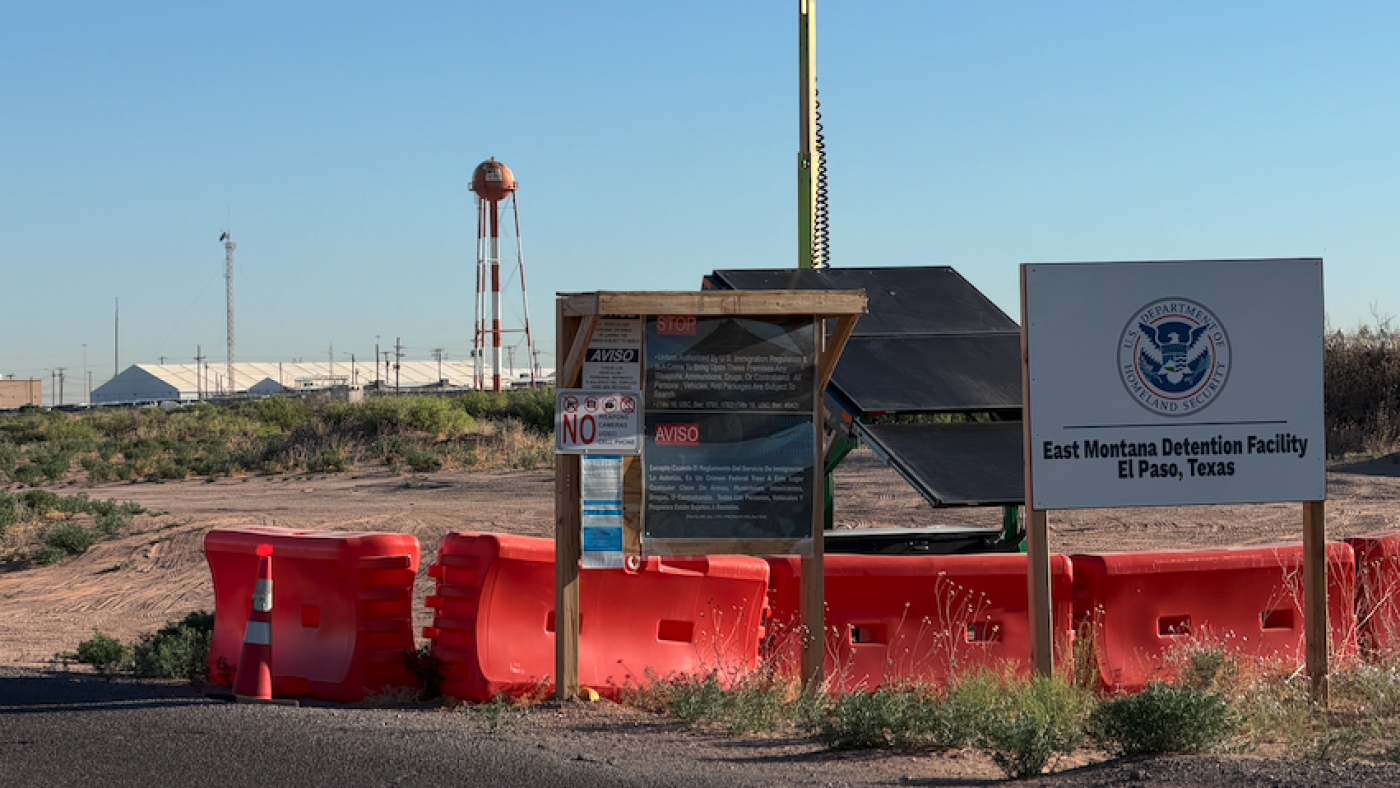
ICE detention deaths are on a record pace. One Texas facility bears the brunt

GOP rails against ‘s— sandwich’ deal as all eyes turn to House to end DHS shutdown
-

 Culture1 week ago
Wil Wheaton Discusses ‘Stand By Me’ and Narrating ‘The Body’ Audiobook
-

 South-Carolina5 days ago
South Carolina vs TCU predictions for Elite Eight game in March Madness
-

 Miami, FL1 week ago
Jannik Sinner’s Girlfriend Laila Hasanovic Stuns in Ab-Revealing Post Amid Miami Open
-

 Culture1 week ago
What Happens When We Die? This Wallace Stevens Poem Has Thoughts.
-

 Minneapolis, MN1 week ago
Boy who shielded classmate during school shooting receives Medal of Honor
-

 Vermont5 days ago
Skier dies after fall at Sugarbush Resort
-

 Education1 week ago
Video: Transgender Athletes Barred From Women’s Olympic Events
-

 Politics5 days ago
Trump’s Ballroom Design Has Barely Been Scrutinized