Colorado
5 Elephants Lose Colorado Court Case


Colorado’s top court has ruled against an effort to have five elephants at the Cheyenne Mountain Zoo legally declared people. The Nonhuman Rights Project filed a habeas corpus petition on behalf of Missy, Kimba, Lucky, LouLou, and Jambo, seeking to have them protected from what the group believes is unlawful imprisonment, the Denver Post reports. The court ruled that while elephants are majestic and intelligent animals, they’re still not people and don’t have the right to challenge their detention. The Nonhuman Rights Project was aiming to have the five released to an elephant sanctuary.
The decision “does not turn on our regard for these majestic animals,” the Colorado Supreme Court said, per the AP. “Instead, the legal question here boils down to whether an elephant is a person,” the court said. “And because an elephant is not a person, the elephants here do not have standing to bring a habeas corpus claim.” In June, a lower court ruled that habeas corpus doesn’t apply to nonhumans, “no matter how cognitively, psychologically or socially sophisticated they may be.”
The Nonhuman Rights Project, which has filed eight similar lawsuits in different states without winning a case, said the decision “perpetuates a clear injustice.” The zoo called the group’s lawsuit frivolous and said it had “wasted valuable time and money responding to them in courts and in the court of public opinion,” KOAA reports. “It seems their real goal is to manipulate people into donating to their cause by incessantly publicizing sensational court cases with relentless calls for supporters to donate,” the zoo said. The zoo said a “strenuous review” of its elephant care program didn’t find even minor concerns. (More elephant stories.)



MONTE VISTA, Colo. (KKTV) – Citing high water temperatures and low flow, Colorado Parks and Wildlife imposed voluntary afternoon fishing closures on two stretches of the Rio Grande starting Wednesday.
The impacted areas include the section of the river from the Rio Grande Reservoir Dam to the Rio Grande Canal and the stretch from Big Meadows Reservoir Dam to the confluence of the main stem of the river.
“We feel it is important to protect the fish populations in the Rio Grande from low flows and warm temperatures,” said CPW aquatic biologist Estevan Vigil. “The Rio Grande has a long stretch that meets Gold Medal standards for the number of larger fish, and these fish need relief from the high temperatures they are experiencing.”
Closures are in place from noon to midnight each day until further notice. Find a full list of fishing closures here.
Copyright 2026 KKTV. All rights reserved.

Editor’s note: Welcome to the 13th installment of our 15-week series Colorado 150, marking 150 years of statehood with our favorite Colorado things.
The best part about going up the mountain — and, to be honest, that part is pretty great, too — is that you then get to go back down. Sometimes at whooshing speed.
We in Colorado have found a seemingly infinite number of ways to turn our rugged state into a limitless playground. On rock and snow and ice and dirt and asphalt and grass and water, the Rocky Mountain rollercoaster brings joy in forms both familiar and completely weird. To wit: there’s a hugely popular coffin race at a festival in Estes Park dedicated to a frozen Norwegian grandpa and it’s not even the oldest coffin race in the state — that one, the world’s first, takes place every year in Manitou Springs.
The list below offers a snapshot of some of the sporting events that make Colorado so unique, but it is by no means exhaustive. There’s also the Pike Peak International Hill Climb, where cars race up America’s Mountain while drifting perilously close to the abyss; the Deer Trail Rodeo, which bills itself as the world’s first rodeo; and the Meeker Classic sheepdog trials, the herding version of the Super Bowl.
You can watch world-class skiing at the Birds of Prey course in Beaver Creek or head to Pueblo and take in the Bell Game, the oldest high school football rivalry west of the Mississippi River, or grab a hot dog and sit in the stands at Coors Field to watch a baseball move (or not move) in a way it does at no other Major League park.
Or maybe do something no one has thought up yet. If in 150 years we came up with all this, imagine what we’ll dream up in the next 150. Let us know your favorite Colorado sporting event or activity — past, present or future tense — and we’ll add it to the list of reader submissions.
Burro racing

Pack burro racing was named Colorado’s official summer heritage sport in 2012, but dates back to 1949, when the first official race was organized between Leadville and Fairplay. Per race rules, each burro must carry a pickax, a shovel and a gold pan. Since the burros were carrying a full load, the miners had to walk, which is why there’s no riding in pack burro races.
There are about a dozen races around Colorado every summer, uniting mountain towns and attracting crowds eager to watch the unique celebration of the state’s mining boom. Anyone can race, and no prior donkey experience is required.
MORE INFO
Skijoring

The Wild West spectacle called skijoring challenges even the most experienced skiers as they swerve past gates, jam their arms through dangling orange rings and soar over gaps nearly 13 feet long. Oh, and all while being pulled by a horse and hitting speeds of 40 mph down a snow-covered straightaway in a mere few gallops.
Across Colorado, folks line the main streets of mountain towns to watch the mashup of rodeo and ski racing, with adrenaline-seeking cowboys and skiers flying down the straight track set up along streets once lined with saloons and gambling halls.
MORE INFO
GoPro Mountain Games

Born in 2002 as a local whitewater paddling contest, the GoPro Mountain Games are a cultural celebration of mountain sports and music. The four-day festival still revolves around kayaking — with the world’s top paddlers racing and flipping through the swollen Gore Creek — and includes climbing, slacklining, trail running and mountain biking. The early-June weekend is the official launch of summer for Vail, with a rare blend of spectating and participation that typically injects more than $11 million into the local economy with nearly 100,000 attendees and more than 5,000 athletes competing in all kinds of contests.
MORE INFO
Leadville Series

Mountain bikers from around the world vie every summer for what has become a coveted spot to claim the sport’s biggest badge, er belt buckle, of honor. The 100-mile race starts in the early-morning hours at 10,152 feet and goes 50 miles across some of the toughest terrain, only to hit Columbine Mine to turn around and do it all again.
And for those who cross the finish line in less than 12 hours, a shiny belt buckle awaits. (And the following week, a smaller group of runners takes to a similar 100-mile track to race across the sky.)
MORE INFO
Hardrock 100

For more than 30 years, the world’s top trail runners have rallied in Silverton for the ultimate test. The Hardrock 100 race climbs some 33,000 vertical feet across 102.5 miles with lithe runners galloping above 12,000 feet a total of 13 times on a course that includes the summit of 14er Handies Peak. The average finish time for this race is around 40 hours, but the uber-elite runners finish in 25 hours or less.
About 3,000 runners apply for the Hard Rock 100 every year and only 146 are chosen in a golden-ticket lottery that balances gender and reserves spots for aspiring runners who have never started or crossed the finish line.
MORE INFO
Ouray Ice Festival

Every winter an army of ice-farming volunteers and climbers carefully sculpts more than 200 ice climbs, trickling 200,000 gallons of water a night down craggy limestone into the mineral-tinted Uncompahgre River. The precipitous frozen fangs lure nearly 25,000 climbers a year who fuel a vibrant winter economy in the city that calls itself the Switzerland of America.
The ice park is just a short stroll from hot springs, hotels and coffee shops. The peak of the park’s season comes with the Ouray Ice Festival and Competition every January.
MORE INFO
Bolder Boulder

Colorado summer doesn’t start until the race gun goes off for the Bolder Boulder. The marquee 10K is an annual showcase of the quirky and the inspiring. The day mixes an upward of 40,000 competitors, a Memorial Day celebration inside Folsom Field, and a crowd of adoring spectators.
Tens of thousands of runners fill the streets every year, from people running in costumes or pajamas to professional athletes drawn by the race’s hefty prize purses. Along the route, some fans have cookouts. Others cheer and spray competitors with a water hose while live music blares at points along the route.
MORE INFO
Colfax Marathon

The 26.2-mile run is centered around the longest continuous commercial street in the country, and after more than two decades the weekend has evolved to showcase runners of all abilities. There’s a 5k, 10k, half-marathon and even relay teams. So, you don’t have to be one of those 26-milers to join the masses.
The marathon also tours some of Denver’s most iconic spots: starting and finishing in City Park, but in between hitting the Broncos stadium, a fire station and plenty of views along the creeks and rivers as it heads toward the foothills before turnaround.
MORE INFO
Olympic Center

Located in downtown Colorado Springs, the Olympic & Paralympic Training Center draws more than 130,000 visitors a year to see where some of the world’s best athletes prepare for the Games. Sports fans can tour the campus, which includes among other facilities an aquatic center, gymnasiums, velodrome and shooting center.
And a few miles away, the U.S. Olympic & Paralympic Museum features a dozen galleries. There’s plenty to see and do as visitors can learn at exhibits on athlete training, the science and technology in athlete performance, the history of the Summer and Winter Games, and the USOPC Hall of Fame.
MORE INFO
Iron Horse Bicycle Classic

A brotherly bet birthed the Iron Horse Bicycle Classic in 1971 when Tom Mayer pedaled his Schwinn from Durango to Silverton faster than his brakeman brother in a coal-fired train. More than a half-century later, the Memorial Day weekend bike party draws thousands of pedalers in a celebration that pumps nearly $5 million into the Four Corners economy and anchors one of the most vibrant bike cultures in the West.
In an era where the graveyard of road bike races is stacked dozens deep, the Iron Horse has endured thanks largely to the unwavering embrace of the Durango community. It’s safe to say the Iron Horse’s vibrancy helped land the first-ever world championship of mountain biking, which returns in 2030.
MORE INFO

Aspen Dance Connection’s show, “Emergence,” will feature seven different dances from five well-established Colorado choreographers at 7:30 p.m. July 17 at TACAW.
“There’s so much talent in Colorado; they’re exceptional,” ADC director Fran Page said.
The choreographers — Carbondale resident Alexandra Jerkunica, Amy Anderson of Engage Movement Arts in Denver, Maureen Breeze of Maureen Breeze Dance Theater in Denver and Grand Junction-based Rebecca Fleishman and Liz Vrettos — have generated works for the 18 professional freelance dancers who will perform at TACAW. The artists also dance professionally with Colorado Ballet, Ballet Ariel and Wonderbound in Denver, as well as with choreographers in New York City.
It’s the only time this specific configuration comes together to perform “Emergence,” though Page does take dancers to show up at flash mobs at the Wednesday music at River Park in Basalt — the next one takes place Aug. 12 at 7 p.m.
The dancers will also give free sneak peaks, presenting excerpts from “Emergence,” at the Parachute, New Castle and Glenwood Springs libraries on July 15. From 10-11 a.m. July 16, they perform at the Carbondale library, where Breeze also leads children in combining gestures, rhythms and storytelling.
ADC started in 1978, when eight local choreographers launched it to highlight their original works. Page has been the director since 1986. ADC presented 34 years of Colorado Choreographer Showcases at the Wheeler Opera House before moving to TACAW. The organization also is known for its outreach programs at schools, libraries and outdoor events from Aspen to Parachute, extending to more than 6,450 people.
Friday’s show begins with Vrettos’ uplifting “Emanate.”
“It’s a very, light, spiritual, fluid dance that ends up being more energetic,” Page said.
Then, Gregory Gonzales and Sharon Wehner, the latter of whom was a prima ballerina at Colorado Ballet for 22 years, perform a duet called “Shoes.” It depicts a conflict around a kitchen table, choreographed by Anderson.
“This one really touches you emotionally but leaves on an upbeat (note),” Page said, adding that the ballet technique within the modern dance is very strong. “Gregory Gonzalez, who’s Amy’s husband, also has been a big part of a Colorado Ballet on a lot of different levels as a dancer and a choreographer. Now he’s a visiting dancer, and I think he’s in the best shape ever.”
One of the longest pieces, “Shifting Grounds,” by Breeze, portrays modern society’s divisive world as five dancers move around a long table.
“There’s this parallel of drama on the earth, as well as in our culture with people,” Page said, adding that it also has a light sense of humor.
Breeze’s other piece, “Remnants of You,” reflects on a past relationship and includes a playful duet with a large metal door serving as a unique trapeze. It features lifts and intricate partnering.
The name of ADC’s show, “Emergence,” partially took inspiration from Fleishman’s dance about a dragonfly shedding its skin, portraying the kind of strength that’s needed to emerge into one’s best self. She created the piece after her mother’s death.
“It symbolizes being strong enough to go on with life and making the transformations,” Page said.
Jerkunica’s piece follows, since shapes within the opening and closing reminded Page of a dragonfly.

“To me, it’s like another section — it’s very balletic. She calls it ‘Elevation,’ meaning just flying high,” Page said. “It’s really beautiful … (with) very strong technique, and those shapes, yet there’s a softness at times, too.”
The evening concludes with seven dancers performing Anderson’s “Panama Station,” about people waiting for a bus. It begins with a male drifter and incorporates three tourists, a honeymoon couple and an expatriate.
“(It includes) all the funny stuff you can do with falling off the bench, and the music is upbeat,” Page said. “Amy and her husband (Gonzales) have done a lot of tango, so those rhythms are in there, but again, lots of humor.”
-

 World3 minutes ago
WATCH: Russian soldier thrown through air as Soviet-era helicopter gun spins out of control
-

 Politics9 minutes ago
Lindsey Graham’s final act reverberates in Senate as sister is urged to “keep pedaling”
-

 Health15 minutes ago
Is lettuce still safe to eat amid Taco Bell illness probe? Doctors answer
-

 Sports21 minutes ago
Marcello Hernández roasts Jake Paul, Tiger Woods and Bill Belichick in ESPYS monologue
-

 Technology27 minutes ago
You paid for it. So why is your device showing ads?
-
 Business33 minutes ago
Paramount shareholder lawsuit accuses Ellisons of corruption
-
 Entertainment39 minutes ago
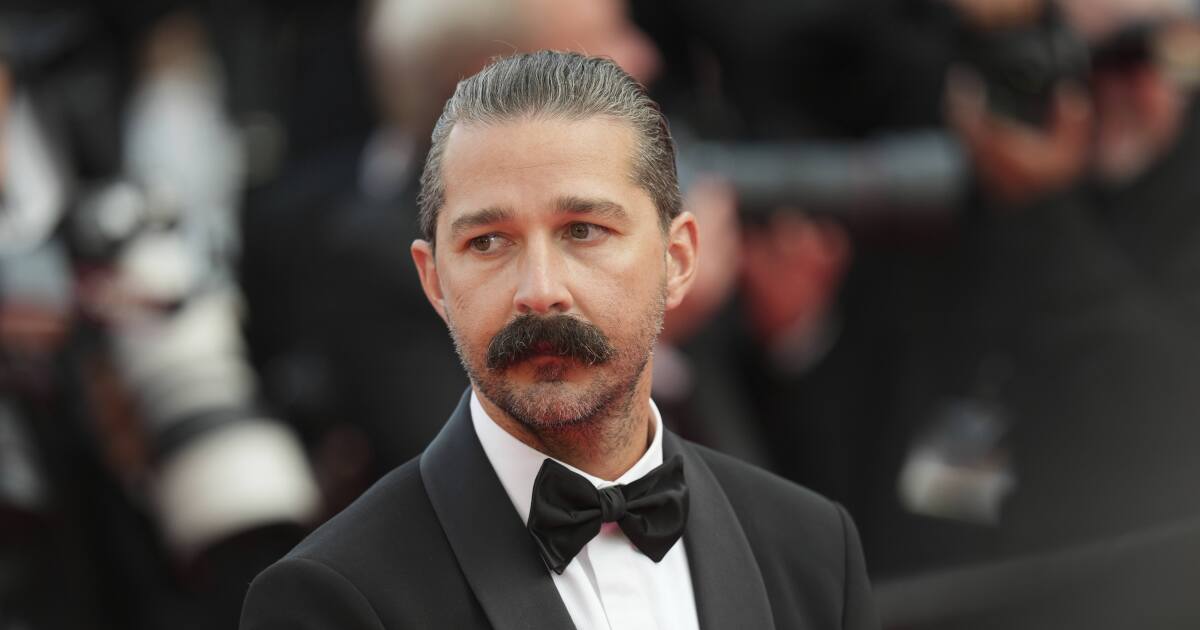
‘You’re scaring my people.’ Shia LaBeouf’s alleged stalker arrested after posting viral video
-
 Politics51 minutes ago
Californians back Becerra and reject AI data centers by big margins, poll finds

