California
Your favorite movies starring California

Good morning, and welcome to the Essential California newsletter. Here’s what you need to know to start your weekend:
The best movies that capture the essence of California
The Essential California team this year expanded opportunities for readers to directly engage with the newsletter. Each week we ask readers to answer a question — from the best local restaurants to favorite books.
One question in particular got a lot of attention and sparked some debate: What is your favorite movie that captures the essence of California?
Below are the most mentioned movies and comments from readers about what makes these films special to California. We hope this list will help find something to watch this weekend. Enjoy!
“Chinatown”
Adelaide writes: “It doesn’t get more iconic than a film noir that tackles tremendous geopolitical issues that still affect us to this day.”
And Jim writes: “How can you talk about movies that capture the essence of California and not mention one of the greatest movies of all time, ‘Chinatown’? Today, despite the state’s beauty and glorious climate (most of the time), it is still as corrupt and morally bankrupt as it was back in the days of stealing water from the Owens Valley.”
Paul Giamatti, left, and Thomas Haden Church in the 2004 movie “Sideways,” directed by Alexander Payne.
(Searchlight Pictures)
“Sideways”
Raymond Ballesteros writes: “One of my all time favorite movies to see that truly captures the essence of California, hands down, is ‘Sideways.’
“Alexander Payne seizes the beauty and majesty of California’s Santa Barbara wine country, including a handful of wineries that encapsulates the hearts of fellow wine lovers across California and the country. Of course, not to be watched with a glass of Merlot!”

Keanu Reeves, left, and Patrick Swayze in the 1991 film “Point Break.”
(20th Century Fox)
“Point Break”
Fritzi Lareau write: “I am a tour guide and when touring the Golden State I show my guests ‘Point Break’ (the original with Keanu Reeves and Patrick Swayze) or ‘Hollywood Homicide’ starring Harrison Ford.”
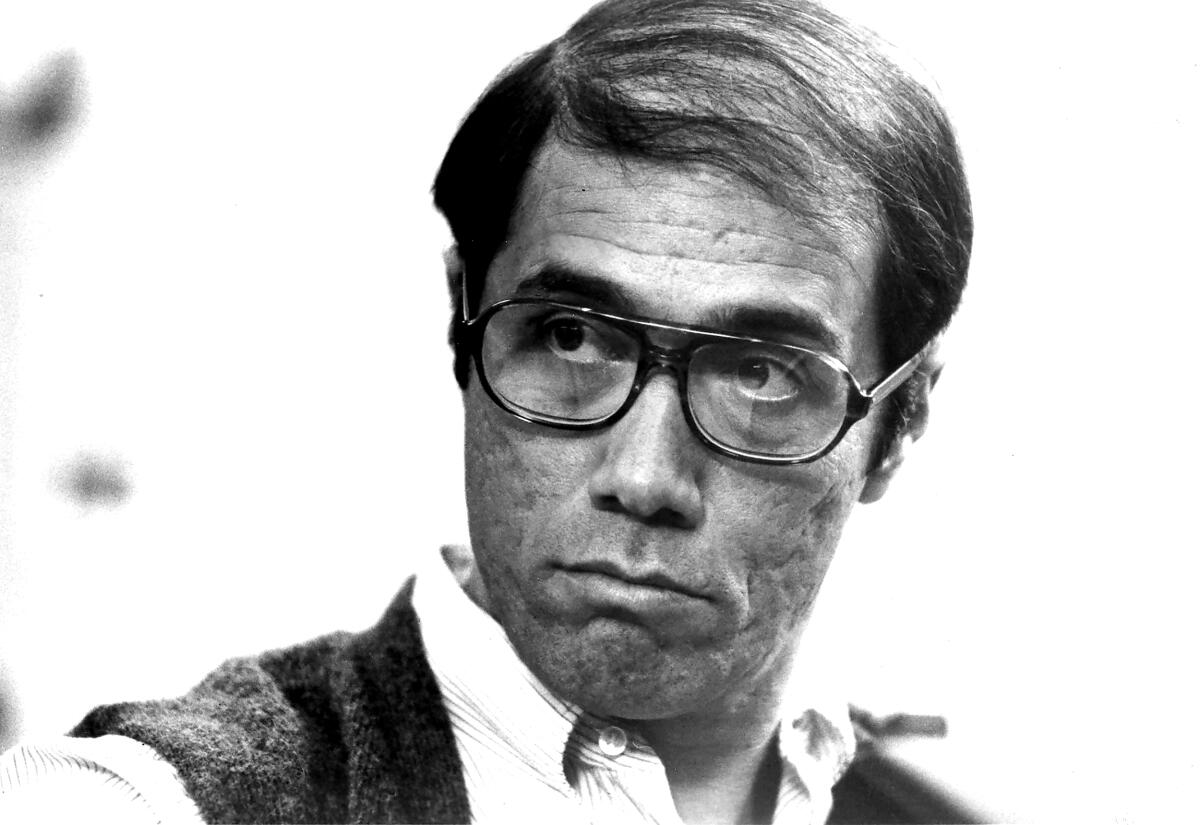
Edward James Olmos stars as Garfield High School math teacher Jaime Escalante in 1988’s “Stand and Deliver.”
(Warner Bros. Pictures)
“Stand and Deliver”
Robert Reul writes: “One great film that is 100% California is ‘Stand and Deliver,’ with Edward James Olmos and an amazing cast of young actors. I have found few, if any, films that capture the absolute magic that can happen in the community of first-generation Americans, descended from hard-working Mexican immigrants.”
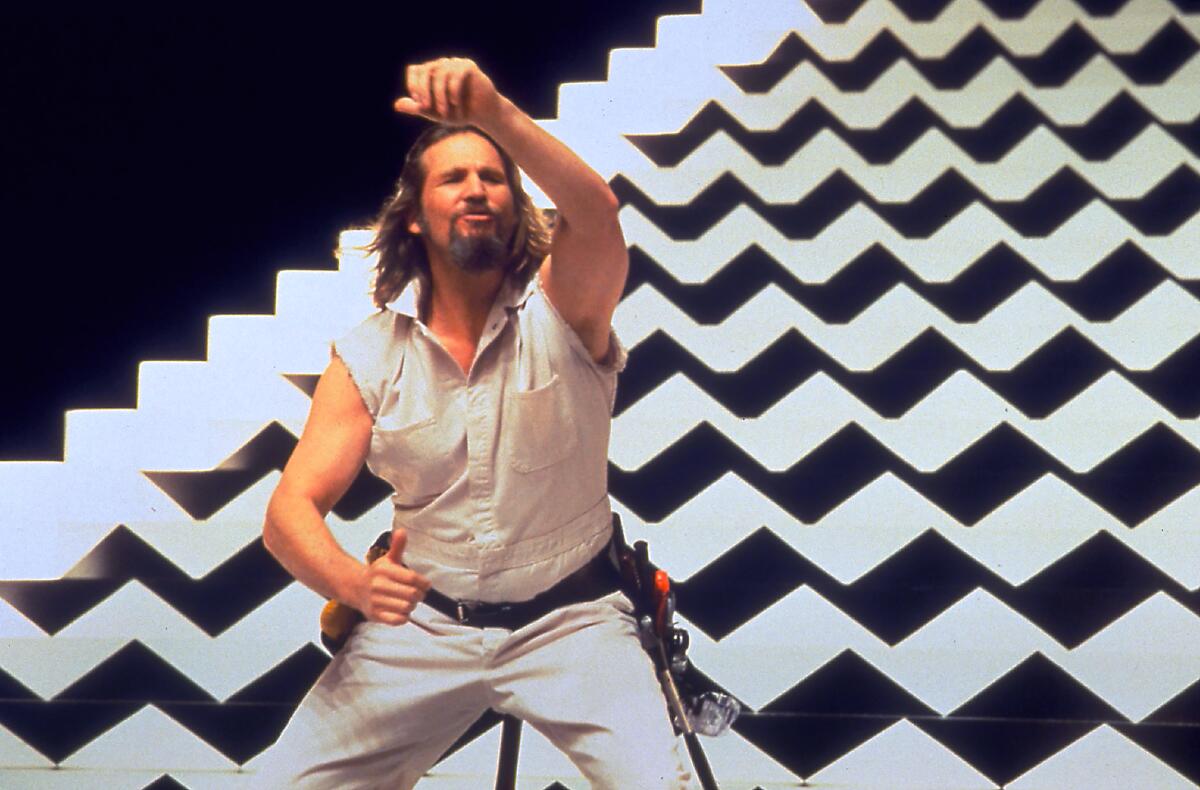
Jeff Bridges as the title character in the Coen Brothers’ “The Big Lebowski.”
(Merrick Morton / Gramercy Pictures)
Honorable mentions
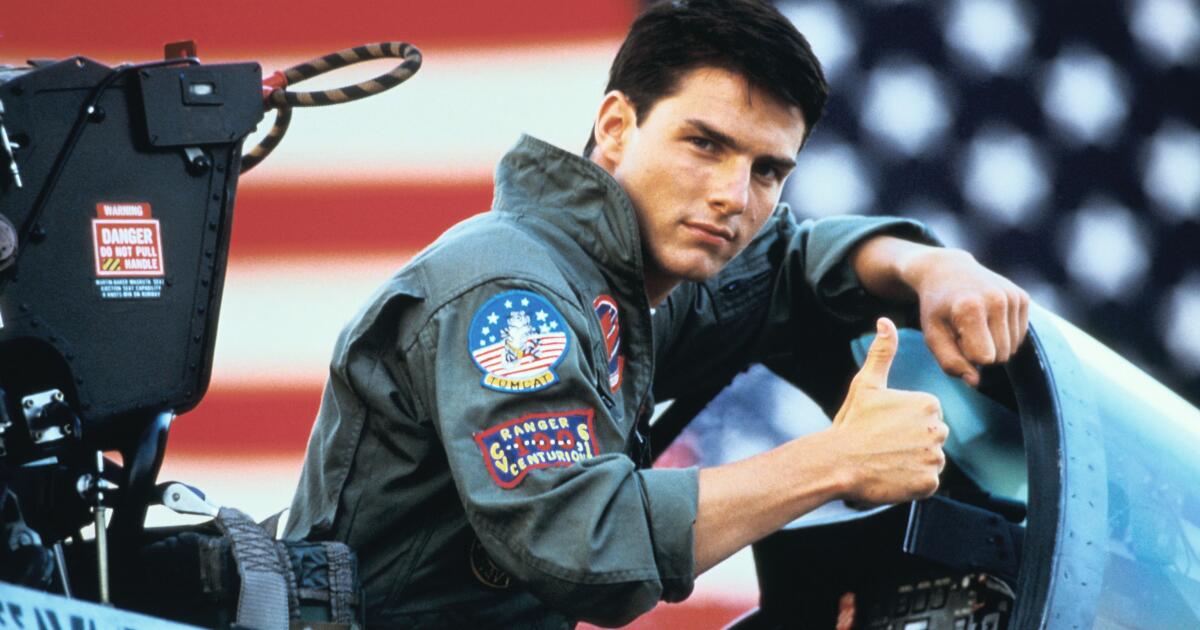
“Top Gun”
“The Birds”
“The Parent Trap”
“The Big Lebowski”
“Fast Times at Ridgemont High”
“La La Land”
Want to wade into the debate over which movie captures the essence of California? Feel free to email us at essentialcalifornia@latimes.com.
The week’s biggest stories
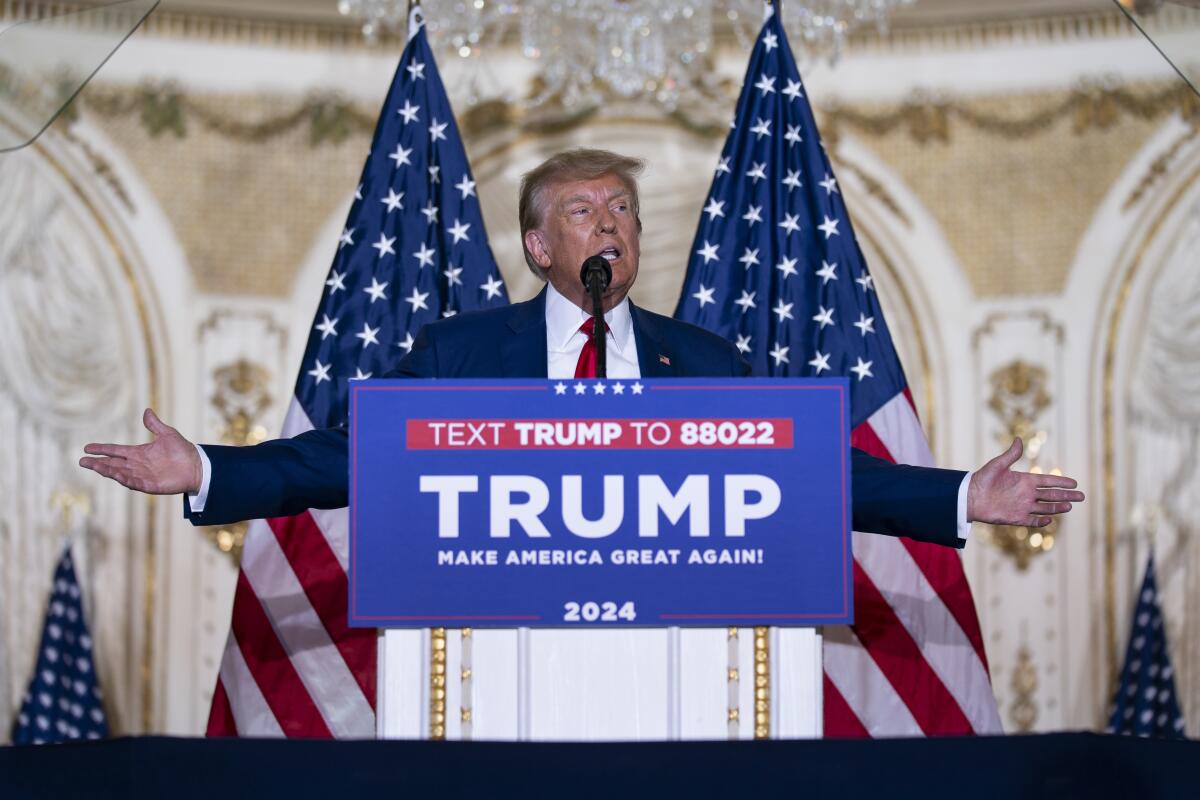
President-elect Donald Trump, shown at his Mar-a-Lago estate in 2023, is stocking his cabinet with Floridians.
(Evan Vucci / Associated Press)
Florida is winning the political battle with California as Trump takes office
- Trump is stocking his cabinet with Floridians. And his plans to reverse California’s policies on the environment, crime, homelessness and education are facing far less pushback than they did during his first term.
- Gov. Gavin Newsom has vowed to continue the fight against Trump’s policies but without what he called “a resistance brand” that defined his earlier clashes.
- Meanwhile, healthcare is Newsom’s biggest unfinished project. Trump complicates the governor’s task.
Destructive waves keep thrashing Santa Cruz, causing millions of dollars in damage in recent years
Scientists say we are fighting H5N1 bird flu with one hand tied behind our backs
- Scientists and health officials fear we’re on the precipice of another global pandemic as the H5N1 bird flu virus steamrolls its way across the globe. But when that could come to pass is hard to predict.
- Just one mutation can make the bird flu a threat to humans, California researchers found.
- L.A. County health officials are warning pet owners to avoid raw cat food after a feline died of bird flu.
California is growing again
- The Golden State’s population grew by almost a quarter of a million residents in 2024, according to the U.S. Census Bureau, a rebound that brings California almost back to its pre-pandemic numbers.
- While California’s population gain of 232,570 people from July 1, 2023, to July 1, 2024, represents the largest numeric population increase in the nation’s West, it lagged behind Texas, which expanded its population by 562,941, and Florida, which grew by 467,347 people.
More big stories
Get unlimited access to the Los Angeles Times. Subscribe here.
This week’s must reads

(Emiliano Ponzi / For The Times)
A California inmate recruited “wives” to spread fentanyl across Alaska, federal authorities say.
The prisoner, Heraclio Sanchez Rodriguez, oversaw a sprawling drug ring that spread death and addiction to the most remote corners of Alaska, prosecutors say.
More great reads
How can we make this newsletter more useful? Send comments to essentialcalifornia@latimes.com.
For your weekend

Refresh yourself on “Squid Game” before starting Season 2 on Netflix.
(No Ju-han / Netflix)
Going out
Staying in
How well did you follow the news this week? Take our quiz.

(Times staff and wire photos)
Which creature gets top billing in the title of the Barry Jenkins–directed “Lion King” prequel that hit theaters last week? Plus nine other questions from our weekly news quiz.
Have a great weekend, from the Essential California team
Hunter Clauss, multiplatform editor
Check our top stories, topics and the latest articles on latimes.com.



Fireworks Safety Guide
Essential safety tips for buying, handling, and watching fireworks to ensure a safe celebration.
With July 4 falling on a Saturday this year, many businesses and organizations are taking the day off Friday, July 3, to mark America’s 250th birthday. From banking to mail service, here’s what’s open and closed for the holiday weekend.
Most federal offices closed, mail service to continue
Non-essential federal offices will be closed on July 3. However, mail service will continue as normal, and post offices are scheduled to remain open.
Most California government offices to remain open
Most California government offices will be open on July 3, with some exceptions.
DMV offices throughout the state will be open. However, the Employment Development Department will be closed.
DMV offices that offer Saturday hours will be closed on July 4.
Private parcel services to remain open
UPS and FedEx are both scheduled to operate normally on July 3, but will suspend service on July 4.
Stock markets closed
Both the New York Stock Exchange and Nasdaq will be closed on July 3.
Most banks to stay open
While most banks were expected to operate normally on July 3, some may operate under modified holiday hours. All banks will be closed on July 4.
Online banking services should remain operational.
Grocery stores
Most major grocery chains will be open on both July 3 and July 4. Trader Joe’s locations will be open for regular business on July 3 but will close early at 5 p.m. on the Fourth of July.
Retailers
Many major retail stores, such as Walmart and Target, plan to operate under normal business hours on both July 3 and 4. All Costco warehouse stores operate under normal business hours on July 3, but will close on July 4.
Restaurants
Most major restaurant chains remain open on July 4, but some will have limited hours. All Raising Cane’s locations will close on July 4.

Bruce Lee Day aims to honour the San Francisco-born martial arts legend as a cultural bridge and Asian-American icon.
Published On 2 Jul 2026
Martial arts icon Bruce Lee will become the first Chinese American in California history to be honoured with an annual namesake day.
California Governor Gavin Newsom signed a law on Tuesday afternoon, officially designating May 17 as Bruce Lee Day.
Recommended Stories
list of 4 itemsend of list
Lee was born in San Francisco in 1940 and returned to the city on May 17, 1959, aged 18, after spending his childhood in Hong Kong.
His daughter, Shannon Lee, CEO of the Bruce Lee Foundation, said the honour reflects her father’s enduring legacy as a bridge between cultures.
“From young people who found confidence and possibility in his philosophy, to families who finally saw themselves represented on screen, to athletes who still draw on his teachings of discipline and inner strength, his reach is profound,” she said in a statement.
State Assembly member Matt Haney, who represents San Francisco, called Lee the “epitome of the best of California”.
“At a time when Asian Americans were too often absent from or stereotyped on screen, Bruce Lee helped generations see themselves represented with strength and dignity,” he said.
The Bruce Lee Foundation and Asian-American groups hope Bruce Lee will be celebrated each year with voluntary activities, including cultural exhibits, public events and classroom lessons.
Born to Chinese parents touring the US with an opera, Lee held birthright citizenship. He moved to Hong Kong as an infant, became a child actor, and studied Chinese kung fu before returning to the US in 1959.
He enrolled at the University of Washington in Seattle in 1961, but dropped out to teach martial arts.
In the 1960s, Lee appeared in Hollywood, most notably as Kato in the TV series The Green Hornet, but said studios typecast him in racist roles and paid him less than white actors.
He returned to Hong Kong and starred in martial arts films, including The Big Boss and Fist of Fury.
Lee died tragically in 1973 at the age of 32 after an allergic reaction to pain medication.
His name and likeness remain widely popular.
Fans gather on his birthday, and a treatment he wrote for a television series inspired the HBO Max show “Warrior”.

See the best High Desert fireworks through the years
Fireworks have long lit up the California High Desert, from community shows in Victorville and Apple Valley to backyard celebrations that filled the night sky. Revisit Fourth of July moments through the years.
Each year, fireworks light up the sky across the United States for the nation’s Independence Day. With 2026 marking the nation’s 250th birthday, fireworks shows may be a bigger draw.
With California being so fire-prone, the state has strict fireworks laws, but does that mean that people won’t enjoy fireworks without risking jail time on July 4?
Are fireworks illegal in California?
The California Department of Forestry and Fire Protection, or CalFire, is the agency in charge of managing fireworks and classifying which ones are safe to light.
The California Fireworks Law was passed in 1938 and designated the Office of the State Fire Marshal as the only fireworks classification authority in the state, according to CalFire.
The fire marshal’s office classifies fireworks through lab analysis and field testing. It also requires that all parties dealing in fireworks, such as pyrotechnic operators, manufacturers, and retailers, have licensing.
Along with the aforementioned law, the State’s Explosive Law authorizes the fire marshal to “adopt regulations for the safe use, handling, storage and transportation of explosives,” CalFire says.
“Safe and Sane” fireworks are less likely to cause injury and generally mean that the fireworks do not explode or fly, according to the City of Fontana.
There are almost 300 communities in the state that allow “Safe and Sane” fireworks.
It is illegal in the state to sell, transport, or use fireworks that don’t carry the “Safe and Sane” seal or use any in a nonpermitted community. If convicted, you can face a fine up to $50,000, a year in jail or both, according to CalFire.
All other fireworks are considered illegal in the state and are prohibited from being operated by unauthorized parties in most jurisdictions.
Some illegal fireworks include:
- Wire Core Sparklers
- Sky rockets
- Bottle rockets
- Roman candles
- Aerial shells
- Firecrackers
- Other fireworks that explode, go into the air, or move on the ground in an “uncontrollable manner.”
How to safely use fireworks
CalFire has put out a list of safety tips to avoid injury when handling fireworks.
CalFire recommends:
- Use only State Fire Marshal-approved fireworks
- Verify local ordinances before purchasing or using fireworks.
- Always read the directions on labels.
- Children should always have an adult present.
- Only use fireworks outdoors.
- Avoid using fireworks near dry grass or other flammable materials.
- Only light one firework at a time.
- Have a bucket of water and a hose nearby in case of fire.
- During a drought, it is recommended that you use a bucket of reused water to submerge your firework after use to ensure it’s completely extinguished.
- Never place any part of your body directly over a fireworks device when lighting the fuse.
- Back up several feet immediately after lighting a firework.
- Never point or throw fireworks at another person.
- Never attempt to relight or fix fireworks.
- Never experiment with fireworks.
- Do not wear loose-fitting clothing while lighting fireworks.
- Never carry fireworks in your pockets.
Ernesto Centeno Araujo covers breaking news for the Ventura County Star. He can be reached at ecentenoaraujo@vcstar.com, 805-437-0224 or @ecentenoaraujo on Instagram and X.
-
 Politics41 seconds ago
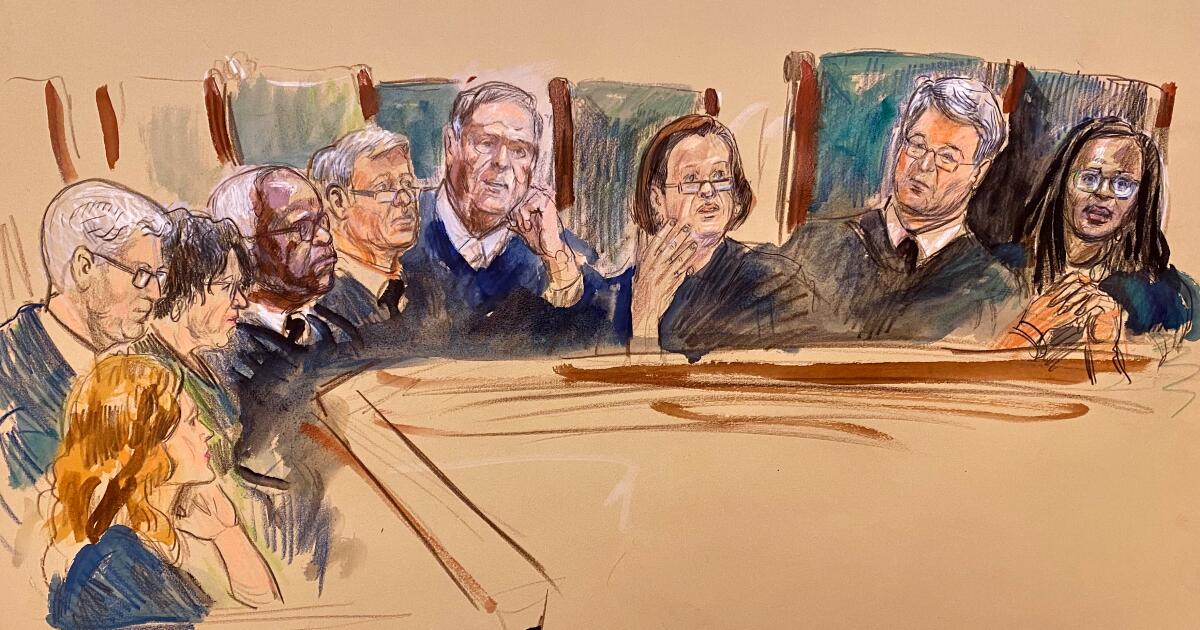
How Roberts led a fractured Supreme Court to wins for the right and defeats for Trump
-
 Science6 minutes ago
Contributor: Alcohol should be stigmatized like smoking
-
 Sports13 minutes ago
Thousand Oaks native Claire Liu finally reaches Wimbledon’s third round, will face Coco Gauff
-

 World21 minutes ago
Could water become a flashpoint between Islamabad and New Delhi?
-
 News46 minutes ago
Ukraine latest / Limits of military might / Can major powers regain dominance? : Sources & Methods
-

 Los Angeles, Ca2 hours ago
Juvenile charged with murder after 4-month-old Claremont infant thrown to her death
-

 Detroit, MI2 hours ago
Silence from Jalen Duren’s camp is what the Pistons want to hear
-

 San Francisco, CA3 hours ago
Jury deadlocked on 2 counts for Golden Gate Bridge pro-Palestinian protesters

