California
Fire marched toward west Altadena hours before official accounts, new report shows


The Eaton fire was marching toward west Altadena even earlier than previously believed, a state-commissioned report confirmed this week, raising further questions about why it took L.A. County officials so long to order evacuations in the neighborhood where 18 people died.
The fire erupted Jan. 7 at 6:18 p.m., fueled by hurricane-force Santa Ana winds that pushed flames into neighborhoods with great speed. Within about an hour, the county issued evacuation orders for many of the foothill communities near the fire’s origin, including the eastern side of Altadena. But as The Times first reported in January, evacuation orders were not issued for west Altadena until after 3 a.m., well after the fire had threatened the area. Evacuation warnings for the area never went out.
All but one of the Eaton fire’s 19 deaths occurred in west Altadena.
The Fire Safety Research Institute report, released Thursday morning, doesn’t analyze why alerts were delayed, but provides the most detailed timeline yet of the night of the fire, including new timestamps that show there were signs the fire was moving toward west Altadena almost six hours before the area received any evacuation alert.
The report notes that there was “fire spread to the west” as early as 9:30 p.m. on Jan. 7, pointing to several spot fires west of the fire origin.
By 10:22 p.m., and through the next hour, there were multiple radio calls reporting the fire was spreading west toward North Lake Avenue, the report said. Just before 11 p.m., as The Times has previously reported, there were signs of flames in west Altadena — more than four hours before officials issued evacuation orders for that area.
The report states that winds shifted just after 11 p.m., which “could have assisted in spreading flames that had reached the foothills and the northeastern section of Altadena to the south and west throughout Altadena in the earlier hours of Jan. 8, 2025.”
Between 11:18 p.m. and 12:17 a.m., the document identified at least 10 fire reports on the western flank of the blaze, showing its advance toward Lake Avenue.
Why the county did not evacuate west Altadena earlier has been a subject of great concern among residents, and a question the county has still not fully addressed.
A county report on fire evacuations last month found that there was a recommendation to issue more widespread evacuations to the west around midnight, but for unknown reasons it was not heeded. It would be another three hours before incident commanders would order additional evacuation orders.
Though the new state report doesn’t provide new details about that midnight recommendation, it does offer new insights into how fast the fire moved, particularly how early the ember cast from the Eaton fire blew into west Altadena, ultimately ravaging the community.
The highly anticipated state report is the first of two from the nonprofit safety research organization. It provides the most exhaustive examination yet into how and when fire officials responded to the Eaton and Palisades fires.
Although the document doesn’t provide much analysis, focusing on the facts of the conditions, preparations and response, the findings were clear that “the ember cast contributed to the rapid expansion,” Derek Alkonis, one of the authors, said at a news conference on Wednesday, ahead of the report’s release.
The delayed evacuations have prompted scrutiny from public officials and Altadena residents about the L.A. County Fire Department’s handling of the wind-driven inferno.
Michael Gollner, an associate professor of mechanical engineering at UC Berkeley who leads its Fire Research Lab, said the timeline provided in the report is an important starting point to understand what happened during the fire response.
But he noted there was still little information about some crucial details: What was the chain of command on the first day of the Eaton fire? How was information being shared? What other issues were incident commanders dealing with at the same time that could have affected evacuation decisions?
“That’s what’s really important, how that information was passed on and how much they knew that [the fire] was spreading into this area,” Gollner said. “There’s a lot more to come and a lot more we need.”
Other already released reports about the fires conducted by Los Angeles County and the city were met with criticism from residents for being limited in scope and findings.
Last month, a report commissioned by Los Angeles County found that a general lack of planning, poor communication, understaffing and chaotic conditions contributed to untimely evacuation orders as the Eaton fire tore through Altadena. But the report was widely criticized for not answering key questions around evacuation failures, including why county officials didn’t send evacuation alerts to west Altadena until 3:25 a.m. or later.
Details in the state report shed some more light on what ultimately caused county fire officials to expand evacuations to include western Altadena.
At 10:50 p.m., a resident called in to say that fire was visible from her home on East Calaveras Street in west Altadena. Almost exactly an hour later, a Los Angeles County battalion chief reported a structure fire at Glenrose Avenue and West Loma Alta Drive, even farther into west Altadena, according to the report.
Shortly before 2 a.m., an official drove west toward Lake Avenue on East Altadena Drive, trying to get to Fair Oaks Avenue in west Altadena to “investigate the extent of fire spread” and found intense conditions, the report said.
“He could not continue as he encountered zero visibility, intense heat, and had serious concerns of becoming trapped,” the report said.
Around the same time, county fire officials were defending structures on East Mount Curve Avenue near Lake Avenue. They were forced to leave after 30 minutes because of danger from the erratic winds.
Despite all these signs of increasing fire activity in west Altadena, it would still take more than an hour before the evacuation order went out.
Gov. Gavin Newsom commissioned the Fire Safety Research Institute to conduct an investigation about a month after the Palisades and Eaton fires killed 31 people and destroyed 16,000 structures across Los Angeles County. Researchers and engineers from the institute — which also conducted the post-incident analysis for the state of Hawaii after the 2023 Maui fire — deployed to Southern California to gather evidence to “build a comprehensive timeline of events and conditions that will inform the analysis of efficacy of the response.”
Thursday’s report provides a timeline of how the fires progressed and looks at state and local officials’ actions, weather conditions, the emergency response and fire suppression. It also includes a review of 10 other fires that occurred in Southern California the same month as the Eaton and Palisades fires.
The report further captures the chaos and erratic nature of the wind-driven Eaton fire and the challenges crews on the ground faced battling the inferno. Not only was the fire moving west earlier than previously reported, but it was also spreading east simultaneously, according to the report.
Just before 1 a.m., crews at different ends of the fire requested more resources, asking for help both to the east and west of the fire’s origin. Similar accounts of the severity of the fire came in from law enforcement from 1:11 a.m. to 3:13 a.m., reporting houses on fire in north Sierra Madre, as well as in east and west Altadena.
The ember cast transformed what started as a wildfire into a full-blown urban conflagration. This likely made evacuations more difficult, experts have said.
When fire officials are considering evacuations, they generally look at wind speed and direction, topography and fuel type to help guide them, said Matt Rahn, the founding director for the wildland urban interface program at Cal State San Marcos and the research director for the Wildfire Conservancy.
But in a rapidly moving inferno where embers are casting miles from the head of the blaze and igniting spot fires, it “makes it very difficult to evacuate communities and predict where an evacuation should occur,” Rahn said.
“When all of the sudden you have spot fires start literally miles away from the fire front itself, it creates this whole new challenge,” Rahn said. “You’re not just worried about what’s happening here, you’re worried about other incidents that may grow into larger fires or, in the case of the Eaton fire, an urban conflagration. They’re very hard to predict and they’re becoming more common in the kinds of fires we experience.”
The second phase of the report, expected to be released in mid-2026, will draw on information contained in the first report to provide analysis and details on the effectiveness of officials’ efforts to prevent the fires and alert residents. The reports will not delve into the cause of the fires.
Art Botterell, former senior emergency services coordinator for the California Governor’s Office of Emergency Services, said the timeline was a necessary first step. But although the timeline approach can be useful, Botterell said, it also has limitations.
Botterell said trends and variations in demographics, urban planning, workforce development, and infrastructure development and maintenance might be harder to spot in a series of snapshots from a relatively short period.
“New data is always helpful, but usually the blind spots lie in the questions we don’t ask,” Botterell said. “Much will depend on the depth, perspective, and independence of the analysis that follows.”
Times staff writer Jenny Jarvie contributed to this report.



California
Sheriff’s lieutenant with million-pound fireworks stash led to deadly blast, prosecutors say

A former Yolo County Sheriff’s Office lieutenant is one of five people charged with murder following a fireworks warehouse explosion that killed seven workers in the rural Northern California community of Esparto last summer, authorities said.
Samuel Machado is accused of illegally having 1 million pounds of fireworks on his property at the time of the blast and using his law enforcement position to shield the illicit operation from scrutiny for years, according to the Yolo County district attorney’s office.
Machado was placed on administrative leave following the violent July 1 explosion, which was felt by residents up to 20 miles away, destroyed a family farm and sparked a 78-acre grass fire.
Devastating Pyrotechnics LLC and Blackstar Fireworks, Inc., are accused of manufacturing and storing explosives — including some too powerful to even be legally considered fireworks — on Machado’s property. On Friday, Yolo County Dist. Atty. Jeff Reisig announced a 30-count felony indictment had been filed against seven people connected to the blast, following the largest investigation he’s seen in two decades at the office. A separate five-count felony indictment was filed against an eighth defendant, Machado’s wife.
The most serious counts are seven second-degree murder charges — one for each of the warehouse workers who died.
An investigative report filed by a Yolo County civil grand jury last month stated that various top county authorities were aware of the sprawling illegal operation for at least three years prior to the lethal explosion, yet failed to take action.
A county Building Services Department official received a tip that the property was being used by two pyrotechnics businesses in June 2022, according to the report. Department officials wrote in emails that they would inspect the site, but noted they would “tread lightly” as the property was owned by “deputies that we work with.”
“Inexplicably, no code enforcement occurred, even though all dangerous fireworks had been banned by ordinance throughout rural Yolo County since 2001,” the report states. “In the absence of official oversight and enforcement, unmitigated expansion of the fireworks businesses operating at the site in Esparto led directly to death and destruction.”
In addition to Machado, the owner of Devastating Pyrotechnics, Kenneth Chee, operations manager Jack Lee and business partner Gary Chan Jr. all were charged with murder, as was Douglas Tollefsen of Blackstar Fireworks, Inc.
Machado’s wife, Tammy, was working at the Sheriff’s Office in an administrative position at the time of the blast. She also has been placed on leave and was charged in a separate indictment with child and animal endangerment for allegedly storing illegal fireworks at their property, as well as tax fraud and mortgage fraud.
The 30-count indictment alleges a decadelong conspiracy that “turned the property of a former Sheriff’s Lieutenant Sam Machado into the Northern California hub for an illegal enterprise that imports illegal explosives on the black market,” Yolo County Deputy Dist. Atty. Clara Nabity said at a Friday news conference.
Devastating Pyrotechnics is accused of expanding its footprint from 13 storage containers on Machado’s property in 2015 to more than 50 containers and a 5,000-square-foot warehouse in 2025.
During that period, the enterprise allegedly imported more than 11 million pounds of explosives and related materials onto a site located near residents and a family pool, Nabity said. None of the storage containers were licensed by the Bureau of Alcohol, Tobacco, Firearms and Explosives, and there are no licenses that permit the storage of explosives near homes and public roadways, Nabity said.
Other counts filed in the indictments include charges for having a dangerous workplace, unlawfully causing a fire, insurance fraud, child endangerment, animal cruelty, tax fraud and possession of illegal assault weapons.
Seven people charged in connection with the explosion were arrested in a sweeping operation early Thursday morning, Reisig said, including Blackstar Fireworks owner Craig Cutright. Ronald Botelho III, who worked for Blackstar, has been in custody since December on separate charges, the Associated Press reported, and on Thursday was charged for his alleged role in the explosion.
Chee, the owner of Devastating Pyrotechnics, was arrested in Orlando, Fla. Jail records obtained by Monterey Bay area news station KSBW indicate that he was apprehended at Disney World.
The defendants are scheduled to be arraigned Monday, Reisig said. Chee and another defendant who was arrested outside the county will be arraigned once they have been transferred to local custody, he added.
“This investigation has thus far involved dozens, maybe hundreds of law enforcement agencies around the state and the country,” Reisig said. “It has taken us across California, it’s taken us across the nation and it’s even taken us across our national borders.”
The seven workers killed in the explosion were identified as Christopher Goltiao Bocog, 45, and Neil Justin Li, 41, of San Francisco; Joel Jeremias Melendez, 28, of Sacramento; Carlos Javier Rodriguez-Mora, 43, of San Andreas; brothers Jesus Manaces Ramos, 18, and Jhony Ernesto Ramos, 22, of San Pablo; and Angel Mathew Voller, 18, of Stockton, according to the Yolo County coroner’s office.
The families of the victims filed a $35-million claim against the county and state fireworks regulators alleging widespread negligence for allowing the illegal operation to continue.
California
7 arrested in a Northern California fireworks warehouse blast that killed 7 and injured 2

WOODLAND, Calif. (AP) — Seven people have been arrested in connection with a fireworks warehouse explosion in Northern California that killed seven people and injured two others last July, authorities said Friday.
The deadly fireworks explosion near the small farming community of Esparto in Yolo County sparked a massive fire and led to nearby Fourth of July celebrations being called off.
The Yolo County District Attorney’s Office is expected to announce the indictments for those arrested at a news conference Friday. Several of those arrested have been booked on murder charges, according to jail records.
Those arrested include Samuel Machado and Tammy Machado, who owned the warehouse about 40 miles (64 kilometers) northwest of Sacramento. At the time, Samuel Machado was a lieutenant with the Yolo County Sheriff’s Office and his wife, Tammy Machado, was a non-sworn administrative employee. They were put on leave after the incident.
Kenneth Chee, owner of Devastating Pyrotechnics, whose illegal fireworks were being stored at the warehouse, was arrested in Florida. He appeared in a Florida courtroom Friday and was told he will be extradited to California within the week, KCRA-TV reported.
Authorities also arrested Jack Lee, the operations manager for Devastating Pyrotechnic, and Gary Chan Jr., whose name is on the company’s federal license, the television station reported.
Craig Cutright, the owner of Blackstar Fireworks, which operated at the Esparto property owned by the Machados, was also among those arrested. Cutright, was a volunteer firefighter for the Esparto Fire District and was also listed as an employee of Devastating Pyrotechnics, KCRA-TV reported.
One of Cutright’s employees, Ronald Botelho III, has been in custody since December. More than a dozen new charges were filed against him Thursday, jail records show.

(KTXL) — Northern California residents will have an opportunity to see the world’s largest steam locomotive when Union Pacific’s “Big Boy” makes numerous stops in the state over the next several days.
Big Boy No. 4014 is in the middle of a coast-to-coast tour that will take the train from California to Pennsylvania in celebration of the 250th anniversary of the United States. The train began the journey last month in Cheyenne, Wyoming, the locomotive’s home base, and arrived in Portola, California on Wednesday.
After stops in Oroville, Marysville and Lincoln Thursday, Big Boy will arrive for a multi-day stay in Roseville, California.
“We’re proud to welcome the Big Boy back to Roseville, a city that owes its founding more than a century ago to the railroad,” Roseville Mayor Krista Bernasconi said in a news release. “Big Boy’s return isn’t just a nod to our past; it brings visitors from across the region to explore the shopping, dining, events and attractions that make Roseville such a vibrant place to be.”
The train will be on public display at 375 Atlantic Street in Roseville for two days: 1-5 p.m. on April 10 and 9 a.m. to 3 p.m. on April 11.
While in the Golden State, the train will also make brief “whistle-stops” in several other area towns:
- Oroville, April 9, 2-2:30 p.m., 2181 High Street
- Marysville, April 9, 3:30-3:45 p.m., 7th Street Crossing
- Lincoln, April 9, 4:30-4:45 p.m., 7th Street Crossing
- Colfax, April 12, noon-12:45 p.m., Amtrak Depot, 99 Railroad Street
- Truckee, April 12, 4:45-5 p.m., 10065 Donner Pass Road
Admission is free, though Union Pacific warns that guests should always stay 25 feet back from the tracks and never climb on the locomotive.
U.S. Labor Secretary Lori Chavez-DeRemer, former Oregon congresswoman who now serves in President Donald Trump’s administration, will be in town to celebrate the visit. The cabinet member plans to talk with the Big Boy’s “steam team” and learn more about the locomotive, officials said.
Big Boy No. 4014 was one of 25 locomotives commissioned for Union Pacific Railroad beginning in 1941. According to the company, they were built to haul heavy equipment during World War II between Ogden, Utah and Cheyenne, Wyoming.
The locomotives are 133 feet long and weigh 1.2 million pounds. They are “hinged,” which helps the huge trains navigate curves.
The Big Boys were eventually decommissioned, including the retirement of No. 4014 in December 1961 after traveling more than a million miles, according to Union Pacific.
But in 2013, the company reacquired the locomotive from a museum in Pomona, California. And in May 2019, Big Boy No. 4014 was returned to service, celebrating the 150th anniversary of the completion of the Transcontinental Railroad.

Fox News AI Newsletter: Lowe’s $250M bet on blue-collar jobs that AI can’t do
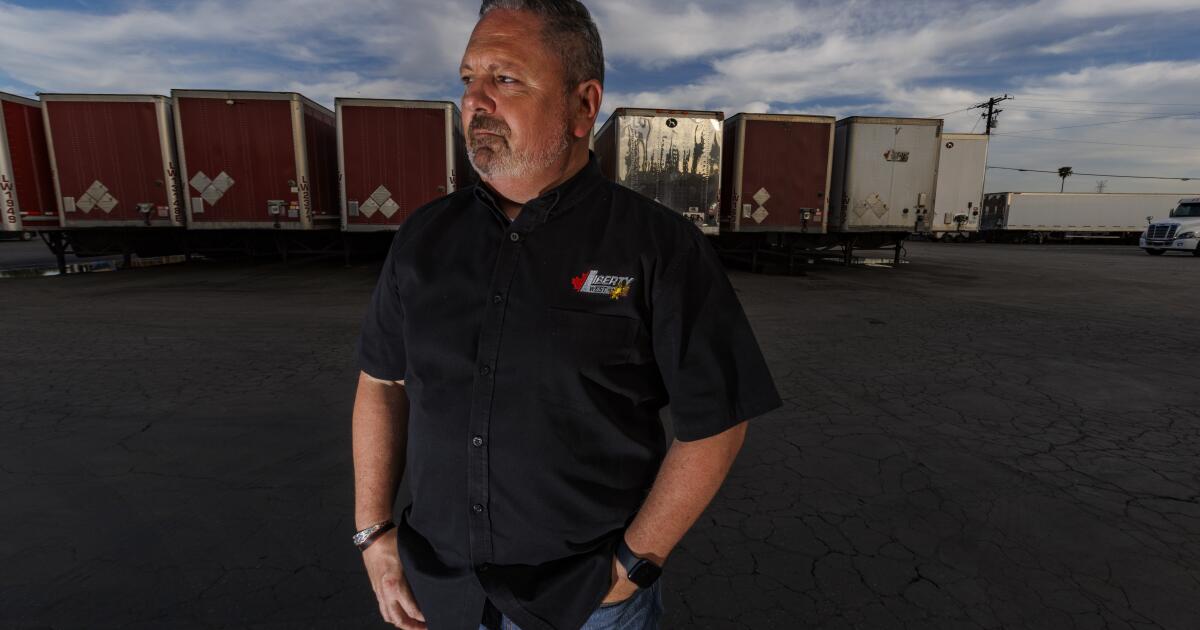
‘It’s killing everything.’ California’s truckers are buckling under country’s priciest diesel

Review: As Trump rains down terror on Iran, Sanaz Toossi’s Pulitzer-winning ‘English’ has its L.A. premiere

Dolce & Gabbana Co-Founder Resigned as Chair

Call it the Bad Bunny Effect: Why Telemundo no longer is an underdog

Florida High School Football Rankings: Top 25 teams – Oct. 21

How old is Bo Nix? What to know about Oregon quarterback ahead of 2024 NFL Draft

Cleary's 21 help Le Moyne down Central Connecticut State 69-64 in OT

99th annual Pony Swim held in Virginia

Indiana Members Credit Union announced as new anchor tenant at Bottleworks District

Russian propaganda unit targets Hungary’s elections

WATCH: Artemis II astronauts splash down on Earth

Swalwell’s former female staffer drops bombshell allegations of sexual assault, exposing himself: report

NASA’s Artemis II prepares for splashdown on Earth

Trump proposes painting executive office building white
-

 Atlanta, GA6 days ago
1 teenage girl killed, another injured in shooting at Piedmont Park, police say
-

 Education1 week ago
Video: Toy Testing with a Discerning Bodega Cat
-

 Movie Reviews1 week ago
Vaazha 2 first half review: Hashir anchors a lively, chaos-filled teen tale
-

 Georgia4 days ago
Georgia House Special Runoff Election 2026 Live Results
-

 Pennsylvania4 days ago
Parents charged after toddler injured by wolf at Pennsylvania zoo
-

 Arkansas18 hours ago
Arkansas TV meteorologist Melinda Mayo retires after nearly four decades on air
-
 Milwaukee, WI5 days ago
Potawatomi Casino Hotel evacuated after fire breaks out in rooftop HVAC system
-
 Entertainment1 week ago
Inside Ye’s first comeback show at SoFi Stadium