California
Can this state be saved? Why California is so different from the rest of the U.S.


For people who don’t live in California, the nation’s most populous state can be a little hard to understand.
Home to Hollywood and Silicon Valley, Yosemite National Park and Disneyland, Lake Tahoe and the Napa Valley, the Golden State offers some of the most desirable tourist destinations in the U.S. — and some of the most beautiful places to live. California has great food, gorgeous landscapes and temperate weather. “If there were an ‘it girl’ of the United States, it’d have to be California,” House Beautiful magazine gushed last year.
There is the American dream, yes, but there is also the “California dream,” which for decades drove people to heed Horace Greeley’s famous call to “Go West” in search of the good life.
And yet, these days, California is derided for its politics and laws, seen by those in other states as wildly out of step with the rest of the nation; this year, new laws include one prohibiting school districts from notifying parents if a student changes their gender identity at school, and another that legalizes cannabis cafes.
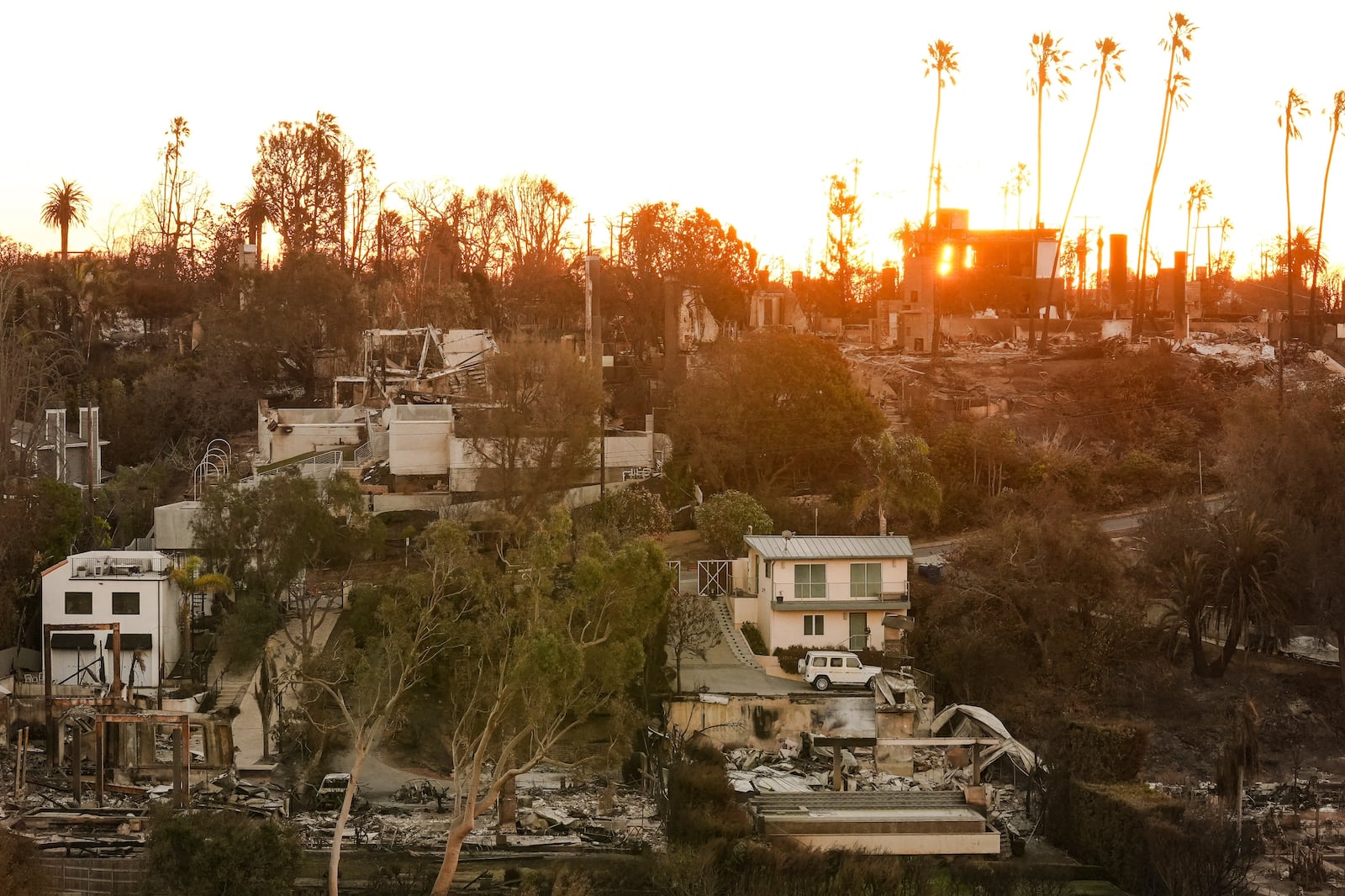
The wildfires that swept through Los Angeles this month brought into sharp relief the state’s progressive environmental and building laws that some say contributed to the devastation. Actor Mel Gibson, whose $14.5 million Malibu home was destroyed in the fires, said on the Joe Rogan podcast, “This might finally get me out of California.”
The state has been losing residents to other regions in recent years; more than 800,000 residents left between 2021 and 2022, with some citing high taxes, home prices and the cost of living generally. (California’s gas taxes are the highest in the nation, 68 cents a gallon in 2024.) Consumer Affairs recently named California the worst state in which to raise a family, and United Van Lines ranks California fourth on its list of states that people are moving out of, behind New Jersey, Illinois and New York. High-profile voices who have left California in recent years include Elon Musk, Ben Shapiro and Joe Rogan.
President-elect Donald Trump has just named Jon Voight, Sylvester Stallone and Mel Gibson as “special ambassadors” charged with bringing business back to Hollywood — even before the fires, headlines were proclaiming that “Hollywood is ditching Hollywood” because of entertainment companies going to places like Georgia and New Mexico, and even to other countries, to escape California’s costs.
But there are other ways in which California is an outlier, maybe even a little bit weird.
Take the “California Psychics” that advertise so heavily on conservative radio shows. It’s hard to articulate why psychics seem to belong in California, but it’s clear that “Virginia Psychics” or “Ohio Psychics” just wouldn’t have the same cachet.
And is there an American consumer alive who hasn’t been perplexed— and perhaps a little bit fearful — about why something they’re about to eat is banned in California while legal everywhere else?
“California is the embodiment of ‘a nice place to visit, but you wouldn’t want to live there,’” said Bill Whalen, a research fellow at the Hoover Institution at Stanford University who was a speechwriter for former California Gov. Pete Wilson.
While a state as large as California is naturally going to have a lot of churn, there is some evidence that conservatives leaving the state are seeking “redder pastures,” as the Los Angeles Times put it a few years ago. There are also nonpartisan reasons for the exodus, to include the nation’s largest risk of wildfires and tsunamis, and the nation’s second highest risk of earthquakes (after Alaska), all of which make it more expensive to get insurance, if you can get insurance at all.
State Farm, among insurers which recently reduced or dropped coverage in the state because of wildfire risk, is under heightened scrutiny because of the LA fires and has pulled its popular advertising out of this year’s Super Bowl.

All of California, it seems, was not ready for its close-up, which arrived when the Santa Ana winds hit the Pacific Palisades Jan. 7, sparking both the fires and national scrutiny.
In the coming months, California faces a reckoning on whether its proud reputation as the “Left Coast” is literally destroying parts of the state — and whether that needs to change. If there is a shift to the right, as some people are predicting in the wake of the fires, it would be a seismic change for a state that embraces its outlier status.
“It’s not just big — it’s different,” acknowledges Dan Schnur, who teaches politics and communications at the University of Southern California and University of California, Berkeley. “Most Californians see it that way and like it that way.”
That’s in part because a lot of what the rest of the country sees as California oddities are policies aimed at improving the quality of life — like the $20 minimum wage for fast-food workers — or protecting California residents from various nefarious threats, such as the notice that pops up on the GetTrumpWatches.com website that says “Notice to California consumers.”
“Under California Civil Code sections 1798.83-1798.84, California residents are entitled to ask us for a notice describing what categories of Personal Information we share with third parties or corporate affiliates for those third parties or corporate affiliates’ direct marketing purposes.”
The notice stipulates that this only applies to residents of California.
But one person’s protection, of course, is another person’s nanny state.
How many Californians voted for Trump?
Schnur moved to California nearly 35 years ago to work on a political campaign, intending to stay for only a few months, but he stayed, living for a while in Sacramento and the Bay Area, before moving to Los Angeles, where he lives now.
“What I find fascinating about Southern California is that it might be the most diverse society in the history of the planet Earth. There’s something exciting and sometimes challenging about being part of this mass experiment, of people with different backgrounds, different heritage and different beliefs, trying to make it work,” he said.

“There have been times in the past when New York or Boston or perhaps Miami represented that diversity more than any other place, but Southern California’s geographic location is what leads to such a broad range of backgrounds.”
In fact, more than a quarter of the state’s population was born outside the U.S., nearly twice the national average, and the state has been a hotbed for immigration battles. California not only has sanctuary cities, but is considered a “sanctuary state.” And Gov. Gavin Newsom has vowed to fight President-elect Donald Trump’s plans to deport immigrants living in the U.S. illegally; the Legislature approved his $50 million package to “Trump-proof” the state, with half of that money going to fight deportations.
The package was the latest volley in the long-simmering feud between Newsom and Trump, which stands to become more acrimonious in the coming months as Washington debates what aid to authorize for California, and whether there should be restrictions tied to it. Glenn Beck and House Speaker Mike Johnson are among those arguing that wildfire aid should be conditional, on California making changes.
California, however, has long been a stronghold of resistance to the GOP. Vice President Kamala Harris comfortably beat Trump in November with 58.5% of the vote, and former Speaker of the House Nancy Pelosi has wielded power in Washington for decades, most recently being instrumental in the ousting of President Joe Biden on the Democratic ticket. As the most populous state, California has the most representatives in Congress, even after losing a seat after the 2020 census. Writing for Cal Matters, Dan Walters warned that California’s political power will shrink as its population does.
And although the state remains blue, 6 million Californians voted for Trump — roughly the population of Utah, Wyoming and New Mexico combined.
Which, Schnur points out, is what many outsiders don’t understand about California: just how large and diverse the state is. People who haven’t lived in California think of the state as an amalgam of “Baywatch,” Hollywood and Silicon Valley, not realizing it’s also the nation’s largest agricultural producer, and that parts of the state, particularly along its eastern border, “aren’t all that much different from the rest of the country.”

“But there are 40 million people here, and most of them don’t work in entertainment or technology,” Schnur said.
This sentiment is seconded by people like Mike Cernovich, a filmmaker who frequently posts about California’s beauty on the social media platform X. “No one wants to leave California. Geographically it is perfect. You can go from beach to mountains in three hours,” Cernovich wrote on X. But his photos of Golden State beauty are sometimes challenged by people who say they feel gaslit.
“We have some very serious problems here in California, and they’re being perpetuated by progressive policies. Things like needle exchange programs, open air drug markets, and the decriminalization of theft,” podcaster Michael Oxford wrote in response to one of Cernovich’s idyllic photos.
Former Gov. Arnold Schwarzenegger has talked about biking past a homeless encampment in Venice on his way to the gym, and California accounts for about one-third of the homeless population in the U.S.
It is, in fact, those sorts of images that make California a punchline on Fox News and cause people in other parts of the country to wonder why anyone would want to live there. That’s quickly followed, however, by those in Texas, Utah and other locations with, “but don’t move here and drive up our housing prices.”
Both the golden view and doomsday view of California can be true; it depends on where you’re looking.
The ‘great exception’
The late Carey McWilliams famously called California “The Great Exception” in a book by that title released in 1949, a century after the Gold Rush that brought hundreds of thousands of people into the state. “California has not grown or evolved so much as it has been hurtled forward, rocket-fashion, by a series of chain-reaction explosions. (The) lights went on all at once, in a blaze, and they have never been dimmed,” McWilliams wrote.
But California has dimmed in the eyes of many Americans, in large part to the perception that the state is not so much a trail-blazer, but completely out of step with the values of the rest of the country — an idea that Newsom reinforces by talking about “California values,” as if they are distinct from American values.
In its annual list of the 10 worst new laws in California, the group Reform California, led by Assemblyman Carl DeMaio, included for 2025 a new law that prohibits polling stations for asking voters for proof of identification, already being challenged in court, like the law prohibiting school districts from notifying parents when a child identifies as a different gender in school. The group also called out a new law that requires potential foster parents in California to demonstrate support for “gender affirming” standards of care, which some see as discrimination against religious parents who don’t agree with the policy, let alone the terminology.
“Is California the petri dish of what America should be?” Whalen said. “No, if you’re either centrist or right of center.”
It was the law prohibiting school districts from notifying parents about gender changes that Elon Musk called “the final straw” that made him decide to pull out of California. He has also said that he tired of “dodging gangs of violent drug addicts just to get in and out of the building” when the headquarters of X was in San Francisco.
Conservative commentator Ben Shapiro, who moved from California to Tennessee, along with his media company, The Daily Wire, wrote four years ago that he left his home state “because all the benefits of California have eroded steadily — and then suddenly collapsed.” Podcaster Joe Rogan has said he moved from California to Texas because the state “went nuts” and has “gone full communist.”
Despite these high-profile losses, California’s population rebounded by about 250,000 people in 2024, the Los Angeles Times reported last month, while noting, “The numbers are not all rosy. California experienced a slower growth rate than the country as a whole, particularly large states in the fast-growing South. It also experienced the nation’s largest domestic migration loss.”
California gained 232,570 new residents between July of 2023 and July of 2024, compared to Texas, which grew by 562,941, and Florida, which gained 467,347 new residents.
Eric McGhee, a senior fellow at the Public Policy Institute of California, told me, “We do see some evidence that conservatives and Republicans are more likely to leave the state.” But he said that typically people give “family, job and the cost of living” as reasons for leaving, not “I can’t stand that Gavin Newsom, I’ve got to get out of here.”
On the other hand, McGhee said, “Republicans are dramatically more likely to say that they have thought about leaving California.” But, he added, “only a small fraction of them will actually do it.”
That’s not because living in California is gradually making them more liberal by osmosis, but more likely because, as Joshua Charles, a former speechwriter for Vice President Mike Pence, put it recently on X: “Home is always home.”
“Our family has been here over 100 years, since the beginning of the 20th century. … I am convinced that reclaiming the human from the grasp of modernity oftentimes requires staying put, putting down roots, and building,” wrote Charles, who lives near Sacramento.
From sitcoms to punchlines
The idea that people are leaving California in droves because of its progressiveness isn’t a new one. Whalen, the Hoover Institution scholar, worked for then-Gov. Pete Wilson in the 1990s, and even then people joked that U-Haul always ran out of trucks in California, he told me.
But, he said, you can see how the image of California has changed over time in how it is represented on TV.
“You go back and look at situation comedies in the 1950s and 1960s, and what do you see? California is a destination. California is the place you want to be. It’s where the Ricardos drove and thought about staying. It’s where situation comedies like ‘The Brady Bunch’ and ‘My Three Sons’ were set. The sunny suburban parts of Los Angeles; it just looked like paradise on Earth.” Now, he said, it’s still considered a nice place to visit, not live, by people outside of the state — particularly the middle class.
California has what’s called a barbell economy, Whalen said — meaning it is heavily weighted with high-skill, high-paying jobs on one end, and low-skill, low-paying jobs on the other. “And I don’t think the middle class has ever been under assault as it is right now in California in terms of livability,” he said. “That’s what you see in the outbound migration. And that’s the challenge that vexes every governor, every lawmaker: how to make California more affordable. And nobody seems to have an answer.”
California is typically ranked as the second most expensive state to live in, after Hawaii, with costs averaging around 30% higher than the rest of the U.S., per U.S. News & World Report. The state has the highest individual tax rate and the highest gas tax, 68 cents a gallon in 2024.
But Schnur says that many residents are willing to pay what amounts to a “weather tax” for the privilege of living in California. “It costs more to live here but in return you get beaches and mountains and a really terrific climate,” he said, noting that it costs more to live near water everywhere in the country, be it the ocean or a lake.
Moreover, he argues that many of the things that other people consider weird about California are simply the state being a trendsetter, with the rest of the country playing catch-up. In 2014, for example, California was the first state to pass a ban on plastic bags, something which many other states and municipalities across the country have now done.
“For most of the last century or longer, many of the nation’s most notable trends started in California, starting with the aerospace industry in the post-Cold War era and the tax-cutting revolution that ultimately elected Reagan as president. Certainly, the modern-day environmental movement has its roots here. Debates over immigration, affirmative action and climate change might not be unique to California, but the case can be made that the political impact was seen here first. … You can argue that history doesn’t repeat itself, it just moves East.”
Moreover, he noted, that some of the concerns of the Trump-adjacent Make America Healthy Again movement — such as worries about food additives and toxins — have already long been addressed by California’s Proposition 65, which seeks to protect residents from “significant exposures to chemicals that cause cancer, birth defects or other reproductive harm.”
And McGhee of the Public Policy Institute of California noted, “We had our own version of the Clean Air Act before the Clean Air Act was passed.”
Newsom, who has been considered a potential Democratic presidential contender, declined to be interviewed for this article. But Whalen, at the Hoover Institution, noted that if Newsom runs for president, it will essentially be a national referendum on California. And, he said, “It’s hard to see someone saying with a straight face that California is the direction in which America should go right now.”



BAKERSFIELD, Calif. (KBAK/KBFX) California voters will face a high-profile “billionaire tax” measure on the November ballot, a proposal supporters say would raise new revenue, but critics warn could push some of the state’s wealthiest residents to leave.
If passed, the measure would impose a one-time 5% tax on California billionaires living in the state as of Jan. 1, 2026.
Tal Eslick, owner of Vista Consulting, said, “I think there is this effort, especially on the part of progressive state leaders, to somehow, you know, go after billionaires or maybe even the trillionaires that may exist in the future.”
Billionaire tax measure heads to California’s November ballot, with Kern County watching (AP Photo/Jeff Chiu, File)
Political analysts say a proposal like this could encourage some of California’s wealthiest residents to relocate, potentially taking investment and business activity with them.
Eslick said, “And for that matter, they can come back occasionally to visit and do a little bit of business, but live in a state that is a little more accommodating for them from a tax standpoint.”
Questions have also been raised about what the impact could be for Kern County if billionaires leave the state.
Sherod Waite, CEO of Moneywise Guys, said, “It’s questionable how much revenue would actually be generated from the tax and how much revenue would be lost from those people exiting the state. It’s questionable. It’s a gamble.”
Waite said billionaires leaving could reduce state revenue that could be used in Kern County.

Billionaire tax measure heads to California’s November ballot, with Kern County watching (AP Photo/Jeff Chiu, File)
“Think of all the support services that the state offers to the entire state, including us here in Kern County, that are paid for by tax dollars,” he said.
Gov. Gavin Newsom has been outspokenly against a state wealth tax and is instead proposing a national tax policy that would tax anyone with a net worth of $100 million.
Newsom said, “It’s time for a national billionaire’s tax and a new social contract. Just think of this, just ten percent of people own 2/3’s of the nation’s wealth.”
Eslick said Newsom’s position can be difficult to square.
“It’s a naturally confusing sort of position to be opposed to the tax in California but be supportive of it at a national level. But I think that’s him walking a treacherous political road,” he said.
Billionaire tax measure heads to California’s November ballot, with Kern County watching (AP Photo/Jae C. Hong, File)
In a statement regarding the measure, Assemblyman Stan Ellis said in part, “This would hurt Kern’s energy, Agriculture, manufacturing, and working families through lost investment, fewer jobs and unstable state funding.”

WASHINGTON (TNND) — Residents in a neighborhood in Southern California said that their homeowners association has threatened to fine them if they don’t take down the American flags displayed outside their homes.
Amy and Chris Cooke and their neighbor Terri Collins live in San Marcos, which is located in San Diego County.
They said that they could potentially face a $100 fine if they keep the flags displayed outside their homes, according to the Daily Wire.
“I’m not taking my flag down,” Collins said. “They can fine me, $100, $200, $1,000, I’m not paying it.”
Collins said that the neighborhood is very patriotic because it is located close to the former Miramar Navy Air Station.
She said that “all the Top Gun pilots lived here.”
The neighbors said that ever since President Donald Trump won the 2024 election, the HOA has enforced the rule about flags.
“Once the members allow use of a common property by an owner to express what is essentially a political or affiliative view in a flag, other owners will want to do the same and the common area will degrade,” a letter from the HOA reads.
Homeowners were told that flags displayed in “exclusive use” areas like backyards.
An HOA attorney told the Daily Wire HOAs “count on the fact that homeowners don’t know better and might be scared.”
BE THE FIRST TO COMMENT
“I would tell these people to stand firm and under no circumstances should they remove that flag,” he told the outlet.

SACRAMENTO — Gov. Gavin Newsom on Monday signed his final state budget as governor, a $351.7-billion spending plan that seeks to uplift the poorest Californians through a tax system reliant on the stock market gains of the wealthy.
In a video message, Newsom extolled free school meals, universal transitional kindergarten, 130,000 subsidized childcare slots and other accomplishments in his tenure at the state Capitol, a period in state history marked by a dramatic expansion of state government and over $100 billion in increased spending.
“Over the past eight years, we built great things for the people of California — some of the boldest actions any government in this country has taken in a generation,” Newsom said. “And we did this without breaking the bank. We did this by design.”
The agreement ends weeks of lobbying by outside interests and negotiations among lawmakers and the governor at the state Capitol about how to handle a surge of income tax collected on stock market gains related to artificial intelligence.
Economists have warned that the revenue bump is potentially temporary and analysts say the growth in state spending could leave California in a challenging position if the economy declines.
Assemblymember David Tangipa (R-Fresno) agreed with Democrats that the budget is “compassionate.”
“My fear is that it’s not too much of a competent budget, and the budget continues a pattern that Californians know all too well: Spend now, justify it later, and hope somebody else pays the bill,” he said during a floor debate Monday.
Here’s what you need to know about the spending plan, which takes effect July 1.
Who decides the state budget?
The simplest answer is: Democrats. California voters have elected Democrats to represent 30 of the 40 seats in the Senate and 60 seats of the 80 seats in the Assembly. The budget was passed through a majority vote in each house of the Legislature and signed by Gov. Gavin Newsom, also a Democrat.
A more complex answer is that the budget is a product of dozens of legislative hearings, millions of dollars spent on lobbying by outside interests, talks among lawmakers and the governor and ultimately subject to the same political dynamics that rule the Democratic party.
Senate President Pro Tem Monique Limón (D-Goleta) and Assembly Speaker Robert Rivas (D-Hollister), in consultation with the chairs of the budget committees, represent their Democratic caucuses and reach a final agreement on the details of the spending plan with Newsom. In reality, staff members for the three parties handle most, if not all, of the back of forth negotiations to get there.
Union leaders seeking better pay, working conditions, benefits for workers and opportunities to expand their ranks are often brought in to consult or hammer out thorny deals as business groups try to fight off more regulations, taxes and costs, and support policies that increase their financial performance.
Democrats are spending more than ever before. How is that possible?
The Legislative Analyst’s Office, the nonpartisan fiscal advisor for lawmakers, recently examined the increase in state spending since 2019-20, Newsom’s first full year in office.
Between the budget approved that year and the spending proposal Newsom unveiled in January, spending from the state’s main operating fund had grown by over $100 billion, or 70%. That was largely by a 60% increase in revenue during that time. California typically operates with a spending deficit because Democrats spend more money than the state brings in.
The LAO found that the increase in spending stemmed from the growing cost of sustaining programs and services that were already in place when Newsom took office. About 30% of the remaining spending growth was categorized as new, either by newly created programs or the expansion of existing services.
Among the report’s conclusions: California could not afford the programs that predated Newsom and the ones he and the Legislature adopted.
To balance the budget over the last few years, Newsom and lawmakers have dipped into the state’s reserves at a time when California is experiencing strong revenue growth, which the LAO has cautioned against. Democrats have also increased taxes on businesses, paid for programs out of other funds and suspended reserve deposits among other solutions.
This year, the state budget places $6.4 billion in higher than expected revenue into a temporary holding account to knock down a deficit and balance the budget through 2027-28.
Democrats are pursuing a change to the state constitution on the November ballot that would allow them to set aside more money in years of good revenue growth to prevent cuts in future downturns.
Where is the money going?
Education and Medi-Cal are the two largest costs for the state.
Medi-Cal is the state’s version of subsidized health insurance for low-income Californians and provides medical, dental and vision care for an estimated 14.5 million people, or about one-third of the state population.
The federal government pays for more than half of the cost of the program. California is expected to spend about $50 billion from the general fund next year out of a total estimated at more than $220 billion in costs shared between the state and federal government, according to the LAO. State taxes and fees on providers also help fund Medi-Cal.
Overall, Medi-Cal costs more than any other state program and takes up about 40% of total spending, including federal funds the state receives, according to the LAO.
Spending on Medi-Cal has more than doubled over the last 10 years, which the LAO attributes to an increase in costs per enrollee, more enrollees and a greater share of seniors seeking care, among other factors.
Under Newsom, California has expanded Medi-Cal, including offering coverage to include all immigrants regardless of their immigration status, which the governor said has dropped the state’s uninsured rate down to 5.9%
The cost of Medi-Cal has grown beyond what Democrats expected and resulted in Newsom suggesting spending cuts.
The final budget agreement rejects a call by Newsom to lower the asset limit to $2,000 now and instead lowers it to $21,000 in 2027-28 to be eligible for Medi-Cal. The Legislature also delayed the governor’s proposal to reduce dental coverage and shift asylum seekers and other immigrants to restricted scope Medi-Cal, according to Jason Sisney, the lead budget advisor for the Assembly who posts about the budget on Substack.
The budget includes Newsom’s proposal to shift enrollees with unsatisfactory immigration status, a term that includes undocumented immigrants and others, from managed care to fee-for-service to save costs.
Under Proposition 98, approved by voters in 1988, California has a minimum funding guarantee for schools and community colleges and dedicates roughly 40% of general fund revenue to education.
Sisney said the budget increases the Local Control Funding Formula by $2.2 billion and provides historic general fund per pupil spending of $21,148. Support for special education also grew by $1.8 billion.
The California Community Schools Partnership Program received a $1-billion boost and Democrats directed $2.8 million in additional funding to the program that provides free meals for school children.
The budget also establishes 22,770 new slots for free or reduced childcare, which Newsom had proposed decreasing.
-

 Alaska2 minutes ago
Alaska moves to award $350M contract to replace 62-year-old Tustumena ferry
-

 Arizona5 minutes ago
What areas are affected by the Pocket Fire near Oak Creek Canyon?
-

 Arkansas10 minutes ago
Northwest Arkansas-based Community Clinic aims to acquire multiple Baptist Health-Fort Smith clinics | River Valley Democrat-Gazette
-

 California17 minutes ago
Billionaire tax measure heads to California’s November ballot, with Kern County watching
-

 Colorado20 minutes ago
Smokey skies and critical fire danger conditions continue in southern Colorado
-

 Connecticut25 minutes ago
US Supreme Court to consider challenge to Connecticut assault weapons ban
-

 Delaware32 minutes ago
Delaware Fire Marshal Urges Fireworks Caution Ahead of July 4th – 47abc
-

 Florida35 minutes ago
New details in deadly Florida alligator attack

