California
California high-speed rail federal funding targeted by House Republican


A Republican lawmaker has set his sights on federal funding for California’s high-speed rail, driven by the ambitious initiative’s escalating costs and significant delays.
On Wednesday, California Representative Kevin Kiley announced that he would be proposing a bill to halt federal funding for the “failed California High-Speed Rail Project.”
“California’s high-speed rail project has failed because of political ineptitude, and there is no plausible scenario where the cost to federal or state taxpayers can be justified,” Kiley said on Wednesday. “Our share of federal transportation funding should go towards real infrastructure needs, such as improving roads that rank among the worst in the country.”
Newsweek reached out to the California High-Speed Rail Authority via phone and email for comment.
When contacted for comment, Kiley’s office said that the bill would be introduced at the beginning of the 119th Congress, set to commence on January 3.
Kiley’s office added that the bill aims to terminate the project entirely, after which proposals will be introduced advocating for federal funding to be directed toward California’s roads and existing infrastructure.
While Kiley’s bill will need to go through the customary legislative procedures of House, Senate and Executive approval before becoming law, it is only the latest example of opposition to the ballooning costs and minimal returns associated with the massive infrastructure project.
Angelina Katsanis/POLITICO via AP Images
What is California’s high-speed rail project?
The project, funding for which was first authorized in 2008, is a planned high-speed rail route connecting Los Angeles and San Francisco, with second-phase plans incorporating routes to San Diego and Sacramento.
It was initially expected to be operational by 2020. However, in its 2024 business plan, the California High-Speed Rail Authority set a target to launch service in the Initial Operating Segment (IOS) connecting Merced and Bakersfield between 2030 and 2033.
The purpose of the project, which would be the United States’ first high-speed rail network, is to create an efficient and environmentally friendly transportation system, reducing traffic congestion, cutting greenhouse gas emissions, and offering Californians an alternative to air and car travel.
“California’s high-speed rail project plays an important role as part of the broader climate solution in our state,” the California State Transportation Agency has said. “It will provide the backbone of our statewide rail service that will increase connectivity between communities, statewide, regional and urban areas.”
Funding for the project comes from the state and federal level, $3.1 billion of which was recently allocated as part of the Biden Administration’s 2023 Bipartisan Infrastructure Law.
Why is the project facing pushback?
The project has been heavily criticized for escalating costs and numerous setbacks in its construction. Opponents argue that state and federal funds would be better spent on alternative transportation projects to connect Californians.
The project was initially expected to cost taxpayers $33 billion. As of February, however, the California High-Speed Rail Authority estimates that completing the route will cost between $89 and $128 billion. It justified this figure by stating that constructing “equivalent highway and air passenger capacity” would require between $179 to $253 billion in funds.
In recent remarks on the House floor, Kiley called the project “perhaps the single greatest example of government waste in United States history.”
In the Wednesday announcement, Kiley cited recent criticisms of the project from the Department of Government Efficiency, the new advisory body announced by President-elect Donald Trump. Led by billionaires Elon Musk and Vivek Ramaswamy, the unofficial department has been tasked with devising strategies to curb excessive federal spending and eliminate unnecessary government regulations.
“This is a wasteful vanity project, burning billions in taxpayer cash, with little prospect for completion in the next decade,” Ramaswamy wrote of the California project in late November.
Kiley, who also sits on the House Transportation and Infrastructure Committee, has instead advocated for federal funds to go “towards real infrastructure needs” of Californians, such as improvements to existing roads.
Do you have a story we should be covering? Do you have any questions about this article? Contact LiveNews@newsweek.com.



Huntington Beach police are vowing to prevent a potential “takeover” event being promoted across social media that they believe could get out of control.
Police said they became aware of the event from a flyer online advertising an “end of summer beach bash” in the city.
“Dear ‘Beach Bash’ organizers…” police said in an Instagram post Thursday. “Thanks for the flyer. We’ve seen it too.”
They continued, “We have no intention of allowing that to happen here.”
No further details were provided about when the event was planned to take place or the exact location.
Police and the city of Huntington Beach said they’re working to prevent the event following similar events in Southern California that resulted in violence, vandalism and other criminal activity.
One chaotic event that was held in Newport Beach on the Fourth of July ended with more than 400 people being arrested, according to police. Some partygoers were seen fist fighting, while others allegedly vandalized property and local businesses, including a Pavilions grocery store.
Newport Beach police said social media posts drew a large influx of people to Newport Pier in a short amount of time, and the event got out of control.
Huntington Beach PD warned that anyone who organizes, promotes or participates in criminal activity associated with a takeover event may be arrested or prosecuted. Charges may include incitement to riot, vandalism, theft, assault, reckless driving, unlawful assembly, conspiracy or other applicable offenses.
They also warned that juveniles would not be exempt from punishment, and parents or guardians may also be liable for damages caused by their child’s actions.
The HBPD Special Investigations Bureau has already identified individuals believed to be involved in organizing and promoting the event, according to police.
If you have information regarding this event, you are urged to contact Huntington PD’s Special Investigations Bureau at 714-536-5991.
California
Popular California Fast-Casual Chain Mendocino Farms Opens 100th Location in Santa Barbara – edhat

Santa Barbara has become home to a milestone location for a popular sandwich and salad chain.
Mendocino Farms has officially opened its doors at La Cumbre Plaza, marking the company’s 100th location.
Located at 3851 State Street, the restaurant is Mendocino Farms’ first location in Santa Barbara.
Announcing its new store in a social media post, Mendocino Farms said the restaurant offers chef-curated sandwiches and fresh salads using seasonal ingredients.
“Whether you’re fueling your next adventure or settling in for a sunny lunch with friends, we can’t wait to be part of your community. Here’s to our next chapter, together!” the business wrote on Instagram.
View this post on Instagram
The restaurant features a custom mural by local artist DJ Javier, as shared by Mendocino Farms in an Instagram post.
The store opened on June 30 and marked its first day with a host of activities to celebrate its launch.
The opening day featured a live DJ, activities such as ‘Rodeo Riviera’, a hat bar, live sandwich-making sessions with the chefs, and a postcard station.
The location is open daily between 10:30 a.m. and 9 p.m., according to its website.
Diners can enjoy a special summer menu along with the regular options of sandwiches and salads that Mendocino Farms is known for.
View this post on Instagram
In addition to its menu options, the restaurant also offers catering services with deliveries available from 10 a.m. onwards.
The space occupied by Mendocino Farms earlier housed Panera Bread, which closed in 2025, per the Restaurant Guy.
About Mendocino Farms
The Los Angeles-based fast-casual chain is known for its selection of freshly made sandwiches, salads, wraps, and soups.
Founded in 2005, Mendocino Farms offers classic as well as limited signature items.
The company opened its first location below the Museum of Contemporary Art in Los Angeles and has since expanded into a regional brand, according to the Restaurant Guy.
In addition to California, Mendocino Farms has locations in Arizona, Colorado, Illinois, Texas, and Washington, the company’s website shows.
The restaurants feature a rotating menu of items, along with a range of kids’ menu items that are served with a beverage and a choice of side.
Additionally, the chain offers a variety of dessert options, packaged chips, and packaged beverages.
The company is known for sourcing all its ingredients from ethical local farms and small producers.
All meat and poultry items served are antibiotic-free and humanely raised, while eggs are sourced from cage-free farms, according to its website. Fruits and vegetables are hand-picked, and bread is locally and freshly sourced.
The menu includes a range of items to accommodate all types of diets, such as flexitarian, vegan, and gluten-free.
California
Toddler sustains brain injury in fall after California childcare worker threw him into the air, lawsuit says

A fitness club is being sued after an employee at one of its childcare facilities in Southern California threw a 23-month-old child in the air and failed to catch him, resulting in a traumatic brain injury, according to the complaint.
Matthew and Elena Kittle filed the lawsuit July 2 against The Bay Club, an upscale club with multiple locations, including one in El Segundo, just south of Los Angeles.
They allege that while their son, identified by the initials C.K., was at the daycare center at The Bay Club El Segundo on March 17, 2025, an employee tossed him into the air — 6 feet above the ground — but failed to catch him, the lawsuit says. C.K. fell to the ground and hit his head on the hardwood floor, and the employee fell backward and landed on top of him, the suit says.
It says The Bay Club downplayed the severity of the fall to the boy’s parents. C.K. sustained a concussion and still experiences side effects from the fall, the suit says.
The complaint, filed against The Bay Clubs Co. LLC and Bay Club South Bay LLC, alleges negligence; negligence per se; negligent hiring, retention and supervision; negligent infliction of emotional distress; fraud — intentional concealment; intentional infliction of emotional distress; and battery.

The Bay Club said it is unable to comment on ongoing litigation.
“At the Bay Club, the safety of our members, team members, and the families we serve is our highest priority,” it said in a statement.
The Bay Club LLC owns and operates private fitness and country clubs across the West Coast, including locations in Oregon, Washington and California.
Its El Segundo location has the El Segundo Clubhouse, which the club’s website describes as a 14,000-square-foot childcare center, where kids participate in activities under supervision.
The day of the incident, C.K.’s father dropped him off at the El Segundo Clubhouse. He told staff members he would be at the Bay Club Manhattan Country Club, a mile away, for the next three hours, according to the complaint.
C.K. was injured at 9:20 a.m., the suit says.
Security video, which was included in the lawsuit, shows a female employee holding a child by his hands and swinging him between her legs. She then throws the boy over her head, letting go of the child’s hands, and fails to catch him. The child falls to the floor behind her, and the employee falls backward and appears to land on top of him, the video shows. The employee then appears to hold the child while they are on the floor.
Other staff members react with shock and concern after the fall, the video shows.
The club called C.K.’s parents separately afterward. Matthew Kittle picked up the call at 9:30 a.m. and was told that C.K. had “fallen” and had since “calmed down,” the lawsuit says. He called back and said he would pick up his son at the end of his session.
At 9:45 a.m., the club called him again, suggested C.K. needed to be picked up and said that “they had not been able to settle C.K. down,” the filing says.
When Matthew Kittle picked up C.K. at 10:10 a.m., he found his son’s face was “badly bruised,” with his right eye swollen shut and his mouth swollen, the suit says. Once he was at home, C.K. was “extremely drowsy, lethargic, and irritable,” and his parents became concerned, the suit says.
Elena Kittle spoke with an employee, who described herself as the aquatics director, at 10:44 a.m., according to the filing.
The aquatics director said that C.K. “was being held by an employee who fell over while she was in a squatting position” and that “C.K. was only about ‘1.5 feet above the ground’ when the fall occurred,” the suit says. She also said that C.K. wanted to “go to sleep immediately after the fall” and that employees “had trouble keeping him awake,” the suit says.
An hour later, C.K. was checked into the emergency room at a medical center in Torrance. There, the medical staff also questioned the accuracy of The Bay Club’s description of the incident, “because the injuries weren’t consistent with a fall from 1.5 feet,” the suit claims.
C.K. underwent a CT scan and a neurological exam and was diagnosed with a concussion, blunt head trauma and facial abrasion, the complaint says.
At 2:22 p.m. that day, Elena Kittle spoke with The Bay Club’s general manager, who said she reviewed video of the incident and also claimed C.K. fell from 1.5 feet, according to the filing.
The parents asked for the video, which they received March 21, 2025 — which left them “shocked” by the “severity of the fall” and by “the fact that the Bay Club tried to cover up the true nature of the incident,” the suit says. The complaint says the video showed the child was at least 6 feet in the air — not 1.5 feet, as the club had said.
Weeks after the incident, C.K. had symptoms including sensitivity to light and sound, irritability, irregular sleep, lethargy and attachment issues, the suit says. A neurology specialist who examined him in April 2025 said C.K. was still experiencing concussion symptoms, the filing says.
“It was assessed that C.K. suffered a ‘definite concussion with a discrete enough force and clinical signs that indicate he’s in pain and behavioral changes,’” the complaint says. The filing says C.K. continues to experience symptoms, including loss of hearing.
The suit also alleges that the daycare center was not operating legally.
Under California law, childcare centers require licenses from the state Department of Social Services. Some child daycare programs can be exempt from licensing if parents and guardians are on the same premises and if they are not operated on certain sites, including malls or ski facilities.
The suit alleges The Bay Club does not fall under that exception because parents are not necessarily always on the premises. Children can be left at the Bay Club El Segundo Clubhouse while parents go to The Bay Club’s Manhattan Country Club a mile away, the suit says.
The club’s website says a parent or guardian has to be on-site during a reservation.
The parents, represented by the law firm Rosen Saba, demand a jury trial, exemplary and punitive damages and civil and statutory penalties.
-

 Georgia4 minutes ago
Georgia cops’ alleged misuse of Flock license plate tracking data fuels privacy concerns
-

 Hawaii7 minutes ago
3 candidates to be considered for District 18 seat
-
 Idaho12 minutes ago
“We won’t insure you”: Robie Creek homeowners struggle to get home insurance due to wildfire risks
-

 Illinois19 minutes ago
After recent Illinois lightning strikes, officials share safety tips
-

 Indiana22 minutes ago
Kelsey Mitchell winner completes Fever comeback against Mercury, without Caitlin Clark
-

 Iowa27 minutes ago
McKeever’s 7′3″ frame made Iowa the ‘obvious choice’ in the transfer portal
-
 Kansas34 minutes ago
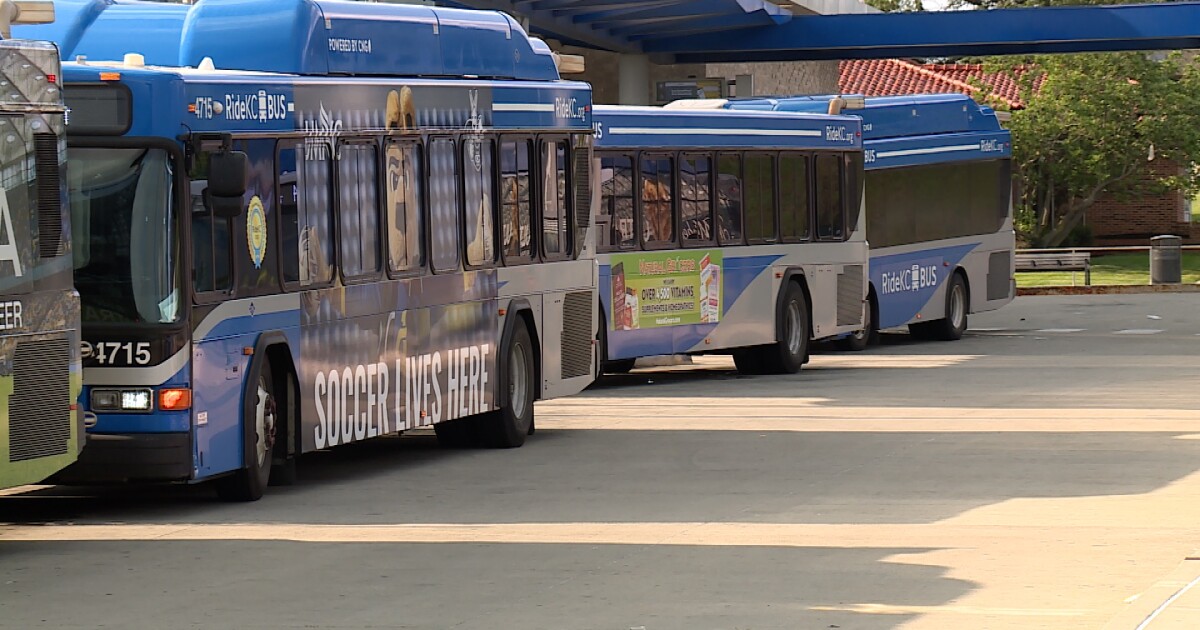
Kansas City to reduce bus transit frequency, extended hours after World Cup matches end
-

 Kentucky37 minutes ago
Public Health Student Hollie Hagan found her calling in rural Kentucky

