Colorado
Congress looks to help fund new control tower at growing Northern Colorado airport


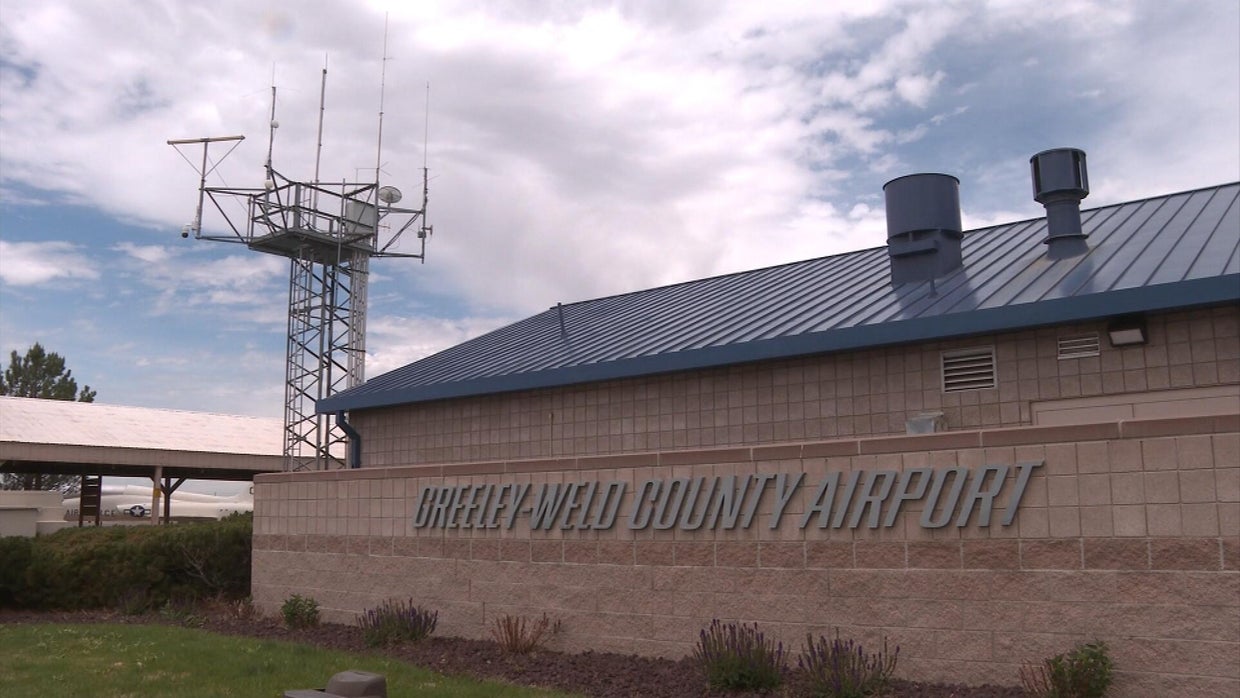
As Weld County and Northern Colorado continue to grow, leaders at the Greeley-Weld County Airport are preparing for an expansion they say will position the facility as a major transportation and economic hub for the region.
Airport director Cooper Anderson said the airport has reached a point where additional growth on its current footprint is no longer possible.
“We have reached our capacity, here, as far as growth on the south side of the airport,” Anderson said.
The airport is now developing land northeast of its existing facilities to accommodate larger aircraft and future aviation services.
“We needed to find a new area to expand and allow larger corporate jets, and eventual charters and commercial service down the road,” Anderson said.
Construction is already underway or completed on several infrastructure projects, including expanded taxiways and sites for future hangars. Anderson said the area being developed was farmland just a few years ago.
“It used to be corn fields, but since then we have ran water, sewage and gas is coming next week,” Anderson said.
The expansion effort has been supported by a combination of local and federal funding. Anderson noted that approximately $850,000 in federal funding was previously secured to develop a master design and long-term vision for the airport, with local money helping execute the plan. Additional federal tax dollars in recent years also helped fund taxiway expansion projects that have prepared the airport for future growth.
Now, Colorado leaders in congress are seeking millions more in federal funding to continue that momentum.
Rep. Gabe Evans, who represents Colorado’s 8th Congressional District, said the airport plays an important role in one of the nation’s busiest aviation corridors.
“The northern Front Range of Colorado is one of the densest airspace systems in the nation,” Evans said.
Before entering Congress, Evans served as a Black Hawk helicopter pilot out of Buckley Air Force Base and frequently flew throughout Northern Colorado. He said improvements at the Greeley airport would have benefits extending well beyond Weld County, noting other airports are overcrowded to the point of causing some nearby residents to complain of sound.
“It really does impact the entire Front Range,” Evans said.
Evans is working to secure additional federal funding that would help construct and staff an air traffic control tower in Greeley while supporting continued infrastructure improvements.
“When those bills are passed and sent to the president’s desk, writtten into those bills as a line item is several more million dollars to continue to expand the infrastructure at the Greeley airport,” Evans said. “So you can actually start to bring business flights into the Greeley airport and pull a lot of that traffic off of some of the overburdened airports in the metro area.”
Anderson said federal support demonstrates broad confidence in the airport’s future as a hub for business and travel.
“Having the addition of Congressman Evans’ office, and their congressional funding, I think shows how much everybody believes in this,” Anderson said.
That confidence is already attracting attention from the private sector, Anderson said, with major companies expressing interest in locating operations at the airport.
“Greeley’s population is booming. Weld County’s population in general is growing,” Anderson said.
Airport leaders view the expansion as a way to support economic development across the region.
“By us growing, and expanding our services, we are also helping the city of Greeley, Weld County and surrounding Northern Colorado communities and being able to grow economic opportunities for them,” Anderson said.
As the airport prepares for future growth, officials have also upgraded emergency response capabilities. The airport recently acquired two fire trucks that will improve its ability to respond to incidents involving larger aircraft. The vehicles also allow firefighters to use newer, non-toxic firefighting foam, replacing older products that posed environmental concerns.
Airport officials say those improvements will help ensure the facility can safely accommodate larger aircraft and increased traffic in the years ahead.


The Front Range Passenger Rail District is rallying support from the cities where the future rail line will operate. Denver City Council got on board with a proclamation made Monday at its regular meeting. Denver is the latest of nearly a dozen municipalities to publicly express its support for the railway.
Councilman Darrell Watson sponsored the proclamation that received unanimous support.
“Right now, we’re dealing with forest fires throughout the state,” Watson said. “That air that’s coming in, having a cleaner approach to transit is important, and the Front Range Rail provides that.”
The proclamation also supports the creation of two additional “special events” stops that are south of Union Station and therefore would need voter approval.
“One is on South Broadway and I-25 for the new Denver Summit stadium, as well as Burnham Yard for the new Denver Broncos stadium,” explained Sal Pace, the Front Range Passenger Rail District’s general manager.
For Pace, the support is another step in the right direction for future expansion.
“We’re asking the local municipalities to agree with the station locations and the placement of stations across the district,” Pace said. “That way if we refer a ballot question, that it’s done in alignment with the local municipalities, such as here in Denver.”
But city support also brings monetary gains.
“Because of its population, Denver will be receiving $225 million in local return Pace explained. “And for passing this proclamation, they’ve just qualified themselves for an additional $22.5 million in local return dollars,” he said. “That money will be coming from any future tax revenue that a district is collecting.”
“This is a unique opportunity, not just for Denver, but for anyone that loves rail and anyone that lives in the Front Range,” Watson added.
The first phase of the railway that the Colorado Connector (CoCo) will make trips on goes from Denver up to Boulder, on to Fort Collins. That phase is already funded and is expected to begin service in 2029. The Rail’s board will have a meeting in August on a possible ballot measure for this November. Voters from Fort Collins down to Trinidad would vote on the tax measure to support future expansion if placed on the ballot.


How ESPN projects the rebuilt Pac-12
ESPN names Boise State favorite in rebuilt Pac-12; San Diego State, Fresno State, WSU and Texas State close behind.
Happy college football prediction month!
July is when preseason projections hit for the upcoming season.
The Colorado State football team is approaching the first preseason camp under new coach Jim Mora, which brings hopes of a new beginning after the Rams went 2-10 in 2025.
Here’s a look at how some of the national outlets project the Rams to fare in 2026:
Athlon Sports
The national college football magazine projection for 2026 picks CSU to finish seventh in the eight-team league.
Tight end Juice Vereen is the only Ram Athlon projects to be first-team all-conference. The magazine also lists Vereen as its No. 10 in the top transfers section.
Oklahoma State transfer Hauss Hejny is the No. 3 player in Athlon’s top transfers, with the magazine saying, “Hejny is a former blue-chip recruit who showed promise for the Cowboys.”
The magazine projects Boise State to beat San Diego State in the Pac-12 title game. It does not project a bowl appearance for CSU.
Phil Steele
Steele has one of the most well-known college football preview magazines. He also projects CSU seventh ahead of only Oregon State in the Pac-12.
Steele on the QB room, led by Hejny and UConn transfer K’saan Farrar: “Despite the inexperience, this unit should top last year’s stats.”
Mora will “have to work his magic” in the offensive line room, Steele says, due to just eight career starts within the group. On the defensive line, Steele says that unit is the strength of the team “with great depth.”
Steele says Mora will “craft a run-oriented offense as (tight end) is the strength” and that the offense should “top last year’s numbers by over a TD per game.”
Overall, Steele says CSU is “stronger on both sides of the ball” and that the Rams are improved and “will win more games but it looks like a rebuilding year. Can Mora work another miracle?”
Betting odds
Some early win total betting lines for CSU include BetMGM with an over/under line of 3.5 wins for the Rams and FanDuel listing CSU with a line of 4.5 wins.
ESPN
ESPN’s FPI computer model has the Rams last in the Pac-12 with a win-loss projection of 3.6 wins and 7.5 losses. Basically, that means ESPN’s model projects between three and four regular season wins for CSU.
How do these rankings compare to a year ago?
Offseason projections get trickier every year in this era of college football with immense roster changes each season. That’s especially true in the case of CSU ahead of the 2026 season, where a new head coach means about a 75% roster turnover.
So, projections are to be taken with caution. A look at the picks from a year ago show why.
- Athlon: Projected CSU fifth in the Mountain West, to play for a bowl and that QB Brayden Fowler-Nicolosi “should compete for All-Mountain West honors.”
- Steele: Projected CSU fifth in the MW as well.
- Betting odds: Projected CSU to win six or seven regular season games.
- ESPN: Projected CSU to win six or seven games.
- Reality: In the end, CSU went 2-10, finished last in the MW, Fowler-Nicolosi was benched and eventually left the team, and coach Jay Norvell was fired.
Sports reporter Kevin Lytle can be found on social media on X, Instagram and Threads @Kevin_Lytle and on Bluesky.

Colorado’s housing market wrapped up the spring season with more inventory than in previous years, setting up an active summer for buyers — even as economic and political uncertainty continues to drive up prices.
Colorado continued its momentum toward a “balanced and sustainable environment” in May, according to a Colorado Association of Realtors’ market trends report released in June.
Demand remained steady statewide, but buyers gained more choices thanks to higher overall inventory. New listings dropped nearly 14% in May compared to the same month last year, but pending sales increased 7%. This indicates spring buyers were more active than they were in 2025 despite affordability challenges.
“Summer visitors are beginning to arrive, and buyers and sellers are testing the waters for what many expect to be a busy season,” said Dana Cottrell, president of the Altitude Realtors Association, in the report.
Median and average sales prices rose across the state, up 2.7% and 3.3%, respectively, for the month. The median sales price for single-family homes sat at $565,000 — up $15,000 year over year — and $400,000 for condos and townhomes, which saw a modest 1.7% drop. Sellers are, for the most part, receiving close to 99% of a home’s list price, down a feeble -0.1% year over year.
Accompanying May’s higher prices was an increase in the average time a home spent on the market, jumping to 56 days from 53 in 2025.
Although sales were down slightly across the state, inventory remains significantly healthier than the historically low levels of recent years, with 4.3 months of supply statewide.
A balanced real estate market is traditionally indicated by four to six months of supply, measuring the time it would take to sell the current inventory of homes at the existing pace of sales. Anything less than four months would be a seller’s market (demand outpaces supply), while anything more than six would benefit buyers (supply outpaces demand).
While a useful indicator, it can often be unreliable on its own for determining market health in rural Colorado counties due to low sales volume and fragmented property types. Months supply is often over the six-month threshold in ski towns because homes take longer to sell, and don’t automatically point to a buyer’s market.
Rural counties on the Western Slope recorded a larger supply of homes in May for the most part — ranging from 5.5 months supply in Summit County for single-family homes to 10.5 and 8.4 months supply in Pitkin and Grand counties, respectively, according to May 2026 data from the Colorado Association of Realtors.
“Sellers are facing more competition and must price strategically, while buyers see benefit from selection and negotiating power,” the report states. “Overall, the market reflects normalization, with stable pricing, improving affordability and steady buyer activity providing a more sustainable housing environment across the state.”
On the Western Slope, higher inventory brings more negotiation power for buyers, who are becoming more active compared to this time last year. Many buyers are still moving forward despite the combination of rising prices, rising mortgage rates and economic uncertainty.
Western Slope counties see rise in buyer activity
Similar to statewide trends, some mountain towns in Colorado’s western rural counties are seeing higher inventory compared to past years, offering more options for potential buyers.
Grand County, for example, saw sidelined buyers begin re-entering the market after a year of waiting for opportunities to improve, according to Monica Graves, a realtor in the area. These buyers returned to the market with more negotiating power than they’ve had during the last few years.
Sellers in Grand County, on the other hand, are facing increasing competition. As more housing projects pop up around mountain towns, buyers have more inventory to choose from compared to recent spring and summer seasons. The result is steadying demand and a return to a balanced mountain real estate market, according to the Colorado Association of Realtors report.
“May 2026 felt like the market finally woke up from winter,” Graves said in the report. “Resort buyers are still attracted to the area’s year-round recreation and proximity to Denver, but they are taking longer to make decisions.”
Steamboat Springs saw a similar trend in May, with higher year-over-year inventory despite entering 2026 with fewer new listings across all property types. Single-family inventory was down 4.5% and multi-family inventory was down 21.9% compared to last year, the report states.
Sales for single-family homes were stronger to end the spring season, but homes took longer to sell, averaging 90 days on the market year-to-date.
Summit County’s spring inventory also remained above the “extremely limited levels” seen during the pandemic years, according to Cottrell, giving buyers more options and negotiating power. Single-family home sales were up 27% with a 20% bump in listings in May 2026 compared to 2025, while multi-family homes saw a 32% drop in sales and a 15% decline in new listings.
Listings were mostly down for counties across other parts of the north-central mountains, with Eagle, Garfield and Pitkin counties seeing fewer new listings for single-family homes. All except Pitkin County saw a rise in inventory compared to last May, accompanied by a lengthening of days on market to over 100 days. Pitkin County properties spent the longest on the market before selling, rising 10% to 228 days, according to data from the Colorado Association of Realtors.
Interest is high, but what about pricing?
Whether Western Slope counties saw housing prices rise or drop varied significantly from town to town. However, more expensive price tags don’t seem to be slowing buyers down heading into the summer selling season — for now.
The median price for single-family homes dropped to $965,000 in Grand County from $990,000, while the median list price in Winter Park hit $1.2 million.
“Well-priced properties moved, while homes that missed the mark on pricing tended to sit longer,” Graves said. Homes in Winter Park averaged around 51 days on market in May — lower than the statewide average — while those in Granby averaged 78 days despite significantly lower pricing. Graves added that, in places like Granby, homes offering updated finishes, views or short-term rental potential generated the strongest interest.
Prices across Summit County went up compared to last spring. The average price for single-family homes rose 6% to $2.68 million in May 2026, while multi-family home prices saw a larger 19% jump, hitting $1.07 million.
The most expensive home sold in the county was a $13 million home in Breckenridge. This continued strength in pricing demonstrates that demand for mountain living remains firmly intact, with many buyers still moving forward despite economic uncertainty, Cottrell said.
In Steamboat Springs, multi-family homes — which matched last year’s May closings at 26 — saw median and average sales prices increase to $1.96 million and $2.24 million, respectively. Across Routt County, median sales prices jumped 62% for single-family homes and 156% for townhomes and condos, more than doubling from their May 2025 median price of $640,000 to hit $1.64 million.
Across Eagle, Garfield and Pitkin counties, changes in pricing differed by property type. All three counties recorded a drop in the median sales price for single-family homes, with the greatest drop coming from Pitkin County: 58.5% for a median price of $5.5 million in May 2026. The average sales price also dropped from $12.9 to $12.6 million, while townhomes and condos saw a 50% increase in average sales price, bumping up the cost from $2.99 million to $4.5 million.
Could rising mortgage rates scare away potential buyers?
A major market element that could influence buyer activity heading deeper into the summer season is rising mortgage rates.
In February, Western Slope housing markets were reporting an uptick in buyer inquiries due to sinking mortgage rates. Rates had trended downward throughout the first few months of 2026, after home loan rates hit their lowest point in three years in early January.
As of July 2, 30-year mortgage rates have climbed to 6.51%, reversing what had once improved the sentiments of buyers who had been sidelined by affordability concerns.
Rates began increasing following the start of the war in Iran and the closing of the Strait of Hormuz. Rising inflation has only further elevated mortgage rates, though they’ve managed to remain below the 7% reached in early 2025, according to reporting by the Wall Street Journal.
With recent rate fluctuations, it remains to be seen whether rates will dampen buyer enthusiasm during Colorado’s peak season for buyers.
-

 Washington, D.C12 seconds ago
ARCO Design/Build Deepens Its Presence in Washington, D.C. Market
-

 Cleveland, OH6 minutes ago
LeBron James Could Give the Cavaliers the Mentality They’re Missing
-
 Austin, TX12 minutes ago
Documentary on the fight against a bat-killing plague flies into Austin
-

 Alabama18 minutes ago
What are the best SEC college football programs? Start with Alabama, Oklahoma
-

 Alaska24 minutes ago
Rebecca Wright Stevens on Amos Lane and Repping Alaska’s Indigenous Citizens in Court
-

 Arizona30 minutes ago
2026 K-State Football Early Opponent Preview, Game 7:Arizona State
-

 Arkansas36 minutes ago
Arkansas Game and Fish Commission: Celebrate America 250 with responsible boating | Northwest Arkansas Democrat-Gazette
-
 California42 minutes ago
The fierce competition to get married at California’s most popular public buildings

