California
As mass deportations loom, ICE eyeing new detention facility in California

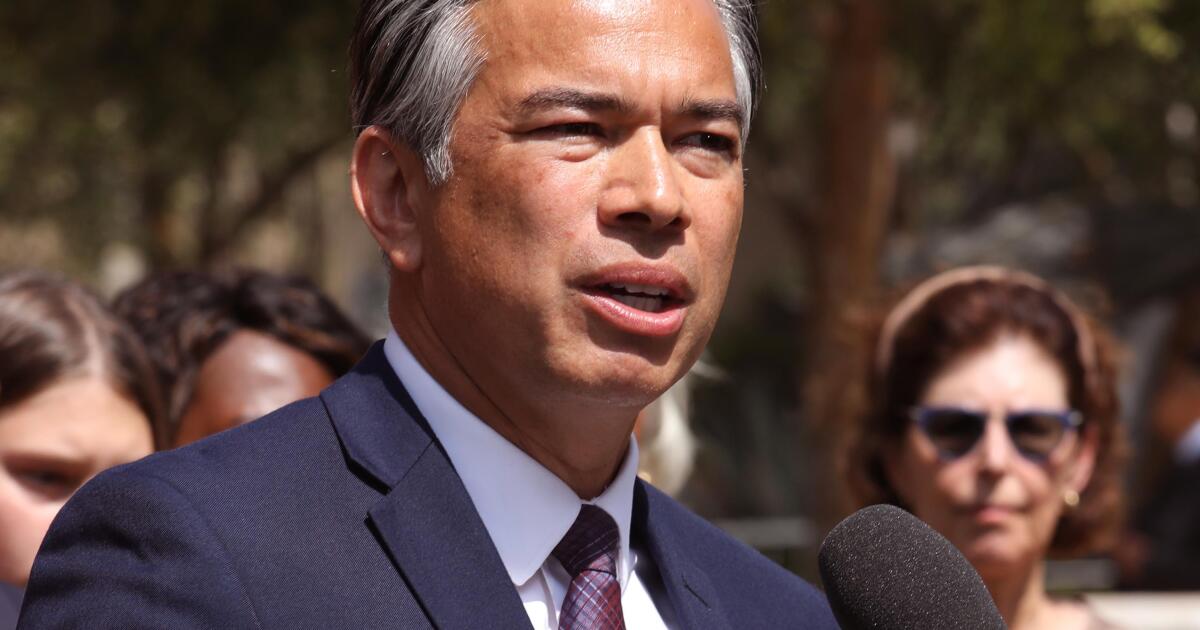
As the incoming Trump administration promises the mass deportation of unauthorized immigrants, federal authorities are eyeing California for a new detention facility for migrant adults.
U.S. Immigration and Customs Enforcement officials are looking for space to accommodate 850 to 950 people and focused on areas within two hours of its San Francisco regional field offices, which include outposts in Sacramento, San Jose and Bakersfield, according to a federal document seeking leads on possible locations.
CalMatters first reported ICE’s interest in opening a new center.
The agency’s desire to expand its immigration lockups predates Trump’s election. Officials began collecting information in August, about a month after President Biden toughened policies for asylum seekers at the Mexican border. In addition to California, ICE is looking into the possibility of new detention centers near Phoenix, El Paso and Seattle, according to the document asking for leads on locations.
“ICE has identified a need for immigration detention services within the Western U.S. area of responsibility,” an agency spokesman, Richard Beam, told CalMatters.
The contemplated centers would add about 3,800 available beds — an increase of about 10% over the current number of detainees — and house both adult men and women of various security classifications from low to high, according to ICE. The agency said it was open to publicly or privately owned sites and locations where other types of inmates are currently incarcerated, which could include county jails or for-profit prisons.
The half-dozen existing ICE detention facilities in the state are run by private companies.
President-elect Donald Trump has promised to launch the largest deportation operation in U.S. history, though how he plans to carry out or pay for it remains to be seen. More than 11 million unauthorized immigrants are believed to be living in the U.S. with only about 38,000 individuals in ICE detention, according to the agency website.
Elected officials in California are gearing up to fight the Trump administration over migrant roundups. Atty. Gen. Rob Bonta reminded public institutions last week of a state law limiting the cooperation of courthouses, hospitals, schools, universities and shelters with federal immigration enforcement efforts.
“No matter who is in the White House, in California, we will continue to lead with California values,” Bonta said in a statement. “We cannot let the Trump deportation machine create a culture of fear and mistrust that prevents immigrants from accessing vital public services.”

California
Mother, daughter found ‘alive and well’ after going missing on Southern California hiking trail

A mother and daughter who went missing after going for a hike on a difficult trail in San Bernardino County’s San Gorgonio Wilderness have been found “alive and well,” the sheriff’s department announced Friday.
The San Bernardino County Sheriff’s Department told KTLA they were uninjured and “walked out on their own.”
Krystal Meyers, 41, and her daughter Alexis Meyers Martinez, 21, were hiking on the Vivian Creek Trail Thursday but didn’t return, according to the San Bernardino County Sheriff’s Department.
They were last known to be at the 10,300-foot elevation mark above the High Creek switchbacks at 11 a.m., according to the San Gorgonio Search and Rescue team.
The Vivian Creek Trail is widely considered one of the more strenuous and hazardous routes in the San Gorgonio Wilderness.
The U.S. Forest Service says it’s the shortest and steepest route to the summit of Mount San Gorgonio and requires experienced mountaineering skills.
Officials did not provide any further details about the circumstances surrounding their disappearance.

BAKERSFIELD, Calif. (KBAK/KBFX) — The California Highway Patrol is urging drivers to stay focused on the road as they head out for Fourth of July celebrations.
The holiday weekend can be a dangerous time on our roads as millions of drivers are expected to travel.
CHP Officer Jorge Toro joined Eyewitness News Mornings to share how drivers can stay safe behind the wheel.
Officer Toro also highlighted the importance of sober driving over the holiday.
BE THE FIRST TO COMMENT
He says anyone hosting a party should make sure all of their guests get home safely, ensuring anyone who may be impaired doesn’t drive.

California is returning a stretch of rugged Mendocino County coast to the Indigenous nations whose ancestors once stewarded its shores.
State transportation officials recently approved the transfer of Blues Beach and the surrounding bluffs to Kai Poma, a nonprofit founded by representatives of the Sherwood Valley Band of Pomo Indians, Round Valley Indian Tribes and Coyote Valley Band of Pomo Indians.
The transfer of 136 acres just south of the community of Westport will mark the first time land managed by the California Department of Transportation has been returned to Indigenous tribes.
“This is beyond huge,” said J. Carlos Rivera, tribal chairman of the Sherwood Valley Band of Pomo Indians. “It’s enormous from our tribal perspective that we are basically obtaining the land that our people once lived on before colonization.”
California purchased the swath of rocky cliffs and windswept shoreline in the 1960s to expand the construction of Highway 1 and create a scenic viewpoint for highway travelers, according to a California Coastal Commission report.
More recently, public access has been largely unregulated, and summer weekends and holidays have drawn large groups who camp and party on the beach, at times driving through sensitive areas, damaging cultural sites and leaving behind trash, the report states.
Kai Poma plans to conduct cultural and archaeological resource studies and environmental surveys and then prepare a resource management plan for the property, according to planning documents. The nonprofit and the Coastal Commission have drafted a public access management plan that states the land will be open from sunrise to sunset.
Rivera described the entire property as a sacred site. The coastal waters are used by tribal people for seaweed and abalone gathering, and the shores host youth cultural camps, he said. “Protecting the land, it has a deeper meaning for us because we’re connected to the land,” he said.
The effort to acquire the land took years — and required a change in state law. Caltrans lacked the ability to transfer land to tribal governments until 2021, when Gov. Gavin Newsom signed a bill sponsored by state Sen. Mike McGuire (D-Healdsburg) that enabled the transfer, according to a news release issued at the time. The law also bars commercial activity on the property and requires public access be maintained.
“With 136 acres now officially transferred into tribal stewardship, one of the most spectacular stretches of the Mendocino Coast will be forever protected,” McGuire said in a statement.
“This agreement, the first of its kind in California, gives these three dynamic Native American tribes the rightful opportunity to reclaim sacred lands and cultural traditions on this special piece of earth. And it’s about damn time.”
The land transfer cleared its last regulatory hurdle June 26 with the approval by the California Transportation Commission, said Neil Thapar, an attorney who works as an advisor and legal consultant to Kai Poma. Caltrans staff will next record the deed transferring the title from the state of California to Kai Poma, which is expected to happen any day, he said.
-

 Connecticut4 minutes ago
Several state parks, beaches close Friday due to capacity
-

 Delaware11 minutes ago
Beloved farm owner, 65, fatally crushed by one of his own camels in Delaware
-

 Florida14 minutes ago
Publix? Walmart? What Florida stores are open and closed on July 4
-

 Georgia19 minutes ago
Georgia baseball has nation’s No. 1 transfer class
-

 Hawaii26 minutes ago
Man accused of trying to run over police officers in Kalihi arrested
-

 Idaho29 minutes ago
Fire burning near Ammon foothills – East Idaho News
-
 Illinois34 minutes ago
Illinois Launches Holiday DUI Crackdown
-

 Indiana41 minutes ago
Storm chance late on the Fourth, then heat tones down early next week | July 4, 2026

