Connect with us

Arizona

Montezuma Castle among Arizona national park sites combating vandalism

Published

on

Montezuma Castle among Arizona national park sites combating vandalism


Montezuma Castle National Monument is wrapping trees to prevent vandalism.

In March, natural resources technicians at the national monument used
burlap to cover the bark of six Arizona sycamore trees along public
trails at Montezuma Castle. Portions of the bark were written and carved
on. Many of the carvings included the year, which made it obvious there
had been a recent increase in incidents.

But national park vandalism isn’t just a problem at Montezuma Castle –
it’s been an issue many Arizona national park sites have dealt with.

While incidences of defaced trees have increased at Montezuma Castle
in the past few years, the method of wrapping them in burlap has never
been used there, according to a representative from the monument.

Advertisement

Rangers chose to cover the trees in burlap because it is resistant to
cutting and can be used through the warm spring and summer months
without risking the health of the trees. The burlap is intended to give
the trees a chance to recover from their injuries and to enhance visitor
experience by covering graffiti on the bark.

Before they resorted to burlap-wrapping, Montezuma Castle National
Monument rangers had posted signs near the trees and stationed
volunteers to speak with visitors to discourage tree defacement and
explain its harm. The trees, however, remained frequently carved, not
leaving enough time for the old carvings to shed carved bark before new
ones were added.

The sign on each wrapped tree reads: “This tree has been vandalized.
Defacing trees is vandalism. Please help us preserve and protect our
nation’s unique natural and cultural heritage. Do not write on or carve
the trees.”

Defacement and vandalism of trees at the site would be considered a
federal misdemeanor, which could be punishable by six months in jail or a
$5,000 fine.

In the past, carvings were few and small enough that natural
resources technicians at the park could safely fill them in with wood
glue and sawdust. If that method were used to cover the current extent
of the damage, however, it would harm the tree’s health, according to
the monument representative.

Advertisement

The National Park Service, which manages Montezuma Castle National
Monument, investigates crimes at national parks through its National
Park Service Investigative Services Branch. The branch has been
successful at preventing vandalism at a different Arizona park – Saguaro
National Park.

Saguaro National Park spokesperson Cam Juárez said the park’s most
recent act of vandalism was in 2016, when someone cut down eight or nine
saguaro cactuses. Juárez said that visitors to the park are discouraged
from vandalism because they know it has consequences, such as fines.

“We have an amazing law enforcement team here,” Juárez said of the park.

Juárez said, however, there is not enough staff to have investigative
units at every national park in Arizona, and some struggle with
security.

“I think our law enforcement teams … are definitely understaffed, and
that’s a problem nationwide, and I think they all do their best to
interact within current units but also interact with local law
enforcement,” Juárez said.

Advertisement

Therefore, the parks have to trust the public to act responsibly, Juárez said.

“It’s impossible to close off a national park. … It’s hard to keep
people out,” he said. “We’re just hoping that people do the right
thing.”

The park rangers tend to be effective at preventing smaller acts of
vandalism, such as breaking into cars or stealing personal items, Juárez
said.

“The community is definitely part of that process in protecting our natural and cultural resources,” Juárez said.

Richard Ullmann, program manager for visitor services for Flagstaff
Area National Monuments, said visitors play the largest role in
mitigating park vandalism.

Advertisement

“Majority of the people understand and do the right thing,” Ullmann
said. “We assume good intentions when visitors come to the national
parks.”

Educating people about the harmful effects of vandalism is crucial to
preventing it in the future, Ullmann said. If a person is caught
vandalizing a national park, Ullmann said he hopes to give them an
opportunity to learn and to demonstrate better behavior.

“In the case of an act of vandalism, it’s an opportunity to help that
individual or that person or group of people do something different
next time,” Ullmann said. “It’s an educational opportunity.”


Source link

Advertisement

Arizona

11 illegal Indian national truck drivers arrested at Arizona border last month

Published

on

11 illegal Indian national truck drivers arrested at Arizona border last month


Eleven illegal Indian national truck drivers were arrested at the Arizona border in the month of February. 

The Yuma Sector Border Patrol arrested 11 total Indian national truck drivers in Yuma, Arizona in February 2026. 

According to a Facebook post by the Yuma Sector Border Patrol, all 11 truck drivers held commercial drivers licenses from the states of Florida, New York, Pennsylvania, Indiana, and California. All were “found to be present in the United States illegally.”

“Border Patrol remains committed to upholding immigration laws and protecting our communities,” the post continued.

Advertisement


Source link

Continue Reading

Arizona

Arizona Independent Party to appeal ruling erasing name

Published

on

Arizona Independent Party to appeal ruling erasing name


play

The Arizona Independent Party will appeal a court ruling that invalidated its name, guaranteeing more legal limbo and possibly a new chapter of confusion in the effort to give unaffiliated voters a viable third-party option at the ballot box.

Party chair Paul Johnson confirmed he would appeal the ruling from Maricopa County Superior Court Judge Greg Como, which forces the party to revert to its prior name: the No Labels Party. The ruling ordered elections officials in Arizona to follow suit.

Advertisement

The decision was a high-profile loss for Secretary of State Adrian Fontes, who Como said had permitted a “bait and switch” on voters by allowing the name change.

“We were given due process, the judge did a fair job,” Johnson said. “I don’t agree with his final position, but I like the way our country works in terms of the rule of the law.”

“I don’t feel discouraged at all,” Johnson said, adding that an appeal could proceed in federal court and raise claims of First and Fourteenth Amendment violations.

It is unclear how the judge’s order, if it stands, could impact candidates who submitted signatures to qualify for the ballot under the Arizona Independent Party label.

Advertisement

“The commission’s position has been that this would cause confusion,” said Tom Collins, executive director of the Clean Elections Commission, which was part of the case. “This is an example of that confusion.”

The number of signatures required to make the ballot is a percentage of registered voters for each party, but unaffiliated candidates had to collect roughly six times as many as Republican or Democratic candidates. Running with the Arizona Independent Party meant only 1,771 signatures were needed.

Como’s order was signed March 19 but made public on March 25, after a March 23 deadline for candidates to file signatures to make the ballot.

“Unfortunately due to the court order, this question is left unaddressed,” said Calli Jones, a spokesperson for Fontes. “This question will be left to the challenge process or other court proceedings.”

Advertisement

Clarity could come through any lawsuits filed challenging Arizona Independent Party candidates’ signatures. No such challenges had been filed as of March 25, and the deadline is April 6.

What’s preventing ‘Arizona Nazi Party’ or the ‘Arizona Anarchists’?

Last October, Fontes agreed to change the name of the No Labels Party to the Arizona Independent Party, saying to do so was not explicitly prohibited in law. The change was done at the request of Johnson, a former Phoenix mayor and advocate for open primaries. To Johnson, the party is something of a can’t-beat-them-join-them way to put independent candidates on an even playing field with those from the two major parties.

The name change quickly led to a trio of lawsuits filed by the state’s voter education agency, the Arizona Citizens Clean Elections Commission, and the Arizona Republican Party and Arizona Democratic Party. Those cases were merged into one, which ultimately led to the March ruling.

The commission and political parties argued the name change would create confusion for voters and election officials in terms of distinguishing when someone wanted to be part of the new party versus and independent voter in a colloquial sense, which means not registering with any party. Fontes did not dispute there could be confusion.

Advertisement

State law does not directly address when a political party wants to change its name, but Como said that request should follow the process for creating a new party. That includes gathering signatures from supportive voters. Como has been on the bench since 2015.

Como raised concerns of transparency, noting that voters who registered for the old party may not support the new party name. He said a party could gather support with an “innocuous sounding name,” then change it entirely. Como offered a grave example.

“Would the same 41,000 people who signed petitions to recognize the No Labels Party have signed to support the ‘Arizona Nazi Party’ or the ‘Arizona Anarchists’?” he wrote.

His ruling is guided by and affirms Arizona court precedent that statewide elected officials’ powers are only those that are given explicitly to them in statute or the constitution.

Legal challenges needed to bring clarity

Jones, Fontes’ spokesperson, said the office had no power to address whether signatures were valid, because the office presumes “anyone who met the requirements at the time of filing their signatures are valid candidates.” Fontes, a Democrat seeking reelection this year, said he would not appeal the ruling given the “fast approach of the election and the challenging job election administrators have before them.”

Advertisement

He also stood by his decision, but said the court ruled with voters. “Both approaches, being reasonable, the Court entered an order with a lean towards the voters, not the party leaders,” Fontes said.

Como did not find Fontes’ approach was reasonable, saying it was beyond Fontes’ authority.

“The judge noted that even Fontes admitted this issue would cause confusion for the voters, but Fontes disregarded that concern and the obvious truth, and proceeded to allow them to continue the charade,” Arizona Republic Party Chair Sergio Arellano said, responding to the ruling.

That Fontes will not appeal was welcome, because “he has already cost taxpayers too much money” and “further eroded trust in our election officials at a time when that trust is already at an all-time low,” Arellano said.

Eleven candidates are running for office with the Arizona Independent Party name, or whatever it turns out to be. That includes candidates for Congress, governor and state Legislature. Hugh Lytle, the party’s preferred candidate for governor, said in a statement the ruling proves “how far the political parties will go to protect their grip on power.”

Advertisement

Lytle is among the candidates who could face a challenge to his just over 6,000 signatures. Of those, just 132 were gathered via the state’s online system, which requires verification before signing. The remaining could be more vulnerable to objections.

Ultimately, Lytle said, the judge’s ruling wouldn’t change much.

“We are on the ballot,” he said.

Reach reporter Stacey Barchenger at stacey.barchenger@arizonarepublic.com or 480-416-5669.


Source link

Advertisement
Continue Reading

Arizona

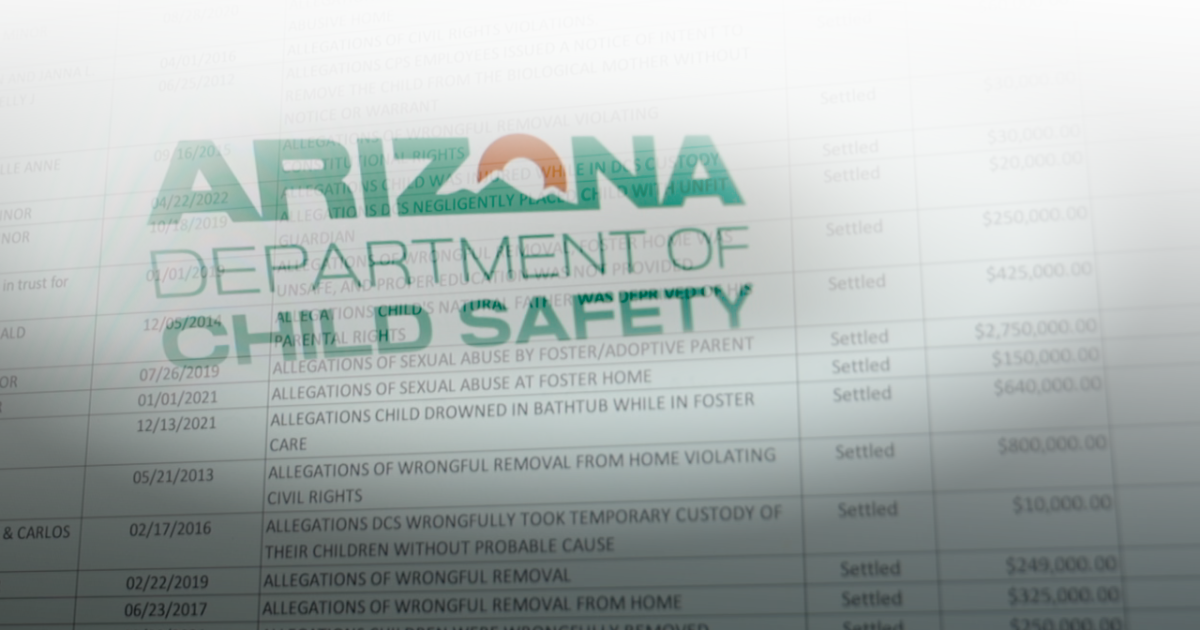
Arizona Senate committee passes three bills aimed at reforming the Department of Child Safety

Published

on

Arizona Senate committee passes three bills aimed at reforming the Department of Child Safety


A state Senate committee passed three bills Wednesday morning aimed at reforming the Arizona Department of Child Safety.

The bills are part of a search for solutions following the murders of three girls known to Arizona’s child welfare system in 2025.

One of the bills strengthens the rules to place children with relatives or other adults they know. HB2035 would make kinship care presumptive and require a written explanation if a different placement were made.

Another bill, HB4004, encourages DCS to investigate new reports of child abuse, even if caseworkers had designated a “protective parent” who would shield the child from harm.

Advertisement

The third bill, HB2611, aims to improve the conditions of group homes. This includes improved building security, allowing foster children to participate in enrichment activities and live free from bullying, and randomly drug testing group home workers.

Hayden L’Heureux, who lived in foster group homes, spoke about the conditions youth face.

“For many foster youth group homes are not experienced as places of healing but as places of punishment or setback,” L’Heureux said.

Angelina Trammell also lived in foster group homes and shared her experience.

“I’ve been through things no child should ever have to go through in the hardest part. A lot of it could’ve been prevented,” Trammell said.

Advertisement

All three bills have already passed the state House and will move forward for consideration by the full Senate.

This story was reported on-air by a journalist and has been converted to this platform with the assistance of AI. Our editorial team verifies all reporting on all platforms for fairness and accuracy.


Source link

Continue Reading

Trending