Arizona
Kingpin: Arizona father and son ran large-scale drug trafficking ring, DOJ says


PHOENIX – The Department of Justice says the two leaders of a large-scale, drug-trafficking ring are a father and son with roots in Phoenix.
In addition to charges of narcotics, conspiracy and money laundering, prosecutors are charging the two men with the “Kingpin” statute, also known as the Continuing Criminal Enterprise Statute.
In January 2024, a federal grand jury in Johnstown, Pennsylvania charged 35 people in a second superseding indictment, accusing the group of participating in a “violent transnational drug and money laundering operation” between August 2021 and June 2023.
Twenty-six of the 35 defendants are from the Phoenix area. A wiretap investigation by the FBI led to the discovery of the alleged drug ring.

Marcos Monarrez-Mendoza mugshot
Marcos Monarrez-Mendoza, 55, was convicted and sentenced to prison in 2013 for using the mail to set up a methamphetamine delivery system in Texas. A decade later, prosecutors believe he and his son Marcos Monarrez Jr. – aka “Nene” – are the leaders of the Monarrez Drug Trafficking Organization based in Phoenix.
The father and son are accused of importing millions of fentanyl pills, kilograms of fentanyl powder, hundreds of pounds of methamphetamine and dozens of kilos of cocaine from Mexico and selling it throughout the U.S.
Court documents say the Monarrez DTO worked with four major suppliers from Mexico and Phoenix. Those four men are also charged in this case, including Jaime Ledesma.
Ledesma is serving time in an Arizona state prison for previous convictions of narcotics possession for sale and weapons misconduct.
Investigators say Monarrez DTO paid numerous distributors and couriers to transport and deliver shipments of fentanyl, meth and cocaine to re-distributors in Phoenix, Seattle, Minneapolis, Cleveland, Wichita, Kansas, Fort Wayne, Indiana and Western Pennsylvania.
Through court records, FOX 10 identified some of the defendants accused of working for Monarrez-Mendoza to distribute illicit drugs, including Cesar Monarrez – aka “Pollo,” Colby Barrow – aka “Bando,” Donald Garwood and Valeriz Sanchez, all based in the Phoenix area.
Carlos Zamora – aka “Calancho” – is not only accused of re-distributing fentanyl and meth – but law enforcement calls him the “enforcer” of the operation and says he was paid by Monarrez Jr. to perpetrate violence, including a drive-by shooting.
Where does our state stand amongst drug trafficking nationwide?
“We are ground zero for drug trafficking right here,” says Special Agent in Charge Cheri Oz of the DEA’s Phoenix Field Division.
Since 2020, Oz and her team have been on the frontlines of the fentanyl crisis in Arizona, seizing historic amounts of drugs.
“Synthetics are the wave of the future,” she says. “With methamphetamine and fentanyl, the cartels have learned chemistry and they’re making concoctions in the jungles and basements and kitchens. They’re packaging those up and selling them, bringing them into the United States and selling them here.”
She says the Sinaloa Cartel and the Cartel de Jalisco Nueva Generacion – known as “CJNG” – are the largest Mexican criminal syndicates that threaten the U.S., but it’s not migrants that primarily bring in illicit drugs on foot.
Couriers or “mules” drive through legal ports of entry at the southern border to bring drugs into Arizona.
Authorities also seize drugs at airports like Phoenix Sky Harbor, discovering products hidden in checked luggage and containers. By land and by air, Oz says it’s moving fast and agents are trying to keep up.
“The cartels find very innovative and creative ways to conceal loads and bring them into this country. We’ve seen them inside teddy bears if they go through the mail. Everything that you can imagine, think drug trafficking, illicit drug trafficking is a $3 trillion business. So that’s a lot of money, a lot of reasons to try and bring poison into this country. So, they will be very creative. They will do anything they can to get their poison into the United States,” Oz said.
The black market at the southern border is where drugs and firearms trafficking collide.
“In Mexico you can only buy a weapon through the army. There are only two stores in all of Mexico, and you have to have a permit in order to buy a weapon. So, it is extremely controlled arms regulation or weapons regulation,” says Rafael Barcelo Durazo.
Barcelo is Tucson’s Mexican Consul. He says both sides of the border feel the negative effects.
In the U.S. government’s case against the Monarrez DTO, one of its alleged suppliers – Humberto Arredondo-Soto, was paid in military-grade firearms, including AK-47 and short-stock Draco rifles, Glock handguns and FN SCAR assault rifles smuggled to Mexico by couriers from the U.S.
“From 75 to 80% of the weapons seized in the commission of a crime in Mexico, those were weapons bought in the United States and were illegally trafficked into Mexico,” said Barcelo.
Court records reveal the magnitude of executed search warrants linked to the Monarrez Drug Trafficking Organization.
Phoenix take down seizure
In 2023, authorities searched nine Phoenix locations, seizing 27 kilograms of fentanyl pills, seven and a half kilograms of fentanyl powder, nearly 50 pounds of meth, 12 firearms and more than $200,000 in cash.
Seattle take down seizure
At the same time in Seattle, five search warrants led to the seizure of 27 kilograms of fentanyl pills, 14 firearms and nearly $400,000.
Pills hidden in supplement bottles seized in a flight from Phoenix to Minneapolis in 2022
This seizure happened in 2022 after investigators learned a passenger on a commercial flight from Phoenix to Minneapolis was in contact with members of the Monarrez DTO.
Just weeks later in another alleged smuggling attempt from Phoenix to Minneapolis, authorities seized two protein tubs of fentanyl pills, weighing 20 kilograms, also linked to the Monarrez organization.
“The organized crime has taken so many lives in Mexico and I think from the public opinion point of view in the United States, it’s only the drugs that are the priority. But you cannot tackle the drug trafficking if you don’t tackle, also, the illegal trafficking of weapons from the United States,” says Barcelo.
It doesn’t stop behind bars
The DOJ says while Monarrez Jr. was in prison in the Western District of Pennsylvania, he used contraband cell phones to communicate with other co-conspirators on the outside and orchestrate the distribution of 500,000 fentanyl pills throughout the nation.
Marcos Sr. was arrested by Chandler Police in November 2023 on drug and money laundering charges.
Out of the 35 defendants, five have taken plea deals and four of them have been sentenced.
Oz says Arizona is ground zero for drug trafficking here in Arizona, impacting so many families across the state.
‘We watched her die’
“I miss her so much every day. I miss her laugh. She was very sarcastic. She was always laughing, always making jokes. And she was just super fun. She just lit up everybody’s life,” says Danya Ayers, the mother of Hannah Pairrett.
Ayers doesn’t miss a chance to tell her daughter’s story because she’s no longer here.
In June 2019, she warned her 16-year-old daughter about the dangers of buying pills off the street.
“She actually said ‘I would never be stupid enough,’ which were her words. ‘I’m not stupid enough to go out and buy something if I don’t. I’m not going to do that because I know better,’” said Danya.
But Hannah ultimately bought what she believed were three Adderall pills. An hour later, Hannah overdosed and was rushed to Phoenix Children’s Hospital.
Danya remembers seeing her daughter in the ICU.
“And if she does make it, it would be a miracle, and she would not be the same person because she would have been severely brain-damaged because of how long she was down for,” Danya said.
The pill Hannah took was laced with fentanyl. Her death was one of 1,294 fatal opioid overdoses in Arizona in 2019.
“We watched her die,” says Danya.
For Danya, the repercussions of one drug sale changed her family’s life.
In November 2023, Michael Allen Fox was sentenced to six years in prison for the distribution of fentanyl that caused Hannah Pairrett’s death.
Fox is not linked to the Monarrez DTO.
“There’s a little bit of closure because he did get sentenced, and he is in prison now. But the sentencing was only six years. So, we don’t feel like that was the justice that she deserved,” says Danya.
Meanwhile, the DEA says fentanyl seizures in Arizona have started to decline.
“We have a ton of fentanyl that’s coming into the United States. However, I’m happy to say that our numbers are plateauing and even going down just slightly,” says Oz.
Danya makes it her mission to educate parents about the fears of fentanyl and to watch out for the signs before it’s too late.
“To watch your child die or to hear that your child is gone. Nobody, you don’t want that. Nobody wants that,” she says. “So that’s what I really want to try to get out there is you never forget. It never goes away. And it never stops hurting to lose your child like that.”
As for the Kingpin Statute, te sentence for a conviction carries a mandatory minimum of 20 years in prison and a maximum of life in prison.
Only a handful of Americans have been charged with that statute.



LOS ANGELES — After tests on his sore elbow revealed no structural damage, Pavin Smith took batting practice and was declared ready to return to the Diamondbacks’ lineup.
Smith, who was a late scratch on Opening Day, was a late addition on Day 2. He will bat fifth and serve as the designated hitter, sending Tim Tawa to the bench.
Smith is a relatively important member of the Diamondbacks lineup as a potential impact hitter against right-handed pitching. Last year, he hit .265/.361/.456 with eight homers against righties in 226 at-bats.
Diamondbacks at Dodgers, 7:10 p.m., Cox, Ch. 34
Diamondbacks RHP Ryne Nelson (7-3, 3.39)* vs. Dodgers RHP Emmet Sheehan (6-3, 2.82)*.
At Dodger Stadium: Nelson opened last season in the bullpen but moved into the rotation full time after RHP Corbin Burnes went down with elbow surgery. He was impressive from that point on, putting up a 3.38 ERA across 20 starts from June 1 onward. … Nelson faced the Dodgers three times (two starts) last season, giving up four runs in 13 innings with one walk and 12 strikeouts. … Nelson has solid career numbers against most Dodgers hitters, including 3B Max Muncy, who is 0 for 8 with three walks and five strikeouts. … Sheehan, 26, a sixth-round pick out of Boston College in 2021, returned from Tommy John surgery last year and performed well, logging a 2.82 ERA in 73 1/3 innings. He also logged important innings for the Dodgers out of the bullpen in the postseason. … Sheehan has never faced the Diamondbacks. … Last season, he averaged 95.6 mph with his four-seam fastball. He also threw a slider and change-up with the occasional curveball.
Coming up
Saturday, March 28: At Los Angeles, 6:10 p.m., Diamondbacks LHP Eduardo Rodriguez (9-9, 5.02)* vs. Dodgers RHP Tyler Glasnow (4-3, 3.19)*.
Sunday, March 29: Off.
Monday, March 30: At Chase Field, 7:10 p.m., Diamondbacks RHP Michael Soroka (3-8, 4.52)* vs. Tigers RHP Justin Verlander (4-11, 3.85)*.
Tuesday, March 31: At Chase Field, 6:40 p.m., Diamondbacks RHP Brandon Pfaadt (13-9, 5.25)* vs. Tigers RHP Casey Mize (14-6, 3.87)*.
* — stats from 2025.
(This story will be updated. Check back soon.)

Boats, beaches, and buckets of fun! Just the way you’d expect a boy to spend his Florida vacation!
But there was something else 11-year-old Miles Boyd got to do last year when he and his family traveled to Florida. It was a sea turtle adventure that truly became the trip of a lifetime.
“I had never been to the ocean before,” explained Miles. “So see that just wowed me. It was amazing!”
Miles and his family also got to see baby sea turtles on the beach at night.
“The ocean is so mysterious,” says Miles. “It’s such a big place, and the fact that these turtles can move but are so tiny and when they go in the ocean, they get to hundreds of pounds.”
In so many ways, the trip to Palm Beach County, Florida, was a dream vacation for Miles and his family, but it only came after what was a living nightmare.
“I couldn’t imagine losing him,” says Miles’ mom, Natasha.
It was the harsh reality that Natasha had to face after learning her son Miles had a cancerous brain tumor.
“The world just stopped,” Natasha says about the moment she found out the devastating news. “I just sat on the floor and cried.”
Even Miles admits he was scared.
“I’m just a kid, you know what I mean?” he says. “It’s a lot to handle all at once.”
After three brain surgeries, countless hours of therapy and rehab, and having to take a chemo medication twice daily, Miles proved to the world he is a true survivor!
And his trip to Florida, through Make-A-Wish Arizona, proved to be the medication he never knew he needed.
Miles explains that the trip motivated him to keep going.
“It showed me that I made it to this car, and I can keep going,” he says. “I started at the lowest of lows, and now, I’m on a beach – it just gave me confidence and motivated me that I could keep going.”
Last year alone, Make-A-Wish Arizona granted 476 wishes; they’ve also fulfilled more than 8,500 since being founded in 1980.
Across the Globe, Make-A-Wish has granted more than 650,000 wishes since 1980
Miles and Nick Ciletti will co-host Make-A-Wish Arizona’s Wish Ball on Saturday! To learn more about Make-A-Wish Arizona, click here.

Eleven illegal Indian national truck drivers were arrested at the Arizona border in the month of February.
The Yuma Sector Border Patrol arrested 11 total Indian national truck drivers in Yuma, Arizona in February 2026.
According to a Facebook post by the Yuma Sector Border Patrol, all 11 truck drivers held commercial drivers licenses from the states of Florida, New York, Pennsylvania, Indiana, and California. All were “found to be present in the United States illegally.”
“Border Patrol remains committed to upholding immigration laws and protecting our communities,” the post continued.

DHS attorney said agents in Los Angeles should have ‘started hitting’ protesters, emails show
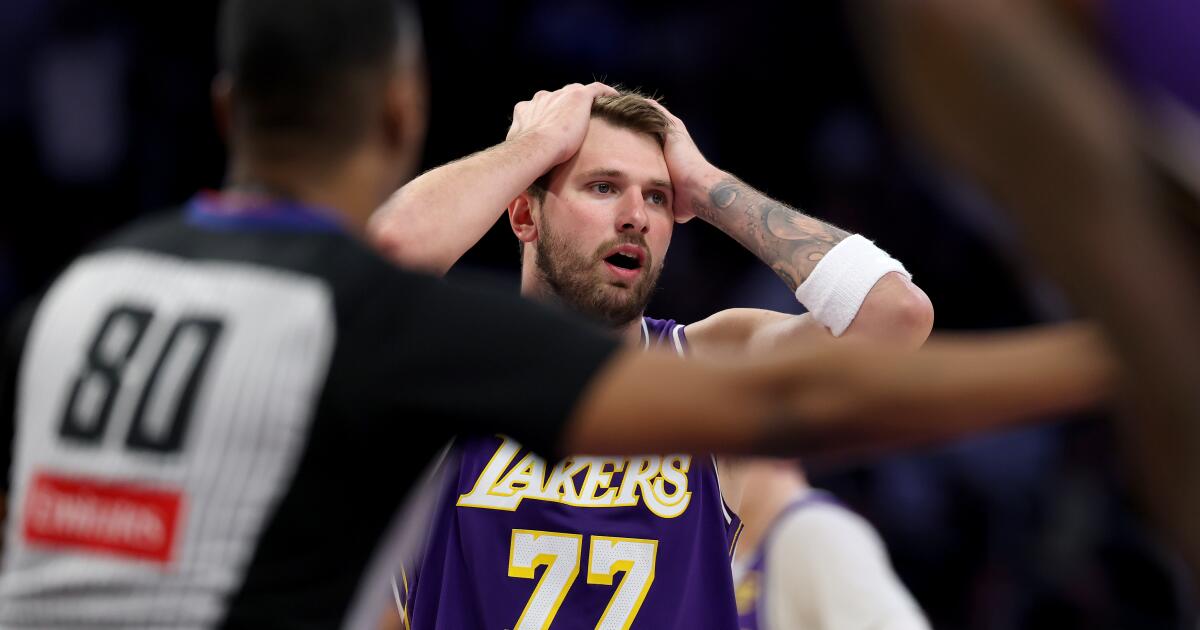
Lakers beat Nets, but Luka Doncic is facing suspension again after 16th technical

EU Parliament unblocks key political hurdle in digital euro talks

Man arrested in plot to firebomb Palestinian activist’s home after undercover op

Video: We Analyzed the Deadly Crash at LaGuardia

Florida High School Football Rankings: Top 25 teams – Oct. 21

How old is Bo Nix? What to know about Oregon quarterback ahead of 2024 NFL Draft

Cleary's 21 help Le Moyne down Central Connecticut State 69-64 in OT

99th annual Pony Swim held in Virginia

Indiana Members Credit Union announced as new anchor tenant at Bottleworks District
EU Parliament unblocks key political hurdle in digital euro talks
Man arrested in plot to firebomb Palestinian activist’s home after undercover op

WATCH: Senate hearing goes silent after Angel Father confronts top Dem over daughter’s death

US diplomat Marco Rubio denounces settler violence, tolls in Hormuz strait

Iran-linked hackers have breached FBI Director Kash Patel’s personal emails | CNN Politics
-

 Detroit, MI1 week ago
Drummer Brian Pastoria, longtime Detroit music advocate, dies at 68
-

 Movie Reviews1 week ago
‘Youth’ Twitter review: Ken Karunaas impresses audiences; Suraj Venjaramoodu adds charm; music wins praise | – The Times of India
-

 Sports7 days ago
IOC addresses execution of 19-year-old Iranian wrestler Saleh Mohammadi
-

 New Mexico5 days ago
Clovis shooting leaves one dead, four injured
-
 Business1 week ago
Disney’s new CEO says his focus is on storytelling and creativity
-

 Technology6 days ago
YouTube job scam text: How to spot it fast
-

 Tennessee4 days ago
Tennessee Police Investigating Alleged Assault Involving ‘Reacher’ Star Alan Ritchson
-

 Texas1 week ago
How to buy Houston vs. Texas A&M 2026 March Madness tickets