


“It wasn’t the outcome we wanted, but they balled out this season,” Perez said. “In the tournament, they balled out. No one expected us to go this far with as many freshmen as we had. But they just totally balled out this season. And we love our Wildcats.”
Arizona
Big 12 debut brings new academic and travel hurdles for ASU, Arizona athletes – The Gila Herald


File photo by William Wilson/Cronkite News: As Arizona State transitions to the Big 12, logistical challenges loom for the equipment staff, with longer drives to games, some even on the East Coast.
By Joshua Heron/Cronkite News
LAS VEGAS – University of Arizona linebacker Jacob Manu plans to rely more heavily on his counselor this year. The prudent approach stems from the increased travel responsibility he will endure this upcoming college football season and the possible academic challenges that may arise.
Arizona, Arizona State University, the University of Utah and the University of Colorado will make their Big 12 Conference debut this upcoming football season. As a result, schools like Arizona and ASU now face more frequent travel outside the West Coast, including games against teams as far as the University of Central Florida.
The shift to new time zones brings challenges such as altered assignment submission deadlines and possibly reduced cognitive function among players due to jet lag. These factors generate concern about the athletes’ ability to maintain full focus on their education.
“Yeah, there might be some challenges academically,” Manu said Wednesday. “Just being so busy with football and having to travel with different time changes might be difficult.”
Big 12 commissioner Brett Yormark acknowledged the potential difficulties that more traveling may cause on an athlete’s academic pursuits and plans to set parameters to ensure their education remains paramount.
“Student-athletes travel, and inconveniences and the challenges that come with it are certainly something that we are considering,” Yormark said. “When you look at our scheduling matrix, it’s a big part of it. How do we reduce travel in ways we can and maintain the right rivalries and competitive spirit of the conference? It’s a balancing act. We are not always going to be perfect but we are trying to make sure that that is a key component in any decision we are making.”

Arizona is scheduled next season for a road game against the University of Central Florida, which is more than 2,100 miles from Tucson by equipment truck and one of three matchups way from the West Coast. First-year Arizona coach Brent Brennan trusts his school’s staff to assist students when academic struggles may arise due to travel.
“We have incredible academic support,” Brennan said. “And as a coaching staff, we are very serious about supporting the academic mission of our university.”
While ASU won’t travel to Florida, the Sun Devils travel outside the West Coast five times this upcoming season compared to zero last year. They will play on the road against Texas Tech, Texas State, Cincinnati, Oklahoma State, and Kansas State.
ASU athletic director Graham Rossini says preparation before travel is critical to ensure players can focus on their schoolwork, adding that the adjustment for the university won’t be difficult, but instead, “different than what we’re used to.” He says the distance traveled doesn’t change but acknowledges the time zone shift and believes the onus to take care of the athletes rests not only on the coaching staff.
“We’re tapping into our sports medicine team, our sports performance team, our nutrition team,” Rossini said. “And there are things that we can do ahead of a trip to make sure that we’re focused on peak performance and recovery, knowing that their student-athletes have demands on their time and academic expectations.”
Rossini recognizes the importance of asking practical questions when traveling across time zones to guarantee the players meet their academic expectations.
“And so how we travel, the time that we leave. Do we need to add an extra day on the particular road trips, depending on where we’re traveling? All that enters the conversations as we know that traveling the Big 12 will be a little bit different,” Rossini said. “And so, looking at all that, what do we do for meals pre-trip, on the trip, when we land? How do we find a responsible way to get into decent times so everybody gets a good night’s rest and is prepared to go compete?
Rossini added that the athletics department must be “mindful” of the students’ classroom expectations by ensuring they’ve got “space in the hotels” to complete exams and attend classes if needed.
“The student athlete’s well-being and experience are very much front and center of how we make decisions,” Rossini said.

The National Football Foundation is a non-profit focused on spreading the importance of academics among amateur football players. NFF chief operating officer Matthew Sign places the onus on each university to provide necessary markers for students to thrive academically but maintains confidence in the schools’ collective plan.
“For the most part, especially as you move up the ladder, those schools do a really good job of trying to prepare the young men for what’s going to happen,” Sign said. “From what we see and what we hear … they’re all working on this, and I think they all have a good plan for it. Is it going to be difficult? Yes. But everyone’s just going to have to adapt.”
ASU defensive back Xavion Alford believes the time difference presents a new academic obstacle for athletes, but his advice to all players is simple: “Don’t procrastinate.”
“You (athletes) know you have practice from Thursdays on. It kind of gets real in the week,” Alford said. “Take care of your work on the weekends before, like Sundays, use days like that. Use the beginning of the week to knock out your work so you can focus on just the game throughout the end of the week.”
For Alford, business is business no matter the zone, and no matter if it’s on the field or in the classroom.
“There’s time differences everywhere, you still got to get the job done,” he said. “We just got to prepare as much as we can for the time zone, but at the end of the day, we still have a job to do.”



The University of Arizona men’s basketball team closes out their historic season after losing to the University of Michigan in the Final Four of the NCAA Tournament. The Wildcats had a tremendous season, breaking program records and earning several different recognitions and awards.
Over the course of the season, the Wildcats dominated with a 36-3 run, breaking the program record for most wins in program history. Previously, this record was 35 wins during the 1987-98 season.
Many of Arizona’s players were recognized for their outstanding work during the season. Notably, senior Jaden Bradley was named Big 12 Player of the Year. Freshman Koa Peat and Bradley were selected to the West All-Region team. Peat also earned the Most Outstanding Player across the western regionals. Another notable recognition was Bradley and freshman Brayden Burries earning All-American honors.
Head coach Tommy Lloyd also received lots of well deserved praise for the way he led this team. He was named Big 12 Coach of the Year and Naismith Coach of the Year. After much discourse during the coaching carousel and the possible coaching job at the University of North Carolina, Lloyd recently agreed to a five-year contract extension with Arizona.
Regular Season Dominance
Right off the bat, the Wildcats showed promise in their team. The Red-Blue showcase was a great introduction to the team and demonstration of their talent for this upcoming season. As many predicted, they dominated in the preseason matchups against Saint Mary’s College and Embry-Riddle Aeronautical University, blowing both teams out of the water.
Arizona continued to exert this dominance in their non-conference start to the season in November against tougher opponents. Their first competition was against the reigning NCAA Champions, No. 3 University of Florida, in Las Vegas. The Wildcats took the win 93-87, which was just the start of what was to come. Koa Peat made his college debut with a bang and proved he was a force to reckon with. Peat recorded 30 points on his debut, which also turned out to be his career high. When Arizona took the win against Florida, this was eye opening for a lot of people about the promise and talent that this team had to offer.
They had a close call against UCLA about two weeks later, taking the victory by a mere 4 points, 69-65. Arizona jumped significantly in the rankings since playing Utah Tech, where they were ranked No. 13, to taking the No. 5 spot. They only continued to climb in the AP rankings, inching up one position at a time. They were ranked No. 4 when they took the victory against No. 3 University of Connecticut, who won the national championship back in 2024. This win was just five days after they beat UCLA.
The Wildcats jumped right past the No. 3 spot after the UConn victory to the No. 2 spot as they took on the University of Denver, Norfolk State University and No. 20 Auburn University at home. After these three games, the Wildcats hit double digits and were holding a 10-0 record.
Christmas came early for the Wildcats as they grabbed the No. 1 spot in the AP polls in early December before playing No. 12 University of Alabama. Arizona held the No. 1 spot for nine consecutive weeks, which broke the program record that was previously held at eight weeks. They closed out their 2025 by adding four more victories to their roster, along with that No. 1 position.
After a notable regular season run, the Wildcats established themselves as a force to be reckoned with. They became the first team in AP Poll history to beat five ranked teams in their first nine games.
Undefeated Conference Run
The Wildcats began their new year and conference season on the road as they took their first Big 12 victory, 97-78, against the University of Utah. The following Wednesday, the Wildcats returned home for their first conference game in the McKale Center to face another team of Wildcats, Kansas State University. They blew them out of the water, taking a 101-76 victory. Throughout the course of the season, Arizona had 17 wins where they took the victory by 20+ points.
They continued asserting their dominance on both their home court and on the road. The first rivalry game of the season against ASU was a close one, but Arizona came out unscathed taking an 89-82 win. The Wildcats picked up three more wins against the University of Central Florida, the University of Cincinnati and West Virginia University before heading back to Utah to take on No. 13 BYU.
This was a close victory with the Wildcats beating the Cougars 86-83. The Arizona freshmen met their match with BYU freshman AJ Dybantsa, who was a contender for the No. 1 overall pick in the NBA draft, but still is uncertain if he will enter the portal this season. Dybantsa recorded 24 points for the Cougars while Burries lead the Wildcats with 29. The Wildcats pulled through with a late rally to take the victory and remain undefeated in their season.
The Wildcats closed out January with another win against the school up north but this time in enemy territory. Following their game against ASU, Arizona took a victory against Oklahoma State University at home. This marked the Wildcats’ 23rd win, which was an Arizona program record, as well as achieving the best start in Big 12 history. Arizona and the University of Miami Ohio were the remaining undefeated teams at this point in the season.
Looking forward to their next game, they were taking on No. 9 University of Kansas on their home court. The Jayhawks handed Arizona their first loss of the season in a hard fight. Kansas was able to maintain their perfect home record on Big Monday, going 39-0 under head coach Bill Self. Going into this game, Arizona knew it would be a tough one as Kansas had home court advantage, but they also possess dominant freshman and veteran players. They were led by Flory Bidunga and Melvin Council Jr., who each collected 23 points.
After this loss on Monday, Arizona looked forward to their next home game against No. 16 Texas Tech University on Valentine’s Day. Not only was it a special day because it was Valentine’s Day, but it was also ESPN’s College Gameday, where 14,688 fans sold out the McKale Center to watch this nationally televised spotlight on the Wildcats.
This was the fifth time that Arizona has been the host, with the last time being in 2022. It was also the first time that a game was played in the new McKale Center at ALKEME Arena after the announcement of a 15-year naming rights partnership between Arizona Athletics and ALKEME Insurance. During this game, Arizona also honored former Wildcat guard Caleb Love who was welcomed into the Ring of Honor with a ceremony at halftime.
The Texas Tech game was a nailbiter, with the lead changing 11 times and having 11 ties. The game eventually went into overtime after Ivan Kharchenkov shot late free throws, but unfortunately the Red Raiders were too strong and took the win 78-75. JT Toppin collected 31 points and 13 rebounds while Christian Anderson recorded 19 points and six 3-pointers for Texas Tech. Arizona fought until the end and put up a good fight with both Burries and Tobe Awaka scoring in double figures.
Because of these two back-to-back losses, Arizona took a fall in the AP rankings from No. 1 for nine consecutive weeks to No. 4 as they prepared to take on No. 23 BYU for the second time this season.
Arizona managed to get back in the winning column to close out the rest of their season taking on some familiar faces like BYU and No. 14 Kansas for the second time this season, as well as new ones. They took victories against No. 2 University of Houston, Baylor University, No. 6 Iowa State University and University of Colorado, Boulder to round out the season. They managed to get redemption against Kansas and avenge their first loss of the season with a 20+ point victory margin 84-61 at home.
They secured the Big 12 regular-season title and earned the No. 1 seed heading into the Big 12 Tournament.
Big 12 Champions
After the Wildcats closed out their conference season against Boulder with another victory, they looked towards the Phillips 66 Big 12 Tournament in Kansas City. Arizona was the No. 1 seed and automatically advanced to the quarterfinals, where they took on No. 8 seed UCF. It was a clean sweep victory 81-59 to advance to the semifinals.
In the semifinals, they faced No. 5 seed Iowa State for the second time this season. Bradley cemented his name as the Big 12 Player of the Year after shooting a 3-pointer buzzer-beater to win the game and send Arizona to the finals. The Wildcats won 82-80 in a crazy finale.
Arizona faced No. 2 seed Houston in the finals of the Big 12 Tournament before stamping their ticket to the NCAA Tournament after a close win 79-74. This was the first time that Arizona has won the Big 12 Championship title since joining the conference back in 2024.
March Madness
Because of their pure dominance throughout the season and the Big 12 Tournament, Arizona was the No. 1 seed in the western region for the NCAA Tournament. All of Tucson buzzed with excitement over the start of the tournament, and most people made their brackets with Arizona taking the victory at the end of it all.
They headed down to San Diego for the first round of the tournament, where they played against No. 16 seed Long Island University. They took their first victory of the tournament with over a 30-point margin.
Later that weekend, Arizona advanced to play No. 9 seed Utah State University to finish out their weekend in San Diego. This was another victory to add to Arizona’s roster with the Wildcats’ winning 78-66.
Arizona returned home to Tucson, where they were greeted by loving fans showing their support upon their arrival to McKale Center at ALKEME Arena. They had a quick turnaround, though, as they were headed up to San Jose for the second round of the tournament. That Thursday, they took on No. 4 seed University of Arkansas in the Sweet 16.
In this matchup, Arizona showed strong offense with both Burries and Peat scoring 21 points, Kharchenkov scoring 15 and Bradley, Awaka and Motiejus Krivas tallying 14 points each. The Wildcats advanced to the Elite Eight after a 109-88 victory over Arkansas. This was their first appearance in the Elite Eight since 2015.
The Elite Eight matchup was against No. 2 seed Purdue University. Arizona got off to a slow start, letting Purdue take the lead for the majority of the first half and going into halftime. The Wildcats made a strong comeback in the second half to come out with the 79-64 victory taking them to the Final Four for the first time since 2001.
Arizona was heading to Indianapolis for the Final Four where they were set to play the No. 1 midwestern seed University of Michigan. Arizona fans migrated to the midwest to support their Wildcats as they ended the 25 year drought since they had played in the Final Four. Unfortunately, this game did not go as the Wildcats had hoped. They were unable to find their rhythm against Michigan’s tough defensive strategy with their strong offense and high shooting percentage.
Arizona fell to Michigan 91-73 in the Final Four round of the NCAA Tournament. Though they did not win it all after a very tough game, this does not diminish everything this team has done this season and everything they have done for the Arizona basketball program. This team will stand as one of the greats and did the Arizona and Tucson community proud on the national stage.
Follow the Daily Wildcat on Instagram and Twitter/X


Fan cheer and hold up signs as they wait at McKale Center on April 5, 2026 for the Arizona men’s basketball team to return from Indianapolis after their Final Four loss to Michigan the night before.
The two didn’t know each other, but engaged in conversation while they waited next to each other.
On the other side of the barricade was Tucsonan Beth Cole, who graduated from the university in 1997, the same year the Wildcats took home the national championship. She was out at McKale Center to show her love for the Final Four team.
“It’s a big thing for the city of Tucson, for the university,” she said. “It’s not a celebration like a national championship, but we should still be really happy and really proud and rally behind the team and coaching.
“They’ll be back,” she added.
The return of the Wildcats was a family affair for many Tucsonans, who showed up and showed out with kids in tow.
The Brown family, consisting of Devon and Chelsie, who are Arizona alums, and their two young sons, showed up around 11:30 a.m. to wait for the Wildcats. They held “welcome back” and “thank you” signs along the barricade for their favorite team and players.
Their sons also participate in Arizona’s youth basketball camps.
“We’re diehard Arizona fans,” Devon Brown said. “We were students years ago … and our kids, they scream ‘Bear Down,’ and they’re already choosing to come to the U of A when it’s their turn. Our circle of friends, our family, we’re all U of A alums.

Breaking down Michigan basketball victory over Arizona in Final Four
Breaking down Michigan basketball victory over Arizona in Final Four at Lucas Oil Stadium in Indianapolis on Saturday, April 4, 2026.
INDIANAPOLIS — All season long, the Arizona Wildcats owned the paint. They made more free throws than their opponents attempted. They were secure with the ball. On the few occasions they trailed, they found a way to “figure it out,” as head coach Tommy Lloyd often put it.
This time, there was no figuring it out.
Michigan overpowered Arizona, 91-73, on April 4 in front of 72,111 fans at Lucas Oil Stadium in the second NCAA Tournament semifinal. The win sends the Wolverines (36-3) into the championship game on April 6 against Connecticut (34-5), a 71-62 winner over Illinois earlier in the night.
With 51 seconds left and the Wolverines up by 23, coach Dusty May called a timeout for the opportunity to pull his starters. Arizona coach Tommy Lloyd did the same.
Moments later, Arizona players strolled off the court, expressions of disbelief across their faces. Jaden Bradley and Koa Peat walked through the tunnel arm in arm, Peat with a towel draped over his head. The Wildcats weren’t just beaten. They were manhandled, something completely unfamiliar for a team whose only two regular-season losses were by a combined seven points.
Lloyd admitted it will probably take a few days to process.
“I thought we had a chance to win this four-team tournament,” Lloyd said. “Obviously, Michigan had other thoughts today. We’ll get back home and take a breath. But I know, myself, no loss at the end of the season feels great. But I also think that it can be a great learning tool.
“So we’re going to take a breath, probably try to figure out what our roster looks like next year, and like I’ve always said, in this business, as a coach, you’ve got to be tough enough to take disappointment and show back up. And we’re going to show back up. We’re going to try to do this again, but see if we can do it a little bit better.”
The Wildcats (36-3) were making their fifth appearance in the Final Four, but the first since 2001 when they made the title tilt. Their only championship came way back in 1997. Many national pundits thought this was the year the school could break that long drought. The Wildcats defeated 14 nationally ranked teams, the most by a team since rankings started. They were battle-tested, winning both the Big 12 regular-season title and the conference tournament.
But Michigan came in battle-tested, too. It is one of the few teams that has the size to match up with the Wildcats. That made all the difference.
Arizona has a 7-foot-2 behemoth in Mo Krivas, but Michigan countered with 7-3 Aday Mara. Mara, who previously played at UCLA, tallied 26 points, nine rebounds, and two blocks. The Wolverines also started a pair of 6-9 forwards in Morez Johnson and Yaxel Lendeborg, who combined for another 21 points and 10 rebounds. Michigan finished with a 19-12 edge in second-chance points.
Lendeborg sprained an ankle in the first half. He returned in the second but played just 15 minutes in the game, although it was an impactful 15 minutes.
“Their size really impacted the game,” Lloyd said. “I felt that. I see they only have Mara down for two blocks. There’s no way. I could think of three that he tipped, you know what I mean, just right off the top of my head.
“They’re one of those teams — I would say, like, Houston’s like that, or even Iowa State’s like that, teams we played. You have to play them a few times. And after you kind of get used to playing them a few times, you get more comfortable. I wish we had another crack at it, but we don’t. And so they get a ton of credit.”
Michigan came in as a 1.5-point favorite, which indicated the game was a toss-up. But it was never close.
The Wildcats trailed 48-32 at the half, the largest deficit the team has faced at any point this season. That hill to climb got steeper at 23 points just 5 minutes into the second half and was up to 30 at 77-47 with 10:31 left. There was no coming back from that.
Part of the disappointment comes from the fact that next season the team will look a lot different. For many, this was their shot. Three of the top seven are graduating, and freshmen phenoms Koa Peat and Brayden Burries are likely to head to the NBA.
Peat won four state titles at Perry High School, so ending the season with a loss is something unfamiliar. He says he took pride in being a hometown kid and representing the state.
Peat accompanied Lloyd to the postgame interview room along with Burries, Bradley, and Lloyd, but had his head buried in his arm when others were answering questions.
“It means everything to me. Being a kid from Arizona, putting on this jersey, having Arizona across my chest,” he said. “Like I said at the beginning of the season, when I put Arizona across my chest, I’m going to go 110% every game and leave no regrets. I’m just really thankful for the brand and the program for everything they did for me, and these teammates right here. I’m just super blessed. And it was a special year, and I’m just really thankful for everybody in Tucson.”
Players were asked to reflect on their favorite moments of the season. Each said it wasn’t one win, it was more about the time they spent together.
“I would say just, on and off the court,” Bradley said. “I feel like you really get to figure your teammates out, know what they’re like, meet their families. Just stuff beyond basketball. I felt like it brings you closer on the court, and I feel like we did a lot of stuff like that this year.”
Arizona shot just 36.6% (26-for-71), which included a 6-for-17 from deep. Peat had 16 points, but it took a 6-for-18 showing from the field. Burries and Anthony Dell’Orso each had 13, but Burries was only 4-for-16 from the field and 2-for-10 from deep. The Wildcats tallied 14 turnovers, which allowed Michigan to finish with a 26-12 advantage in points off turnovers.
Michigan shot 47.8% (33-for-69), including a 12-for-27 from deep.
“I think a lot of it is simply match-ups,” May said. “When we’ve played this model, this Arizona model this year — and they’re the souped-up version, they’re the steroid version of Gonzaga and these other teams — we just felt like if a team relies on scoring 15 feet and in, with Aday and Morez and Yaxel and Nimari Burnett and Roddy Gayle, because of our size, length, it’s going to be tough to score enough points 15 feet and in, if we’re making some shots and we’re in a decent rhythm offensively. We matched up well with Arizona better than we have some other teams this year.”

New York16 minutes ago
How a Family of 3 Lives on $25,000 in Corona, Queens

Detroit, MI46 minutes ago
Trick Trick joined Waka Flocka onstage at ‘The Boys 4 Life Tour’ stop in Detroit – Detroit Metro Times

San Francisco, CA58 minutes ago
NFL Experts Continue to Link Former 49ers WR Back to San Francisco

Dallas, TX1 hour ago
What we learned in FC Dallas’ win vs DC United

Miami, FL1 hour ago
Dolphins 7-Round 2026 NFL Mock Draft: Miami could catch the wave just right and get a monster draw in the top-50 picks

Florida1 year ago
Florida High School Football Rankings: Top 25 teams – Oct. 21

Oregon2 years ago
How old is Bo Nix? What to know about Oregon quarterback ahead of 2024 NFL Draft

Connecticut2 years ago
Cleary's 21 help Le Moyne down Central Connecticut State 69-64 in OT

Virginia2 years ago
99th annual Pony Swim held in Virginia

Indiana2 years ago
Indiana Members Credit Union announced as new anchor tenant at Bottleworks District

Videos4 hours ago
Trump threatens Iranian infrastructure over Strait of Hormuz | BBC News

Politics9 hours ago
GOP races to pass ICE, Border Patrol funding bill as priorities pile up, divisions emerge
World10 hours ago
Jet fuel crisis: Rationing triggered at four airports in Italy
News11 hours ago
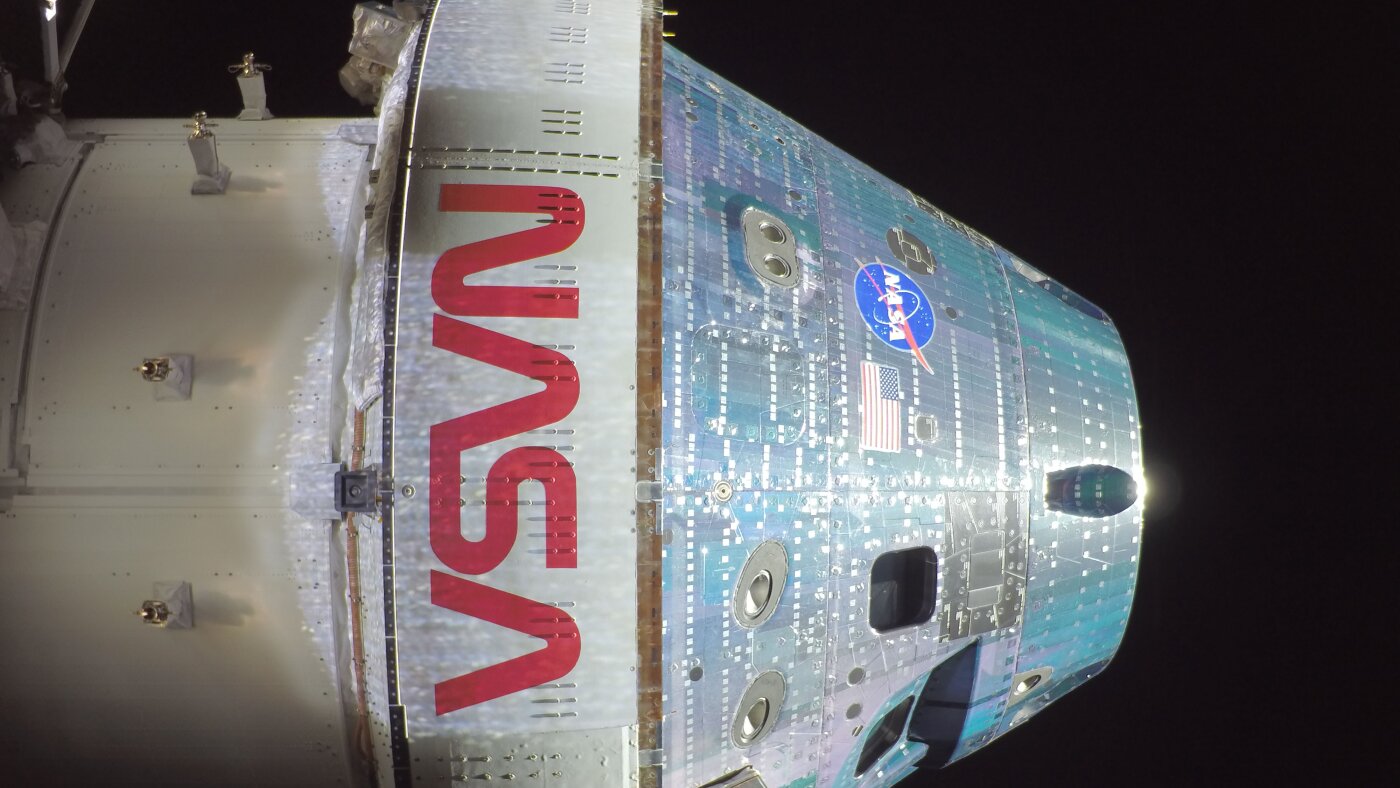
NASA’s Artemis II crew readies for Monday’s lunar flyby. Here’s what you need to know

Politics21 hours ago
Tax day is next week: Avoid these 5 common mistakes that can cost you money
-

 South-Carolina1 week ago
South Carolina vs TCU predictions for Elite Eight game in March Madness
-

 Atlanta, GA2 days ago
1 teenage girl killed, another injured in shooting at Piedmont Park, police say
-

 Vermont1 week ago
Skier dies after fall at Sugarbush Resort
-

 Movie Reviews4 days ago
Vaazha 2 first half review: Hashir anchors a lively, chaos-filled teen tale
-

 Politics1 week ago
Trump’s Ballroom Design Has Barely Been Scrutinized
-

 Atlanta, GA1 week ago
Fetishist ‘No Kings’ protester in mask drags ‘Trump’ and ‘JD Vance’ behind her wheelchair
-
 Entertainment4 days ago
Inside Ye’s first comeback show at SoFi Stadium
-

 Politics1 week ago
JD Vance says he was ‘obsessed’ with UFOs, believes aliens are actually ‘demons’