Arizona
Arizona lawyers keep distance from GOP's 'election integrity' operation amid concern over Kari Lake's fraud claims


PRESCOTT VALLEY, Ariz. — Multiple Republican lawyers in Arizona say they and others who were involved in the party’s election litigation efforts in past cycles are keeping their distance this time around, in large part due to Senate candidate Kari Lake’s history of spurious fraud claims.
Earlier this month, Kory Langhofer resigned his position as the chief legal counsel for former President Donald Trump and the Republican National Committee’s “election integrity” operation in Arizona. He is now among more than a dozen Republican lawyers in the state who were a part of the GOP’s Arizona litigation team in past election cycles, including in 2020 and 2022, but are not slated to participate in its efforts this fall.
It’s a dynamic that has created uncertainty around the party’s much-touted legal efforts in a key state in the battle for the White House and the Senate weeks out from Election Day.
Langhofer, who filed the Trump campaign’s initial legal challenge of his loss in the state in 2020 and represented the Arizona state Senate in its discredited “Cyber Ninja”-led audit of that year’s election, declined to comment to NBC News about his departure.
Three GOP lawyers involved in previous Arizona campaigns, who spoke on the condition of anonymity to speak openly about their hesitation to engage this cycle, told NBC News that there is concern particularly over a penchant from Lake — who continues to challenge her loss in the 2022 state’s gubernatorial race while sowing doubts about the upcoming election — to push litigation and question proceedings. One of the lawyers described it as “fatigue.”
“Kari creates this environment that is inhospitable for very reasonable people,” said one Arizona Republican attorney who was involved in past cycles.
In addition to Lake, Arizona has been a hotbed for GOP-fueled conspiracy theories about stolen elections since Trump’s 2020 defeat in the state and nationally in the presidential race.
“There’s just a perception that [Republican lawyers] are not doing enough proactively,” a second lawyer said about staving off supposed fraud. “But what’s enough? If you can’t identify something [wrong to legally challenge], then what do you do?”
After Langhofer’s departure, the Trump campaign announced the hiring of Harmeet Dhillon, a Republican National Committeewoman and high-powered California lawyer, last week to relocate to Arizona for the final weeks of the campaign. Dhillon doesn’t have a license to practice law in Arizona, but a source familiar with the effort said that Dhillon would be expected to hire local counsel.
“I don’t know who is going to be in the war room or what other Arizona lawyers are going to be there,” said a third Republican lawyer in Arizona who is among those not involved in this year’s legal efforts. “I really don’t know what’s going on.”
Each of the three lawyers who spoke to NBC News said that they would still be willing to help the Arizona legal operation in the month ahead if legitimate concerns impacting the election arise.
After Langhofer’s departure, Lake’s senior campaign adviser Caroline Wren rebuked the RNC and the Trump campaign in a post on X for “telling us they have the ‘greatest election integrity program’ yet they don’t have a single attorney on the ground in Arizona.”
In April, the RNC, touted that it would build a massive “election integrity” operation with 100,000 attorneys and volunteers across the country to prevent fraud ahead of November’s election.
“Is it possible we are all being gaslit by the @gop regarding a fake ‘Election Integrity’ program that doesn’t actually exist?” Wren wrote in the post. “Yes, and frankly, it’s more plausible than it is possible.”
Days later, the RNC onboarded Dhillon to oversee the state’s legal front. Dhillon does not have a deep history in the state, though she worked for Lake on election week in 2022 when the then-gubernatorial candidate assailed Maricopa County elections officials for mechanical issues with some of its vote center printers that caused longer wait times in several precincts.
According to multiple sources engaged in deliberations over the decision to turn to Dhillon, the Trump and Lake campaigns are confident in her decision-making related to the filing of any potential litigation in the weeks ahead.
Still, the Arizona Republican Party is now relying on its party chairwoman, Gina Swoboda, to initiate dialogue with state and county elections officials. Swoboda does not have a law degree, though she previously worked in the Arizona secretary of state’s office.
In a statement, Swoboda expressed confidence in Dhillon.
“Harmeet is ready to lead the fight,” said Swoboda. “We are full steam ahead in our unprecedented dedication to Election Integrity,” she added.
Wren wrote in a statement to NBC News: “The Kari Lake campaign has full confidence in Harmeet Dhillon and Gina Swoboda to lead the Election Integrity efforts in Arizona and we are thrilled with this outcome.”
Lake’s legal efforts around her last election are still causing headaches for Arizona Republicans. Earlier this year, one of Lake’s attorneys, Bryan Blehm, was fined and suspended for lying to the Arizona Supreme Court during his representation of Lake’s 2022 election challenges.
An Arizona court is also due to determine the damages that Lake owes Maricopa County Recorder Stephen Richer as part of a defamation suit he filed against her following the 2022 election. Richer, a Republican, alleged in the suit that Lake “repeatedly and falsely accused Richer of causing Lake’s electoral defeat.”
Part of the intraparty legal tension also stemmed from the discovery by Richer, the Maricopa County Recorder, that 218,000 Arizona voters had never proven their citizenship as part of their process to determine voter eligibility — the result of an apparent clerical error years ago.
Earlier this month, Wren openly questioned why the Trump campaign had not filed a lawsuit to challenge the eligibility of the “218,000 unconfirmed ‘US citizen’ voters.”
The Arizona Republican Party, however, filed an amicus brief with the courts that sided with Democratic Secretary of State Adrian Fontes, calling for the court to maintain those voters’ eligibility — a plurality of whom were registered as Republicans — to allow them to take part in this fall’s election.



Arizona
Kroger, Albertsons sued by Arizona, seven other states seeking antitrust lawsuit expense reimbursement
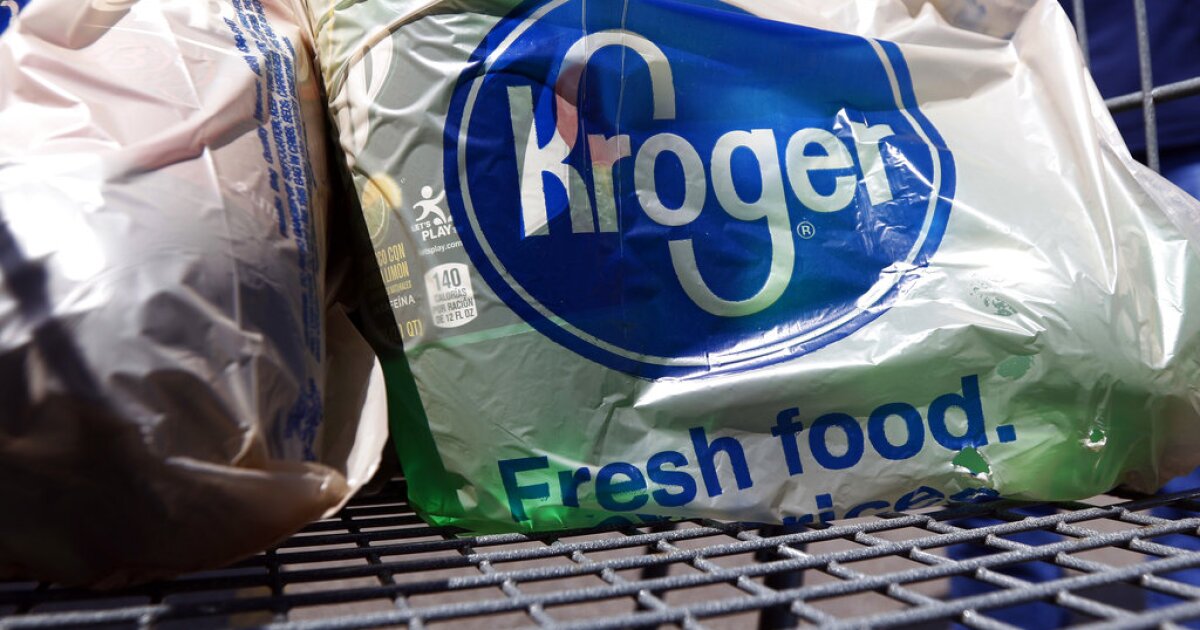
Kroger Co. and Albertsons Cos. Inc. have been sued by Arizona and seven other states and the District of Columbia, all of which are seeking to be reimbursed for costs they incurred while fighting a merger between the two grocers that later failed on antitrust grounds.
The coalition of plaintiffs, which also includes the Federal Trade Commission, is seeking $10.3 million from Cincinnati-based supermarket giant Kroger and Boise, Idaho-based grocery rival Albertsons, according to the lawsuit filed March 31 in U.S. District Court in Portland, Ore.
Kroger is the parent company of Fry’s Food Stores in the Valley, and Albertsons owns the Safeway brand in Arizona.
Read more of this story from the Business Journal.

Amid the ongoing spring heat, Arizona is in store for even hotter summer months. FOX 10’s Irene Snyder learns how Arizonans can stay safe and cool, while avoiding fire risks.

The University of Arizona men’s basketball team closes out their historic season after losing to the University of Michigan in the Final Four of the NCAA Tournament. The Wildcats had a tremendous season, breaking program records and earning several different recognitions and awards.
Over the course of the season, the Wildcats dominated with a 36-3 run, breaking the program record for most wins in program history. Previously, this record was 35 wins during the 1987-98 season.
Many of Arizona’s players were recognized for their outstanding work during the season. Notably, senior Jaden Bradley was named Big 12 Player of the Year. Freshman Koa Peat and Bradley were selected to the West All-Region team. Peat also earned the Most Outstanding Player across the western regionals. Another notable recognition was Bradley and freshman Brayden Burries earning All-American honors.
Head coach Tommy Lloyd also received lots of well deserved praise for the way he led this team. He was named Big 12 Coach of the Year and Naismith Coach of the Year. After much discourse during the coaching carousel and the possible coaching job at the University of North Carolina, Lloyd recently agreed to a five-year contract extension with Arizona.
Regular Season Dominance
Right off the bat, the Wildcats showed promise in their team. The Red-Blue showcase was a great introduction to the team and demonstration of their talent for this upcoming season. As many predicted, they dominated in the preseason matchups against Saint Mary’s College and Embry-Riddle Aeronautical University, blowing both teams out of the water.
Arizona continued to exert this dominance in their non-conference start to the season in November against tougher opponents. Their first competition was against the reigning NCAA Champions, No. 3 University of Florida, in Las Vegas. The Wildcats took the win 93-87, which was just the start of what was to come. Koa Peat made his college debut with a bang and proved he was a force to reckon with. Peat recorded 30 points on his debut, which also turned out to be his career high. When Arizona took the win against Florida, this was eye opening for a lot of people about the promise and talent that this team had to offer.
They had a close call against UCLA about two weeks later, taking the victory by a mere 4 points, 69-65. Arizona jumped significantly in the rankings since playing Utah Tech, where they were ranked No. 13, to taking the No. 5 spot. They only continued to climb in the AP rankings, inching up one position at a time. They were ranked No. 4 when they took the victory against No. 3 University of Connecticut, who won the national championship back in 2024. This win was just five days after they beat UCLA.
The Wildcats jumped right past the No. 3 spot after the UConn victory to the No. 2 spot as they took on the University of Denver, Norfolk State University and No. 20 Auburn University at home. After these three games, the Wildcats hit double digits and were holding a 10-0 record.
Christmas came early for the Wildcats as they grabbed the No. 1 spot in the AP polls in early December before playing No. 12 University of Alabama. Arizona held the No. 1 spot for nine consecutive weeks, which broke the program record that was previously held at eight weeks. They closed out their 2025 by adding four more victories to their roster, along with that No. 1 position.
After a notable regular season run, the Wildcats established themselves as a force to be reckoned with. They became the first team in AP Poll history to beat five ranked teams in their first nine games.
Undefeated Conference Run
The Wildcats began their new year and conference season on the road as they took their first Big 12 victory, 97-78, against the University of Utah. The following Wednesday, the Wildcats returned home for their first conference game in the McKale Center to face another team of Wildcats, Kansas State University. They blew them out of the water, taking a 101-76 victory. Throughout the course of the season, Arizona had 17 wins where they took the victory by 20+ points.
They continued asserting their dominance on both their home court and on the road. The first rivalry game of the season against ASU was a close one, but Arizona came out unscathed taking an 89-82 win. The Wildcats picked up three more wins against the University of Central Florida, the University of Cincinnati and West Virginia University before heading back to Utah to take on No. 13 BYU.
This was a close victory with the Wildcats beating the Cougars 86-83. The Arizona freshmen met their match with BYU freshman AJ Dybantsa, who was a contender for the No. 1 overall pick in the NBA draft, but still is uncertain if he will enter the portal this season. Dybantsa recorded 24 points for the Cougars while Burries lead the Wildcats with 29. The Wildcats pulled through with a late rally to take the victory and remain undefeated in their season.
The Wildcats closed out January with another win against the school up north but this time in enemy territory. Following their game against ASU, Arizona took a victory against Oklahoma State University at home. This marked the Wildcats’ 23rd win, which was an Arizona program record, as well as achieving the best start in Big 12 history. Arizona and the University of Miami Ohio were the remaining undefeated teams at this point in the season.
Looking forward to their next game, they were taking on No. 9 University of Kansas on their home court. The Jayhawks handed Arizona their first loss of the season in a hard fight. Kansas was able to maintain their perfect home record on Big Monday, going 39-0 under head coach Bill Self. Going into this game, Arizona knew it would be a tough one as Kansas had home court advantage, but they also possess dominant freshman and veteran players. They were led by Flory Bidunga and Melvin Council Jr., who each collected 23 points.
After this loss on Monday, Arizona looked forward to their next home game against No. 16 Texas Tech University on Valentine’s Day. Not only was it a special day because it was Valentine’s Day, but it was also ESPN’s College Gameday, where 14,688 fans sold out the McKale Center to watch this nationally televised spotlight on the Wildcats.
This was the fifth time that Arizona has been the host, with the last time being in 2022. It was also the first time that a game was played in the new McKale Center at ALKEME Arena after the announcement of a 15-year naming rights partnership between Arizona Athletics and ALKEME Insurance. During this game, Arizona also honored former Wildcat guard Caleb Love who was welcomed into the Ring of Honor with a ceremony at halftime.
The Texas Tech game was a nailbiter, with the lead changing 11 times and having 11 ties. The game eventually went into overtime after Ivan Kharchenkov shot late free throws, but unfortunately the Red Raiders were too strong and took the win 78-75. JT Toppin collected 31 points and 13 rebounds while Christian Anderson recorded 19 points and six 3-pointers for Texas Tech. Arizona fought until the end and put up a good fight with both Burries and Tobe Awaka scoring in double figures.
Because of these two back-to-back losses, Arizona took a fall in the AP rankings from No. 1 for nine consecutive weeks to No. 4 as they prepared to take on No. 23 BYU for the second time this season.
Arizona managed to get back in the winning column to close out the rest of their season taking on some familiar faces like BYU and No. 14 Kansas for the second time this season, as well as new ones. They took victories against No. 2 University of Houston, Baylor University, No. 6 Iowa State University and University of Colorado, Boulder to round out the season. They managed to get redemption against Kansas and avenge their first loss of the season with a 20+ point victory margin 84-61 at home.
They secured the Big 12 regular-season title and earned the No. 1 seed heading into the Big 12 Tournament.
Big 12 Champions
After the Wildcats closed out their conference season against Boulder with another victory, they looked towards the Phillips 66 Big 12 Tournament in Kansas City. Arizona was the No. 1 seed and automatically advanced to the quarterfinals, where they took on No. 8 seed UCF. It was a clean sweep victory 81-59 to advance to the semifinals.
In the semifinals, they faced No. 5 seed Iowa State for the second time this season. Bradley cemented his name as the Big 12 Player of the Year after shooting a 3-pointer buzzer-beater to win the game and send Arizona to the finals. The Wildcats won 82-80 in a crazy finale.
Arizona faced No. 2 seed Houston in the finals of the Big 12 Tournament before stamping their ticket to the NCAA Tournament after a close win 79-74. This was the first time that Arizona has won the Big 12 Championship title since joining the conference back in 2024.
March Madness
Because of their pure dominance throughout the season and the Big 12 Tournament, Arizona was the No. 1 seed in the western region for the NCAA Tournament. All of Tucson buzzed with excitement over the start of the tournament, and most people made their brackets with Arizona taking the victory at the end of it all.
They headed down to San Diego for the first round of the tournament, where they played against No. 16 seed Long Island University. They took their first victory of the tournament with over a 30-point margin.
Later that weekend, Arizona advanced to play No. 9 seed Utah State University to finish out their weekend in San Diego. This was another victory to add to Arizona’s roster with the Wildcats’ winning 78-66.
Arizona returned home to Tucson, where they were greeted by loving fans showing their support upon their arrival to McKale Center at ALKEME Arena. They had a quick turnaround, though, as they were headed up to San Jose for the second round of the tournament. That Thursday, they took on No. 4 seed University of Arkansas in the Sweet 16.
In this matchup, Arizona showed strong offense with both Burries and Peat scoring 21 points, Kharchenkov scoring 15 and Bradley, Awaka and Motiejus Krivas tallying 14 points each. The Wildcats advanced to the Elite Eight after a 109-88 victory over Arkansas. This was their first appearance in the Elite Eight since 2015.
The Elite Eight matchup was against No. 2 seed Purdue University. Arizona got off to a slow start, letting Purdue take the lead for the majority of the first half and going into halftime. The Wildcats made a strong comeback in the second half to come out with the 79-64 victory taking them to the Final Four for the first time since 2001.
Arizona was heading to Indianapolis for the Final Four where they were set to play the No. 1 midwestern seed University of Michigan. Arizona fans migrated to the midwest to support their Wildcats as they ended the 25 year drought since they had played in the Final Four. Unfortunately, this game did not go as the Wildcats had hoped. They were unable to find their rhythm against Michigan’s tough defensive strategy with their strong offense and high shooting percentage.
Arizona fell to Michigan 91-73 in the Final Four round of the NCAA Tournament. Though they did not win it all after a very tough game, this does not diminish everything this team has done this season and everything they have done for the Arizona basketball program. This team will stand as one of the greats and did the Arizona and Tucson community proud on the national stage.
Follow the Daily Wildcat on Instagram and Twitter/X

Hogs Shut Out Trojans in Midweek Win

California Assembly Health Committee passes ‘Next of Kin Notification’ bill

Denver Silent Film Festival highlights upcoming feature film

Taking a closer look at how fire hydrants maintained across Connecticut

Delaware Lottery Mega Millions, Play 3 Day winning numbers for April 7, 2026

Florida High School Football Rankings: Top 25 teams – Oct. 21

How old is Bo Nix? What to know about Oregon quarterback ahead of 2024 NFL Draft

Cleary's 21 help Le Moyne down Central Connecticut State 69-64 in OT

99th annual Pony Swim held in Virginia

Indiana Members Credit Union announced as new anchor tenant at Bottleworks District

Democrat swing candidate called Biden’s border handling ‘a huge misstep’ after backing his approach as mayor

‘Policy of abuse’: Women march in Cuba against US energy blockade

Acting AG says ‘Nobody has any idea why’ Pam Bondi was fired except for Trump | CNN Politics

Ilhan Omar calls Trump an ‘unhinged lunatic,’ urges booting him out of office
Between Budapest and Brussels: Péter Magyar’s political tightrope
-

 Atlanta, GA3 days ago
1 teenage girl killed, another injured in shooting at Piedmont Park, police say
-

 South-Carolina1 week ago
South Carolina vs TCU predictions for Elite Eight game in March Madness
-

 Movie Reviews6 days ago
Vaazha 2 first half review: Hashir anchors a lively, chaos-filled teen tale
-

 Vermont1 week ago
Skier dies after fall at Sugarbush Resort
-

 Politics1 week ago
Trump’s Ballroom Design Has Barely Been Scrutinized
-

 Politics1 week ago
JD Vance says he was ‘obsessed’ with UFOs, believes aliens are actually ‘demons’
-

 Atlanta, GA1 week ago
Fetishist ‘No Kings’ protester in mask drags ‘Trump’ and ‘JD Vance’ behind her wheelchair
-
 Entertainment6 days ago
Inside Ye’s first comeback show at SoFi Stadium