A grand jury in Arizona has returned an indictment for several close associates of former President Donald Trump as well as lower-level individuals who served as false electors in Arizona during the 2020 presidential election. The Office of Attorney General Kris Mayes has charged all of them with a conspiracy under Arizona state law to overturn the popular vote in the state.
The list of indicted co-defendants includes seven national figures: Mark Meadows, Rudy Giuliani, John Eastman, Boris Epshteyn, Mike Roman, Jenna Ellis, and Christina Bobb.
The 11 other co-defendants are all the false electors in the 2020 election. That list notably includes Kelli Ward, who served as the chair of the Arizona Republican Party during the 2020 presidential election.
Notably, like Georgia, criminal trials in Arizona can be publicly broadcast.
Advertisement
Some highlights follow.
The Conspicuous Absence of Donald Trump
The Arizona indictment raises a question. How is it possible that Trump’s twoalter egos have been indicted but the former president—the ego in that equation—has not?
The two alter egos are Trump White House chief of staff Mark Meadows and Trump’s personal lawyer Rudy Giuliani. Trump’s absence from the indicted co-defendants list is all the more puzzling since Trump is identifiable as “Unindicted Coconspirator 1” in the attorney general’s court filings. Coincidentally, on Wednesday, Michigan Attorney General Dana Nessel’s office testified in that state’s court that Trump, Meadows, and Giuliani are “unindicted co-conspirators” in the Michigan state prosecution of false electors.
A great deal of evidence shows that Meadows and Giuliani helped lead the multipronged efforts to overturn the election, acting on behalf of Trump.
Advertisement
Giuliani
The federal indictment of Trump, for example, refers to Giuliani as “Co-Conspirator 1,” including for his allegedly helping orchestrate—on behalf of Trump—the false electors scheme across the seven swing states, including Arizona. The federal indictment also states that Trump worked directly with Giuliani in pressuring Arizona state officials to overturn the popular vote, including calling the Republican Speaker of the Arizona House of Representatives Rusty Bowers, in which they “made knowingly false claims of election fraud aimed at interfering with the ascertainment of and voting by Arizona’s electors.”
Meadows
The Jan. 6 House Select Committee final report has the greatest details of Meadows’ deep involvement in the false electors scheme on behalf of Trump. For Meadows, indicted in Georgia, his own court filings in that state claim—or admit—that he was acting in service of the then president.
One can only speculate as to why Trump might be excluded from but the other two men included in the Arizona indictment. One reason might have to do with direct evidence for Meadows and Giuliani that is lacking for Trump—especially as the former president acted in part through them as intermediaries and conduits. Another reason may be the exercise of “prosecutorial discretion.” Yet another could be that prosecutors submitted the question to the jury but an insufficient number of jurors approved of charging the former president. Or it could be some other reason entirely.
Advertisement
Tuesday’s indictment may not be the final word on whether Trump will be indicted in Arizona. Another shoe may have yet to drop. But the current situation cries out for an explanation of how Trump’s two key agents—Giuliani and Meadows—are included in the list of indicted individuals but Trump himself is not.
The Conspicuous Absence of Kenneth Chesebro
Kenneth Chesebro has properly been called “a chief architect” of the false electors scheme. He is identifiable as Co-Conspirator 5 in the federal indictment of Trump, and he has pleaded guilty in the prosecution in Fulton County, Georgia.
Chesebro has so far escaped prosecution in other states where false electors are under indictment. His protection from prosecution appears to be on the basis that he “cooperated” with those investigations. However, recent investigative reporting by CNN and others has revealed that Chesebro apparently made false statements to state prosecutors in Michigan and Nevada while feigning cooperation with their respective criminal investigations of false electors. (See also this analysis of flaws with his proffer agreement in Georgia.)
That all is now fairly well known to close observers of these cases. Why, then, the Arizona indictment excludes Chesebro is a mystery. Prosecutors in Michigan and Nevada have decided not to seek indictments of anyone at the national level and instead focused only on false electors in their states. But in Arizona that’s different, as the prosecutors have now charged several out-of-state individuals who were involved in the nationally coordinated effort to overturn the election results. But not Chesebro. Earlier reports were that Chesebro was “cooperating” with the Arizona prosecutors, and that may explain it.
Advertisement
The Indictment of Boris Epshteyn and Christina Bobb
Two new figures have been added to the list of Trump’s associates now under indictment for alleged efforts to overturn the presidential election: Boris Epshteyn and Christina Bobb.
In the federal indictment, it appears that Epshteyn may be unindicted “Co-Conspirator 6” (see this analysis by the New York Times’ Maggie Haberman, Jonathan Swan, and Luke Broadwater). In the Fulton County indictment, previous analysis at Just Security identified Epshteyn as most likely one of the unindicted co-conspirators (“Individual 3”).
A Potential Trump Presidency and Pressure on Defendants to Flip
Advertisement
Criminal defendants in the Arizona 2020 election interference prosecution, as well as elsewhere, like Fulton County, Georgia, may have reasons to flip and cooperate with prosecutors due to the prospect of a Trump presidency.
A president cannot issue pardons for state crimes, and his or her control over the Department of Justice does not extend to state law enforcement authorities. The state-level prosecutions of false electors and other Trump associates—in Arizona and elsewhere—will accordingly proceed whether or not Trump wins election. But he himself has a high likelihood of being deemed immune (by the Supreme Court if it comes to that) from state and local criminal prosecutions while in office. In other words, co-defendants and co-conspirators may be left holding the bag. That dawning reality may create incentives for some of these individuals to cooperate with law enforcement authorities sooner than later.
The Week 7 matchup between K-State and Arizona State will feature two of the youngest coaches in all of college football: Kenny Dillingham and Collin Klein. They are tied for the youngest in the Power 4 conferences, and only Kirby Moore of Washington State (35) and Zach Kittley (34) are younger Division I coaches.
While Dillingham didn’t play football at Arizona State, like Klein, he is at his alma mater. An injury in his high senior year forced him to stop playing and get into coaching. He became the offensive coordinator at Chaparral High School at 21 years old, and was hired just two years later by Mike Norvell as an offensive analyst at Arizona State. He went back to Tempe in 2023, after spending the previous season as the offensive coordinator at Oregon.
Both of these guys are looking to lead their alma maters to a Big 12 Championship, and this is one of those games that could be pivotal in that pursuit.
Advertisement
K-State Early Opponent Preview Series: Nicholls| Washington State| Tulane| Cincinnati| Houston| Kansas
Offense
Quarterback Sam Leavitt wasn’t able to live up to the hype after leading the Sun Devils to the Big 12 Championship in 2024, and he announced he was transferring to LSU during the off-season. Dillingham and his staff were quick to fill the vacany, as they picked up former Kentucky quarterback Cutter Boley in the transfer portal.
Boley was the highest-rated quarterback to ever commit to Kentucky, as he was a consensus 4-star recruit. He had an up-and-down freshman year in 2025, as he threw for 2,160 yards, 15 touchdowns and 12 interceptions. In a loss to Tennessee, he showed off the talent by throwing for 330 yards and five touchdowns.
Advertisement
The offense lost two great playmakers in Kaleek Brown and Jordan Tyson. Brown was one of the best running backs in the Big 12, as he rushed for 1,141 yards and 4 touchdowns. Tyson had to deal with injuries, but he still had 61 catches for 788 yards and eight touchdowns and ended up going No. 9 to the New Orleans Saints in the 2026 NFL Draft.
Advertisement
One guy who could make a strong impact in the Arizona State offense is Boston College transfer Reed Harris. He had 39 catches for 673 yards and five touchdowns. He is a matchup nightmare, as he towers over defensive backs with his 6-foot-5 frame. He plays a style similar to Tyson, and he stands three inches taller and 17 pounds heavier.
Defense
There are a lot of changes on the defense at Arizona State, but defensive lineman C.J. Fites is a player who is capable of being an anchor on a defense. He took a major leap last season, finishing the year with 27 tackles and 6.5 sacks. He was named a preseason All-Big 12 defensive tackle and is a guy who figures to hear his name in the 2027 NFL Draft. Fite’s presence will force offenses to throw double-teams at him, and should open up opportunities for others to get after the quarterback.
Advertisement
The two leading tacklers last year were linebackers Jordan Crook and Keyshaun Elliott, who had 101 and 98 tackles, respectively. With both of these players gone, Martell Hughes is a guy who the Sun Devils will need to step up.
Advertisement
While there were losses in the off-season, the Sun Devils’ secondary has a chance to be one of the better units in the country. They bring back two very talented safeties in Adrian Wilson and Jessiah McGrew. The cornerback duo of Rodney Bimage Jr. and Montana Warren was good, but the arrival of LSU transfer Ashton Stamps.
He made major news last year after he hit the transfer portal after playing in only one game against Louisiana Tech. While it was a weird year, he is the type of talent that could give the Sun Devils the best secondary in the Big 12.
Advertisement
Schedule
In today’s college football, many teams are becoming hesitant to take big challenges during the non-conference season. However, that isn’t the case with the Sun Devils, as they go to College Station to take on Texas A&M in Week 2. After that game, the schedule lightens up. Including the matchup against K-State, four of Arizona State’s next five games will be at home.
Advertisement
The challenging part of the Sun Devils’ conference schedule is that some of their toughest matchups are on the road. They have road trips at Texas Tech, BYU, and Arizona, who are looked at as contenders in the Big 12.
Outlook
Dillingham has been outstanding early in his tenure in Tempe. After going 3-9 in his first year in 2023, he helped lead the Sun Devils to an 11-2 record and an appearance in the College Football Playoff during the 2024 season. Last year, they finished the year 8-5, despite losing quarterback Sam Leavitt early in the year.
Advertisement
The Big 12 is wide-open, and the Sun Devils once again to have the pieces to compete for a spot in the conference championship.
Game Info
Date: Saturday, October, 24 Time: TBD TV: TBD Location: Mountain America Stadium Series history: Arizona State leads the all-time series, 6-1. The Sun Devils have dominated this series, and won the most recent game 24-14 in 2024. The only time the Wildcats have knocked off Arizona State was in the 2002 Holiday Bowl.
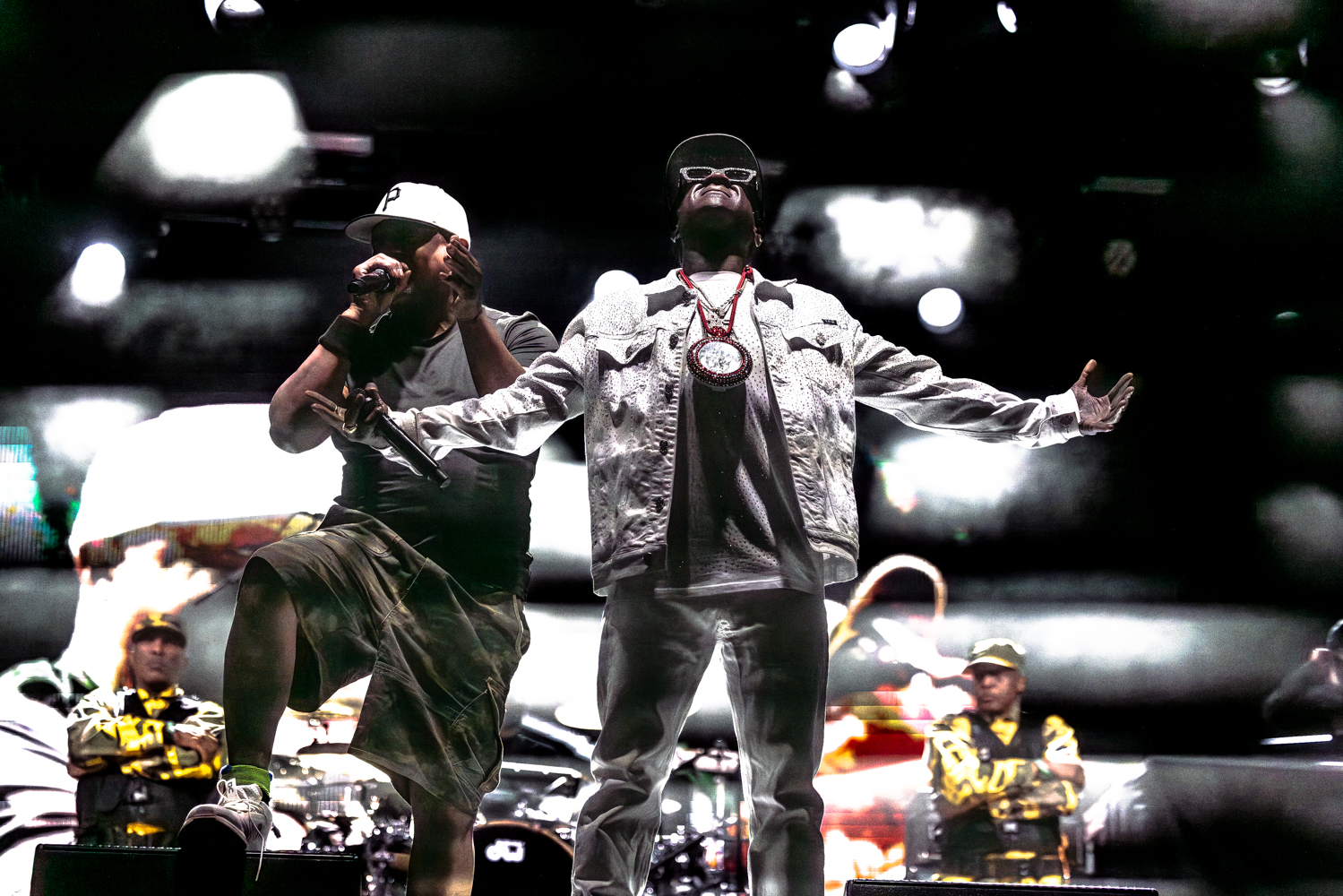
Two Arizona Public Enemy concerts in one year? As Chuck D. might say, bring the noise.
Advertisement
After a searing set in February at Tempe’s Innings Festival, the legendary hip-hop group will return to metro Phoenix on Saturday, Oct. 24, to perform as part of the Arizona State Fair’s concert series.
The concert starts at 7 p.m. inside the Arizona Veterans Memorial Coliseum with no opening act.
Public Enemy joins a growing lineup of artists set to perform at the 2026 Arizona State Fair, which runs weekends from Oct. 1 to Nov. 1.
Sign up for our free music newsletter. We’ve got the latest on the artists you love.
THANK YOU!
You’re all set.
Advertisement
Previously announced Coliseum Concert Series performers include alt-rockers Gin Blossoms on Friday, Oct. 2, R&B/pop star Becky G on Friday, Oct. 9 and punk favorites The Offspring on Friday Oct. 16.
Few hip-hop acts are as iconic as Public Enemy. Fronted by Chuck D. and Flavor Flav, the group has performed since the early ‘80s and has spent decades mixing politically charged lyrics with fierce bests on classic tracks like “Fight the Power,” “Bring the Noise” and “Welcome to the Terrordome.”
Public Enemy’s upcoming concert marks the first time the iconic hip-hop act has performed at the Arizona State Fair and their latest in a series of Valley gigs. It also continues a decades-long history of Valley performances.
Over the years, Public Enemy has played venues large and small across metro Phoenix, from arenas and stadium shows to concert halls Tempe’s Marquee Theatre. The group also famously staged an impromptu performance at the long-running local hip-hop event The Blunt Club back in 2006.
Advertisement
Public Enemy performs at Innings Festival on Feb. 22, 2026.
When do Arizona State Fair concert tickets go on sale?
Tickets for Gin Blossoms and Russell Dickerson are already available through azstatefair.com/concerts.
Tickets for Public Enemy at the fair go on sale at 10 a.m. on Friday through azstatefair.com/concerts. A presale for subscribers to the Fair Fandom newsletter begins at 10 a.m. on Thursday.
Reserved-seat upgrades are available for all four concerts. Each concert ticket also includes admission to the Arizona State Fair.
VIDEO: Hundreds of loved ones and first responders gathered Saturday to celebrate the life of Nicholas Hutcherson, an Arizona wildland firefighter killed late last month while battling a wildfire in Colorado.
Hutcherson was part of a Helitack crew trained to respond to remote areas and contain wildfires before they spread.
He was one of three wildland firefighters killed June 27.
His father, Ron Hutcherson, said his son sent him a text message the morning he died, saying he was on his way to a fire and would try to call that evening.
Advertisement
“The text included a picture from inside his Helitack helicopter,” Ron Hutcherson said. “One of his crew members had a Snoopy on their helmet — he knew how much me and my wife loved Snoopy.”
That evening, a call came — but not from Nicholas.
Saturday, Ron Hutcherson read a letter addressed to his son, recounting their shared memories — including the moment a young Nicholas fell in love with the fire department.