:quality(70)/cloudfront-us-east-1.images.arcpublishing.com/adn/3K4FWTD24BGMJJ2JXVRJRRCIHM.png?ssl=1 "State of Alaska issues regulations for carbon offsets program")
JUNEAU — The Dunleavy administration has finalized regulations to start selling carbon offset credits on state land.
The Legislature approved Senate Bill 48 in May last year to allow the state to establish a carbon offset program. New state regulations are set to go into effect July 19. In Haines, a yearlong public process has started to amend the state forest management plan to allow for carbon offsets.
Trevor Fulton, the state’s carbon offset program manager, said it would likely take another 18 months to two years for the state to start selling carbon credits.
“We’re still relatively early in that process,” he said at a public meeting in Haines in May.
That process has already been more than a year in the making.
During his annual address to the Legislature last January, Gov. Mike Dunleavy unveiled plans to monetize carbon in Alaska. SB 48 created a framework to establish carbon offsets on state land. The other Dunleavy bill, approved by legislators in May, allows the state to establish a regulatory framework for storage of carbon dioxide deep underground.
Dunleavy said last year that a carbon management system could generate billions of dollars per year in new state revenue. But at first, revenue expectations from carbon credits are much more modest.
The state is looking at three areas to start selling carbon offsets: Haines State Forest, Tanana Valley State Forest and state forested land in the Matanuska-Susitna region. All three pilot projects are expected to be around 75,000 acres to 100,000 acres each. Anew, an outside consultant, estimated in 2022 that the state could bring in $8 million per year from the three areas, in the first decade.
“We hope to see that grow as projects develop across the landscape, and as we tap further into Alaska’s potential for carbon offsetting,” Fulton said.
By law, 80% of revenue generated from carbon credits would go to the state’s general fund, which could be appropriated for any purpose. The other 20% would be directed to the state’s renewable energy grant fund for clean energy projects.
Carbon offsets in Alaska could see the state receive compensation for protecting forests, kelp farms or even selling millions of acres of beetle-killed wood for biochar, a carbon-rich material that has applications in agriculture.
[Environmentalists urge US to plan ‘phasedown’ of trans-Alaska pipeline amid climate concerns]
In an interview, Fulton said the state is looking to participate in carbon offsets in two ways: By developing its own offset program, and then by establishing a leasing program for carbon management projects to third parties. Fulton said state law likely prevents leasing management of Alaska’s timber resources. That means third-party leasing would likely be limited to projects such as biochar and kelp farms, he said.
Alaska is set to participate in the $2 billion global voluntary carbon market, which allows corporations such as airlines to purchase carbon credits to offset their emissions. The much larger $800 billion compliance market that California participates in with its cap-and-trade program mandates that corporations reduce their emissions to certain levels, including with carbon offsets.
Each carbon offset equates to one metric ton of carbon avoided or removed from the atmosphere. Fulton said that would be the equivalent of the amount of carbon produced by an average round-trip drive from Anchorage to Seattle.
Climate vs. logging
The revenue implications of carbon credits are uncertain for Alaska — and so are the environmental benefits. A growing number of studies have questioned how emission reductions from offsets are measured and whether they are effective at all.
In response to concerns about the unregulated voluntary carbon market, the Biden administration in May released a set of principles to define high-integrity carbon offsets that have a measurable impact in reducing emissions.
Legislative debates about monetizing carbon storage in Alaska have focused more on the potential for revenue and industry investment than environmental benefits. But proving those environmental benefits could be key.
[Previously: Alaska’s carbon storage bill, once a revenue measure, is now seen as boon for oil and coal]
Dominick DellaSala, chief scientist with Wild Heritage, a California-based forest conservation group, said the state would need to show how its offset program would reduce emissions and have that verified. Using the example of logging, DellaSala said the state could pledge not to log old-growth trees and instead use them as a carbon sink.
“That difference between what they would have released from logging versus what they are protecting is the carbon offset,” he said.
The Alaska Department of Natural Resources said the state would show the environmental benefits from its offsets program with improved “forest management projects” to increase “carbon stocks year-over-year.” A spokesperson said those projects could include planting trees and thinning tree stands to reduce crowding — among other practices.
Sealaska Corp., a Southeast Alaska Native corporation, agreed several years ago to participate in California’s cap-and-trade program and protect thousands of acres of old-growth forest for 100 years. The deal was worth a reported $100 million between 2015 and 2020.
DellaSala said that “legitimate” carbon offsets in Southeast Alaska would come from protecting old growth forests for decades. He said the state’s regulations and other forest management practices appear “vague,” and run the risk of “greenwashing.”
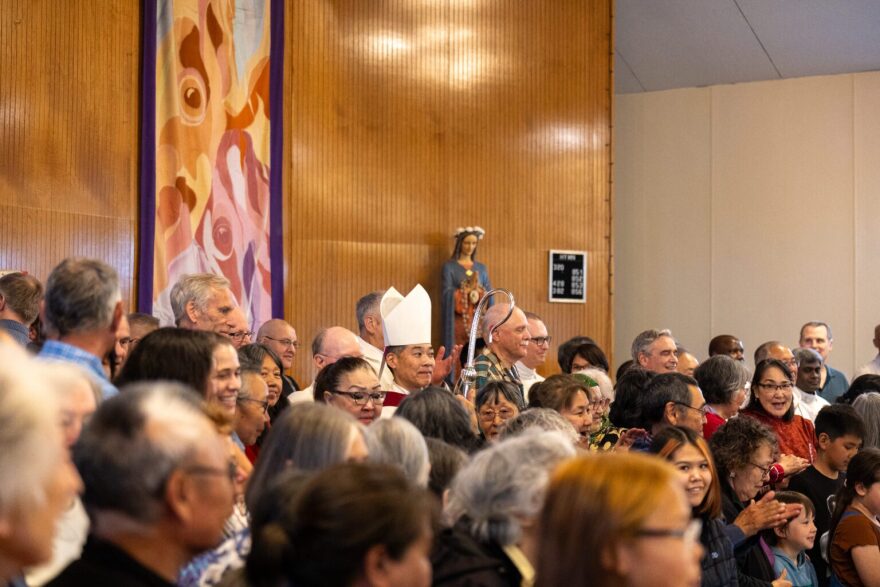
In May, state officials held a public meeting to start discussions about allowing carbon offsets in Haines State Forest. The 260,000-acre forest managed by the state has some of “highest per-acre carbon levels” studied by Anew.
Jessica Plachta, executive director of Lynn Canal Conservation, welcomed the state’s interest in carbon offsets. She said that much of the timber in the area is of low value due to timber defects. Carbon offsets would be a significant improvement in forest management practices from large, old-growth timber sales, she said.
“These forests support superlative salmon-spawning and rearing habitats, host the world’s largest gathering of bald eagles, and underpin local subsistence and the commercial fishing and tourism industries, which are the bedrock of the local economy,” she said by email.
SB 48 says that state forests used for a carbon offset program “must remain open to the public” for hunting, fishing and other recreation opportunities. The Dunleavy administration has also said that carbon offsets can coexist with resource extraction industries such as logging.
But there could be a balancing act. The trees with the greatest potential to capture carbon emissions are typically the most attractive to the timber industry.
State forester Greg Palmieri said in May that the five-year schedule of timber sales in Haines would be paused as the forest management plan is discussed. Once that process is completed, state officials should have a better idea how to apply carbon offsets in Haines.
“Every acre of the forest that’s available for timber sales is going to be available for carbon offset programs, Palmieri said, adding that “the intention is to create the highest value for the state in the resources that they own on these lands that we manage.”
State officials say they’ve heard some concerns from the timber industry, but they stressed several factors to help allay fears. State forests being considered for carbon offsets are below their allowable cut, which refers to the amount of wood that can be sustainably harvested; there are no specific projects being actively considered; and public engagement would be robust as the offsets programs are developed, they said.
“Enrollment in an improved forest management project doesn’t take timber harvest off the table, it just takes the most aggressive timber harvest scenario off the table,” a spokesperson for the Department of Natural Resources said.
Bryce Dahlstrom, president of the Alaska Forest Association, said the timber industry’s trade group would have no comment about carbon offsetting until state projects are ready to be presented.
For Southeast Conference, a regional economic development organization, there is interest in the potential benefits of carbon offsets. Robert Venables, Southeast Conference’s executive director, said he is looking to develop a mariculture program to see how much carbon can be sequestered in kelp and seaweed.
One challenge for the state, and other actors, is to marry up the science with the potential economic benefits of carbon offsets, he said.
“I think there is a lot of potential, both on the mariculture side as well as in the forests,” he said. “That will take a new approach on both fronts.”