Alaska
Best solution to Alaska’s PFD ‘gorilla’ is to end the program with $10K payout, Walker argues


Former Gov. Bill Walker, running to again be Alaska’s top elected official, would like to end the Permanent Fund dividend program with a one-time $10,000 payment to each eligible Alaskan.
“We are in this to solve significant issues,” Walker said in a phone interview Friday. “Business as usual just isn’t going to work.”
Alaska has faced a structural deficit — that is, more expenses than revenue — for years. A sharp decline in oil prices in the mid-2010s, during Walker’s first term in office, led him to take the unprecedented step of vetoing part of the Permanent Fund dividend in 2016. Ever since, lawmakers have spent much of their energy each year wrangling over the amount of the dividend.
Though Gov. Mike Dunleavy proposed a dividend in line with a 1980s statute in each of his annual budget proposals, lawmakers consistently approved far smaller payouts — $1,000 last year, and $1,200 this year — with legislators on both sides of the aisle saying the dividend formula is no longer realistic.
“The dividend discussion has been the 600-pound gorilla in the room,” said Randy Hoffbeck, Walker’s former revenue commissioner and running mate.
With the existing formula calling for “financially impossible” dividends, there are two choices, Hoffbeck said.
“We can cage the gorilla with a new formula that better reflects our current economic situation and our fiscal situation, or we can actually remove the gorilla from the room,” he said.
Walker envisions asking Alaskans to endorse the idea with a question on the application for the 2027 Permanent Fund dividend, he said.
“If it’s overwhelmingly, ‘Yes, we like it,’ then we would proceed to the Legislature with legislation,” Walker said. “If it’s not, then we will continue with, probably, looking at a formulaic modification in some way that reflects our current fiscal situation.”
Alaskans would be free to spread the payment over multiple years to avoid a large tax bill, Walker said. And it would be a one-time offer in an effort to avoid people moving to Alaska on a short-term basis to cash in.
“If we paid it out in 2027, people would already have to be here to be eligible,” Hoffbeck said.
Ending the dividend with a one-time $10,000 payment would certainly “stress” the fund, he said. With more than 618,000 applicants for the 2025 dividend, the plan would cost about $6.2 billion.
That’s roughly what would be left in the Permanent Fund’s earnings reserve account, which can be spent with a majority vote of the Legislature and the consent of the governor, after transfers for dividends, government services and inflation-proofing this year and next year, according to figures from the Alaska Permanent Fund Corp., which manages the state’s $89 billion nest egg.
“The $10,000 isn’t a random number,” Hoffbeck said. “It’s a calculated number on what is possible with the current earnings reserve balance.”
But it would go a long way toward erasing the structural deficit, Hoffbeck said. He estimated that beginning in 2028, ending the deficit would free up about $1 billion in revenue.
“Even though it has a depressing effect on the (annual 5% draw), it’s more than offset from the benefits of not having to pay the dividend,” Hoffbeck said.
Walker’s proposal drew criticism from some of his competitors in the governor’s race. Democrat Tom Begich called the plan “fiscally irresponsible” and “fantastical,” comparing it to Dunleavy’s unfulfilled campaign promise to deliver full dividends. It’s the Legislature, not the governor, that sets the maximum amount of the dividend each year, Begich said.
“We may have underfunded education in this state, but Alaskans aren’t stupid,” Begich said.
Walker and Hoffbeck rejected the criticism, insisting the key difference is that their proposal would provide a one-time payment. They said they’d work with the Legislature to push the proposal through if elected.


The Environmental Protection Agency issued a temporary waiver Friday under the Clean Air Act for using diesel with higher sulfur levels above the Arctic Circle in Alaska. In a letter to Gov. Mike Dunleavy, EPA Administrator Lee Zeldin said the 20-day waiver was meant to address fuel supply disruptions caused by the war in the Middle East.
“It is in the public interest to take action to address the extreme and unusual supply circumstances that prevent distribution of an adequate supply,” Zeldin wrote in the letter.
The Clean Air Act requires the use of cleaner burning ultra-low-sulfur fuel in highway and non-road vehicles and equipment. The fuel produces fewer emissions and does not damage modern engines.
Zeldin said much of the equipment used above the Arctic Circle still has engines designed for high-sulfur diesel. He said that some North Slope topping refineries, which separate diesel from crude oil and produce heating oil, can produce high-sulfur diesel to power that machinery, which could reduce the demand for diesel hauled into the region.
“Alaskans will no longer be forced to unnecessarily truck their fuel hundreds of miles across the state, and Alaskan families will feel lower prices at the pump,” Zeldin said in a prepared statement.
Fuel prices began to rise again earlier this month after the collapse of the ceasefire with Iran, with NPR reporting that prices were 86 cents higher per gallon than they were before the war. A new U.S. blockade of the Strait of Hormuz means prices could climb even higher.
Under Secretary of Energy Kyle Haustveit said during a roundtable in Anchorage that the waiver will allow for the production of tens of thousands more barrels of diesel.
“These topping units that have been restricted from an emission standpoint can now run at a higher output capacity,” Haustveit said. “It’s going to bring more supply to market.”
Sen. Dan Sullivan applauded the waiver and said he had advocated for it to lower fuel prices. He said in a press release that the action will allow North Slope producers to put idle refining capacity to work.
“Global fuel supply disruptions have been a significant challenge for Alaska communities, resulting in rising fuel prices,” Sen. Sullivan said in a prepared statement.
He said he measure “frees up Alaska-produced fuel to help put downward pressure on prices for hard-working Alaskans.”
The waiver is limited to highway and non-road vehicles and non-road equipment certified to operate on high-sulfur diesel fuel. It applies only above the Arctic Circle.
Copyright 2026 KNBA
Alaska
New Partnerships With State of Alaska & University of Alaska Fairbanks Expand on Critical Minerals & Energy Innovation – CleanTechnica

Support CleanTechnica’s work through a Substack subscription, on Patreon, or on Stripe. Help us produce all of the high-quality, original content we publish week after week despite the challenges of content-scraping AI, antisocial media, inflation, and other hurdles.
NLR Laboratory Director Jud Virden Signs Partnership Agreements at Alaska Sustainable Energy Conference in Anchorage
The National Laboratory of the Rockies (NLR) signed two new memorandums of understanding (MOUs) on May 19 that aim to increase research and innovation in critical minerals, energy, and buildings in Alaska and the Arctic. These partnerships build on longstanding collaborations and are designed to tap into Alaska’s resources in a way that benefits both the state and the nation.
“Alaska faces unique challenges,” NLR Director Jud Virden said. “NLR is proud to partner with the state and its flagship university to develop and accelerate innovative solutions to Alaskan challenges and address our nation’s pressing needs in critical minerals, energy, and buildings.”
At the Alaska Sustainable Energy Conference, joined by U.S. Department of Energy (DOE) Assistant Secretary Audrey Robertson, Alaska’s governor Mike Dunleavy, and University of Alaska Fairbanks (UAF) leadership, Virden signed agreements that will make it easier for NLR to work with these key partners to scale solutions for the real world.
NLR is the only DOE national laboratory with a physical presence in Alaska, located adjacent to the University of Alaska Fairbanks campus. NLR’s Alaska research focuses on energy and building technologies in extreme climates and remote locations, as well as support for military, government, and communities in decreasing energy costs and improving reliability. Recent projects include an analysis of the state’s power grid to address declining natural gas supply within Alaska, an evaluation of methods to stabilize permafrost on military sites, and support for designing a secure, resilient facility on the Alaska-Canada border.
Through the MOU with the university, NLR gains access to UAF expertise in microgrids, engineering, and critical minerals—such as the Alaska Critical Minerals Collaborative, a research unit at UAF connecting government, industry, and researchers to advance critical mineral development across Alaska. The laboratory may also host students and fellows from UAF’s College of Engineering and School of Mines, Arctic engineering, geosciences, and other relevant programs, offering a training ground for the critical mineral workforce of the future.
On the flip side, NLR can provide access to advanced analysis tools, such as the ability to create digital twins of mines and microgrids with its Advanced Research on Integrated Energy Systems (ARIES) platform, and a wide range of capabilities in its new Energy Materials and Processing at Scale (EMAPS) facility that offers partners an entirely new model for “market-first” research: the ability to grow laboratory-scale innovations into scalable and validated market-relevant prototypes under a single roof.
“This partnership leverages the unique strengths of each of our organizations to create something that is greater than the sum of two parts,” UAF Interim Chancellor Mike Sfraga said.
NLR’s agreement with the state is complementary in approach, paving the way for NLR and the state to coordinate resources, share research, and boost Alaska energy and critical mineral production.
“This agreement helps turn Alaska’s resources and know-how into practical solutions,” Gov. Dunleavy said. “By formally partnering with federal researchers who are already based in Alaska, we can lower energy costs, build infrastructure that works in Arctic conditions, strengthen domestic supply chains, and create good-paying jobs, especially in rural and remote communities. It puts Alaska at the center of solutions that matter to both our state and the nation.”
Learn more about NLR critical minerals research and collaborations.
By Molly Rettig, NLR
Sign up for CleanTechnica’s Weekly Substack for Zach and Scott’s in-depth analyses and high level summaries, sign up for our daily newsletter, and follow us on Google News!
Have a tip for CleanTechnica? Want to advertise? Want to suggest a guest for our CleanTech Talk podcast? Contact us here.
Sign up for our daily newsletter for 15 new cleantech stories a day. Or sign up for our weekly one on top stories of the week if daily is too frequent.


CleanTechnica uses affiliate links. See our policy here.
CleanTechnica’s Comment Policy

Southcentral Alaska’s largest natural gas utility said Tuesday it might not have the gas to make it through this winter. That’s after state regulators last Wednesday denied Enstar’s request that would’ve expanded natural gas storage in Kenai, as the region faces a looming natural gas shortage.
Enstar president John Sims said it’s “not looking good” for the utility’s more than 150,000 Southcentral customers heading into the cold, winter months.
“Just to be very blunt, we need additional production in order to make it through this winter,” Sims said. “We are kind of turning over every stone possible and trying to find more gas resources.”
In the order, the Regulatory Commission of Alaska wrote they were “unsure about the timing of the need for additional natural gas storage capacity, including insertion and withdrawal capacity.”
Enstar proposed developing and operating a depleted reservoir known as the Kenai Loop Pool that is currently leased and operated by AIX Energy, LLC., to store gas to use during the colder months.
The utility was seeking an “advanced determination” from RCA that it was prudent, which would allow the project to unlock financing for development, the order says. In its original filing, Enstar said that the project would help ensure there are enough supplies to meet the needs of its customers.
A search for other options
The commission denied the utility’s request in a 17-page order last Wednesday, saying the Department of Natural Resources hadn’t determined if the facility was capable of serving as a gas storage facility. Hilcorp has a competing application for the same storage facility, the order said.
The RCA didn’t respond to a request for comment Tuesday afternoon.
The facility would hold 25 billion cubic feet of gas, which Sims said is appropriately sized for the current supply needs and future natural gas imports.
“The other benefit of having this storage facility right now is we can go to Furie, AIX, to all the small producers and even Hilcorp and say, ‘Hey, whatever volume of gas you produce, I can buy it.’ And I can store that into this storage facility for later use,” he said.
Longer term, utilities are looking to import natural gas, which would impose an unavoidable price increase to thousands of households and businesses. Legislators are currently in negotiations over a multibillion-dollar property tax break for the developer of the Alaska LNG project, Glenfarne. But it’s unknown if, or when, that project will be built.
According to the order, Enstar’s Kenai storage project garnered support from DNR, multiple state legislators and other regional electric utilities. However, some Anchorage-based property management companies said it was “inappropriate” for ratepayers to bear the cost of the project. The project’s $240 million price tag would’ve increased bills for customers by $10 to $12 per month, according to the filing.
Sims said Enstar is filing a petition for the reconsideration of the ruling next week.
“Just in case the commission denies that request, yes, we are looking at other storage options,” he said. “Unfortunately, based on our analysis that we did before we filed with the commission, those options appear to be more expensive.”
Sims said he’s hoping production and storage ramps up, but if it doesn’t, he said the utility may need to ask customers this winter to conserve supplies by lowering their thermostats.
___
This story was originally published by Alaska Public Media and distributed through a partnership with The Associated Press.
-
 Politics4 minutes ago
Trump escalates election attacks, threatens California over voter data
-
 Science10 minutes ago
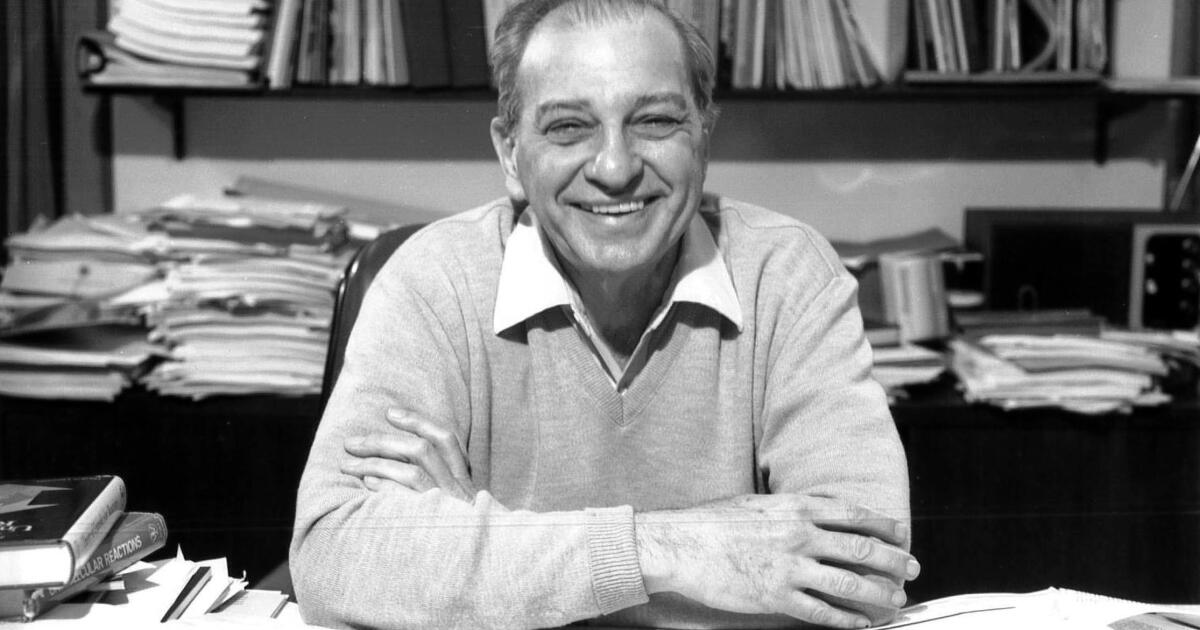
Rudolph Marcus, Caltech chemist who won Nobel Prize, dies at 102
-
 Sports16 minutes ago
Commentary: With Will Smith out indefinitely, Dodgers need to trade for a catcher
-

 World28 minutes ago
Mandela Day: What his legacy means in today’s South Africa
-
 News58 minutes ago
ICE shared Medicaid data it wasn’t supposed to have with Palantir
-

 Los Angeles, Ca3 hours ago
‘Moana’ is a triumph for Pacific Islander representation on the big screen
-

 Detroit, MI3 hours ago
Five shot during funeral at Detroit church
-

 San Francisco, CA3 hours ago
San Francisco Giants Announce Intriguing Roster Move Ahead of Mariners Series

