Alaska
Orcas teens return from 710-mile boat race to Alaska | Islands' Sounder


After almost eight days of sailing, Orcas Island teens Dagney Kruger and Else Ranker finished the Race to Alaska (R2AK) on June 20.
Joined by Bellingham teammates Bryce Lutz and Willow Gray, they traveled the 710 miles from Victoria B.C. to Ketchikan, Alaska on their Carrera 19, Loose Cannon. The team faced different challenges throughout their journey, but also met many great supporters and participants along the way.
The team, which chose the name ‘The Juvenile Delinquents’ in reference to the final weeks of school they would skip in order to participate in the race, left for Alaska at noon on June 12. Prior to this official start, teams completed a portion known as ‘the proving grounds’ on June 9, which involved a 40 mile stint from Port Townsend to Victoria B.C. It was during this initial run that The Juvenile Delinquents faced their first challenge. The team discovered leakage as standing water began to pool. Lutz caulked the boat following this discovery, but the leaks continued to be a slight challenge for the team.
Around the third day of the trip, they hit the most difficult part of the journey as they crossed Queen Charlotte’s Strait between Vancouver Island and the mainland of British Columbia, Canada. The team, two of whom had been awake since midnight due to a disruption in their sleep schedule after making a stop to catch the tide, faced high winds and large swells coming off the ocean, the first swells they had experienced thus far.
“Suddenly we’re beating upwind and we can see on the tracker that we’re like, three to four miles [behind them], and these were two teams that we’ve been catching the whole time,” said Kruger. “So we know they’re like right there, but also everyone’s seasick, and all day we see these giant swells and heavy wind, it’s not fun.”
Additionally, Kruger explained that while in Queen Charlotte Strait, you can see Cape Caution, the next daunting landmark for competitors. It is the first cape on the course that is unprotected and out on the open ocean, where the racers experience the largest swells of the trip.
Once they forged through the rough open water, the team experienced smoother sailing, ducking behind islands for more protection and falling into more of a rhythm with their sleep schedules and acclimating to being on the water. They took turns with two awake and two asleep, unless more extreme conditions required three on deck. Kruger said that all of the members needed to know how to do everything since there were only four people on the team and everyone needed to sleep.
Despite a windier start to their adventure during the proving grounds portion, the wind was lighter than Kruger had hoped for. Because their pedal drive was not in top condition, the team was at a disadvantage, but they still finished 4th among other monohull vessels and 8th overall.
One of Kruger’s original goals was to beat the other youth team from Seattle, and the Juvenile Delinquents ended up finishing only one hour after the other youth team.
“It turned into a lot more of a drag race than I ever thought it was going to be,” said Kruger. “You look at the tracker, it’s like we’re basically on top of each other for the last three days, just like drag racing. We didn’t beat them, but we only lost to them by like, an hour after [sailing] over 700 miles, it was crazy.”
However, there were no hard feelings. Kruger described one of the highlights being the night before the two youth teams finished the race, the Seattle team pulled up behind The Juvenile Delinquents and they rafted their boats together, tossing snacks back and forth between the boats.
Besides the camaraderie created by fellow competitors, Kruger mentioned the overwhelming support from friends and family, as well as spectators who kept track of the racers’ progress online. During their only stop on land to get more water, the team decided to stop near a tiny town after making it past Brown Bay and Seymour Narrows, the first major landmark in the race. Kruger said when they pulled up to the dock, there were already two people waiting for them with a hose and a jerry can filled with water.
As for the scenery of the trip, Kruger quoted her teammate Gray who was amazed by the surreal beauty: “It was a lot less rainy than expected and more of a fever dream.”
If given the chance to re-do the race, Kruger said in general she felt they did a good job and wouldn’t change much beyond running more tests prior to the journey to discover the leaks as well as improve the pedal drive situation. As for advice to those interested in competing in the R2AK, Kruger adamantly encourages others to go for it, but to be prepared for the highs and lows of the trip, and that it helps to have someone who has sailed up the coast before.
“You’re gonna hit a low moment, if you don’t move, then you’re gonna stay there. But like, I had such a hard moment in Johnstone strait like, ‘What the hell are we doing here?’ But as soon as you get up and you go outside, there is a beautiful moon and [the water’s] glassy, and there’s no end, it’s so pretty. You just have to appreciate where you are,” said Kruger.
In the future, Kruger hopes to compete in the Washington 360, a 360 mile boat race around the puget sound, which after completing the R2AK will be a ‘less serious’ venture for Kruger. She also hopes to compete in the Pacific Cup, a 2,000 mile yacht race from San Francisco to Oahu, Hawaii, with her father next summer.


The recent strike and killing of a pregnant fin whale by a cruise ship in the Gulf of Alaska tragically highlights decades of inaction by the federal government and shipping industry to enact reasonable measures to reduce this risk. Such whale protection measures include vessel speed reductions, or VSRs, to 10 knots or less and bow watches posted in designated whale habitat. A voluntary vessel speed reduction off California has reportedly reduced ship-whale strikes by half, while also reducing underwater noise, fuel use and harmful stack emissions.
While technological options to detect and avoid whales, such as thermal imaging infrared cameras, forward-looking sonar, sonic pingers and passive acoustic monitoring, are useful, the best way to reduce the risk of ship-whale strikes is slower speed and a posted bow watch.
Similar to speed limits for cars in school zones when children are present, ship speed reductions give both a ship crew and whales more time to detect each other and avoid a collision. They also reduce the risk of more serious or fatal injuries if a collision occurs.
We know that the number of whales actually observed killed by ships is just the tip of the iceberg in terms of total mortalities. To be detected, usually a struck whale must remain pinned across the bow of a ship and carried into port. Studies have estimated that whale mortalities unobserved offshore compared with those observed are anywhere from 7-to-1 to 25-to-1. Given the thousands of whales and ships overlapping in Alaska waters each year, it is more than likely that hundreds of whales have been struck and killed here.
It is important for the public to know the record of failure by government and industry to reduce this risk.
Beginning in 2009, I proposed to the incoming Obama administration that it enact greater protections for Unimak Pass in the eastern Aleutians and Bering Strait, including ship-whale strike reduction measures. I reiterated this specific ship-whale strike reduction request in 2013, 2018, 2021 and 2022. Each time, the federal administration declined to act.
Additionally, in 2022, I proposed directly to the Prince William Sound tanker owners that they enact voluntary speed reductions to reduce the risk of whale strikes. These huge oil tankers steam year-round directly across the paths of hundreds of whales. In June 2009, the Exxon tanker Kodiak entered Valdez with a dead humpback whale stuck on its bow.
I then proposed to the National Oceanic and Atmospheric Administration and the PWS Regional Citizens Advisory Council that they press the tanker owners to adopt voluntary whale protection measures.
NOAA convened an informative technical workshop on the issue but declined to take any action, presenting a flawed assessment of the risk. In response to a formal scientific integrity complaint I filed with the agency, the NOAA National Appeals Office directed its Alaska staff to provide a supplemental assessment of the ship-whale strike risk in PWS that corrected some, but not all, of its previous flawed assessment. The agency continued to decline to take any action.
In July 2024, the PWSRCAC sent a letter to tanker owners asking them to consider adopting a speed reduction in PWS, which the tanker owners declined the following month, saying they would only “follow the guidance, direction, and regulations provided by NOAA/NMFS on this matter.”
In March 2023, two organizations I am associated with, Public Employees for Environmental Responsibility and The Ocean Foundation, submitted a proposed rulemaking to NOAA asking the agency to adopt a nationwide protocol to reduce whale strikes by ships
The petition proposes that the agency designate critical whale safety zones in all U.S. waters in which ships would be required to slow to 10 knots during the day, 8 knots in low visibility, such as nighttime, fog or heavy weather, and post bow watches to detect whales ahead. Neither the Biden nor the Trump administration responded to the petition, the latter saying earlier this year only that “NMFS is still considering the 2023 petition.”
After two suspected ship strikes on whales in Icy Strait in August 2024, I urged the Cruise Lines International Association with its 59 member companies, to adopt voluntary speed reductions and other whale-strike reduction measures in critical Alaska whale habitats. The cruise ship association ignored the request.
Again in February of this year, I urged the Cruise Lines International Association and NOAA to enter into a memorandum of agreement specifically to reduce the risk of whale strikes this summer in Alaska. In a Feb. 20 email, the cruise association responded: “In addition to specialized training for crew, cruise lines have agreed to the voluntary slowdown of vessels in sensitive areas or when marine life is observed/present. Cruise lines also use methods and technologies such as bow-positioned observers and online monitoring and reporting apps to carefully navigate in ways that are respectful and protective of marine mammals.”
When I pressed them for details on these vague, questionable assertions and reiterated our proposed memorandum of agreement between the Cruise Lines International Association and NOAA, the cruise association went silent. Later that month, NOAA’s Alaska regional director responded to the proposal: “Here in Alaska, we continue to engage with the cruise industry to reduce the risk of vessel strikes (e.g., encouraging the use of Whale Alert). Due to reduced capacity we’re quite limited in our ability to do more proactive work with the cruise industry at this time.”
After the fin whale was struck and killed by the Ovation of the Seas in the Gulf of Alaska last month, I again pressed NOAA and the Cruise Lines International Association to enter into a memorandum of agreement to reduce such risk, suggesting that important whale safety zones in Alaska waters that need strategic vessel speed reductions include at least Icy Strait, Prince William Sound, Resurrection Bay/Kenai Fjords, Unimak Pass and Bering Strait.
The cruise association has yet to respond, and NOAA’s regional director said simply that they are reviewing the situation and potential next steps.
Tragically, there is still no commitment by the shipping industry or government to address this issue in Alaska. While these same ship owners participate in voluntary whale-strike reduction measures elsewhere, they refuse to do so here in Alaska.
As these ship owners remain unwilling to remedy this voluntarily in Alaska, it is time that NOAA adopt our 2023 proposed rulemaking requiring them to reduce this risk to whales here in Alaska and across the nation.
Alaska whales, who share their ocean home with us terrestrial primates on ships, deserve nothing less.
Rick Steiner is a marine conservation biologist in Anchorage, former marine professor at the University of Alaska and board chair of Public Employees for Environmental Responsibility.
• • •
The Anchorage Daily News welcomes a broad range of viewpoints. To submit a piece for consideration, email commentary(at)adn.com. Send submissions shorter than 200 words to letters@adn.com or click here to submit via any web browser. Read our full guidelines for letters and commentaries here.

Alaska agreed to settle with the Interior Department on Monday over a Biden-era plan aimed at restricting drilling and leasing, a deal that could expand the state’s oil and gas development.
The state and the Alaska Industrial Development and Export Authority in consolidated cases agreed to drop the suit if Interior offered a written admission that its approval of the Biden-era plan was flawed and violated the 2017 Tax Act.
The 2024 plan included restrictions such as protecting more than 1 million acres of coastal plains. According to the proposed agreement, that move eliminated interest in a Jan. 6, 2025 …

ANCHORAGE, Alaska (KTUU) – Kei trucks and other K-class vehicles are now road legal in the state of Alaska following the passage of SB 239.
The small Japanese import vehicles have drawn a following among owners who say the compact trucks and vans can handle more than their size suggests.
Since kei trucks are imported vehicles that do not meet federal motor vehicle safety standards, they must be at least 25 years old to be brought into the country, per the Imported Vehicle Safety Compliance Act of 1988.
Chris Blankenship drives a 1995 Suzuki Carry and has owned it for about two years after buying it from a previous owner in Tok.
“You don’t need a full-size American truck to do a lot of stuff,” Blankenship said.
He uses the truck for everything from groceries to camping.
“You can do so much with them. I have mine with a cargo carrier on it, the GoPros, the Starlink. I have a truck bed tent for it too,” Blankenship said.
Before SB 239 was passed, Alaska did not align with the federal 25-year import rule.
“Over the decades before, SB 239 came along, folks that would import them thinking that the state would follow the federal 25-year law,” Blankenship said.
While the vehicles could be imported, they couldn’t be registered.
“But before the bill was passed and signed into law, the state of Alaska says, ‘no, you can’t do it,’” he said.
SB 239 was passed last June, aligning Alaska with the federal law and allowing kei trucks that meet the age requirement to be registered as fully road legal.
Blankenship bought his truck in-state and does not have the original import form needed to register it under the new law. To obtain the paperwork, he must take the vehicle out of the state into Canada and back.
“And they’ll check it over, look at the paperwork and do their stamp and go, welcome to the U.S.,” he said.
He is also looking for others in the same situation.
“I’m trying to find out who’s all in the same boat. Because maybe we can drive up there and do them all at once,” Blankenship said.
Prior to the law change, Blankenship’s truck was registered as an all-purpose vehicle, similar to an ATV, allowing for “limited on-road operation,” according to the Alaska DMV.
“It says up to the discretion of law enforcement if they want to pull you over and give you a ticket, tow it, whatever. But I’ve had so many different law enforcement at the city, state and federal — they’re like, ‘we love these things.’ I’ve had folks say, ‘Hey, can I buy it? Can you find one?’” Blankenship said.
Owners say the trucks draw attention from other drivers as well.
“Folks will look at you, they will grin, they will laugh, they’ll say cute truck, they will ask about it,” Blankenship said.
Blankenship said his F350 with a plow has largely been replaced by the kei truck in his daily routine.
“It’s just a really fun truck to drive. My 2000 F350 that has the big plow on it — that stays parked like 99% of the time now, and I drive this,” he said.
See a spelling or grammar error? Report it to web@ktuu.com
Copyright 2026 KTUU. All rights reserved.
-

 Arkansas5 minutes ago
Army names intelligence facility for Arkansas Tech graduate
-

 California12 minutes ago
How California Effectively Legalized an Open-Air Sex Market
-

 Colorado14 minutes ago
Julian Lewis Says Deion Sanders’ Colorado ‘Wasn’t Really Looking at Defenses Much’ Last Season
-
 Idaho19 minutes ago
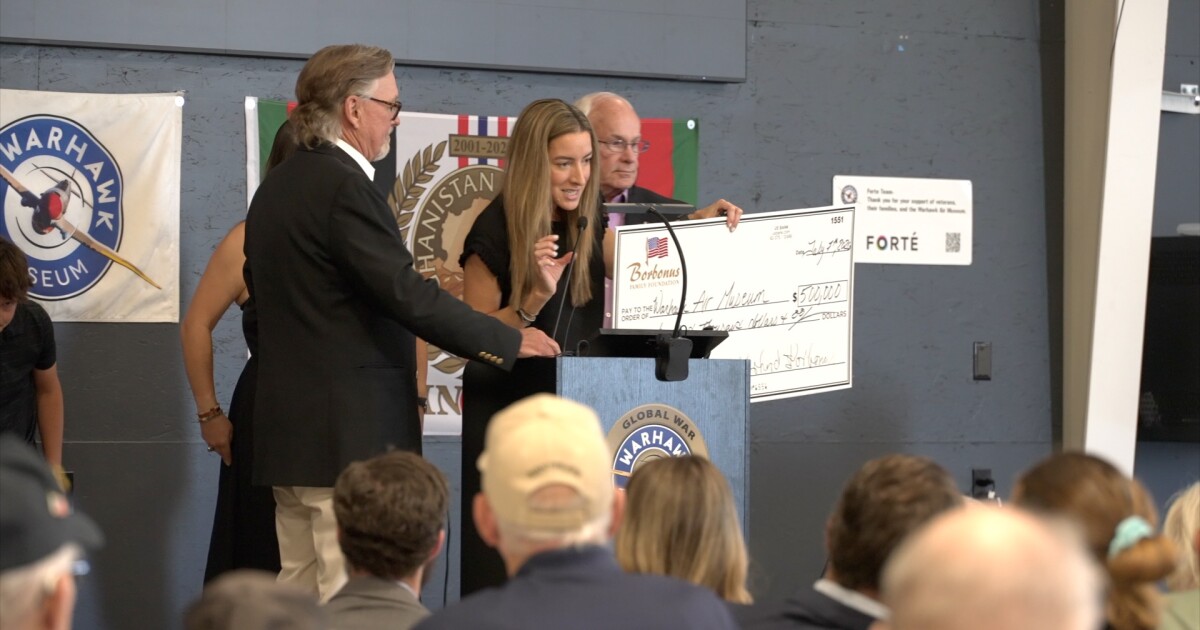
Warhawk Air Museum receives $500K grant honoring fallen Idaho soldier
-

 Connecticut20 minutes ago
Several beaches closed to swimming due to potential bacteria in the water
-

 Delaware26 minutes ago
Delaware Libraries Introduce Digital Literacy Specialists Program – State of Delaware News
-

 Florida30 minutes ago
Video shows man attack Florida deputies in snake-and-gator-infested canal, sheriff says
-

 Georgia34 minutes ago
Georgia Supreme Court upholds convictions of men in deadly shooting during gas station carjacking

