ANCHORAGE, Alaska (KTUU) – Alaska lawmakers are divided over whether new legislation is needed for a liquified natural gas pipeline, with the state’s energy consultant calling it “essential” while some legislators say existing laws are sufficient.
“A successful project will likely require suitable enabling legislation from the state legislature, among other key prerequisites,” state-contracted energy consulting firm GaffneyCline, hired by the Legislative Budget and Audit Committee for up to $200,000 in April 2024, says in a document made public for the first time Monday.
The 62-page document, presented to the Legislative Budget and Audit Committee last month, concludes that legislation is essential for the pipeline to be viable but more needs to be done to get the project across the finish line.
“A detailed economic model of the project is required before the legislature can take an informed view as to the appropriate degree of government take that the project can sustain, and how this could evolve over time,” the document states.
Advertisement
Alaska’s News Source reached out to Glenfarne Tuesday for comment on who presents the economic model and when that model could be presented. Spokesperson Tim Fitzpatrick referred on the report for GaffneyCline.
“We will continue to work closely with the legislature to discuss policy issues that may affect Alaska LNG and work collaboratively on solutions that enable Glenfarne to provide Alaskans with affordable energy security as rapidly as possible,” he said in a statement.
The document’s release comes amid optimism from pipeline developers and federal officials but growing skepticism from some state lawmakers.
During a November Legislative Budget and Audit Committee which discussed the same topic, House Speaker Bryce Edgmon, NA-Dillingham, left believing “the upcoming 2026 legislative session could be dominated by policy measures related to advancing the Alaska gas line project.”
“We don’t have any of this,” Edgmon said last month, relating to laws GaffneyCline says are essential.
Advertisement
Rep. Mia Costello, R-Anchorage, former House minority leader and co-chair of the Alaska Gasline Caucus, said she believes legislation for the pipeline is not needed, citing previous legislative involvement.
“Large scale LNG projects around the world are successfully developed through commercial agreements, private capital, and existing regulatory processes not legislative intervention,” Costello said in a statement. “Alaska already has established permitting, taxation, and regulatory framework capable of supporting energy development. Legislative involvement risks introducing political uncertainty, delaying timelines, and discouraging investors who prioritize stability and market driven decision-making.”
However, Sen. Elvi Gray-Jackson, D-Anchorage, told Alaska’s News Source the policy measures currently in place are more than a decade old, created for a different project, and don’t easily mesh with the task in front of them today.
“When project leadership … and financial models change, it’s our responsibility to revisit the policy framework that governs the state involvement, and that’s what we’re going to do as a legislature,” Gray-Jackson said.
Legislative action?
The asks pipeline developers want in those policies could be steep.
Advertisement
On the list of asks is a concept called “fiscal stability,” essentially a promise if Alaska changes its tax or regulatory policies later, the state would make up any financial losses to investors, according to a GaffneyCline presentation shown to lawmakers on the Legislative Budget and Audit Committee.
Those guarantees can mean a “tax freeze” — locking in the current tax system for the life of the project — potentially 20-30 years, according to GaffneyCline’s presentation to lawmakers. If Alaska later raises taxes or imposes new regulations, the presentation said the state would have to compensate investors to maintain their original profit expectations.
Another ask is the lowering of property taxes for the pipeline, something GaffneyCline’s November presentation said could cost the project $1 billion and add 9% to the cost of delivered gas.
Gov. Mike Dunleavy plans to introduce a bill to lower property taxes for the pipeline, spokesperson Jeff Turner confirmed Tuesday. No other LNG bills are planned at this time, he added.
Time crunch
Whatever the legislature decides to do, they’ll need to do it quickly. The regular session convenes Jan. 20, and for the following 120 days, the process to create a package of policies and framework addressing LNG issues will likely be front of mind.
Advertisement
That comes after Glenfarne Alaska LNG set expectations in October that construction for the pipeline will begin in late 2026 and be operational by mid-2029.
“What Alaskans should take away from the report is that we need to hope for the best, but prepare for the situation not moving as fast as Glenfarne and the other players are thinking,” Gray-Jackson said.
Lawmakers have signaled a mixture of optimism for what the pipeline could create, but it comes with skepticism, too. Gray-Jackson said she was “cautiously optimistic.”
“Frankly, I don’t know where we’re at as far as the legislature is concerned because we haven’t gotten any real answers from Glenfarne,” Gray-Jackson said.
A Glenfarne spokesperson said last month they are active in providing information to the state legislature.
Advertisement
“Glenfarne is making rapid progress on Alaska LNG and regularly meets with legislators to provide updates and discuss important state and local policy considerations,” Glenfarne communications director Tim Fitzpatrick said. “We appreciate the legislature’s continued engagement to help make Alaska LNG a success for the state.”
“I understand the potential, huge, multi-generational impact of the state, as well as being very positive,” Sen. Bert Stedman, R-Sitka, told Alaska’s News Source following the Legislative Budget and Audit Committee meeting in November.
“Concentrating on the benefit of the project that we know, if it’s successful, it’s going to be very beneficial, and if it’s unsuccessful, it could be detrimental for generations.”
“Will the project even come unless we present the right scenario?” House Majority Leader Chuck Kopp, R-Anchorage, asked Nick Fulford, GaffneyCline senior director and global head of gas and LNG.
“You mentioned the buyers want 20–30 years of stability … our fiscal framework might be a little bit out of alignment, if I’m hearing you correctly,” Kopp said.
Advertisement
“If those things are all true, our needs, our situation, us being out of alignment, we’re going to have to look at possibly a reality that this line doesn’t even get [built],” the representative added.
Federal permits completed
The project completed 20 federal permits and environmental reviews last week, according to the Permitting Council, clearing what the governor called “the last major regulatory hurdle.”
“Alaska LNG received the major federal permits needed to proceed in 2020,” Fitzpatrick said. “Some of these permits have a five-year renewal cycle, which was completed last week and all of Alaska LNG’s major permits are current and in effect. Glenfarne has an ongoing process to maintain permits and authorizations for Alaska LNG.”
With the permits cleared, the pipeline inches toward a final investment decision (FID). Natural Gas Intelligence, a natural gas news provider, described an FID as “the last step of determining whether to move forward with the sanctioning and construction of an infrastructure project.”
A source familiar with the pipeline developments previously told Alaska’s News Source to expect an FID early next year.
Advertisement
“Alaska LNG will strengthen our economy, create long-term jobs, and provide reliable energy to Alaskans and our global partners for generations to come,” Dunleavy said.
“I am thrilled to see the Alaska LNG project finish federal permitting actions ahead of schedule,” said Permitting Council Executive Director Emily Domenech in the press release.
“This combined effort reflects our commitment to the State of Alaska and to achieving President Trump’s energy dominance agenda.”
Domenech visited the state alongside the congressional Natural Resources Committee in August, when Dunleavy signed a deal with the Trump administration aimed at bringing more resource development investment will come to Alaska.
LNG, however, was not heavily discussed at the meeting.
Advertisement
Governor Mike Dunleavy (right) shows a signed memorandum of understanding promising “improve(d) coordination and transparency in permitting major infrastructure projects across the state,” his office said.(Rachel McPherron)
“Completing federal permitting for Alaska LNG ahead of schedule shows how the Trump administration is restoring America’s Energy Dominance by cutting unnecessary delays and unleashing our abundant resources,” Interior Secretary Doug Burgum said in the release. “This project strengthens U.S. energy security, creates jobs for Alaskans, and reinforces our commitment to a permitting system that works at the speed of American innovation.”
National momentum
The federal push comes as as GaffneyCline’s presentation said both LNG supply and demand are expected to boom globally. Liquefaction, or the process of turning gas into liquid, is expected to increase by 42% by 2030, reaching about 594 million tons per year.
This summer, Dunleavy vetoed several bills and cut more than $100 million from the state budget, largely due to reduced state revenues from oil price declines.
“The oil situation has deteriorated,” Dunleavy said in a video statement before his budget was revealed. “The price of oil has gone down; therefore, our revenue is going down.
“Basically, we don’t have enough money to pay for all of our obligations. So, as a result of that, you’re going to see some reductions in this year’s budget.”
Advertisement
The pipeline project has support from both the state and federal levels. President Donald Trump has pledged to ensure an LNG project gets built “to provide affordable energy to Alaska and allies all over the world.”
On Jan. 20, Trump signed the “Unleashing Alaska’s Extraordinary Resource Potential” executive order, which the administration says prioritizes “the development of Alaska’s liquefied natural gas (LNG) potential, including the sale and transportation of Alaskan LNG to other regions of the United States and allied nations within the Pacific region.”
Despite the optimistic timeline, Alaska has seen multiple LNG pipeline proposals fail over the past two decades due to financing challenges, regulatory delays and market conditions.
Environmental groups and some Alaska Native groups have also raised concerns about the pipeline’s potential impact on wildlife and traditional lands.
See a spelling or grammar error? Report it to web@ktuu.com
The first Jesuit missionaries in Alaska sailed up the Yukon River in 1887. By the turn of the 20th century, the religious order of the Catholic Church had as many as 50 Jesuits in the state.
Now, only two remain. And by the end of June, there will be none.
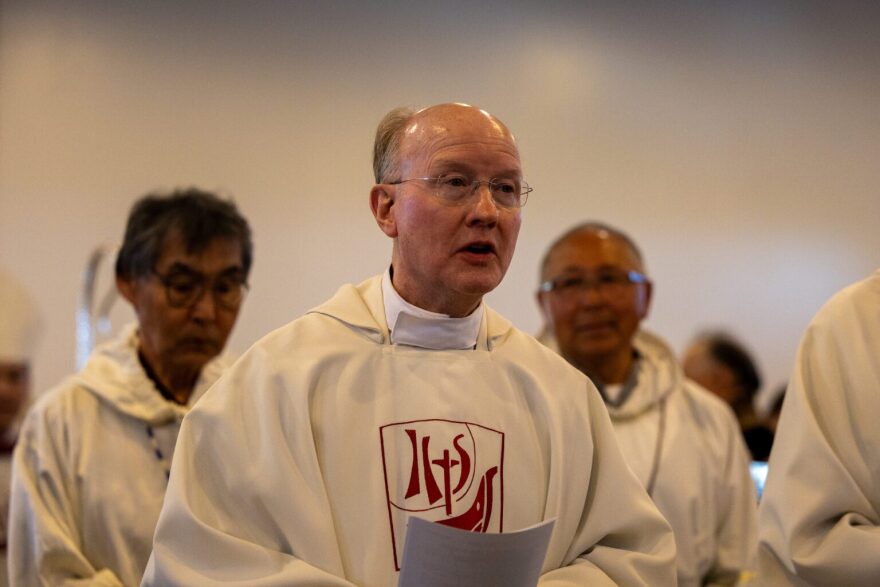
The Jesuits’ nearly 140 years in the state was honored at an event at Bethel’s Immaculate Conception Church on June 16. A procession of priests wearing long white gowns with red hems walked down the aisle to open the event. The Bishop of the Diocese of Fairbanks, Stephen Maekawa, thumped the ground with a shimmering silver staff known as a clozier as he approached the altar.
Bishop of the Diocese of Fairbanks, Steven Maekawa, walks toward the altar at the Immaculate Conception Church in Bethel.
“My brothers and sisters, we gather together to celebrate this wonderful and blessed occasion to acknowledge the love of God and the work of God through the 139 year mission of the Society of Jesus of the Jesuit fathers,” Maekawa said to open the event.
Advertisement
A traditional Catholic mass followed, with readings in both English and Yup’ik. During the sermon, Maekawa acknowledged the vastness of the Fairbanks diocese, and the tremendous amount of work done by the Jesuits to establish it.
“All of the 46 churches of the Diocese of Fairbanks that we currently have were established by either the Jesuit fathers or by direction of a Jesuit bishop,” Maekawa said. “We have a long history of the Society of Jesus’ presence and ministry here in all of Alaska.”
The Jesuits are an order within the Catholic Church, akin to the Dominicans or Franciscans. They have a reputation for taking on some of the Catholic Church’s most remote assignments.
That missionary spirit brought the Jesuits to the Yukon River in 1887, where they built churches, schools, and ministries. Without their work, Catholicism may not have taken root in huge swaths of Alaska, particularly among Alaska Native communities.
The Immaculate Conception Church in Bethel.
But the Jesuits leave a complicated legacy. Their methods of converting Native people to the religion, particularly in the first half of the 20th century, created generational traumas still felt to this day.
Advertisement
Fr. Sean Carroll is the provincial of the Jesuits West Province, which oversees Alaska and nine other states.
Fr. Sean Carroll, provincial of the Jesuits West Province, speaks at an event recognizing nearly 140 years of Jesuit service in Alaska.
“Thank you for all that you have taught us about who Jesus is and how to love and serve Him wholeheartedly,” Carroll said. “I also thank you for your patience with us. For there have been times when we have sinned and when we have hurt you.”
Missionaries, including the Jesuits, forcefully converted and assimilated Alaska Native people into Western culture and religion. Students at Jesuit-run boarding schools were forced to abandon their Native languages and physically punished when caught speaking languages other than English. Native dancing and drumming were also banned.
The Jesuits West Province maintains a list of 150 Jesuits with credible claims of sexual abuse against minors or vulnerable adults. A quarter of the accused Jesuits served in Alaska at some point in time.
“I ask for your forgiveness for all that we have done that was not rooted in Christ and love for Him, and for when we did not value your culture nor recognize the presence of God in you,” Carroll said.
Advertisement
Carroll gave the order to withdraw from the state last spring. A big issue was the recruitment of Jesuits willing to travel and serve in remote villages. He told the congregation that the Jesuits’ work would continue, just without a permanent presence.
Fr. Rich Magner, one of the two remaining Jesuit priests in Alaska, attends a ceremony in Bethel.
Fr. Rich Magner is one of the two remaining Jesuit priests in Alaska. His last day serving Chevak, Hooper Bay, and Scammon Bay is June 30.
“We all always knew coming in, or should have known, that we’re not going to be here forever. It’s going to be mission accomplished at some point,” Magner said. “And then we hand it off to the diocese that we’ve helped create, and so that’s a good feeling.”
Magner’s next stop is a Clinical Pastoral Education residency in Tacoma, Washington.
The other remaining priest, Fr. Tom Provinsal, first came to Alaska in 1968 to teach. A fond memory, he said, was meeting Elders that practiced traditional subsistence lifestyles.
Advertisement
“Some of the grandmothers, their fingers were just all bent with arthritis and stuff like that, you know, their whole lives they’ve been working out in the cold and the wet, doing food, sewing, all that kind of stuff,” Provinsal said. “I’d say I just feel very privileged to have come when I did come and to see that.”
Provinsal returned in 1975 as a priest and has served in the region ever since. After moving away, he plans to take a five month sabbatical. What happens next, he said, is in God’s hands.
Two lines formed in the aisle for communion at the end of the mass. After taking communion, Bethel’s Parish Administrator Susan Murphy gave a final thank you.
“It’s difficult to say goodbye to people who have been a part of our lives for so long,” Murphy said. “We know that you have done what was yours to do, and have taught us to do what is ours to do. We are grateful.”
Jesuit priests form a row along the altar of Bethel’s Immaculate Conception Church as members of the congregation lift their arms and pray.
Dominic Hunt, a Yup’ik deacon that flew in from Emmonak for the event, led the congregation through a final prayer.
Advertisement
“Bless them with your wisdom, that they may be a word of hope, a world in need. We ask this through Christ, our Lord. Amen,” Hunt said.
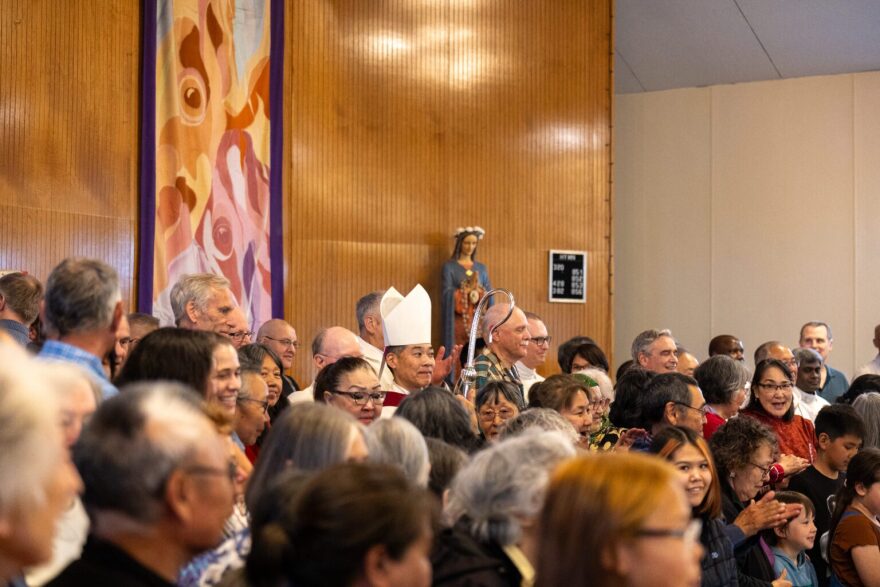
About 70 people posed for a photo on the altar – priests, deacons, parishioners, Elders and children — many of them smiling, some standing quietly.
The photo doesn’t tell the whole story. But it’s a moment when gratitude, grief, and memory all shared the same room.
Bishop of the Diocese of Fairbanks, Steven Maekawa, stands in the middle of a crowd waiting to take a photo at Bethel’s Immaculate Conception Church.
JUNEAU, Alaska (KTUU) – The Supreme Court of Alaska will be taking up the case of the State of Alaska, Division of Elections v. Daniel J. Sullivan, Jr.
The oral arguments will be held Monday at 10 a.m. via Zoom, according to an order and opening notice.
The document also specifies that a decision is expected to be made before noon on Tuesday.
According to documents from the Division of Elections, the state must start printing ballots at noon on the same day.
Advertisement
This comes after an Anchorage Superior Court Judge ordered Dan J. Sullivan on to the ballot Friday.
See a spelling or grammar error? Report it to web@ktuu.com