Alaska
First true taste of summer just around the corner


ANCHORAGE, Alaska (KTUU) – Things are much drier across Southcentral Alaska this morning, but additional rain will build into the region as we head throughout the day.
Unlike previous rain chances, Wednesday’s rain will largely impact the Mat-Su and the Copper River Basin. Rain will return to these regions through the mid-morning and early afternoon timeframe. While the rain won’t be as widespread as yesterday, be prepared for the likelihood that up to a tenth of an inch will fall for those locations.
Further south across the Anchorage Bowl and into the Kenai Peninsula, things will trend on the drier side. There is an outside chance Anchorage could see some rain into the evening, but that will largely hinge on how far showers dive south through the Valley. Any rain across Southcentral will taper off overnight into Thursday morning, with drier weather making a return to the region.
Southeast Alaska is already seeing the trend towards drier weather, although some isolated showers are possible through the Southern Inner Channels. We’ll see temperatures today topping out near 60 degrees for Southeast, with a gradual return to sunshine and warmth through the rest of this week. It’s looking likely that much of the Panhandle will see a stretch of drier weather, with the potential for highs to warm into the 70s over the next week.
Wildfire activity across the state has been helped by recent weather, although the McDonald wildfire continues to spread. With temperatures warming into the 60s and 70s through Interior Alaska today, another round of thunderstorms looks likely into the evening. Any storms could be severe with the potential for gusty winds and large hail. Remember that any thunderstorm development means lightning strikes, which brings with it the potential for new wildfires.
The North Slope is still dealing with snow melt leading to rising waters. While some minor flooding is possible, many area waterways/rivers have either crested or are nearing their crest, with waters set to recede by the weekend. Additional snowmelt will still occur, as daily highs will warm into the upper 30s and lower 40s through the weekend.
Looking ahead to the close of this week, there are sure signs that warmer weather will head our direction. It’s looking very likely that daily highs will top out in the 60s and 70s, with a chance for thunderstorm development near the Talkeetna and Chugach mountains. Most locations should stay on the drier side, except for areas that do manage to see any storms.
Have a wonderful Wednesday and enjoy summer finally building into Southcentral.
Copyright 2024 KTUU. All rights reserved.


ANCHORAGE, Alaska (KTUU) – A musician with Alaska Native roots recorded an hour-long live set in Interior Alaska beneath the aurora.
Chastity Ashley, a drummer, vocalist and DJ who performs under the name Neon Pony, celebrated a year since she traveled to Nenana to record a live music set beneath the northern lights for her series Beats and Hidden Retreats.
Ashley, who has Indigenous roots in New Mexico, said she was drawn to Alaska in part because of the role drums play in Alaska Native culture. A handmade Alaskan hand drum, brought to her by a man from just outside Anchorage, was incorporated into the performance in February 2025.
Recording in the cold
The team spent eight days in Nenana waiting for the aurora to appear. Ashley said the lights did not come out until around 4 a.m., and she performed a continuous, uninterrupted hour-long set in 17-degree weather without gloves.
“It was freezing. I couldn’t wear gloves because I’m actually playing, yeah, hand drums and holding drumsticks. And there was ice underneath my feet,” Ashley said.
“So, I had to really utilize my balance and my willpower and my ability to just really immerse in the music and let go and make it about the celebration of what I was doing as opposed to worrying about all the other elements or what could go wrong.”
She said she performed in a leotard to allow full range of motion while drumming, DJing and singing.
Filming on Nenana tribal land
Ashley said she did not initially know the filming location was on indigenous land. After local authorities told her the decision was not theirs to make, she contacted the Nenana tribe directly for permission.
“I went into it kind of starting to tell them who I was and that I too was a part of a native background,” Ashley said. “And they just did not even care. They’re like, listen, we’re about to have a party for one of our friends here. Go and do what you like.”
Ashley said the tribe gave her full permission to film on the reservation, and that the aurora footage seen in the episode was captured there.
Seeing the aurora for the first time
Ashley said the Nenana performance marked her first time seeing the northern lights in person.
“It felt as if I were awake in a dream,” she said. “It really doesn’t seem real.”
She said she felt humbled and blessed to perform beneath the aurora and to celebrate its beauty and grandeur through her music.
“I feel incredibly humbled and blessed that not only did I get to take part in seeing something like that, but to play underneath it and celebrate its beauty and its grandeur.”
The Alaska episode is the second installment of Beats and Hidden Retreats, which is available on YouTube at @NeonPony. Ashley said two additional episodes are in production and she hopes to make it back up to Alaska in the future.
See a spelling or grammar error? Report it to web@ktuu.com
Copyright 2026 KTUU. All rights reserved.

JUNEAU, Alaska (KTUU) – An Alaska drug task force seized roughly $162,000 worth of controlled substances during an operation in Juneau Thursday, according to the Juneau Police Department.
Around 3 p.m. Thursday, investigators with the Southeast Alaska Cities Against Drugs (SEACAD) approached 50-year-old Juneau resident Jermiah Pond in the Nugget Mall parking lot while he was sitting in his car, according to JPD.
A probation search of the car revealed a container holding about 7.3 gross grams of a substance that tested presumptively positive for methamphetamine, as well as about 1.21 gross grams of a substance that tested presumptively positive for fentanyl.
As part of the investigation, investigators executed a search warrant at Pond’s residence, during which they found about 46.63 gross grams of ketamine, 293.56 gross grams of fentanyl, 25.84 gross grams of methamphetamine and 25.5 gross grams of MDMA.
In all, it amounted to just less than a pound of drugs worth $162,500.
Investigators also seized $102,640 in cash and multiple recreational vehicles believed to be associated with the investigation.
Pond was lodged on charges of second-degree misconduct involving a controlled substance, two counts of third-degree misconduct involving a controlled substance, five counts of fourth-degree misconduct involving a substance and an outstanding felony probation warrant.
See a spelling or grammar error? Report it to web@ktuu.com
Copyright 2026 KTUU. All rights reserved.

SAND POINT, Alaska (KTUU) – A teenage boy who was last seen Monday when the canoe he was in tipped over has been found by a dive team in a lake near Sand Point, according to a person familiar with the situation.
Alaska’s News Source confirmed with the person, who is close to the search efforts, that the dive team found 15-year-old Kaipo Kaminanga deceased Thursday in Red Cove Lake, located a short drive from the town of Sand Point on the Aleutian Island chain.
Kaminanga was last seen canoeing with three other friends on Monday when the boat tipped over.
A search and rescue operation ensued shortly after.
Alaska Dive Search Rescue and Recovery Team posted on Facebook Thursday night that they were able to “locate and recover” Kaminanga at around 5 p.m. Thursday.
“We are glad we could bring closure to his family, friends and community,” the post said.
This is a breaking news story and will be updated when more details become available.
See a spelling or grammar error? Report it to web@ktuu.com
Copyright 2026 KTUU. All rights reserved.
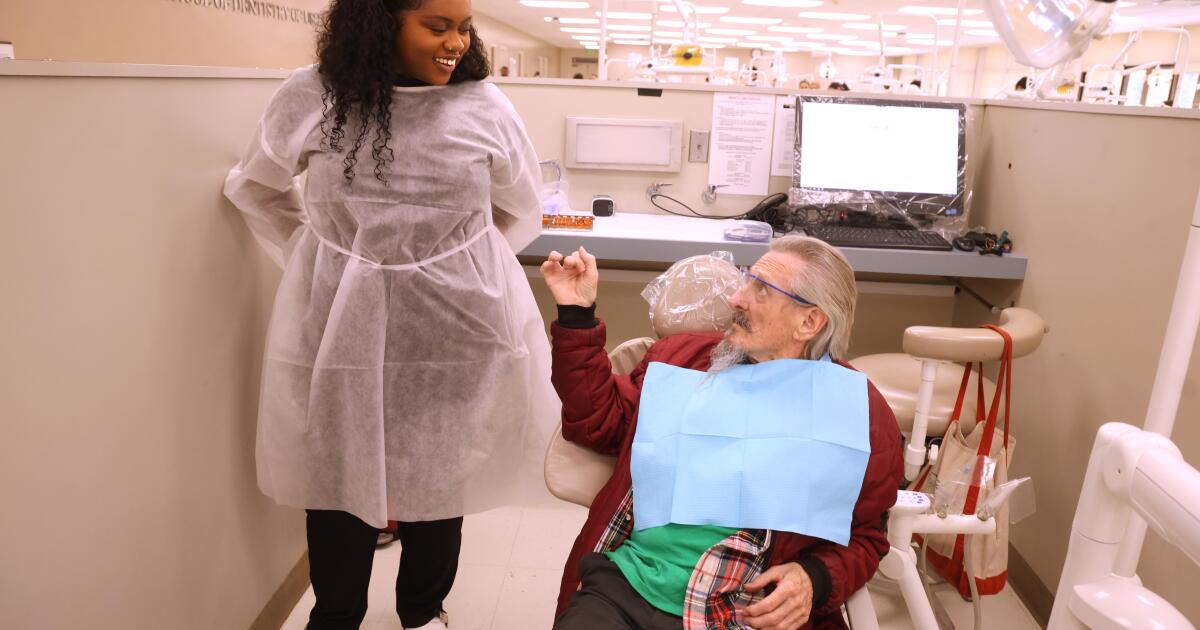
Commentary: My toothache led to a painful discovery: The dental care system is full of cavities as you age

Prep talk: Councilmember looking into helping fix fire damage at Encino Franklin Fields

Israel strikes two schools in Iran, killing more than 50 people

Anthropic CEO says he’s sticking to AI “red lines” despite clash with Pentagon

FBI raid involving LA schools superintendent possibly tied to failed $6M AI deal, potential conflict

Florida High School Football Rankings: Top 25 teams – Oct. 21

Cleary's 21 help Le Moyne down Central Connecticut State 69-64 in OT

How old is Bo Nix? What to know about Oregon quarterback ahead of 2024 NFL Draft

99th annual Pony Swim held in Virginia

Indiana Members Credit Union announced as new anchor tenant at Bottleworks District
Israel strikes two schools in Iran, killing more than 50 people
Anthropic CEO says he’s sticking to AI “red lines” despite clash with Pentagon

ICE blasts Washington mayor over directive restricting immigration enforcement

Did the EU bypass Hungary’s veto on Ukraine’s €90 billion loan?

How the federal government is painting immigrants as criminals on social media
-

 World2 days ago
Exclusive: DeepSeek withholds latest AI model from US chipmakers including Nvidia, sources say
-

 Massachusetts3 days ago
Mother and daughter injured in Taunton house explosion
-

 Montana1 week ago
2026 MHSA Montana Wrestling State Championship Brackets And Results – FloWrestling
-

 Louisiana5 days ago
Wildfire near Gum Swamp Road in Livingston Parish now under control; more than 200 acres burned
-

 Denver, CO3 days ago
10 acres charred, 5 injured in Thornton grass fire, evacuation orders lifted
-

 Technology1 week ago
YouTube TV billing scam emails are hitting inboxes
-

 Technology1 week ago
Stellantis is in a crisis of its own making
-

 Politics1 week ago
OpenAI didn’t contact police despite employees flagging mass shooter’s concerning chatbot interactions: REPORT