Technology
How iOS 18.2 now lets you share your AirTag's location with anyone


With the release of iOS 18.2, AirTag owners can now enjoy a powerful new feature that enhances their ability to keep track of personal belongings: Share Item Location. This innovative capability allows you to share the location of your AirTag or Find My network accessory with anyone you trust, significantly easing the recovery of lost items. Whether you’re traveling and need to keep track of your luggage or simply want to share the location of a valuable item with a friend or family member, this feature is designed to provide peace of mind and convenience.
GET SECURITY ALERTS, EXPERT TIPS – SIGN UP FOR KURT’S NEWSLETTER – THE CYBERGUY REPORT HERE
Share Item Location AirTag feature (Apple) (Kurt “CyberGuy” Knutsson)
What is Share Item Location?
Share Item Location is a new feature in the Find My app that enables you to create a secure link showing the location of your AirTag or compatible Find My network accessory. This link can be shared with trusted individuals or organizations, such as airlines, to help locate misplaced items.
Share Item Location AirTag feature (Apple) (Kurt “CyberGuy” Knutsson)
ASK KURT: HOW DOES AN APPLE AIRTAG WORK AND HOW FAR CAN YOU TRACK?
How Share Item Location works
When you share an item’s location, the recipient can view it on an interactive map through a web browser. The location updates automatically, and a timestamp shows when it was last refreshed. The shared location expires after seven days or when you’re reunited with your item, whichever comes first.
Share Item Location AirTag feature (Apple) (Kurt “CyberGuy” Knutsson)
IS YOUR AIRTAG ABOUT TO DIE?
How to update your software to iOS 18.2 or later
First things first, let’s update your software to iOS 18.2 or later:
- Open Settings
- Tap General
- Select Software Update
- Tap Update Now
- Enter your passcode and agree to terms
- Wait for the installation to complete
Steps to update your iPhone’s software (Kurt “CyberGuy” Knutsson)
BRUSSELS SPROUTS CHRISTMAS TREE LIGHTS UP SCIENCE
Steps to share your AirTag’s location
Now, let’s move on to how to share your AirTag’s location:
- Open the Find My app on your iPhone, iPad or Mac
- Tap Continue at the bottom of the screen
- Tap the Items tab at the bottom of the screen
- Select the AirTag or item you want to share
Steps to share your AirTag’s location (Kurt “CyberGuy” Knutsson)
- Scroll down and tap Share Item Location
- Tap Continue to generate a link
- You can now copy the link or use the Share Link option to send it via AirDrop, Messages, email or other apps.
Steps to share your AirTag’s location (Kurt “CyberGuy” Knutsson)
- Click the up arrow to send it as a text message
- A reminder that the shared location expires after seven days
Steps to share your AirTag’s location (Kurt “CyberGuy” Knutsson)
DID YOU KNOW YOU CAN USE APPLE AIRTAGS WITH YOUR ANDROID PHONE?
Privacy and security
Apple has designed this feature with privacy and safety in mind. The shared location can be disabled by the owner at any time, and it automatically expires after seven days. The item owner can also see how many people have visited the shared link. Here are steps to stop Sharing Item Location:
- Open the Find My app on your iPhone, iPad or Mac
- Tap the Items tab at the bottom of the screen
- Select the AirTag or item for which you want to stop Sharing Item Location
- Scroll down and tap Share Item Location
- Click Stop Sharing Item Location
- Confirm your decision by clicking Continue
Steps to stop Sharing Item Location (Kurt “CyberGuy” Knutsson)
Airline integration
One of the great aspects of this feature is its potential to revolutionize luggage tracking. Over 15 major airlines, including Delta, United, Air Canada, British Airways and Lufthansa, plan to integrate this feature into their customer service processes for locating mishandled or delayed baggage.
Note: While Apple has expanded AirTag location-sharing capabilities to include Android users as recipients, the management of AirTags still requires an iPhone or an Apple device.
SUBSCRIBE TO KURT’S YOUTUBE CHANNEL FOR QUICK VIDEO TIPS ON HOW TO WORK ALL OF YOUR TECH DEVICES
Kurt’s key takeaways
The Share Item Location feature in iOS 18.2 is a significant upgrade for AirTag users. It addresses a common pain point for travelers and offers a secure, user-friendly solution for sharing item locations with trusted parties. As more airlines and organizations adopt this technology, we may see a future where lost luggage becomes a thing of the past.
How have you used technology to keep track of your belongings while traveling, and what challenges or successes have you experienced? Let us know by writing us at Cyberguy.com/Contact.
For more of my tech tips and security alerts, subscribe to my free CyberGuy Report Newsletter by heading to Cyberguy.com/Newsletter.
Ask Kurt a question or let us know what stories you’d like us to cover.
Follow Kurt on his social channels:
Answers to the most asked CyberGuy questions:
New from Kurt:
Copyright 2024 CyberGuy.com. All rights reserved.



This week, Anthropic delivered a master class in arrogance and betrayal as well as a textbook case of how not to do business with the United States Government or the Pentagon.
Our position has never wavered and will never waver: the Department of War must have full, unrestricted access to Anthropic’s models for every LAWFUL purpose in defense of the Republic.
Instead, @AnthropicAI and its CEO @DarioAmodei, have chosen duplicity. Cloaked in the sanctimonious rhetoric of “effective altruism,” they have attempted to strong-arm the United States military into submission – a cowardly act of corporate virtue-signaling that places Silicon Valley ideology above American lives.
The Terms of Service of Anthropic’s defective altruism will never outweigh the safety, the readiness, or the lives of American troops on the battlefield.
Their true objective is unmistakable: to seize veto power over the operational decisions of the United States military. That is unacceptable.
As President Trump stated on Truth Social, the Commander-in-Chief and the American people alone will determine the destiny of our armed forces, not unelected tech executives.
Anthropic’s stance is fundamentally incompatible with American principles. Their relationship with the United States Armed Forces and the Federal Government has therefore been permanently altered.
In conjunction with the President’s directive for the Federal Government to cease all use of Anthropic’s technology, I am directing the Department of War to designate Anthropic a Supply-Chain Risk to National Security. Effective immediately, no contractor, supplier, or partner that does business with the United States military may conduct any commercial activity with Anthropic. Anthropic will continue to provide the Department of War its services for a period of no more than six months to allow for a seamless transition to a better and more patriotic service.
America’s warfighters will never be held hostage by the ideological whims of Big Tech. This decision is final.

NEWYou can now listen to Fox News articles!
When you open a chatbot, stream a show or back up photos to the cloud, you are tapping into a vast network of data centers. These facilities power artificial intelligence, search engines and online services we use every day. Now there is a growing debate over who should pay for the electricity those data centers consume.
During President Trump’s State of the Union address this week, he introduced a new initiative called the “ratepayer protection pledge” to shift AI-driven electricity costs away from consumers. The core idea is simple.
Tech companies that run energy-intensive AI data centers should cover the cost of the extra electricity they require rather than passing those costs on to everyday customers through higher utility rates.
It sounds simple. The hard part is what happens next.
Sign up for my FREE CyberGuy Report
Get my best tech tips, urgent security alerts and exclusive deals delivered straight to your inbox. Plus, you’ll get instant access to my Ultimate Scam Survival Guide — free when you join my CYBERGUY.COM newsletter.
At the State of the Union address Feb. 24, 2026, President Trump unveiled the “ratepayer protection pledge” aimed at shielding consumers from rising electricity costs tied to AI data centers. (Nathan Posner/Anadolu via Getty Images)
Why AI is driving a surge in electricity demand
AI systems require enormous computing power. That computing power requires enormous electricity. Today’s data centers can consume as much power as a small city. As AI tools expand across business, healthcare, finance and consumer apps, energy demand has risen sharply in certain regions.
Utilities have warned that the current grid in many parts of the country was not built for this level of concentrated demand. Upgrading substations, transmission lines and generation capacity costs money. Traditionally, those costs can influence rates paid by homes and small businesses. That is where the pledge comes in.
What the ratepayer protection pledge is designed to do
Under the ratepayer protection pledge, large technology companies would:
- Cover the full cost of additional electricity tied to their data centers
- Build their own on-site power generation to reduce strain on the public grid
Supporters say this approach separates residential energy costs from large-scale AI expansion. In other words, your household bill should not rise simply because a new AI data center opens nearby. So far, Anthropic is the clearest public backer. CyberGuy reached out to Anthropic for a comment on its role in the pledge. A company spokesperson referred us to a tweet from Anthropic Head of External Affairs Sarah Heck.
“American families shouldn’t pick up the tab for AI,” Heck wrote in a post on X. “In support of the White House ratepayer protection pledge, Anthropic has committed to covering 100% of electricity price increases that consumers face from our data centers.”
That makes Anthropic one of the first major AI companies to publicly state it will absorb consumer electricity price increases tied to its data center operations. Other major firms may be close behind. The White House reportedly plans to host Microsoft, Meta and Anthropic in early March to discuss formalizing a broader deal, though attendance and final terms have not been confirmed publicly.
Microsoft also expressed support for the initiative.
“The ratepayer protection pledge is an important step,” Brad Smith, Microsoft vice chair and president, said in a statement to CyberGuy. “We appreciate the administration’s work to ensure that data centers don’t contribute to higher electricity prices for consumers.”
Industry groups also point to companies such as Google and utilities including Duke Energy and Georgia Power as making consumer-focused commitments tied to data center growth. However, enforcement mechanisms and long-term regulatory details remain unclear.
CHINA VS SPACEX IN RACE FOR SPACE AI DATA CENTERS
The White House plans talks with Microsoft, Meta and Anthropic about shifting AI energy costs away from consumers. (Eli Hiller/For The Washington Post via Getty Images)
How this could change the economics of AI
AI infrastructure is already one of the most expensive technology buildouts in history. Companies are investing billions in chips, servers and real estate. If firms must also finance dedicated power plants or pay premium rates for grid upgrades, the cost of running AI systems increases further. That could lead to:
- Slower expansion in some markets
- Greater investment in renewable energy and storage
- More partnerships between tech firms and utilities
Energy strategy may become just as important as computing strategy. For consumers, this shift signals that electricity is now a central part of the AI conversation. AI is no longer only about software. It is also about infrastructure.
The bigger consumer tech picture
AI is becoming embedded in smartphones, search engines, office software and home devices. As adoption grows, so does the hidden infrastructure supporting it. Energy is now part of the conversation around everyday technology. Every AI-generated image, voice command or cloud backup depends on a power-hungry network of servers.
By asking companies to account more directly for their electricity use, policymakers are acknowledging a new reality. The digital world runs on very physical resources. For you, that shift could mean more transparency. It also raises new questions about sustainability, local impact and long-term costs.
ARTIFICIAL INTELLIGENCE HELPS FUEL NEW ENERGY SOURCES
As AI expansion strains the grid, a new proposal would require tech firms to fund their own power needs. (Sameer Al-Doumy/AFP via Getty Images)
What this means for you
If you are a homeowner or renter, the practical question is simple. Will this protect my electric bill? In theory, separating data center energy costs from residential rates could reduce the risk of price spikes tied to AI growth. If companies fund their own generation or grid upgrades, utilities may have less reason to spread those costs among all customers.
That said, utility pricing is complex. It depends on state regulators, long-term planning and local energy markets.
Here is what you can watch for in your area:
- New data center construction announcements
- Utility filings that mention large commercial load growth
- Public service commission decisions on rate adjustments
Even if you rarely use AI tools, your community could feel the effects of a nearby data center. The pledge is intended to keep those large-scale power demands from showing up in your monthly bill.
Take my quiz: How safe is your online security?
Think your devices and data are truly protected? Take this quick quiz to see where your digital habits stand. From passwords to Wi-Fi settings, you’ll get a personalized breakdown of what you’re doing right and what needs improvement. Take my Quiz here: Cyberguy.com.
Kurt’s key takeaways
The ratepayer protection pledge highlights an important turning point. AI is no longer only about innovation and speed. It is also about energy and accountability. If tech companies truly absorb the cost of their expanding power needs, households may avoid some of the financial strain tied to rapid AI growth. If not, utility bills could become an unexpected front line in the AI era.
As AI tools become part of daily life, how much extra power are you willing to support to keep them running? Let us know by writing to us at Cyberguy.com.
CLICK HERE TO DOWNLOAD THE FOX NEWS APP
Sign up for my FREE CyberGuy Report
Get my best tech tips, urgent security alerts and exclusive deals delivered straight to your inbox. Plus, you’ll get instant access to my Ultimate Scam Survival Guide – free when you join my CYBERGUY.COM newsletter.
Copyright 2026 CyberGuy.com. All rights reserved.
Related Article


Amazon has slowly been teasing out casting details for its live-action adaptation of God of War, and now we have our first look at the show. It’s a single image but a notable one showing protagonist Kratos and his son Atreus. The characters are played by Ryan Hurst and Callum Vinson, respectively, and they look relatively close to their video game counterparts.
There aren’t a lot of other details about the show just yet, but this is Amazon’s official description:
The God of War series storyline follows father and son Kratos and Atreus as they embark on a journey to spread the ashes of their wife and mother, Faye. Through their adventures, Kratos tries to teach his son to be a better god, while Atreus tries to teach his father how to be a better human.
That sounds a lot like the recent soft reboot of the franchise, which started with 2018’s God of War and continued through Ragnarök in 2022. For the Amazon series, Ronald D. Moore, best-known for his work on For All Mankind and Battlestar Galactica, will serve as showrunner. The rest of the cast includes: Mandy Patinkin (Odin), Ed Skrein (Baldur), Max Parker (Heimdall), Ólafur Darri Ólafsson (Thor), Teresa Palmer (Sif), Alastair Duncan (Mimir), Jeff Gulka (Sindri), and Danny Woodburn (Brok).
While production is underway on the God of War series, there’s no word on when it might start streaming.

Nye County Sheriff urges caution after deadly month on rural Nevada roads

Sen. Denise Ricciardi & Jeff Rogers: Stopping super speeders can save lives in New Hampshire

N.J. group demands review of Trenton immigration arrest operation at auto shop

Public Service Company of New Mexico Declares Preferred Dividend

Disaster as fencing wire gets tangled in spinning car wash in North Carolina

Florida High School Football Rankings: Top 25 teams – Oct. 21

Cleary's 21 help Le Moyne down Central Connecticut State 69-64 in OT

How old is Bo Nix? What to know about Oregon quarterback ahead of 2024 NFL Draft

99th annual Pony Swim held in Virginia

Indiana Members Credit Union announced as new anchor tenant at Bottleworks District

ICE blasts Washington mayor over directive restricting immigration enforcement

Did the EU bypass Hungary’s veto on Ukraine’s €90 billion loan?
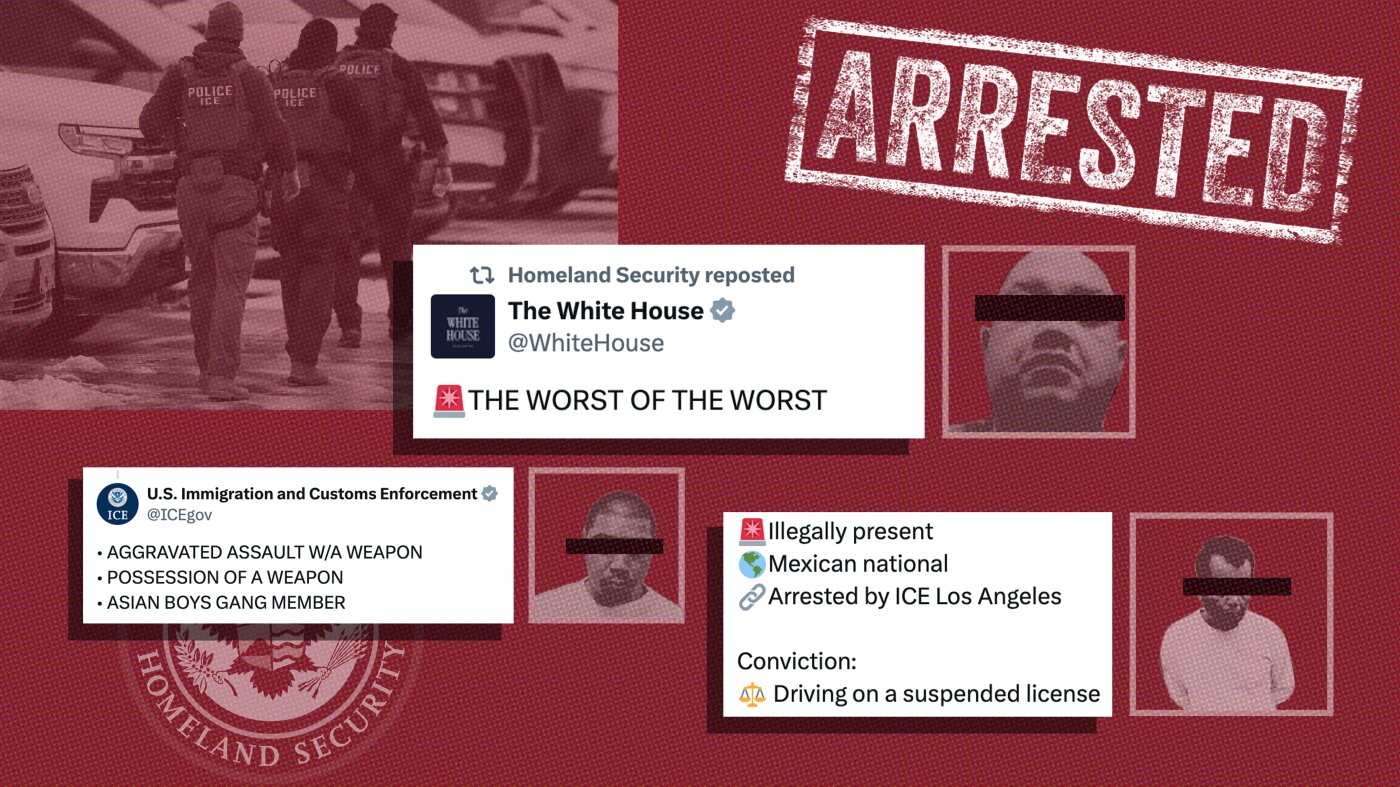
How the federal government is painting immigrants as criminals on social media

Where Iran’s ballistic missiles can reach — and how close they are to the US

Has India’s influence in Afghanistan grown under the Taliban?
-

 World2 days ago
Exclusive: DeepSeek withholds latest AI model from US chipmakers including Nvidia, sources say
-

 Massachusetts2 days ago
Mother and daughter injured in Taunton house explosion
-

 Montana1 week ago
2026 MHSA Montana Wrestling State Championship Brackets And Results – FloWrestling
-

 Louisiana5 days ago
Wildfire near Gum Swamp Road in Livingston Parish now under control; more than 200 acres burned
-

 Denver, CO2 days ago
10 acres charred, 5 injured in Thornton grass fire, evacuation orders lifted
-

 Technology7 days ago
YouTube TV billing scam emails are hitting inboxes
-

 Technology7 days ago
Stellantis is in a crisis of its own making
-

 Politics7 days ago
OpenAI didn’t contact police despite employees flagging mass shooter’s concerning chatbot interactions: REPORT