Sports
Tennis Briefing: Djokovic water bottle conspiracy? Over-eager umpires? Why so many injuries?


Welcome to the Monday Tennis Briefing, where The Athletic will explain the story behind the stories from the last week on court. This week, the coveted Masters 1000 in Rome ran its first week and the stories on court were matched by the drama off it. Novak Djokovic exited, struck by a water bottle, Rafael Nadal took the next step in his comeback, and the on-court spectacle was overtaken by some strange umpiring.
And is everybody injured now?
If you’d like to follow our fantastic tennis coverage, please click here.
Are all these injuries signal or noise?
Friday lunchtime in Rome and the Foro Italico briefly felt like an infirmary, as one medical bulletin followed another.
First, defending champion Elena Rybakina withdrew because of illness, before the first matches of the day on the Campo Centrale and Pietrangeli courts ended in retirements: Lorenzo Musetti (virus) on the former, Anna Blinkova (ankle) on the latter.
Later in the day, world No 7 Casper Ruud battled a back problem in his defeat to Miomir Kecmanovic, who had a similar injury and said afterwards that he took three kinds of pills to numb the pain.
The Italian Open had already seen two of the men’s favourites, Jannik Sinner and Carlos Alcaraz, pull out with fitness issues before it had begun. Defending champion Daniil Medvedev arrived carrying an issue in his upper leg. Elsewhere on Friday, Dominic Thiem announced he would retire later in the year because of his long-standing wrist problem.
So, does tennis have an issue with injuries?
It was a talking point throughout the first week in Rome and Danielle Collins, who benefited from Blinkova’s retirement, told The Athletic after the match that this kind of situation is an occupational hazard given tennis’s relentless schedule.
Collins came to Blinkova’s aid before she had to retire (Mike Hewitt/Getty Images)
“It’s to be expected when we have this many tournaments back to back to back,” she said. “It’s a physical sport and when people are going far and playing lots of matches, injuries and illnesses will pop up.
“I’m not surprised. It’s a long season — everyone deals with injuries or illness during the season.”
A couple of days earlier, Medvedev played down the withdrawals: “Injuries, in general, are coincidence unless it’s the same injury for everyone.”
Grigor Dimitrov, the world No 10 and a relative veteran at 32, offered a different perspective: “We’ve seen a lot more retirements in the last two and a half years because the sport is a lot more demanding.”

GO DEEPER
How to fix tennis
Can Kerber and Osaka crack the comeback (on clay?)
Naomi Osaka and Angelique Kerber are really good tennis players, and giving birth wasn’t going to change that.
That doesn’t mean coming back is easy. Tennis doesn’t protect player rankings during maternity leave, so women can get thrown to the wolves in the early rounds of tournaments and struggle to find wins when they need them most. Osaka and Kerber have been dealing with that these past months, showing flashes of their past Grand Slam-winning selves, but also periods of inconsistency that can spell doom in two-of-three-set tennis.

Osaka has embraced clay this week (Dan Istitene/Getty Images)
But in Rome, Kerber is back in another Masters 1000 round of 16, where she will have her work cut out against Iga Swiatek, the world No 1. Reaching the second week already counts as a victory for Kerber, who is only in month five of her comeback. With her best career results on grass and hard courts, she’s not a player any seed wants to face this summer.
Osaka’s coach, Wim Fissette set her the goal of returning to form for this year’s hard swing in North America, but Osaka is famously impatient and newly redoubtable on the red stuff. Rome has arguably been her best week, with wins over Marta Kostyuk, one of the best players this year, and Daria Kasatkina, maybe the world’s smartest player. Next up was Australian Open finalist Zheng Qinwen, who is 21 years old and relished the match-up, taking out an errant Osaka in straight sets.
That defeat doesn’t discredit Osaka’s commitment to improving on a surface she normally doesn’t relish at all. Osaka lost early in Madrid and went to Mallorca to train before Rome. “I watched some videos,” she said. “I watched Rafa. I watched Alcaraz. I watched Rublev, which is very inspiring. He’s smacking the ball and I thought, ‘I don’t want to have regrets when I leave the court’. In Madrid, I did have regrets of not swinging fully.”
No regrets? Sounds good.
Out in the tramlines: Should umpires be part of the show?
The rise of electronic line calling (ELC) means that umpires are increasingly peripheral figures in tennis.
Clay is slightly different, with tournaments, including the Italian Open, still relying on them popping off their chairs to inspect ball marks.
During a tight final set between British world No 67 Dan Evans and home favourite Fabio Fognini on Thursday night, Fognini scooped a forehand drive volley short and wide — too wide. The line judge responsible for the singles sideline initially put out an arm to stipulate it was out; the Hawk-Eye evidence indicated it was out; umpire Mohamed Lahyani insisted it was not.
“You couldn’t show me the mark, the ball didn’t hit the f*****g line,” as Evans put it.

Lahyani’s appetite for spectacle has irked players (Alex Pantling/Getty Images)
Lahyani insisted during the argument that the line judge had called the ball in, which appeared not to be the case. The incident came a year after Evans’ compatriot Andy Murray got in a similar argument with Lahyani — against the same opponent and at the same tournament.
The back-and-forth continued, and Evans was given a code violation warning for unsportsmanlike conduct.
Some would argue this wasn’t entirely coincidental. Lahyani is happy to get involved in matches — sometimes too much, like six years ago when he gave Nick Kyrgios a mid-match pep talk, subsequently earning a suspension from the ATP. In Rome, there was the surreal sight of Lahyani getting mobbed by spectators on the grounds of the Foro Italico. Officials are generally not revered in this way, and at last year’s tournament, Djokovic took the umpire to task for it, asking him “what is the drama” and “are you acting here” during a row over calling the score.
Maybe this will become a thing of the past once ELC completely takes over — the ATP says it plans to have the technology at all clay-court events next year — and umpires get pushed even further to the margins. A step forward, for some; for others, more evidence of sanitising tennis.
GO DEEPER
Rublev’s default in Dubai is exactly why tennis needs electronic line calling
Why did so many people think someone threw a bottle at Djokovic?
The widespread assumption on Friday night that Djokovic had been deliberately rather than accidentally struck by a water bottle broadly came about for a couple of reasons.
The first was that the original footage made it look that way.
The second, and more revealing, reason is that someone hating Djokovic enough to lob a bottle at him didn’t seem especially far-fetched. And maybe those preconceptions informed why so many assumed it was deliberate from the jump — not just his most dedicated fans, but tennis social media aggregators, figureheads, and Boris Becker.
Djokovic’s divisiveness is well-documented, with an army of supporters and his litany of staggering achievements not belying a huge number of detractors. Without re-litigating all that here, the hostility originally stemmed from the rivalry he enjoyed with the largely beloved Nadal and Roger Federer.
It has intensified over the last few years.

Djokovic often finds a sense of humour in conducting partisan crowds (Clive Brunskill/Getty Images)
He has arguably surpassed both in terms of achievement with comparatively little fanfare; his decision not to get the Covid-19 vaccine, which he always stressed was a personal choice, has invited opprobrium and unwittingly made him a poster boy for groups who believe that choice is a victory against the establishment.
There have been other controversies — at the Australian Open last year, his father was pictured with Vladimir Putin supporters; in the first week of last year’s French Open, he wrote “Kosovo is the (heart symbol) of Serbia” on a television camera in response to violent clashes in Kosovo, putting himself once more in the middle of a battle that has plagued the Balkans for nearly 1,000 years and drawing accusations of aligning himself with fascism and philosophies that led to ethnic cleansing.
Djokovic said both were misinterpreted.
Thankfully Djokovic wasn’t attacked on Friday and, by the following day, he was making light of the incident, arriving at the Foro Italico wearing a bike helmet before his defeat to Alejandro Tabilo.
GO DEEPER
Novak Djokovic was a lightning rod a year ago – now he is royalty
No-shot of the week
Club players of the world: does this look familiar?
Left on purpose, @dThiagoMonteiro 😉#IBI24 pic.twitter.com/dEzRP3Mk8N
— Tennis TV (@TennisTV) May 8, 2024
Shot of the week
Club players of the world: does this look familiar?
Oh no he didn’t… 😱@dThiagoMonteiro with one of the shots of the week in Rome!#IBI24 pic.twitter.com/4WB864fuZS
— Tennis TV (@TennisTV) May 10, 2024
Recommended reading:
📅 Coming up
🎾 ATP:
📍Rome, Italian Open (1000) second week, ft. Stefanos Tstitsipas, Alejandro Tabilo, Thiago Monteiro, Grigor Dimitrov
📺 UK: Sky Sports; U.S.: Tennis Channel 💻 Tennis TV
🎾 WTA:
📍Rome, Italian Open (1000) second week, ft. Iga Swiatek, Aryna Sabalenka, Elena Rybakina, Coco Gauff.
📺 UK: Sky Sports; U.S.: Tennis Channel
Tell us what you noticed this week in the comments as the tours continue.
(Top photos: Mike Hewitt; Alex Pantling; Dan Isitene/Getty Images)



Sports
Golf star records lowest round in LPGA major history with astounding performance at Evian Championship

NEWYou can now listen to Fox News articles!
There are good days on the golf course, and then there is what Haeran Ryu just did on Saturday.
Ryu, 25, recorded the lowest round in LPGA major history on Saturday with an 11-under 60 at the Evian Championship. With the South Korean golfer’s historic round, she holds a three-stroke lead.
Ryu’s round comes just two weeks after winning her first major at the Women’s PGA Championship. On the 18th hole, Ryu left a 30-foot eagle putt a few inches short, and instead settled for a birdie.
CLICK HERE FOR MORE SPORTS COVERAGE ON FOXNEWS.COM
Haeran Ryu of South Korea reacts on the 18th green after the third round of The Amundi Evian Championship at Evian Resort Golf Club in Evian-les-Bains, France, on July 11, 2026. (Stuart Franklin/Getty Images)
She said after the round that she had no idea what she had done until she counted up her scorecard.
“But after the putt and I counted my score with my caddie,” she said. “Oh my God, it’s 11-under par today. It was so amazing. My caddie says, ‘Yep.’ I’m so happy right now.”
If Ryu had made the eagle putt on the 18th hole, she would have been just the second player to shoot a 59 in LPGA history.
ZERO BS. JUST DAKICH. TAKE THE DON’T @ ME PODCAST ON THE ROAD. DOWNLOAD NOW!
Haeran Ryu of South Korea celebrates a birdie on the 15th green during the third round of The Amundi Evian Championship at Evian Resort Golf Club on July 11, 2026, in Evian-les-Bains, France. (Stuart Franklin/Getty Images)
Her 60 broke the record for the lowest round in an LPGA major by one shot. Leona Maguire and Jeungeun Lee6 in 2021, and Hyo Joo Kim in 2014, each shot 61 at the Evian Championship, which was designated as an LPGA major in 2013.
The lowest round in a men’s major is 62, which is shared by four players — Branden Grace at Royal Birkdale in the 2017 British Open, Xander Schauffele and Rickie Fowler in the 2023 U.S. Open at Los Angeles Country Club, and Schauffele and Shane Lowry in the 2024 PGA Championship at Valhalla.
CLICK HERE TO DOWNLOAD THE FOX NEWS APP
Haeran Ryu of South Korea and Lottie Woad of England interact after their round on the 18th green during the third round of the Amundi Evian Championship at Evian Resort Golf Club in Evian-les-Bains, France, on July 11, 2026. (Stuart Franklin/Getty Images)
Ryu hopes her historic third round can help propel her to a second major win in three weeks.
“That is amazing, amazing dream,” Ryu said. “So I just want that one to come true, but we have one more day.”
The Associated Press contributed to this report.
Follow Fox News Digital’s sports coverage on X, and subscribe to the Fox News Sports Huddle newsletter.
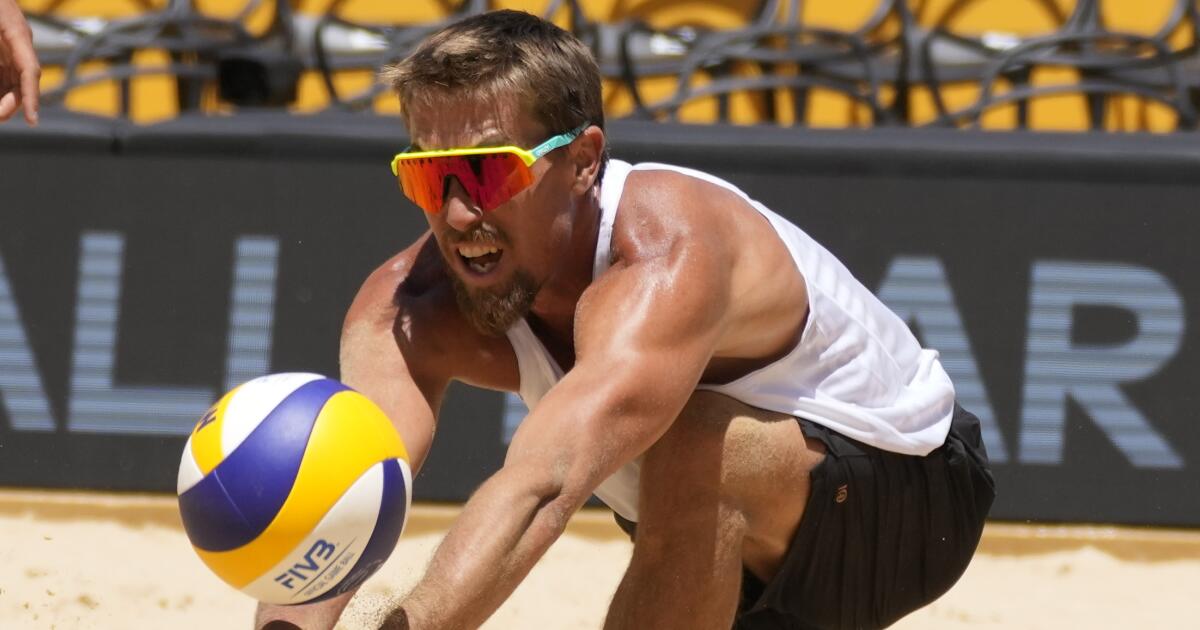
Taylor Crabb is no stranger to South California beaches. The Long Beach State alum returns home this weekend to compete in AVP League matches.
It marks the first time AVP will compete in Long Beach since 2020 and allows players to compete at the 2028 Olympics beach volleyball venue.
Crabb, 34, made his AVP debut in 2013 with his brother, Trevor, and advanced from the qualifier in Manhattan Beach before finishing 25th in his first tournament.
After years of competing with various different partners, Taylor Crabb and Andy Benesh have delivered the top performances this AVP season.
The following interview with Crabb has been edited for clarity and length.
Are you excited to compete in this weekend’s event at Long Beach?
Crabb: Very excited. A lot of my college teammates and part of the school have reached out, saying that they’re gonna come. So I’m excited to get a chance to play in front of them again.
When was the last time you were in Long Beach?
Crabb: I always try to go down there for alumni events or any big games they have. I went to UCLA against Long Beach last year, when it was No. 1 versus No. 2, so I always try to get down there and support them.
You missed out on the chance to compete in the 2020 Olympics because of COVID-19 restrictions and chose not to pursue a spot at the 2024 Olympics. Are you fired up to try to compete in the 2028 Olympics, knowing that Long Beach will host the competition?
Crabb: Yeah, it’s definitely an exciting time having the Olympics in Long Beach, and we kind of get to break it in this weekend. As you said, Tokyo didn’t go the way I wanted, but I’m going full force now. I have a great partner in Andy Benesh, who obviously went to the Paris Olympics, and if it weren’t for the Olympics being in Long Beach, and me getting a partner like Andy, I’m not even sure I’d be going for it, but because of those two things, I want to make the most of it.
You mentioned that if it wasn’t for a partner like Andy, you wouldn’t be going for it. What do you mean by that?
Crabb: I didn’t feel motivated by playing in all the international events, but now, I think, sitting out kind of lit the fire under me, and I’m really motivated now.
You’ve had different partners throughout your time. What other motivation does Andy give you?
Crabb: He’s been, in my mind, the top blocker for the U.S. the last four or five years. Seeing the professionalism he brings every day to practice, on and off the court, while traveling and when showing up to tournaments, it rubs off on you and that’s really motivating to see. And I just want to make him proud.
Why do you love volleyball?
Crabb: A lot of reasons, but it’s just a feeling I have when I’m out there on the court. It feels natural. It feels like home. I was born into a volleyball family. I had a volleyball in my hands my entire life, so I’ve always just enjoyed it.

NEWYou can now listen to Fox News articles!
CM Punk appeared on “Friday Night SmackDown” ready to take on any challenger that was ready to step to him after winning the Undisputed WWE Championship against Sami Zayn.
Punk entered the ring in Oklahoma City and called back to the “Monday Night Raw” after WrestleMania 42 when he told Cody Rhodes he’d be ready to deliver if a championship opportunity fell “out of the sky.”
COMPLETE PRO WRESTLING COVERAGE ON FOX NEWS DIGITAL
Cody Rhodes and CM Punk face off during SmackDown at Paycom Center in Oklahoma City, Okla. (Craig Ambrosio/WWE via Getty Images)
“When championship opportunities fall out of the sky, CM Punk catches them,” he said.
Punk named potential SmackDown superstars he’d think might come for the title, including Gunther, Finn Balor, Royce Keys, Damian Priest and Trick Williams. He even said that Zayn could come back around and get his rematch if he wanted. He didn’t mention Rhodes’ name, but the “American Nightmare” came out uncalled and marched his way down to the ring.
“I don’t think you and I can run away from each other anymore,” Punk told Rhodes.
Cody Rhodes looks on during SmackDown at Paycom Center in Oklahoma City, Okla., on July 10, 2026. (Craig Ambrosio/WWE via Getty Images)
Rhodes agreed and mentioned that Punk would want a match with him, just “say when.” It was a quick retort from Punk, who said, “when.” SmackDown general manager Nick Aldis, who was in the ring for the segment, booked the match for SummerSlam.
Punk will defend the Undisputed WWE Championship at SummerSlam, which takes place Aug. 1 and 2 at U.S. Bank Stadium in Minneapolis.
First, however, Punk and Rhodes will be involved in a tag team match at Saturday Night’s Main Event in New York City next week. Aldis made the match after Gunther demanded that Aldis put him in a match against Punk. Gunther was hoping it would be for the championship. Instead, Gunther will tag with Zayn.
Gunther didn’t take too kindly to that and attacked Aldis. Rhodes came back out to break up the calamity. He wanted to take on Gunther after the show went off air but Gunther walked away.
Gunther makes his entrance during SmackDown at Paycom Center in Oklahoma City, Okla., on July 10, 2026. (Rich Wade/WWE via Getty Images)
CLICK HERE TO DOWNLOAD THE FOX NEWS APP
Punk definitely has his hands full as he moves to SmackDown to become a fighting champion.
-

 Illinois1 minute ago
Woman in custody after breaking into home in Aurora, Illinois, police say
-

 Indiana4 minutes ago
Maximum Offer Relishes Stakes in Indiana Oaks
-

 Iowa9 minutes ago
Iowa State Football Predicted for Tough First Season Under Jimmy Rogers
-
 Kansas16 minutes ago
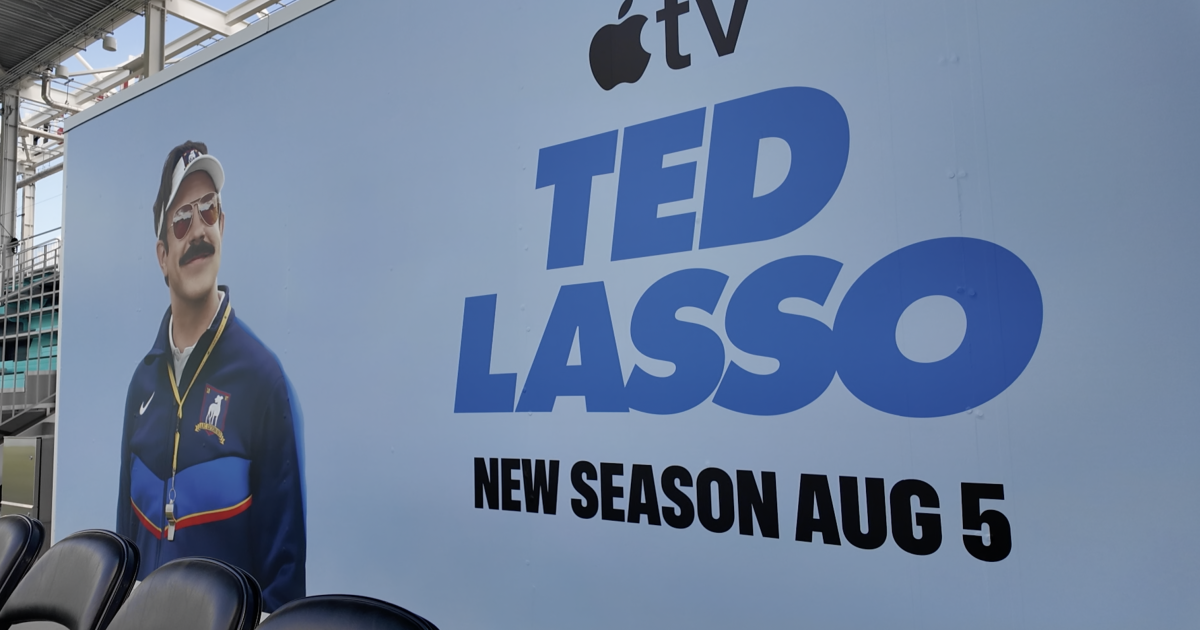
New season of ‘Ted Lasso’ brings Kansas City back into global spotlight
-
Kentucky19 minutes ago
Lucas Glover hangs onto lead in ISCO Championship in Kentucky
-

 Louisiana24 minutes ago
LSP: Ascension Parish resident dies in two-vehicle crash
-

 Maine31 minutes ago
Collins confident as Maine Democrats move to replace Platner
-

 Maryland34 minutes ago
The Final Stretch for Maryland’s 2027 Class: Identifying the Remaining Must‑Gets


