Sports
Footballers’ shin pads – the piece of equipment some pros prefer not to wear


Michael Olise does not like shin pads.
So much so that when the France winger was being brought on for Leroy Sane during Bayern Munich’s 1-0 win over Paris Saint-Germain in the Champions League in November, he was not wearing any.
This was spotted by the game’s fourth official Florin Andrei, who instructed the 23-year-old to put some on. Olise reluctantly tucked some into his socks before slinging them out again when officials looked away.
As Michael Olise prepared to come off the bench for Bayern in their Champions League game vs. PSG, he appeared to have a brief exchange with the fourth official.
Moments later, Olise was seen putting his shinpads into his socks, but then slyly removed his left guard and tossed… pic.twitter.com/ep0mqMLG79
— ESPN FC (@ESPNFC) November 28, 2024
The International Football Association Board (IFAB) laws of the game state that shin pads must be worn by all players. There are no specific rules regarding size but Law 4 states that they “must be made of a suitable material and be of an appropriate size to provide reasonable protection, and be covered by the socks”.
For years, many footballers have been playing fast and loose with their interpretation of the rules. The low socks and micro shin pads trend made cool by the likes of Manchester City’s Jack Grealish and Chelsea’s Lauren James has become vastly popular in recent years.
GO DEEPER
The art of the football sock
“I don’t wear shin pads,” Olise told a fan who tried to gift him a pair recently, although the PSG incident may have been a one-off, with the 23-year-old usually spotted wearing shin protection in matches.
The former Crystal Palace player is not the only professional footballer who would prefer to enter games shin pad free if it was up to him.
“I don’t really like wearing shin pads — we never wear shin pads in the training,” former Sheffield United striker Oli McBurnie told The Athletic in November. “I want to feel how I train every day, so I wear normal socks. I cut my socks and roll them down, and then have little bits of foam that I put in like padding just to feel as comfortable.”

Manchester City’s Jack Grealish is an infamous tiny shin pad wearer (Robbie Jay Barratt – AMA/Getty Images)
Sam Weller Widdowson is credited with inventing shin pads back in 1874. He was a cricketer as well as a footballer for Nottingham Forest, later becoming the club’s chairman and a player once capped by England. It is said that Weller Widdowson cut down a pair of cricket pads and started wearing them to protect him during football matches, and that his idea soon caught on.
Shin guards in sport have been heavily influenced by greaves, an ancient armour fashioned by soldiers dating back to the Bronze Age that protected the shinbone, which has little but skin to protect it.
It was in 1990 when FIFA (making use of IFAB’s laws) ruled that shin guards must be worn by all players in every game. Before that, players could pick and choose whether they protected their shins and ankles. Back then, shin guards were clunky and protected both a player’s ankle as well as their shin.

Custom-made Diadora shin pads made for Roma’s Francesco Totti in 2006, which now appear thoroughly retro by modern standards (Giuseppe Cacace/Getty Images)
They have slimmed down somewhat in the past three decades. Now players can source credit card — or, if you like, biscuit-sized shin guards. This trend has become a worry for grassroots football clubs, some of whom have now sought to enforce bans on young players wearing them.
Penistone Church, a team from Barnsley in South Yorkshire, made headlines last August when they put a ban in place after a 15-year-old player named Alfie suffered a double leg break when getting into a challenge while wearing miniature shin pads.
“It’s not worth the extra bit of speed to have you knocked out of football for months and months. It’s not worth the risk,” Alfie told the BBC after a 50-50 tackle left him nursing a broken tibia and fibular. The shin pads the teen was wearing at the time of the tackle measured just 3cm (1.1in) by 9cm (3.5in).
@officialbhafc The world’s smallest shin pad… 🤣 #BHAFC #AFC #PL ♬ original sound – Brighton & Hove Albion FC
Warrington Town defender Peter Clarke is 25 games away from reaching his 1,000th senior appearance since his Everton debut in the Premier League in January 2001. At 42 years of age, he says he can remember the cumbersome and bulky shin pads of the late 80s, 90s and early 2000s, with their built-in ankle protectors and velcro straps. And while he wears smaller guards than the ones he started his career with, plenty of on-pitch experiences have ensured that he has never downsized too much.
“The ones I wear now are carbon fibre and they have chips and scratches in which, when I look at them, I’m glad to be wearing them,” the centre-back, who also played for Huddersfield Town, Oldham Athletic and Tranmere Rovers, says.
“Twenty years ago, tackles would fly in a lot more. I remember going into a full-blown tackle and getting hit on the shin. As the game wore on, I realised there was blood on my sock — the studs had gone right through the shin pad and left a two-inch cut down my shin. It is a contact sport and it is wise to be well protected rather than wearing the smallest shin pads possible.”

Shin pads are designed to protect players’ legs during moments of impact (VI Images via Getty Images)
His longevity means Clarke is playing in the National League North alongside team-mates at Warrington who were born after he made his first professional appearance. What does he think is the reason that more players are opting for tiny shin pads these days?
“I don’t like the feel of them slipping around, so I wear sleeves to prevent that,” Clarke says. “Whether it is that or whether it is how an individual looks when they are playing; but I’m not sure a seven-inch piece of plastic or carbon fibre is going to slow an individual down that much. I’m not entirely sure but things have certainly changed and it is not for the best in terms of player safety.”
Clarke estimates he has used five or six pairs of shin pads throughout a career that has spanned more than 25 years and saw him defend against Thierry Henry (then of Arsenal) and Cristiano Ronaldo (then of Manchester United). He makes sure his daughter and son wear adequately-sized shin pads for their own protection when playing and encourages others to do the same.
While he has opted for plainer efforts, his children have customised guards with pictures of themselves and their family on. That is something a lot of players at all levels are opting for now, with some elite players even having pictures of just themselves on their own shin pads.

Cristiano Ronaldo wore shin pads at Euro 2024 featuring images of his nearest and dearest (Marcus Brandt/picture alliance via Getty Images)
Manchester City and Brazil goalkeeper Ederson, and Crystal Palace and France striker Jean-Philippe Mateta are among those who do take to the pitch with images of their own faces tucked inside their socks.
For every Luka Modric, who wears one with photos of himself playing for Croatia and winning the Champions League with Real Madrid and the other of his wife and children, which he often kisses before stepping onto the pitch, there’s a Declan Rice who prefers to keep things simple with plain shock-absorbing material guards.

Luka Modric gives his shin pad a kiss for luck (David S. Bustamante/Soccrates/Getty Images)
England and Arsenal striker Alessia Russo has a selfie with her parents printed at the bottom of hers and above is an image of her iconic backheel nutmeg goal against Sweden at the European Championship in 2022, which was nominated for the Puskas award that same year.

Arsenal and England striker Alessia Russo’s shin pads (Molly Darlington – UEFA/UEFA via Getty Images)
For players, shin pads can serve not just as protection but as positive homages to help psych themselves up before a game.

Former Real Madrid striker Joselu wore a picture of a dog on his shin guards for a Champions League quarter-final last season (Gonzalo Arroyo – UEFA/UEFA via Getty Images)
Some footballers opt to have their shin guards specially fitted. When former Wales international Gareth Bale was at Real Madrid, he wore a pair made by Podoactiva, a Biotechnology company that specialises in podiatry and biomechanics. It also designs custom-fitted insoles for players’ boots.
Ultimately, shin pads are there to protect players from serious injury but have also become a fashion statement — and, believe it or not, some shin pads are now supporting some players in sourcing moves in the transfer window.
Italy and Lazio striker Martina Piemonte moved from AC Milan to Everton in 2023 and put the transfer to the Women’s Super League in part down to the data her XSEED shin guards, created by Italian analytics company Soccerment, helped her collect during matches.
Aldo Comi is co-founder and CEO of the wearable technology company who have been fine-tuning their artificially intelligent shin guards since the product’s official launch in 2022. They now have approximately 3,000 players wearing XSEED and using the adjacent app, which allows players to interpret their own data. As brand ambassador, Inter Milan full-back Federico Dimarco is one of the more high-profile male footballers wearing the shin guards.
“We try to give the player ownership of their data so that they can use it to improve, to be faster and better, but then also to gain visibility,” Comi says. Soccerment’s shin pads measure a player’s speed, sprints, shots, crosses, passes and more. They also became the first wearable technology to provide expected goals (xG) metrics.

Soccerment’s ‘connected’ shin pads on display at the Consumer Electronics Show (CES) in Las Vegas in 2020 (Robyn Beck/AFP via Getty Images)
Soccerment recently spent six days in California at the Major League Soccer youth tournament MLS NEXT Fest. “For six days, we datafied the 35 matches and more than 220 players,” Comi explains. “And basically, what we did there was create a scouting platform at the event.”
Comi says they were able to create a data breakdown in order to scout players (one of their goals is to create a worldwide scouting platform from this data) who outperformed their peers in various areas. The company has noticed the recent trend in shrinking shin guards, though, particularly among youth players — and are already reacting to it.
“The past two years, the trend has been having smaller and smaller shin guards. In some cases, players don’t even wear them,” he says. “You can see a lot of professional footballers are faking it by using these little sponges underneath their socks which, in my view, is dangerous. What we need to do (at Soccerment) is respond to this trend, which is why we are working on resizing our shin guards and making them smaller and lighter.”

Former Blackpool inside forward Allan Brown, pictured in 1953, shows shin pads as they once were (Allsport UK/Getty Images)
But Soccerment is first off focused on creating shin guards that — before capturing data and protecting the technology within each pad — protect the player.
“We wanted to have them certified as a protective equipment and that is why we had to select the premium materials. For example, we went for a copolymer, which is also used in the aerospace sector for its ability to absorb shocks. It’s been expensive for us but it makes the shin guards really protective.
“And that should be the main purpose of a shin guard: to protect your shins.”
(Top photo: Pau Barrena/Getty Images; design: Dan Goldfarb)






NEWYou can now listen to Fox News articles!
Russell Wilson and Sean Payton spent just one NFL season together, but tension lingered after a rocky year.
And it appears the tension that built up from that tumultuous stretch continues to linger.
Wilson’s interview on the “Bussin’ With the Boys” podcast, recorded before last month’s Super Bowl between Seattle and New England, recently resurfaced.
In the interview, Wilson doubled down on his October comment labeling Payton “classless,” saying he felt slighted by his former coach’s remarks.
Head coach Sean Payton of the Denver Broncos talks to quarterback Russell Wilson on the sideline during an NFL preseason football game against the Arizona Cardinals at State Farm Stadium Aug. 11, 2023, in Glendale, Ariz. (Ryan Kang/Getty Images)
“[When] you’ve been on the same side or this and that, and I got the same amount of rings as you got, meaning Sean, right?” said Wilson, who won a Super Bowl with the Seattle Seahawks as Payton did coaching for the New Orleans Saints.
“I got a lot of respect for him as a play-caller, this and that, but to take a shot, I don’t like. I don’t think it’s necessary, you know, I mean, especially when I’m not even on your own team anymore. So, for me, there’s a point in time where you have to, I’ve realized, I’ve stayed quiet for so long. There’s a there’s a time and place where I’m not.
“I know who I am as a competitor, as a warrior, as a champion, too, and, you know, I’ve beaten Sean, too. You know, like we’ve been on the same place and the same thing. And so, it’s not a matter of disrespect. Just don’t disrespect me.”
Sean Payton and Russell Wilson of the Denver Broncos during an a game against the Minnesota Vikings at Empower Field at Mile High Nov. 19, 2023, in Denver, Colo. (Ryan Kang/Getty Images)
After a rocky one-year stint with the Pittsburgh Steelers in 2024, Wilson joined the New York Giants last offseason. However, he was relegated to a backup role after just three games.
Rookie Jaxson Dart quickly showed promise once he had the chance to start, but his season was briefly derailed by injury. Jameis Winston — not Wilson — stepped in for Dart in a handful of games. Dart threw three touchdowns in a Week 7 matchup with the Broncos, nearly pulling off an upset in what was eventually a close loss.
After the game, Payton said Dart provided a “spark” to the Giants’ offense.
“I was talking to [Giants owner] John Mara not too long ago, and I said, ‘We were hoping that that change would have happened long after our game,’” Payton said.
The New York Giants’ Russell Wilson attempts to escape a sack by Dallas Cowboys defensive end James Houston (53) in the first half of a game Sept. 14, 2025, in Arlington, Texas. (AP Photo/Julio Cortez)
Payton also said the Broncos would have faced less of a challenge had Wilson been under center.
“Classless … but not surprised,” Wilson responded in a social media post. “Didn’t realize you’re still bounty hunting 15+ years later though the media.”
Despite last season’s struggles and chatter about his football future, Wilson does not appear ready to call it quits in 2026.
“I wanna play a few more years for sure,” he said. “I think, for me, I’ve always had the vision of getting to 40, at least. I think the game is different. Quarterbacks, we get hit. It’s not, you know, we get hit hard, but … there’s certain rules. I mean, back in the day when I started, bro, it was you just get [clobbered].
“I mean, so I feel like the game allows you to, you know, live a little longer, I guess. I feel healthy. I feel great. But I think, more than anything else is, do you love the game? Do you love studying? Do you love the passion for it all? Do you love the process? Do you love the practice? Do you love — everybody loves the winning part of it, but it’s process. There’s a journey that you got to be obsessed with. And that part I’m obsessed with.”
Follow Fox News Digital’s sports coverage on X, and subscribe to the Fox News Sports Huddle newsletter.
Related Article

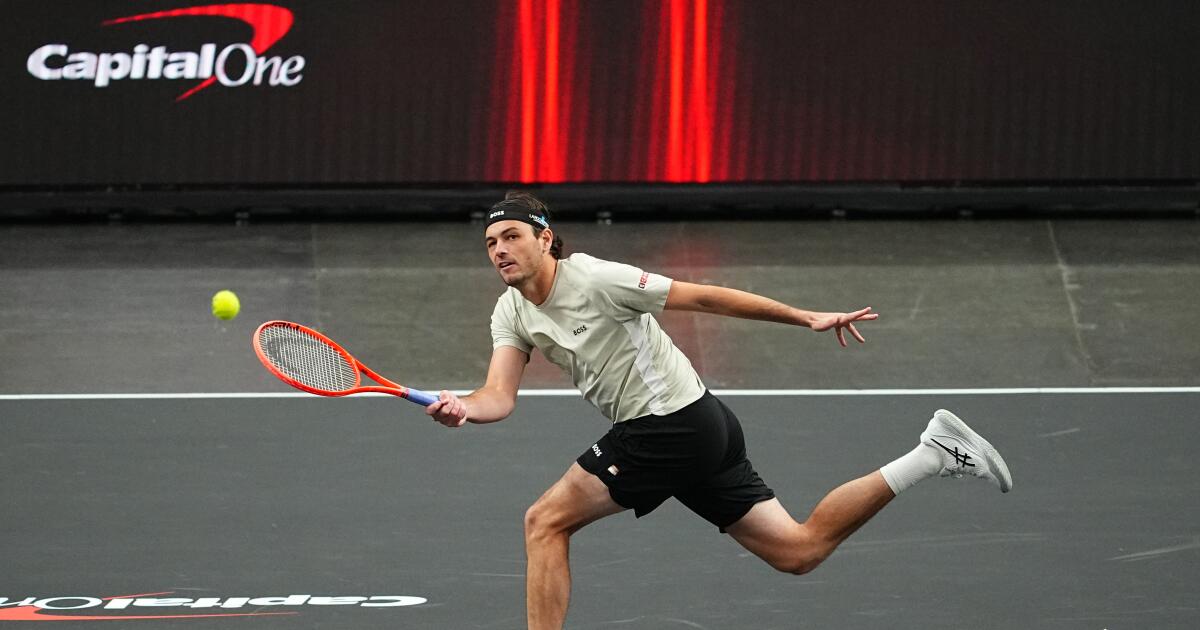
The early rounds of the BNP Paribas Open began Wednesday, with top seeds slated to start play Friday during the 12-day ATP and WTPA Master 1000 tournament.
A busy stretch of the tennis season reaches another gear at Indian Wells Tennis Garden, the second largest outdoor tennis stadium in the world.
While many consider it the “fifth Grand Slam” because of its elite player field, amenities and equal prize money for men and women, professionals acknowledge the tournament is part of a stressful stretch on the tennis calendar.
Indian Wells is followed by the Miami Open, another two-week Master 1000 tournament. The tour stops are known as the “Sunshine Double.”
Some players made the short trip from Indian Wells to Las Vegas this past weekend to participate in the MGM Grand Slam, an exhibition designed to help players ramp up for back-to-back tournaments.
American Reilly Opelka, a 6-foot–11 pro, said managing fatigue after a series of tournaments before hitting Indian Wells has altered his practice and play in exhibition matches, including a loss to 19-year-old Brazilian Joao Fonseca in Las Vegas.
“Normally in any kind of competition, you get excited and play with a pressure point … but you don’t feel this when you are practicing,” Opelka said.
“I was trying to feel like this a few days ago while practicing with … [Tommy Paul,] but instead we got tired and hungry. … That usually doesn’t happen. We just decided to stop and go to eat somewhere.”
Paul said despite the decision to cut practice short, he feels fresh for the upcoming events.
“I started the year pretty well and for Americans, we are excited for the Sunshine Double,” Paul said.
Casper Rudd lost to Opelka during the first round of the Las Vegas exhibition. The Norwegian also lost a week ago during the first round of the Acapulco Open, falling to Chinese qualifier Yibing Wu in straight sets.
Rudd said he felt “extremely tired” after the Australian Open in January.
Rancho Palo Verdes resident Taylor Fritz, ranked No. 7 in the world, said the best way to prepare yourself for grueling tour schedule is “putting [in] the time, work and repetition.”
“… Be there, be focused on the quality that you are doing,” said Fritz, a 28-year-old who won the Indian Wells title in 2022.
While some players are guarding against burnout, others struggled to even reach California. Some players who live in Dubai, including Russians Daniil Medvedev and Andrey Rublev, have to contend with closed airspace triggered by the U.S. and Israel bombing Iran.
The ATP announced Wednesday that, “the vast majority of players who were in Dubai have successfully departed today on selected flights.”
Sports
Law firm fighting for women’s sports in SCOTUS battle comments on ruling possibly impacting SJSU trans lawsuit

NEWYou can now listen to Fox News articles!
A law firm leading the charge in the ongoing Supreme Court case over trans athletes in women’s sports has responded after a federal judge suggested the case’s ruling could impact a separate case involving a similar issue.
Colorado District Judge Kato Crews deferred ruling in motions to dismiss former San Jose State volleyball co-captain Brooke Slusser’s lawsuit against the California State University (CSU) system until after a ruling in the B.P.J. v. West Virginia Supreme Court case, which is expected to come in June.
Slusser filed the lawsuit against representatives of her school and the Mountain West Conference in fall 2024 after she allegedly was made to share bedrooms and changing spaces with trans teammate Blaire Fleming for a whole season without being informed that Fleming is a biological male.
Meanwhile, the B.P.J. case went to the Supreme Court after a trans teen sued West Virginia to block the state’s law that prevents males from competing in girls’ high school sports.
The Alliance Defending Freedom (ADF) is the primary law firm defending West Virginia in that case at the Supreme Court, and has now responded to news that Slusser’s lawsuit could be affected by the SCOTUS ruling.
“We hope the ruling from the Supreme Court will affirm that Title IX was designed to guarantee equal opportunity for women, not to let male athletes displace women and girl in competition. It is crucial that sports be separated by sex for not only the equal opportunity of women but for safety and privacy. Title IX should protect women’s right to compete in their own sports. Allowing men to compete in the female category reverses 50 years of advancement for women,” ADF Vice President of Litigation Strategies Jonathan Scruggs said.
Slusser’s attorney, Bill Bock of the Independent Council on Women’s Sports, expects a Supreme Court ruling in favor of the legal defense representing West Virginia, thus helping his case.
(Left) Brooke Slusser (10) of the San Jose State Spartans serves the ball during the first set against the Air Force Falcons at Falcon Court at East Gym in Colorado Springs, Colorado, on Oct. 19, 2024. (Right) Blaire Fleming #3 of the San Jose State Spartans looks on during the third set against the Air Force Falcons at Falcon Court at East Gym on October 19, 2024 in Colorado Springs, Colorado. ( Andrew Wevers/Getty Images; Andrew Wevers/Getty Images)
“We’re looking forward to the case going forward,” Bock told Fox News Digital.
“I believe that the court is going to find that Title IX operates on the basis of biological sex, without regard to an assumed or professed gender, and so just like the congress and the members of congress that passed Title IX in 1972, allowed this specifically provided for in the regulations that there had to be separate men’s and women’s teams based on biological sex, I think the court is going to see that is the original meaning of the statute and apply it in that way, and I think it’s going to be a big win in women’s sports.”
The Supreme Court’s conservative majority appeared prepared to rule in favor of West Virginia after oral arguments on Jan. 13.
Slusser spoke on the steps of the Supreme Court on Jan. 13 while oral arguments took place inside, sharing her experience with a divided crowd of opposing protesters.
With Fleming on its roster, SJSU reached the 2024 conference final by virtue of a forfeit by Boise State in the semifinal round. SJSU lost in the final to Colorado State.
Slusser went on to develop an eating disorder due to the anxiety and trauma from the scandal and dropped out of her classes the following semester. The eating disorder became so severe, that Slusser said she lost her menstrual cycle for nine months. Her decision to drop her classes resulted in the loss of her scholarship, and her parents said they had to foot the bill out of pocket for an unfinished final semester of college.
President Donald Trump’s Department of Education determined in January that SJSU violated Title IX in its handling of the situation involving Fleming, and has given the university an ultimatum to agree to a series of resolutions or face a referral to the Department of Justice.
Among the department’s findings, it determined that a female athlete discovered that the trans student allegedly conspired to have a member of an opposing team spike her in the face during a match. ED claims that “SJSU did not investigate the conspiracy, but later subjected the female athlete to a Title IX complaint for ‘misgendering’ the male athlete in online videos and interviews.”
CLICK HERE TO DOWNLOAD THE FOX NEWS APP
SJSU trans player Blaire Fleming and teammate Brooke Slusser went to a magic show and had Thanksgiving together in Las Vegas despite an ongoing lawsuit over Fleming being transgender. (Thien-An Truong/San Jose State Athletics)
SJSU Athletic Director Jeff Konya told Fox News Digital in a July interview that he was satisfied with how the university handled the situation involving Fleming.
“I think everybody acted in the best possible way they could, given the circumstances,” Konya said.
Follow Fox News Digital’s sports coverage on X, and subscribe to the Fox News Sports Huddle newsletter.
Related Article

Five takeaways from Denver’s restaurant report

Seattle’s Real Time Crime Center triples arrest odds, according to police review – MyNorthwest.com

How to watch San Diego State vs. UNLV basketball game

Milwaukee oversight body asks for more police pursuit policy changes

Stolen bikes derail program that teaches Atlanta youth to ride

Florida High School Football Rankings: Top 25 teams – Oct. 21

Cleary's 21 help Le Moyne down Central Connecticut State 69-64 in OT

How old is Bo Nix? What to know about Oregon quarterback ahead of 2024 NFL Draft

99th annual Pony Swim held in Virginia

Indiana Members Credit Union announced as new anchor tenant at Bottleworks District

DOJ continues Biden autopen probe despite former president unlikely to face charges
Fact check: Did French border guards mock influencers returning from Dubai amid Iran war?

Iran’s fight for survival / The widening war / Trump’s nebulous goals : Sources & Methods

Map: 4.9-Magnitude Earthquake Shakes Louisiana

Paxton vows he’s ‘staying in this race’ even if Trump backs Cornyn in Texas GOP clash
-

 World1 week ago
Exclusive: DeepSeek withholds latest AI model from US chipmakers including Nvidia, sources say
-

 Wisconsin4 days ago
Setting sail on iceboats across a frozen lake in Wisconsin
-

 Massachusetts1 week ago
Mother and daughter injured in Taunton house explosion
-

 Massachusetts3 days ago
Massachusetts man awaits word from family in Iran after attacks
-

 Maryland5 days ago
AM showers Sunday in Maryland
-

 Florida5 days ago
Florida man rescued after being stuck in shoulder-deep mud for days
-

 Denver, CO1 week ago
10 acres charred, 5 injured in Thornton grass fire, evacuation orders lifted
-

 Oregon7 days ago
2026 OSAA Oregon Wrestling State Championship Results And Brackets – FloWrestling