Sports
Commentary: Roki Sasaki's shoulder issue leaves Dodgers in a familiar and problematic position

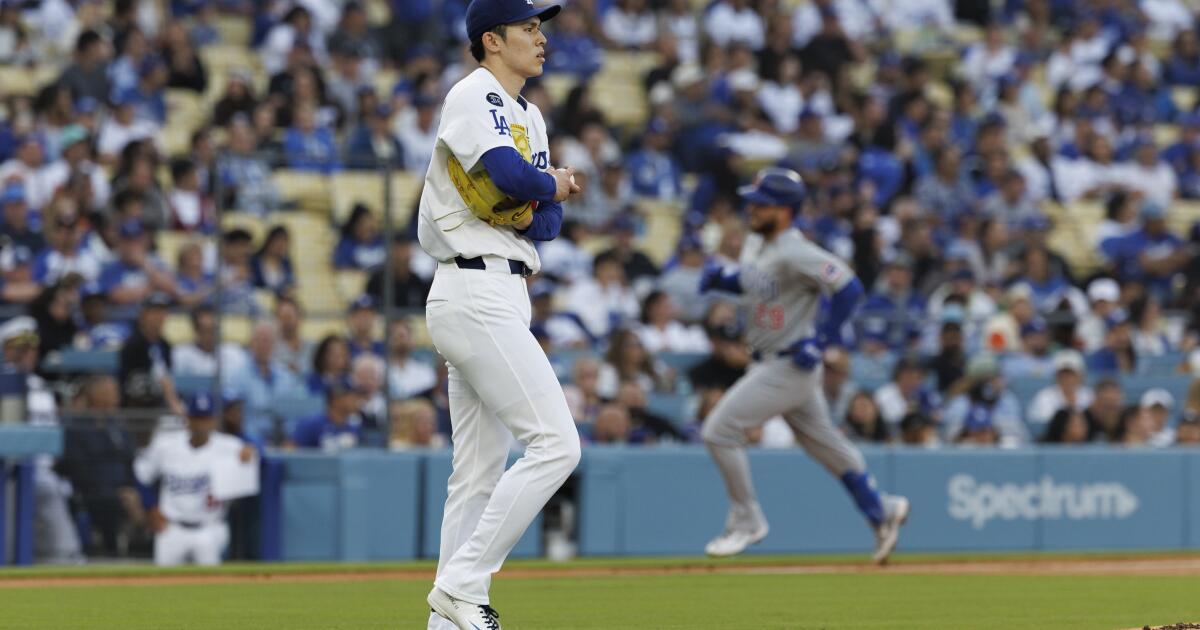
Like pretty much every other time the Dodgers have found themselves in a self-made mess, the task of downplaying a major problem once again was made the responsibility of manager Dave Roberts.
So, in the aftermath of a deflating 11-1 defeat by the Oakland Athletics on Tuesday night, Roberts trudged into the interview room at Dodger Stadium and applied a good old Stan Kasten spin to Roki Sasaki’s move to the 15-day injured list.
The point relayed by Roberts was basically this: Sasaki underwhelmed in his eight major league starts because of a shoulder pain that he kept secret from the Dodgers “for the last weeks,” and not because the 23-year-old rookie right-hander wasn’t as good as they previously thought.
“He hasn’t been as productive as he would have liked because he was compromised,” said Roberts, who added that Sasaki revealed his condition to the team after his most recent start.
The explanation raised an equally alarming possibility, however.
If Roberts’ story was accurate, and Sasaki experienced a shoulder impingement similar to the one that slowed him down last year in Japan, wouldn’t that point to a chronic problem?
As it was, Sasaki was already viewed as a high injury risk. He never remained healthy for an entire season with the Chiba Lotte Marines.
At this point, what’s worse? That Sasaki’s lack of control and decline in fastball velocity were because of a chronic shoulder issue? Or because he just was too raw to compete in the major leagues?
Either scenario would be problematic.
So, what now?
As much as the Dodgers sold Sasaki on how they could one day guide him to a Cy Young Award, his future isn’t their only priority. They also have to consider what’s best for their team, which is positioned to become baseball’s first repeat champion in a quarter century.
Even if the Dodgers acknowledge that Sasaki is more of a long-term project than a short-term solution and want to send him to the minor leagues when he returns, they might not have the luxury of doing so. They have signed four potential frontline pitchers in the last two years, and three of them are currently on the injured list — Sasaki, Blake Snell and Tyler Glasnow. The other, two-way player Shohei Ohtani, isn’t expected to pitch until after the All-Star break.
Snell was examined by a team doctor on Tuesday but the team didn’t provide any details about his condition. Glasnow played catch but Roberts didn’t provide a timeline for his return.
The rotation is in such a state of ruin that not only were the Dodgers forced to start Landon Knack on Tuesday, they were desperately awaiting the return of 37-year-old Clayton Kershaw four days later.
Roberts described Sasaki’s injury as “benign” but didn’t say when he might resume throwing. The manager insisted there were no thoughts of sending him to the minors, despite Sasaki posting a 4.72 earned-run average and completing six innings in just one start.
“I think our goal is to get him healthy, get him strong, make sure his delivery is sound for him to pitch for us,” Roberts said.
In other words, Sasaki will return to the mound in the major leagues. He will have to gain familiarity with low-quality American baseballs in the major leagues. He will have to become more comfortable with the pitch clock in the major leagues. He will have to strengthen his body to prevent future injuries in the major leagues. He will have to learn to throw something other than a fastball, forkball and slider in the major leagues.
The Dodgers knew Sasaki would require an adjustment period, but they couldn’t have imagined anything this drastic.
The introductory news conference they staged for Sasaki in January was matched in scale in recent years only by Ohtani’s and Yoshinobu Yamamoto’s. That was where president of baseball operations Andrew Friedman declared Sasaki would start the season in the Dodgers’ rotation, and general manager Brandon Gomes compared him to Paul Skenes of the Pittsburgh Pirates.
Back then, the Dodgers’ plan for Sasaki was simple: Insert him into the rotation and watch him develop into one of the best pitchers in baseball.
Sasaki can still become everything the Dodgers envisioned, but his path to greatness has become infinitely more complicated. Roberts remained characteristically upbeat, saying Sasaki concealed his shoulder problems not because he was selfish but because he didn’t want to let down an injury-ravaged team.
“He’s a great teammate,” Roberts said.
With his rotation crumbling, Roberts didn’t have the luxury of viewing the situation any other way.





The office of Los Angeles City Councilmember Imelda Padilla has begun working with agencies to find a solution to repair infrastructure damage caused by a fire last month that went through a tunnel at Encino Franklin Fields and has limited access to three softball fields used by youth organizations and the high school teams at Harvard-Westlake, Louisville and Sherman Oaks Notre Dame.
The fire on Jan. 22, believed to have been set by a homeless person, took out wooden framing below an asphalt bridge connecting access to a parking lot, making it unusable for safety reasons. Parents have since paid for a temporary scaffold bridge that allows people to traverse the condemned bridge. The parking lot remains out of commission along with handicap access. Notre Dame has not practiced or played games there since, moving to Valley College. Harvard-Westlake and Louisville have resumed practices and games.
The land is owned by the Army Corps of Engineers. The bridge spans a culvert, maintained by the city. The fields are leased.
A spokeswoman for Padilla said in a statement: “Our team has taken the lead in convening City departments and have engaged the Mayor’s Office to help accelerate coordination and solutions. While agencies work through jurisdictional and cost responsibilities, our priority is preventing unnecessary delays and advancing immediate solutions. As damage and improvement needs are evaluated, we are focused on restoring safe access, including exploring a secondary access point to improve parking safety and ADA accessibility for families and field users. Student athletes and families should not bear the burden of administrative complexity, and we are pushing for a coordinated path forward that prioritizes timely repairs and safe access.”
This is a daily look at the positive happenings in high school sports. To submit any news, please email eric.sondheimer@latimes.com.

NEWYou can now listen to Fox News articles!
USA Rugby, the nation’s governing body for the sport of rugby, announced Friday it will be introducing a new “open” gender division to accommodate trans athletes.
The new rule comes more than a year after President Donald Trump’s “Keeping Men Out of Women’s Sports” executive order and nearly seven months after the U.S. Olympic & Paralympic Committee’s (USOPC) new requirement for all governing bodies to comply with it.
“USA Rugby will now have three competition categories; Men’s Division, Women’s Division and Open Division. The Open Division will permit any athlete, regardless of gender assigned at birth and gender identity, to compete in USA Rugby-sanctioned events, whether full contact or non-contact,” the organization said in a statement.
Cassidy Bargell of the United States passes the ball during a women’s rugby World Cup 2025 match against Samoa at LNER Community Stadium in Monks Cross, York, Sept. 6, 2025. (Michael Driver/MI News/NurPhoto)
The organization’s policy also seemingly allows any hopeful competitors to simply select their gender when registering, with potential vetting by officials.
“Division status will be determined during the membership application and registration process, when an athlete selects the ‘gender’ option in Rugby Xplorer. When applying for membership or registering as ‘Female’ or registering for an event in the Women’s Division, an athlete represents and warrants to USA Rugby that they are Female.”
“This representation creates a rebuttable presumption that the individual’s sex identified at birth was female,” the organization’s member policy states.
Gabriella Cantorna, Ilona Maher and Emily Henrich of the U.S. before a women’s rugby World Cup 2025 match against Samoa at York Community Stadium Sept. 6, 2025, in York, England. (Molly Darlington/World Rugby/World Rugby via Getty Images)
“The determination of whether an individual is Female may be established through records from authoritative sources. Only USA Rugby shall have the right to contest the individual’s Women’s Division status or challenge the presumption of an athlete registered as ‘Female.’”
In July, the USOPC updated its athlete safety policy to indicate compliance with Trump’s “Keeping Men Out of Women’s Sports” executive order.
However, Trump has also pushed for mandatory genetic testing of athletes to protect the women’s category at the upcoming 2028 Los Angeles Olympics amid concerns over forged birth certificates allowing biological males to gain access to women’s sports.
CLICK HERE TO DOWNLOAD THE FOX NEWS APP
The USA Rugby goal line flag before a match between the United States and Scotland at Audi Field July 12, 2024, in Washington, D.C. (Scott Taetsch/Getty Images for Scottish Rugby)
USOPC Chief Medical Officer Jonathan Finnoff said at the USOPC media summit in October the SRY gene tests being used by World Athletics and World Boxing are “not common” in the U.S. but suggested the USOPC is exploring options to employ sex testing options for its own teams and that he expects other world governing bodies to “follow suit.”
“It’s not necessarily very common to get this specific test in the United States, and, so, our goal in that was helping to identify labs and options for the athletes to be able to get that testing. And (it was) based on that experience and knowing that some other international federations likely will be following suit,” Finnoff said.
Related Article


Forfeits by high school boys’ soccer teams in the City Section and Southern Section playoffs continued Friday as both sections try to deal with violations of CIF Bylaw 600, which prohibits players from participating in outside leagues during their sports season.
Calabasas pulled out of the Southern Section Division 3 championship because of an ineligible player. Chavez became the sixth City Section school eliminated from the playoffs for using an ineligible player and was replaced by Chatsworth for the City Division I final.
There’s also an allegation about another Southern Section team that could result in another forfeit in the final.
Some high schools thought they had found a solution by not allowing players to play until after their club seasons ended in early December. Cathedral had several players miss its first three games because of several big club tournaments in November and early December.
“You communicate to students and parents,” Cathedral coach Arturo Lopez said. “Unfortunately, there’s more and more academies now.”
Ron Nocetti, the executive director of the CIF, said, “I think we have to have conversations with our sections.”
CIF membership repeatedly has rejected the proposal of getting rid of Bylaw 600. Schools don’t want to have their coaches battling it out weekly with club coaches, which also would place additional pressure on athletes dealing with school work and then having to do double workouts.
The balancing act for students already is tough enough, with the amount of club teams growing in a lot of sports because it’s a lucrative business. The CIF briefly suspended the rule during the pandemic in 2020 but quickly reinstated it.
The problem is club soccer programs are holding competitions in the middle of the high school season, and players, knowing the rule that you can’t play high school and club at the same time, apparently have decided to try to do both with the hope of not getting caught.
This year, they are getting caught. Emails alleging violations started arriving to City Section commissioner Vicky Lagos before the semifinals. If a player is found to have played club, the high school team has to forfeit, and if it happens during the playoffs, the team is eliminated.
Usually the pressure is on schools to make sure rules are not violated, but for Bylaw 600, schools can do everything right and still be punished for a player violating the rule on their own.
Several leagues are expected to present proposals to get rid of Bylaw 600. Nocetti said membership might be open to adopting changes.
“Maybe this is a tipping point for schools saying maybe it’s time to make a big change with the rule,” he said.

Why Iran resists giving up its nuclear program, even as Trump threatens strikes
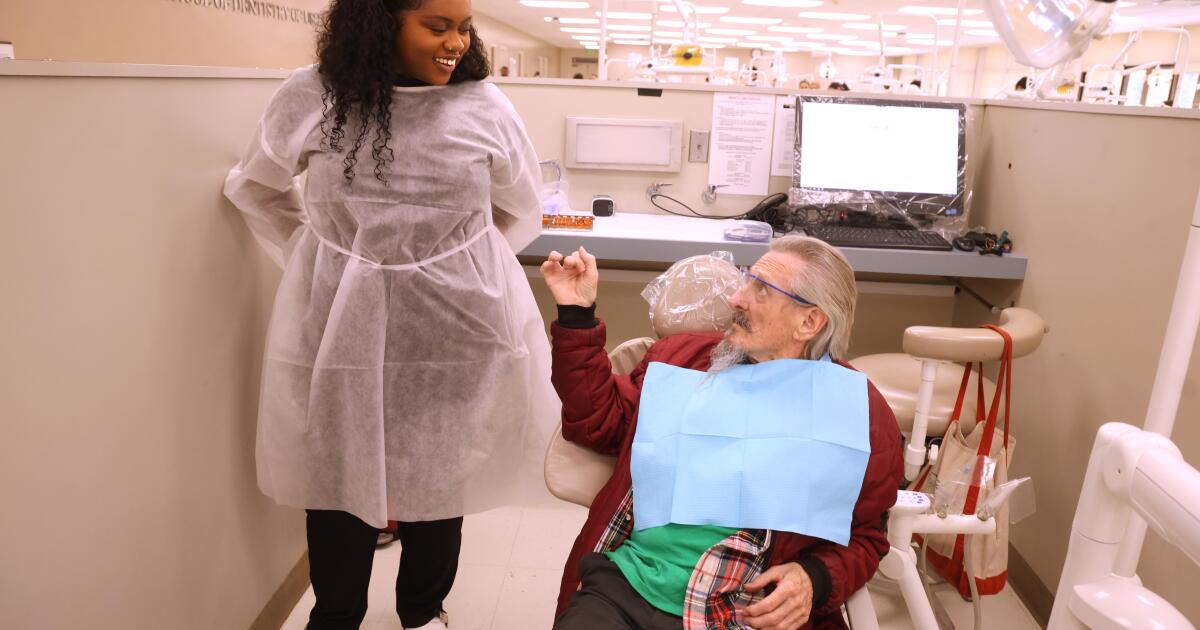
Commentary: My toothache led to a painful discovery: The dental care system is full of cavities as you age
Prep talk: Councilmember looking into helping fix fire damage at Encino Franklin Fields

Israel strikes two schools in Iran, killing more than 50 people

Anthropic CEO says he’s sticking to AI “red lines” despite clash with Pentagon

Florida High School Football Rankings: Top 25 teams – Oct. 21

Cleary's 21 help Le Moyne down Central Connecticut State 69-64 in OT

How old is Bo Nix? What to know about Oregon quarterback ahead of 2024 NFL Draft

99th annual Pony Swim held in Virginia

Indiana Members Credit Union announced as new anchor tenant at Bottleworks District
Israel strikes two schools in Iran, killing more than 50 people
Anthropic CEO says he’s sticking to AI “red lines” despite clash with Pentagon

ICE blasts Washington mayor over directive restricting immigration enforcement

Did the EU bypass Hungary’s veto on Ukraine’s €90 billion loan?
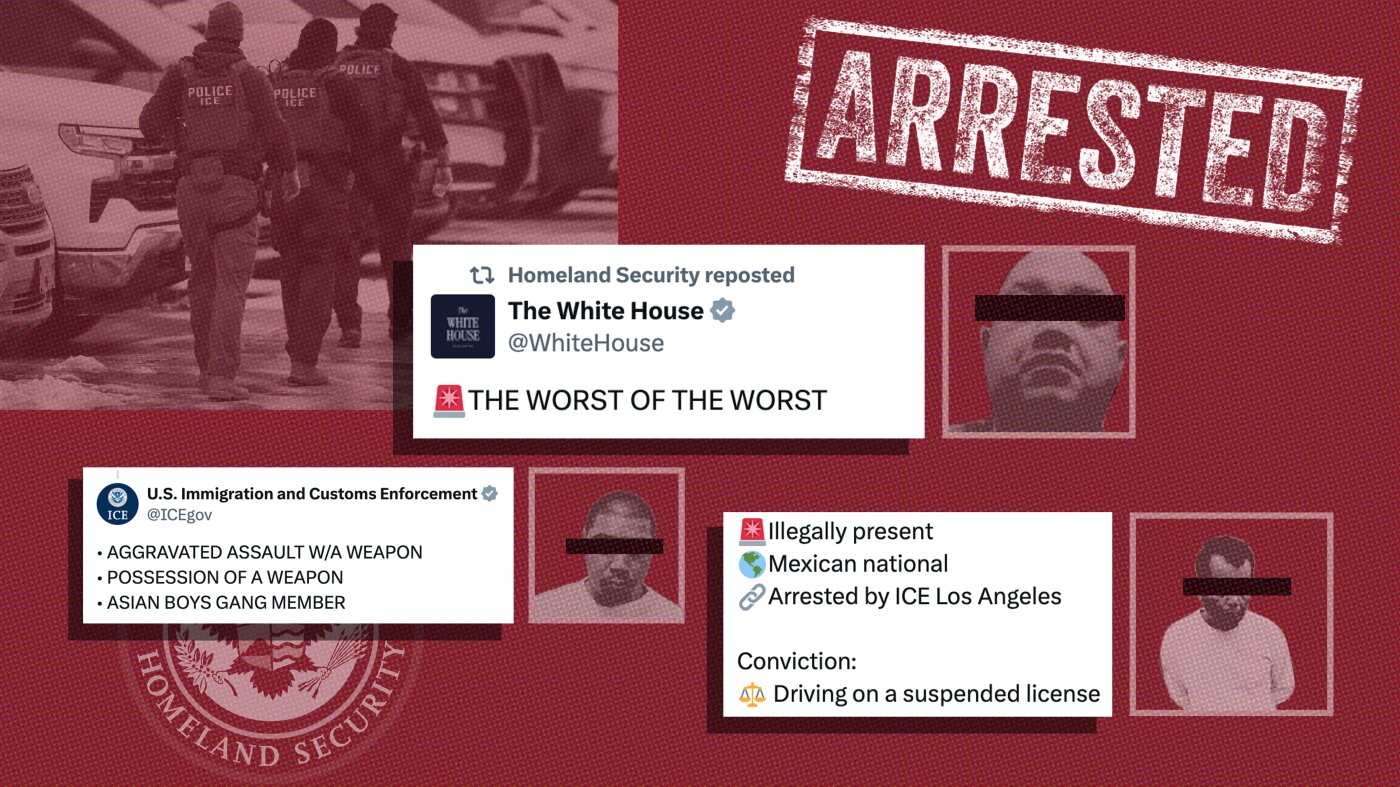
How the federal government is painting immigrants as criminals on social media
-

 World2 days ago
Exclusive: DeepSeek withholds latest AI model from US chipmakers including Nvidia, sources say
-

 Massachusetts3 days ago
Mother and daughter injured in Taunton house explosion
-

 Montana1 week ago
2026 MHSA Montana Wrestling State Championship Brackets And Results – FloWrestling
-

 Louisiana5 days ago
Wildfire near Gum Swamp Road in Livingston Parish now under control; more than 200 acres burned
-

 Denver, CO3 days ago
10 acres charred, 5 injured in Thornton grass fire, evacuation orders lifted
-

 Technology1 week ago
YouTube TV billing scam emails are hitting inboxes
-

 Technology1 week ago
Stellantis is in a crisis of its own making
-

 Politics1 week ago
OpenAI didn’t contact police despite employees flagging mass shooter’s concerning chatbot interactions: REPORT