Sports
A run for the Rose Bowl: Big Ten fans flocking to Pasadena after many years away

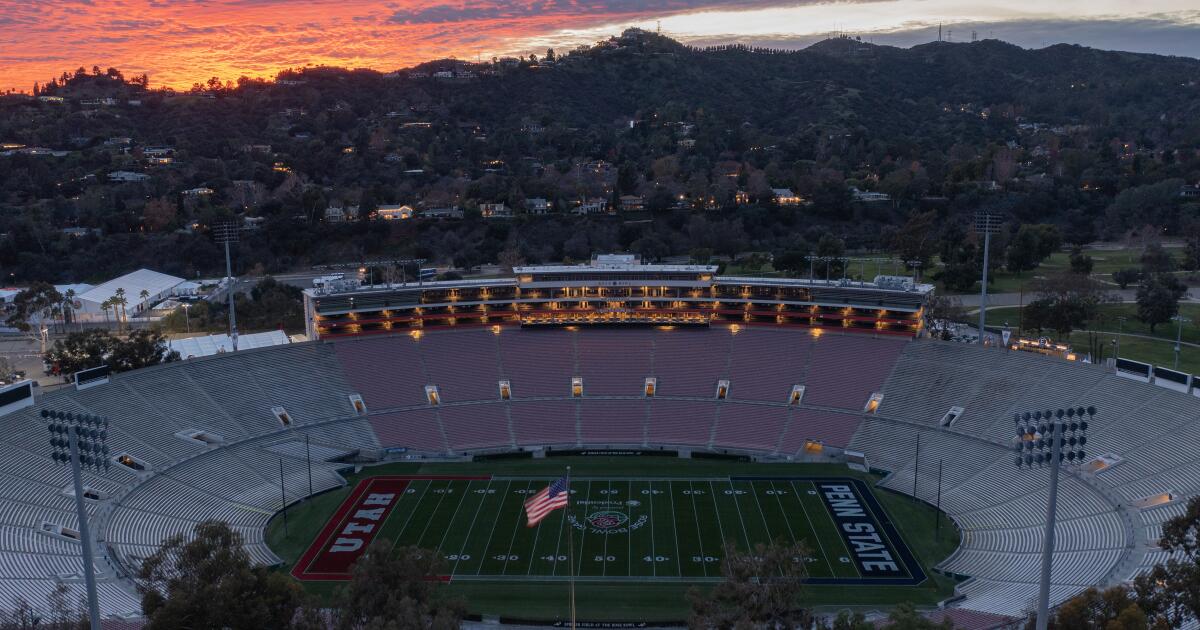
It’s a comeback story years, sometimes decades in the making.
Indiana hasn’t played in the Rose Bowl since its futile attempt to stop USC running back O.J. Simpson on Jan. 1, 1968, making the team’s return this week to face UCLA something of a now-or-never pilgrimage for those who played in that game.
“We have a very thin group of guys who are still around,” said Harry Gonso, the Hoosiers’ quarterback that day 56 years ago, “if you understand what I mean.”
Minnesota was once such a Rose Bowl regular — appearing in the New Year’s Day game as the Big Ten champion in 1961 and ‘62 — that Dave Mona, then a freshman writing for the school’s student newspaper, decided not to splurge on the $49 round-trip train fare to Pasadena to attend the latter game.
“I casually said, ‘No, I won’t go this time — they go every year,’ ” Mona said, “having no idea that it would be more than 50 years later before they would be back.”
Iowa has played in the Rose Bowl only three times in the last half-century, making its return in early November a novelty on par with the team playing a game last season against Northwestern at Wrigley Field in Chicago.
“It’s amazing how many people are already making plans to go out there,” Hawkeyes coach Kirk Ferentz said this summer.
All three traditional Big Ten schools coming to the Rose Bowl this season to face conference newbie UCLA expect to bring their largest contingent of fans traveling to any road game in 2024, reflecting the stadium’s allure in pockets of the country used to longingly seeing the stadium on television.
“Compared to our other Big Ten road games, UCLA has far and away the biggest level of interest among our fans right now,” said Mike Wierzbicki, the Minnesota senior associate athletics director for external affairs who expects at least 10,000 Golden Gophers fans to attend the game on Oct. 12.
To capitalize on the interest, Minnesota’s athletic department is sponsoring two- and three-night travel packages that include accommodations at the JW Marriott Los Angeles L.A. LIVE, a group tour of Los Angeles and a pregame tailgate, complete with open bar, at Brookside Golf Club. There will also be a “’Sota Social” at Barney’s Beanery in Pasadena on the evening before the game.
Mark Jessen, a lifelong Golden Gophers fan, said he planned to attend every event on the itinerary to savor each moment leading up to kickoff and, if he’s lucky, a picturesque sunset over the nearby San Gabriel Mountains.
“My whole life, 61 years, I’ve dreamed of going but it was for a different reason, right?” Jessen said, referring to the possibility of Minnesota making the trip as Big Ten champions. “It was because we had a good team and we were going to get to go to the Rose Bowl. And so at this age it’s like, well, I don’t know if that’s going to happen, especially when you look at our conference and what’s happened here.”
The Big Ten’s expansion and the accompanying demise of the Pac-12 means that teams can now only go to the Rose Bowl by playing UCLA in the regular season or by qualifying for the 12-team College Football Playoff, which will utilize the Rose Bowl game as a quarterfinal in December.
At Big Ten media day, UCLA coach DeShaun Foster delivered a special welcome to the conference’s fans planning a return to Pasadena after many years away.
“You know, they should come out here and just take in Los Angeles and treat it like a vacation — even the players,” Foster said with a smile.
Minnesota fans cheer during a game against Bowling Green in 2021. Will Minnesota fans outnumber UCLA fans at the Rose Bowl on Oct. 12?
(Stacy Bengs / Associated Press)
Indiana, Minnesota and Iowa do not have long histories against UCLA. The Hoosiers have never played the Bruins. Minnesota has faced UCLA just three times, including a 21-3 victory over the Bruins in the 1961 Rose Bowl. The only time Minnesota played UCLA on the road during the regular season, in 1978, the Bruins were still playing home games at the Coliseum.
Iowa has gone 2-7 against UCLA, including a 45-28 loss when the teams last met in the 1986 Rose Bowl — the Bruins’ most recent triumph in the game.
Ferentz, who was Iowa’s offensive line coach during the Hawekeyes’ 1982 Rose Bowl appearance after a 23-year absence, understands the pull of Pasadena for fans in the frigid Midwest.
“That was a huge thing,” Ferentz said of going back to the Rose Bowl, where the Hawkeyes haven’t played since a 2016 loss to Stanford, “so I think there’s that attraction for a lot of our fans — they’re going to love it, so I’m all for that.”
In a nod to the level of interest in the game, Delta Airlines added a direct flight from Cedar Rapids, Iowa, to Los Angeles to accommodate Hawkeyes fans heading to Pasadena. Iowa has sold 2,700 tickets, according to school athletic officials, with the rest of the Hawkeyes’ road games selling between 1,000 and 2,000 tickets. Many more fans wearing black and gold who live in Southern California are expected to show up on game day.
The large swaths of visiting fans inside the Rose Bowl will not only help fill a stadium that has set record lows for attendance in recent years — leading to the installation of giant tarps in each end zone — but also provide UCLA an essential infusion of cash from ticket revenue at a time when its athletic department faces a $167.7-million budget deficit.
UCLA’s other conference home games this season will be against Oregon and USC, former Pac-12 rivals who are familiar with trips to Pasadena. The Ducks and Trojans are also known for bringing throngs of fans, meaning the Bruins could be in for a big attendance bump after averaging only 47,951 fans at the Rose Bowl last season. A school athletic official would not divulge season ticket sales figures for this season, citing an ongoing sales campaign, but said the expectation was for a 10% to 15% increase in season tickets sold from last year.
“One of the many benefits of being in the Big Ten Conference is a bigger audience, whether it’s Southern California-based Big Ten alumni and fans, or UCLA alumni in the other Big Ten locales,” UCLA athletic director Martin Jarmond said. “Some of the Big Ten schools have not had the opportunity to play in the Rose Bowl in decades, if ever, and there is no better setting for college football than the Rose Bowl. Having new opponents come out here is also exciting for our fans and our student-athletes, and we’re looking forward to starting new rivalries within the conference.”
More than half a century after he threw his last college pass, Gonso remains the only Indiana quarterback to play in the Rose Bowl. His memories of that day are fond … in terms of the weather.
“Fortunately, we had a lot of good sunshine,” said Gonso, now 76, “and unfortunately, we played against a very good team.”
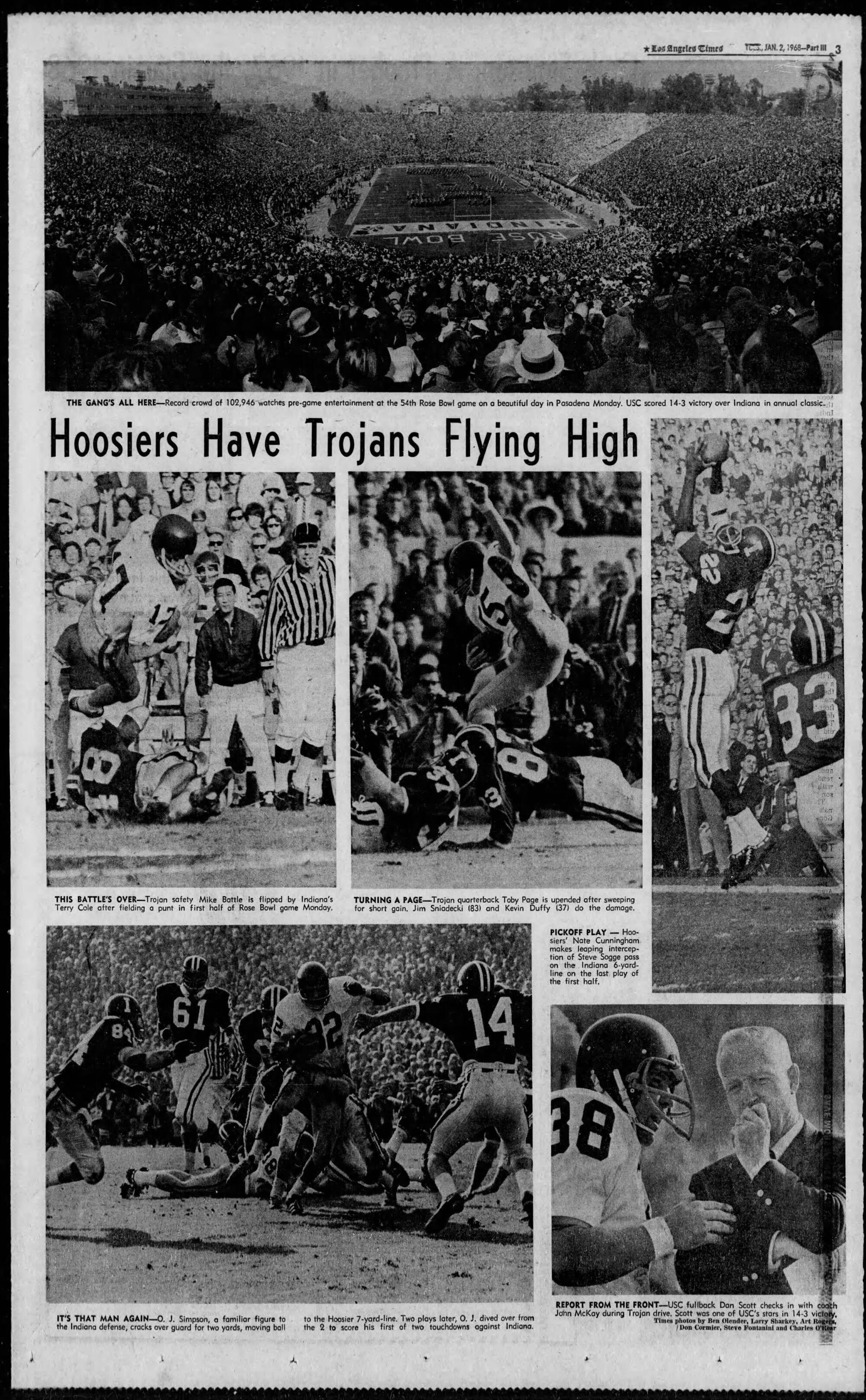
A photo spread in the Los Angeles Times of the 1968 Rose Bowl Game between USC and Indiana.
(Los Angeles Times)
USC had five players that would go on to be taken in the first round of the 1968 NFL draft, not to mention Simpson, a junior running back. Simpson’s second touchdown run — an eight-yarder in the third quarter — secured the Trojans’ 14-3 victory.
Gonso sends his regrets that he won’t be going back next week; he’ll be watching on television from home in Indiana. The Hoosiers have sold a little more than 1,500 tickets, the most for any road game this season.
As (bad) luck would have it, Mona will miss Minnesota’s return after agreeing to host a fall colors tour in New England before the Big Ten schedule was released. He’s expected to return to Minneapolis a few hours before kickoff.
“I’ll get home in time to watch it on TV and keep my fingers crossed that the Gophers either win the Big Ten and get chosen to go to the Rose Bowl [as part of the CFP],” Mona said, “or more realistically, probably in two or four more years they’ll go back as a visiting team.”
Fortunately, Mona can hear all about what it was like to be there from Jessen, a longtime friend who will add the Rose Bowl to the list of college football meccas he’s visited. Clemson’s “Death Valley”? Yep. Texas’ Darrell K. Royal Memorial Stadium? You bet. Jessen also once saw Pete Carroll’s Trojans whip the Bruins at the Coliseum. Among Big Ten venues, he favors Michigan Stadium and Beaver Stadium.
“It’s 112,000 people in white,” Jessen said of Penn State’s home.
Jessen will head to Southern California as part of a group of 25 friends. Another friend has chartered three planes for about 600 more fans. They will be joined by a large contingent of Minnesota alumni who live in the Los Angeles area, most of whom have never seen their beloved team play in the Rose Bowl.
Win or lose, given their team’s decades-long absence, they all will have come back.



NEWYou can now listen to Fox News articles!
Former ESPN broadcaster Keith Olbermann once again incited backlash on social media Wednesday after he called late legendary college football coach Lou Holtz a “legendary scumbag” in an X post on the day Holtz was announced dead.
“Legendary scumbag, yes,” Olbermann wrote in response to a clip of Holtz criticizing former President Joe Biden in 2020 for supporting abortion rights.
Olbermann received scathing criticism in response to his post on X.
“You’re a scumbag that needs mental help,” one X user wrote to Olbermann.
One user echoed that sentiment, writing to Olbermann, “You’re the real scumbag here. Lou Holtz had more class, integrity, and genuine decency in his pinky finger than you’ll ever show in your lifetime.”
Another user wrote, “You’re a grumpy, lonely, Godless man. All the things Lou Holtz was not.”
Keith Olbermann speaks onstage during the Olbermann panel at the ESPN portion of the 2013 Summer Television Critics Association tour at the Beverly Hilton Hotel July 24, 2013, in Beverly Hills, Calif. (Frederick M. Brown/Getty Images)
Olbermann has made it a pattern of sharing politically charged far-left statements that are often combative and ridiculed on social media, typically resulting in immense backlash.
After the U.S. men’s hockey team’s gold medal win, Olbermann heavily criticized the team for accepting an invitation from President Trump to the State of the Union address. Olbermann wrote on X that any members of the men’s team who attended the event were “declaring their indelible stupidity and misogyny,” while praising the women’s team for declining the invitation.
In January, Olbermann attacked former University of Kentucky women’s swimmer Kaitlynn Wheeler for celebrating a women’s rights rally outside the U.S. Supreme Court during oral arguments for two cases focused on the legality of biological male trans athletes in women’s sports.
Former Notre Dame football coach Lou Holtz listens before being presented with the Presidential Medal of Freedom at the White House in Washington, D.C., Dec, 3, 2020. (Doug Mills/The New York Times/Bloomberg via Getty Images)
“It’s still about you trying to find an excuse for a lifetime wasted trying to succeed in sports without talent,” Olbermann wrote in response to Wheeler’s post.
In 2025, Olbermann faced significant backlash after posting (and later deleting) a message on X aimed at CNN contributor Scott Jennings, that said, “You’re next motherf—–,” shortly after the assassination of conservative influencer Charlie Kirk.
Holtz was a stern supporter of President Donald Trump, even saying in February 2024 that Trump needed to “coach America back to greatness!”
Near the end of Trump’s first term, shortly after former President Joe Biden defeated him in the 2020 election, Trump awarded Holtz with the Presidential Medal of Freedom, the highest civilian award of the United States.
After Holtz’s death was announced Wednesday, several top GOP figures paid tribute to the coach on social media.
Those GOP lawmakers included senators Tommy Tuberville, R-Ala.; Todd Young, R-Ind.; Tom Cotton, R-Ark.; and Lindsey Graham, R-S.C.; representatives Greg Murphy, R-N.C.; David Rouzer, R-N.C.; Erin Houchin, R-Ind.; and Steve Womack, R-Ark.; and Florida Gov. Ron DeSantis; Indiana Gov. Mike Braun; U.S. Education Secretary Linda McMahon; and Rudy Giuliani.
CLICK HERE TO DOWNLOAD THE FOX NEWS APP
Lou Holtz, former Notre Dame football coach, addresses the America First Policy Institute’s America First Agenda Summit at the Marriott Marquis July 26, 2022. (Tom Williams/CQ-Roll Call, Inc)
At the time of publication, prominent Democrat leaders have appeared silent on Holtz’s passing, including prominent Democrats with a football background.
Minnesota Gov. Tim Walz, who worked as an assistant high school football coach; Sen. Cory Booker, D-N.J., who was a recruiting target for Holtz in 1986 as a college prospect; Rep. Colin Allred, D-Texas, who played in the NFL; and Rep. Kam Buckner, D-Ill., who played football for the University of Illinois, have not posted acknowledging Holtz’s death.
Follow Fox News Digital’s sports coverage on X, and subscribe to the Fox News Sports Huddle newsletter.
Related Article

Sports
Stephen A. Smith called Zion Williamson a ‘food addict,’ is now feuding with the Pelicans on social
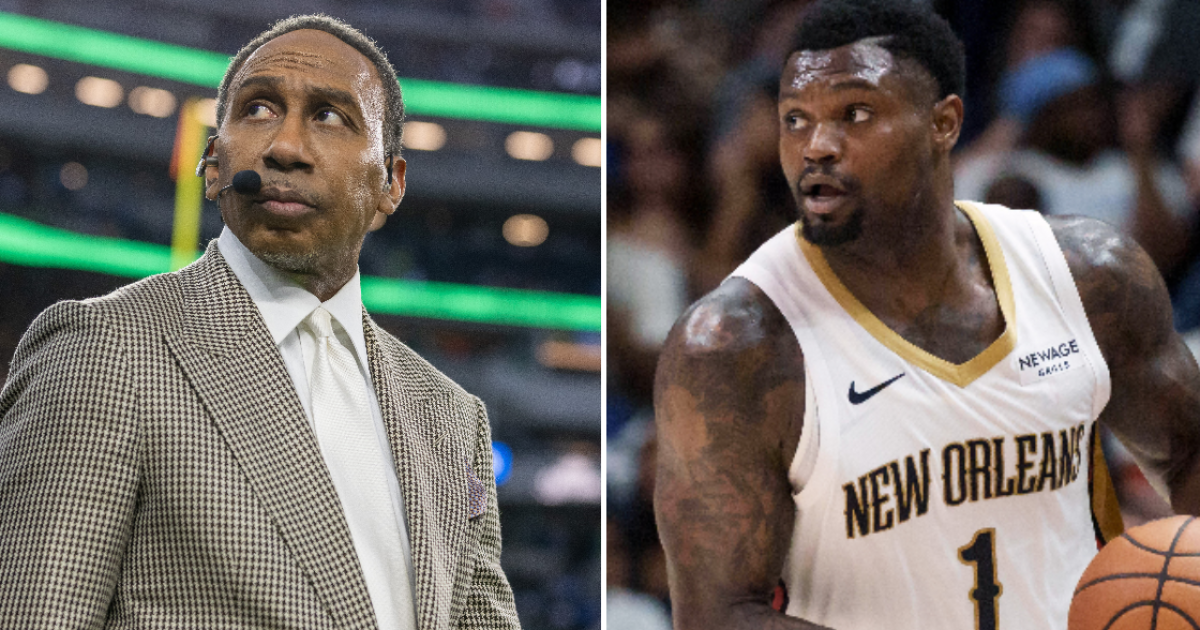
Williamson has been listed as 6-foot-6, 284 pounds since New Orleans selected him out of Duke with the No. 1 overall pick in the 2019 draft. His weight and fitness level have been regularly criticized, and the amount of time Williamson has missed because of injuries hasn’t helped (including all of the 2021-22 season following offseason right foot surgery).
After playing only 30 games last season because of a left hamstring strain and a lower back injury, Williamson reported for 2025-26 looking trim and in shape. He told reporters that he and Pelicans trainer Daniel Bove had come up with a strategy to address his fitness while rehabbing his hamstring and that he stuck to it.
“I haven’t felt like this since college, high school,” Williamson said at the time, “where I can walk in the gym and I’m like just, ‘I feel good.’”
Williamson has played in 46 of the Pelicans’ 63 games this season, already the third-most games he has played in his seven NBA seasons. In a recent interview with ESPN’s Malika Andrews, Williamson addressed how the past criticism affected him mentally.
“I would say the most difficult point was when I missed my third year with a broken foot, and there was a lot of criticism on my weight, my care for the game, etc.,” Williamson said. “But … while people were saying what they’re saying — and everybody’s entitled to their own opinion, it is what it is — I’m in Portland rehabbing, not knowing if my foot’s gonna heal, and it was frustrating. It was very frustrating.
“I was low. I was really low because I just wanted to play basketball. I just wanted to play the game I love, but every time you turn the TV on, every time I check my phone, it was nothing but negative criticism, man. At the time, it did a lot, like I said, it did a lot, but it was a blessing in disguise, and I learned from it and I grew from it.”
Sports
ESPN analyst Paul Finebaum questions Trump’s college sports reform meeting as potential ‘circus’

NEWYou can now listen to Fox News articles!
President Donald Trump will host a White House roundtable regarding college athletics reform later this week.
The panel is expected to include prominent coaches, college sports and pro sports league commissioners, and other professional athletes, according to OutKick.
The group will meet March 6 to examine solutions to key challenges, including NCAA authority; name, image and likeness issues (NIL); collective bargaining; and governance concerns.
President Donald Trump holds a football presented to him during a ceremony to present the Commander-in-Chief’s Trophy to the US Naval Academy football team, the Navy Midshipmen, in the East Room of the White House on April 15, 2025 in Washington, D.C. (BRENDAN SMIALOWSKI/AFP via Getty Images)
The meeting Friday will include big names like Nick Saban, Urban Meyer, Adam Silver and Tiger Woods. Trump has been adamant about “saving college sports,” even signing an executive order setting new restrictions on payments to college athletes back in July.
However, ESPN college analyst Paul Finebaum, who has previously hinted at a congressional run as a Republican, remains a bit skeptical.
“The easiest thing, guys, is just to say this is ridiculous,” Finebaum said to Greg McElroy and Cole Cubelic on WJOX. “And I read the other day, ‘Why is Nick Saban going?’ Why is anybody going? The bottom line is this. If something doesn’t happen very quickly, and I mean in the next short period of time, we’re talking about weeks, not years, then this thing could blow up.
“However it came about, I’m in favor of. The question now becomes, with some of the most powerful people in Washington in the same room, including the most powerful person in the country, can anything get done, or will it be a circus? Will it be just another show?”
U.S. President Donald Trump shakes hands with former Alabama Crimson Tide football coach Nick Saban as Trump takes the stage to address graduating students at Coleman Coliseum at the University of Alabama on May 01, 2025 in Tuscaloosa, Alabama. (Anna Moneymaker/Getty Images)
Trump’s order prohibits athletes from receiving pay-to-play payments from third-party sources. However, the order did not impose any restrictions on NIL payments to college athletes by third-party sources.
A House vote on the SCORE Act (Student Compensation and Opportunity through Rights and Endorsements), which would regulate name, image, and likeness deals, was canceled shortly before it was set to be brought to the floor in December.
The White House endorsed the act, but three Republicans, Byron Donalds, Fla., Scott Perry, Pa., and Chip Roy, Texas, voted with Democrats not to bring the act to the floor. Democrats have largely opposed the bill, urging members of the House to vote “no.”
President Donald Trump looks on before the college football game between the US Army and Navy at the M&T Bank Stadium in Baltimore, Maryland, on Dec. 13, 2025. (Alex WROBLEWSKI / AFP via Getty Images)
The SCORE Act would give the NCAA a limited antitrust exemption in hopes of protecting the NCAA from potential lawsuits over eligibility rules and would prohibit athletes from becoming employees of their schools. It prohibits schools from using student fees to fund NIL payments.
Fox News’ Chantz Martin and Ryan Gaydos contributed to this report.
Follow Fox News Digital’s sports coverage on X, and subscribe to the Fox News Sports Huddle newsletter
Related Article

Reward yourself by exercising regularly at One to One Fitness | CWRU Newsroom | Case Western Reserve University

Movie Review: Here comes “THE BRIDE!”, audacious and wild – Rue Morgue

Netflix, After Walking Away From Warner Bros. Deal, Will ‘Move Forward’ With ‘$2.8 Billion in Our Pocket That We Didn’t Have a Few Weeks Ago,’ CFO Says

Video: Senate Republicans Block Limits to Trump’s War Powers

Mundane, magic, maybe both — a new book explores ‘The Writer’s Room’

Florida High School Football Rankings: Top 25 teams – Oct. 21

Cleary's 21 help Le Moyne down Central Connecticut State 69-64 in OT

How old is Bo Nix? What to know about Oregon quarterback ahead of 2024 NFL Draft

99th annual Pony Swim held in Virginia

Indiana Members Credit Union announced as new anchor tenant at Bottleworks District

DHS defends McLaughlin against allegations husband’s company profited millions from ad contracts: ‘Baseless’

Sánchez defies Trump in political gamble as Madrid say no to war

Satellite images show Iran school strike hit more buildings than earlier reported

US submarine sinks Iranian warship by torpedo in a first since World War II

Which oil and gas facilities in the Gulf have been attacked?
-

 World1 week ago
Exclusive: DeepSeek withholds latest AI model from US chipmakers including Nvidia, sources say
-

 Massachusetts1 week ago
Mother and daughter injured in Taunton house explosion
-

 Wisconsin3 days ago
Setting sail on iceboats across a frozen lake in Wisconsin
-

 Maryland4 days ago
AM showers Sunday in Maryland
-

 Denver, CO1 week ago
10 acres charred, 5 injured in Thornton grass fire, evacuation orders lifted
-

 Florida4 days ago
Florida man rescued after being stuck in shoulder-deep mud for days
-

 Louisiana1 week ago
Wildfire near Gum Swamp Road in Livingston Parish now under control; more than 200 acres burned
-

 Oregon5 days ago
2026 OSAA Oregon Wrestling State Championship Results And Brackets – FloWrestling