Southwest
Texas homeowners who finally evicted squatter 'treated like criminals'

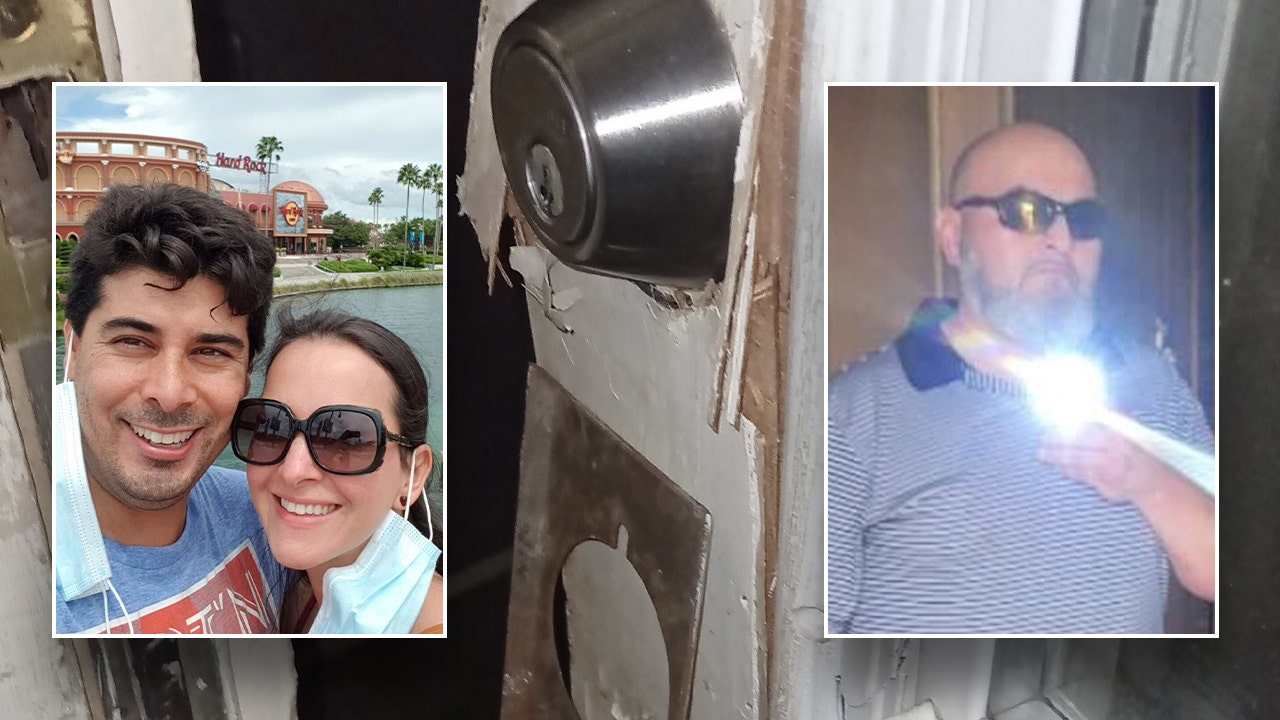
After finally evicting a contractor-turned-squatter from their new home, a pair of Texas homeowners said that law enforcement made them feel like wrongdoers throughout their two-month ordeal.
Yudith Matthews and Abram Mendez, who bought the San Antonio home to accommodate their growing family, said they are “relieved” that the contractor has finally cleared out the last of his things. On Wednesday night, their family got together to secure and board up their new home to ensure the squatter — or other potential intruders — didn’t sneak back inside.
Until this week’s long-fought victory, they said they felt “powerless” amid a legal system that “takes advantage of homeowners… and the working class” over “entitled” squatters — even, they said, when their safety was jeopardized.
“If I [tried] to protect my house, I [would] get arrested,” Matthews told Fox News Digital. “Your heart is about to jump out of your chest. You’re concerned, you don’t sleep. What else is going to happen? How much damage is he going to do?”
TEXAS HOMEOWNERS FURIOUS AFTER SQUATTER REFUSES TO LEAVE PROPERTY, POLICE WON’T REMOVE HIM: ‘TRUST NO ONE’
Navy veteran Abram Mendez and his wife Yudith Matthews said they planned to move into their larger house in San Antonio, Texas, on Easter. That timeline was vastly skewed by their long-fought battle with a contractor-turned-squatter. (Yudith Matthews)
Other than “unloading some materials,” Matthews and Mendez told Fox News Digital the handyman never completed any of the work he was hired to do.
The married couple said they have incurred about $17,000 in damages, utilities and court fees, clearing out the “last actual dollars” in their account. The squatter allegedly destroyed new plumbing work in their garage, barbecued inside with a propane tank, sprayed mahogany cabinets with a bleach mixture, smoked and urinated indoors and broke doors and molding throughout the house to facilitate his legal entry and exit.
The couple said they fell in love with the seven-bedroom, three-bathroom home in a peaceful neighborhood and purchased it in November. They couldn’t wrap their heads around why someone would “destroy it” needlessly.
TEXAS HOMEOWNERS CONFRONT SQUATTERS, SAY POLICE WON’T HELP
Matthews and Mendez said their squatter broke multiple doors and windows in the home so that he could continue to enter and exit the property. (Yudith Matthews)
“Out of spite? To someone you don’t even know? Are you taking the world’s anger out on one person? [Is it] because they don’t need to pay? They just walk away and they are not responsible,” Matthews said.
Allegedly, their squatter bought a blender to leave running throughout the day during his unwanted stay and intentionally turned off their new freezer, letting meat and broken eggs spoil inside. Matthews and Mendez were ordered to restore electricity and water to the home and pay fines after, they claim, the squatter and his female accomplice stole water and electricity.
Even obtaining a writ of possession — a formal document that a property owner posts on their door to inform a tenant or squatter that they must leave in 24 hours or be removed by force by police — cost an additional $300.
HOMEOWNERS SCORE VICTORY AGAINST SQUATTERS IN NEW YORK AFTER LANDLORD HANDCUFFED IN $1M HOME HEIST
The squatter shined high-powered flashlights into the homeowners’ eyes, menaced them with bleach and even flashed a knife during their repeated standoffs. (Yudith Matthews)
“All they care about is bail money, all they care about is bond money, all they care about is fees — they were ‘feeing’ us to death,” Mendez, a father of three, told Fox News Digital. “As long as the squatter is off the street and in someone’s home, that’s going to generate revenue — lawyer’s fees, other things that will stimulate the local economy. But it’s all footed by a taxpaying homeowner who’s worked hard, who has little income or some equity where the best case is to flip it.”
If the contractor had paid a fee and appealed the judge’s decision, they said, their ordeal could have persisted past this week. But by a “stroke of luck,” they said, he was late to a Tuesday court hearing and narrowly missed the window.
The contractor, a man in his forties who the couple said has gout, had asked to stay on a couch inside the house. When they realized he had amassed an alarming number of possessions inside, they called the San Antonio Police Department.
BLUE STATE SQUATTERS PUT ON NOTICE WITH ‘AGGRESSIVE’ LAW AND ORDER BILL: ‘PEOPLE ARE GETTING KILLED’
The couple and their families supervised while the squatter finally loaded his things into moving vans — including four guitars he’d installed special mounts for inside the home — and moved his car and motorcycle off the property. (Yudith Matthews)
He had not stayed in the home for the requisite 30 days to be considered a squatter under Texas property law when police were first called to the property on Feb. 29, but the couple claim officers made no efforts to verify his opposing account, or even check his identification.
“[The squatter] said, ‘No, I live here’ and the police said right away, ‘You’re the resident, you have the right to live here,’” Mendez recalled. “The police came so many times, we have him red-handed, we might have him on video, but police just walk away and say it’s a civil matter.”
Matthews and Mendez said they fell in love with the seven-bedroom, three-bathroom home. The quiet neighborhood, nearby stream and large yard made the property a great place to raise their children, ages 11, 10 and 8. (Yudith Matthews)
“That’s a cop out,” Mendez said. “Police are entitling these people to a right they’re not entitled to… they don’t quite care because they know the lieutenant is going to cover them, they don’t want to write a report.”
The couple said they have filed complaints with the San Antonio Police Department after one encounter where an officer allegedly raised his voice, saying that he “didn’t have time to deal with this.”
“You feel so disappointed, you don’t even bother calling the police when they treat you like you are a criminal,” Matthews said.
Previously, footage of the couple confronting their squatter as he entered the home through a propped window was aired on “FOX & Friends.” After that encounter, the couple were prohibited from entering the home.
Pictured is a crude propane cooking setup the squatter used inside the Texas couple’s home. (Yudith Matthews)
From that point on, the legal process and surveying the property became a full-time job.
“My husband did runs around the house, [we are] taking turns to supervise the property,” Matthews said. “[The squatter] took from us family time, so many events, so many fun things that we do with the kids on the weekend… it’s very unfair. Our kids, they get really stressed.”
After serving seven years as an intelligence officer in the Navy, many of them on active duty tours in Asia, Afghanistan and Iraq, Mendez is fortunate enough to be retired. He couldn’t have managed the nightmare otherwise, he said.
“He decided to keep breaking the windows, breaking the sheet rock, destroying the appliances that we have in there — who is going to be responsible for that?” Matthews asked. (Yudith Matthews)
“How do families where mom and dad have to work — what a nightmare,” Matthews remarked. “Imagine a family who are working 9-5 by themselves with zero support, dealing with this type of thing.”
In one of dozens of visits San Antonio police made to the property, per records provided by the department, the couple claimed the squatter flashed a knife at them. Matthews and Mendez say arriving police “kicked the knife into a corner” and “told him he had a right” to the weapon as a tenant in the house.
Pictured are dishes left in the sink by the squatter after he packed up his things and left this week. (Yudith Matthews)
Matthews claims he shined high-wattage flashlights in her face and even threatened to spray her with bleach in one of their many clashes.
“We are fighting, risking our lives because we don’t get protection from the police, the government, anyone,” she told Fox News Digital. “We saved up enough money, we’re in our mid-forties, we’re focusing on our home and now someone is stealing hard-earned decades of money from us for their laziness. That’s it, they’re lazy.”
“We saved up enough money, we’re in our mid-forties, we’re focusing on our home and now someone is stealing hard-earned decades of money from us for their laziness.”
After no less than four court appearances and paying a $300 fee, the couple were finally able to post an eviction notice on their home’s door. (Yudith Matthews)
Officer Ricardo Guzman of the SAPD told Fox News Digital that law enforcement’s “hands are tied” in these situations.
“A big thing about these squatting things, the hard part on us is the squatter’s rights. Once they move in and they have property, even if it’s an abandoned building, that’s their property,” he told Fox News Digital. “There are laws preventing us from grabbing their property and throwing them out. That’s where it becomes a civil matter, the owner will have to go through the eviction process.”
The unwelcome guest used boards and nails to permanently prop open several windows of the home, which he would use to enter and exit. (Yudith Matthews)
Although the worst is over for the couple, they are still in the process of obtaining a restraining order against their squatter and inventorying damage and stolen items, they said.
“The law did not work for us,” Mendez said. “It eventually worked for us — but after a month of what bills, what losses. [Now] that’s more elbow grease, more sanding, more painting — time eaten up by a squatter who has nothing to lose because the police entitled him by saying, ‘You have a right to stay there.’”
Debris left behind by a squatter is pictured in Yudith Matthews and Abram Mendez’s home. The couple said the contractor installed an extra door in their living room — and brought it with him when he left the premises this week. (Yudith Matthews)
Fox News Digital could not reach the squatter, or an attorney who had represented him in previous criminal court cases, for comment.
Read the full article from Here


A woman was struck and killed by a driver while crossing the street on Pacific Coast Highway in Long Beach.
On June 3, the female pedestrian was using the crosswalk at Pacific Coast Highway and Pacific Avenue around 4:50 a.m.
She had walked against a red light and was hit by a 19-year-old driver in a Chevy sedan, Long Beach police said.
Despite lifesaving efforts, the woman was pronounced dead at the scene. The driver remained at the scene and is cooperating with the investigation.
“At this time, impaired driving, distracted driving and excessive speed are not believed to be a factor in this collision,” police said.
The woman’s name is being withheld pending identification by the Los Angeles County Medical Examiner.
Anyone who witnessed the crash or has information on the incident is asked to call Detective Joseph Johnson at 562-570-7355.
Anonymous tips can be provided to L.A. Regional Crime Stoppers at 1-800-222-8477 or online at lacrimestoppers.org.

A man wanted for a deadly road rage shooting in Los Angeles was arrested and extradited from Mexico after fleeing the U.S. in 2024.
The suspect was identified as Christian Rojas, 21, of Bellflower, according to the California Highway Patrol.
Authorities had been searching for him since the deadly incident on October 10, 2024.
Rojas and a second suspect, Joshua Rojas Sr., 47, of Downey, were driving on the northbound 5 Freeway in Boyle Heights around 4 p.m. when they became involved in an altercation with another driver that escalated into a shooting.
-

Video obtained exclusively by KTLA shows the terrifying moment a road rage suspect opened fire the driver of another car on the 5 Freeway in Los Angeles, fatally wounding him and seriously injuring a passenger, on Oct. 10, 2024. (Credit: @hugoboss01) -
Video obtained exclusively by KTLA shows the terrifying moment a road rage suspect opened fire the driver of another car on the 5 Freeway in Los Angeles, fatally wounding him and seriously injuring a passenger, on Oct. 10, 2024. (Credit: @hugoboss01) -
Video obtained exclusively by KTLA shows the terrifying moment a road rage suspect opened fire the driver of another car on the 5 Freeway in Los Angeles, fatally wounding him and seriously injuring a passenger, on Oct. 10, 2024. The alleged gunman is circled. (Credit: @hugoboss01) -
Video obtained exclusively by KTLA shows the terrifying moment a road rage suspect opened fire the driver of another car on the 5 Freeway in Los Angeles, fatally wounding him and seriously injuring a passenger, on Oct. 10, 2024. (Credit: @hugoboss01) -
Video obtained exclusively by KTLA shows the terrifying moment a road rage suspect opened fire the driver of another car on the 5 Freeway in Los Angeles, fatally wounding him and seriously injuring a passenger, on Oct. 10, 2024. (Credit: @hugoboss01) -
Christian Rojas, 21, of Bellflower, was arrested and extradited to the U.S. from Mexico on June 2, 2026, in connection with a deadly road rage shooting in Los Angeles. (California Highway Patrol)


Video of the tense confrontation showed the suspects, who were driving a Dodge Durango SUV, opening fire on two men in a Cadillac sedan.
The shooting forced the victim to pull over abruptly. That’s when a suspect ran up to the Cadillac, opened the passenger-side door and fired several shots at close range.
In a panic, the Cadillac driver tried to escape by making a sudden U-turn and driving against oncoming traffic. He eventually crashed head-on into several vehicles.
The suspects ditched their SUV and fled toward a freeway exit on foot. The Cadillac driver was left with serious injuries and his passenger was killed. Their identities were not released.
The incident caused a miles-long backup that left thousands of motorists stranded on the freeway for hours and authorities worked to clear the scene.
Following an extensive investigation, detectives identified the two men as the suspects involved.
Joshua Rojas Sr. was arrested in San Bernardino on October 22, 2024, on a murder charge. He remains in custody awaiting trial.
Meanwhile, Christian Rojas had fled the U.S. and was hiding in Mexico, detectives said. A $4.3 million bail warrant was issued for his arrest.
“Through a coordinated international effort, investigators determined that Rojas was living in Palomo de Arriba, Mexico,” CHP officials said. “The U.S. Marshals Service worked with Mexican state police to locate and arrest him on the outstanding warrant.”
On June 2, 2026, Christian was arrested and extradited to the U.S. to face a murder charge.
“This arrest demonstrates that time and distance will not shield violent offenders from justice,” said CHP Southern Division Chief Chris Margaris. “For nearly two years, our detectives remained relentless in their pursuit of those responsible for this senseless act of violence. Through exceptional collaboration with the United States Marshals Service and our law enforcement partners in Mexico, we located and apprehended this suspect and brought him back to face the charges. We remain committed to protecting the public, supporting victims and their families, and holding violent criminals accountable wherever they may try to hide.”

The northbound 405 Freeway will remain closed for several hours near Los Angeles International Airport after a police pursuit ended with officers opening fire Friday morning. Unconfirmed reports indicated the incident began with a robbery at a 7-Eleven store, which ended with Los Angeles Police Department officers pursuing the suspect in a Kia. The chase […]
-

 World3 minutes ago
Jeff Bartos says UN reform is no longer an ‘oxymoron’ after $570M in cuts
-

 Politics10 minutes ago
Top House Democrat says there’s ‘no way’ Platner didn’t know tattoo’s Nazi origins
-

 Health13 minutes ago
Can alkaline water actually improve your health? Experts separate fact from fiction
-

 Sports18 minutes ago
Maxx Crosby plans to attend America 250 UFC fight, talks White House, Fernando Mendoza, Tom Brady and Olympics
-

 Technology25 minutes ago
A wheeled robot may beat humanoids into your home
-
 Business28 minutes ago
California falls behind Texas in Fortune 500 ranking
-
 Entertainment33 minutes ago
Phones banned on Phoebe Bridgers’ tour, including her Halloween shows at Intuit Dome
-
 Lifestyle40 minutes ago
Farewell, my Smilodon: La Brea Tar Pits to close for two years

